The Vanaras (वानर, the monkey folk) are the people of the Valmiki Ramayana, whose kingdom of Kishkindha (किष्किन्धा) is identified with the Hampi area of Karnataka[1][2]. In the epic they are sons of gods, made in monkey forms that changed at will, and their leaders include Sugriva, Vali, Hanuman and Nala[3]. Their story is legend: Sugriva's alliance with Rama, the death of Vali and the vanara search for Sita led to the war with Ravana[4][1]. No inscription or record of the people is in the extracts; the identification with Hampi is credited to Bhatnagar (2004)[1]. Locally, Hanuman is held to be born on Anjanadri hill across the Tungabhadra[2].
01Faith and deities
From the Atlas: KulDevi Anjana, basis Documented, noted as "Mother of Hanuman (legendary people)". Anjana is not named in the fetched extracts[2].
Mother of Hanuman (legendary people)
A recorded tie between the clan and the goddess.
| Deity or tradition | Place in the clan's life | Evidence |
|---|---|---|
| Hanuman | Said to be born on Anjanadri hill across the Tungabhadra (local belief); Hanuman is among the idols in the Kodandarama Temple sanctum | [2] |
| Ram, Sita, Lakshman and Hanuman | Black granite idols in the sanctum of the Kodandarama Temple | [2] |
| Ram's footprints | A shrine in Shabari's ashram caves near Pampa Sarovar; devotees offer flowers | [2] |
| Shabari legend | Tasted each berry before offering it to Ram; her ashram caves are a place of offering | [2] |
| Indra, Surya, Vrihaspati, Vishvakarma, Agni, the Ashvins, Varuna and Vayu legend | Named as the fathers of the vanaras and their leaders in Book I, Canto XVI | [3] |
02Temples
The extracts record no temple built by the vanaras. The sites below are later worship in the Hampi area; their dates are not in the extracts.
Built by the clan
Not recorded.
Given patronage or grants by the clan
Not recorded.
Later temples in the clan's lands
| Temple | Deity | Built | Where | |
|---|---|---|---|---|
| Kodandarama Temple | Ram, Sita, Lakshman and Hanuman | Not in the extracts | Not dated in the extracts | Hillside by the river, reached by a trek from opposite Virupaksha Temple[2] |
| Yantrodharak Anjaneya Temple | Hanuman | Credited to Maharishi Vyas (folklore) | Not dated in the extracts | Near Hampi; the first of a series of Hanuman temples[2] |
| Malayvanta Raghunath Temple | Ram (Raghunath) | Not in the extracts | Not dated; Vijayanagar style | Hampi; brick upper areas and a pillared mandapam[2] |
| White temple on Anjanadri | Hanuman | Not in the extracts | Not dated in the extracts | Anjanadri hill, Anegundi[2] |
03Languages and scripts
| Language or script | Kind | Under the clan | Evidence |
|---|---|---|---|
| Sanskrit, Devanagari | Literary language of the epic | The text's own words for the people: वानर, कपि, वानरयूथप, वानरमुख्य | [5] |
04Books and literature
The vanaras' story is in the Ramayana and the Mahabharata. The extracts give no dates for the texts.
Written in the clan's lands during its era
| Work | Author | Kind | When | Link to the clan |
|---|---|---|---|---|
| Valmiki Ramayana, Kishkindha Kanda | Valmiki | Epic | Not dated in the extracts | [6][5] |
| The Rámáyan of Válmíki (English verse) | Griffith (translator) | Verse translation | Not dated in the extracts | [3] |
| Mahabharata, Sabha Parva | Not given in the extracts | Epic | Not dated in the extracts | [1] |
| Garuda Purana, ch. 143 | Not given in the extracts | Purana | Not dated in the extracts | [1] |
Given patronage by the clan
Not recorded.
05Thinkers and scholars
| Name | Field | Era | Contribution |
|---|---|---|---|
| Bhatnagar | Site identification | 2004 | Credited with identifying Kishkindha with Hampi (p. 198)[1] |
No vanara scholars are named in the extracts.
06Art and architecture
The extracts record sculptures of the Vali and Sugriva story in several places. None is the clan's own object.
Painting and wall art
Not recorded.
Sculpture and temple art
| Art form | What it is | Era | Evidence |
|---|---|---|---|
| Dashavatara Temple, Deogarh | Sugriva's victory legend | Not dated in the extracts | Deogarh[4] |
| Banteay Srei | Tympanum of the brothers' combat | 10th century | Khmer temple[4] |
| Angkor Wat | Bas-reliefs of the alliance and the battle of Lanka | 12th century | Khmer temple[4] |
| Preah Pithu | The Vali and Sugriva fight | 13th century | Khmer temple[4] |
Temple and building architecture
| Art form | What it is | Era | Evidence |
|---|---|---|---|
| Malayvanta Raghunath Temple | Vijayanagar style: brick upper areas, pillared mandapam with yali carvings | Not dated; Vijayanagar style | Hampi[2] |
Weaving and textiles
Not recorded.
Clothing and jewellery
Not recorded.
Coins, pottery and crafts
Not recorded.
07History
Origin in the sons of gods {LEG}
In the Valmiki Ramayana (Book I, Canto XVI) Brahma tells the gods to make helpers for Vishnu, "in monkey forms that changed at will"[3]. The offspring named there are Bali (of Indra), Sugriva (of the Sun), Tara (of Vrihaspati), Nala (of Vishvakarma), Nila (of Agni), Dwivida and Mainda (of the Ashvins), Susheṇ (of Varuna), Sarabh (the rain-sender) and Hanuman (of the Wind)[3].
Vali and Sugriva {LEG}
Sugriva, the vanara king of Kishkindha and younger brother of Vali, is wronged by Vali, who accuses him of betrayal and drives him out[4][1]. Sugriva takes refuge on Rishyamukh hill. In a cave episode with the demon Mayavi, the sage Mathanga curses Vali never to step on Rishyamukh[4]. Vali had seized Sugriva's wife Ruma, who was later reclaimed[4].
Sugriva is described as righteous, wronged by his brother, and when he meets Rama the vanara Hanuman presents himself as Sugriva's minister, a vanara and son of the Wind[5].
Rama's alliance and Vali's death {LEG}
Rama allies with Sugriva, shoots seven tala trees, and kills Vali[1][4]. Griffith's verse gives it as "One shaft from Ráma's deadly bow The monarch in the dust laid low"[3].
Local folklore at Hampi places Sugriva's coronation by Rama in a cave near the Kodandarama Temple, where Sugriva kept ornaments that Sita had dropped[2].
The search for Sita and the war with Lanka {LEG}
Sugriva sends vanara forces to search for Sita. The search regions run from the Vindhya and Narmada to the Pandyas and Keralas, and the Cholas, Andhras, Kalingas and others (Kishkindha Kanda, canto 41)[1].
Hanuman leaps across the sea in one bound, "two hundred leagues across the deep", and Nala builds a bridge over the narrow sea[3]. Sugriva then leads the vanara army against Ravana[4].
After the war: the horse sacrifice {LEG}
Sugriva travels to Ayodhya for Rama's Ashvamedha. Lava and Kusha capture the horse and defeat Bharata and Sugriva[4].
Dvapara Yuga: Sahadeva's visit {LEG}
Sahadeva visits Kishkindha on a southern campaign for Yudhishthira's Rajasuya. Mainda and Dvivida are named as kings of Kishkinda who fought him (Mahabharata, Sabha Parva, ch. 5)[1].
Identification at Hampi
Kishkindha is identified with Hampi, former capital of the Vijayanagara Empire, and the Tungabhadra (then Pampa Sarovara) near Hampi, in Vijayanagara district, is cited as the kingdom's likely region. The identification is credited to Bhatnagar (2004), p. 198[1]. Locally the Tungabhadra is called Pampa[2].
The travel essay records that Deccan Sultanate armies destroyed the Vijayanagar palaces and that most temples were desecrated[2].
08Journey and migrations
The extracts record no migration of the people. Their movements are the moves of the epic, and each one is legend.
| When | From | To | Why | Evidence |
|---|---|---|---|---|
| Legend | Kishkindha | Rishyamukh hill | Sugriva is driven out by Vali | [4] |
| Legend | Rishyamukh hill | Rama's camp at Rishyamukh | Sugriva allies with Rama; Vali is killed | [1][4] |
| Legend | Kishkindha | The search regions | Vanara forces sent to search for Sita | [1] |
| Legend | Kishkindha | Lanka | Sugriva's army fights Ravana | [4] |
| Legend, after the war | Not given in the extracts | Ayodhya | Sugriva travels for the Ashvamedha | [4] |
09Seats and lands
| Place | Role | Where today |
|---|---|---|
| Kishkindha (किष्किन्धा) | Kingdom of the vanaras; Kiṣkindhā in Sanskrit | Hampi, Karnataka (identification credited to Bhatnagar, 2004)[1] |
| Rishyamuka hill (ऋश्यमूक) | Where Sugriva fled and where Rama stayed; the Garuda Purana gives it as well[1] | A Rishimukha hill near Hampi bears the same name[1] |
| Pampa Sarovar (the Tungabhadra) | Scene on the Pampa bank in Kishkindha Kanda, sarga 3[5] | Tungabhadra, near Hampi[1] |
| Anjanadri hill (Anjaneyadri) | Held locally to be Hanuman's birthplace (local belief) | Across the Tungabhadra, in Anegundi[2] |
| Sugriva's cave | Where he kept Sita's ornaments; local folklore places his coronation there | Near the Kodandarama Temple, Hampi[2] |
| Mangi-Tungi | Jain texts say Sugriva attained moksha here[4] | Not located in the extracts |
10Notable figures
| Name | Role | Era | Known from |
|---|---|---|---|
| Sugriva (सुग्रीव) legend | King of Kishkindha; son of Surya; counsellor Hanuman | Ramayana (legend) | [4][3] |
| Vali (Bali) legend | Elder brother; son of Indra; killed by Rama | Ramayana (legend) | [1][4][3] |
| Hanuman legend | Sugriva's counsellor and minister; son of the Wind; leaps the sea | Ramayana (legend) | [5][3] |
| Tara legend | Vali's wife; mother of Angada | Ramayana (legend) | [4] |
| Ruma legend | Sugriva's wife; seized by Vali and reclaimed | Ramayana (legend) | [4] |
| Angada legend | Son of Vali and Tara | Ramayana (legend) | [4] |
| Nala legend | Son of Vishvakarma; builds the bridge over the narrow sea | Ramayana (legend) | [3] |
| Nila legend | Son of Agni; named among the vanaras | Ramayana (legend) | [3][4] |
| Dwivida and Mainda legend | Sons of the Ashvins; kings of Kishkinda who fought Sahadeva | Ramayana; Mahabharata | [3][1] |
| Jambavan legend | Named among the vanaras and allies | Ramayana (legend) | [4] |
| Vriksharaja legend | King of Kishkindha, born from Brahma's tilaka; took female form in an enchanted pond | Legend (source not named) | [4] |
| Sampati legend | Counsels Hanuman before the leap | Ramayana (legend) | [3] |
| Mayavi legend | Demon of the cave episode with Vali | Ramayana (legend) | [4] |
11Allies, rivals and marriages
| People | Relationship | When |
|---|---|---|
| Rama and the Raghavas | Allies: Rama kills Vali; the vanara search for Sita | Ramayana (legend) |
| Ravana and Lanka | Enemy; the vanara army led by Sugriva fights him | Ramayana (legend) |
| Vali | Elder brother of Sugriva; drove him out | Ramayana (legend) |
| Lava and Kusha | Captured the Ashvamedha horse; defeated Bharata and Sugriva | After the war (legend) |
| Sahadeva | Visited Kishkindha on a southern campaign; kings of Kishkinda fought him | Dvapara Yuga (Mahabharata) |
| Bears (lord of bears) | Brahma shaped their lord from his mouth | Ramayana (legend) |
12Society and livelihood
The Sanskrit text gives the people as vanara (वानर) and kapi (कपि), and their leaders as vanara-yuthapa (वानरयूथप) and vanara-mukhya (वानरमुख्य)[5].
Government and social order
| Institution or group | What it was | Evidence |
|---|---|---|
| Kingdom of Kishkindha (किष्किन्धा) | A kingdom of the vanaras; its kings are Sugriva and Vriksharaja | [1][4] |
| Troop-leaders (वानरयूथप) | Leaders of vanara troops; Sugriva is one, the righteous leader of the troops | [5] |
| Minister (सचिव) | Hanuman presents himself to Rama as Sugriva's minister | [5] |
| Vanara army | Sugriva's forces sent to search for Sita and to fight Ravana's army | [1][4] |
Livelihood over time
Not recorded.
13Sub-clans and related clans
The extracts name no sub-clan or family of the vanaras. One related people, the bears of the epic, is named.
| Clan | Relation | Where | Size | In the Atlas | Evidence |
|---|---|---|---|---|---|
| Bears (lord of bears) | Related people | new clan candidate | [3] |
Clans marked "new clan candidate" are not in the Atlas yet.
14Surnames
No surname or family name of the vanaras is in the extracts.
Not recorded.
15Songs and music
Sadhus and devotees sing Ram bhajans in the mandapam of the Malayvanta Raghunath Temple[2]. No titles are given.
None recorded yet.
16Poems, lullabies and children's rhymes
No vanara song, lullaby or rhyme is in the extracts.
None recorded yet.
17Stories, legends and proverbs
Stories and legends
| Story | What happens | Told by | Evidence |
|---|---|---|---|
| Sugriva's cave and the coronation legend | Sugriva keeps Sita's dropped ornaments in a cave; local folklore places Rama's crowning of Sugriva there | Local folklore, Hampi | [2] |
| The cave of Mayavi legend | A cave episode with the demon Mayavi; Mathanga curses Vali never to step on Rishyamukh | Valmiki Ramayana, Book IV, cantos 9–10 (via Wikipedia) | [4] |
| Hanuman's leap legend | Hanuman leaps two hundred leagues across the sea | Valmiki Ramayana, Book I, Canto I | [3] |
| Nala's bridge legend | Nala throws a bridge over the narrow sea | Valmiki Ramayana, Book I, Canto I | [3] |
| Hanuman's birth on Anjanadri legend | Hanuman is said to be born on Anjanadri hill; the white temple there is visible far and wide | Local belief | [2] |
| The idol of the Yantrodharak temple legend | The Hanuman idol kept appearing outside; it was contained with a Shakti Yantra | Local folklore | [2] |
| Shabari's berries legend | Shabari tastes each berry before offering it to Ram | Local folklore, Pampa | [2] |
| Vriksharaja legend | Born from Brahma's tilaka; takes female form in an enchanted pond | Legend (source not named) | [4] |
Proverbs and sayings
Not recorded.
18Festivals and fairs
Not recorded.
19Food, dress and games
Food
Not recorded.
Dress
Not recorded.
Games and martial arts
Not recorded.
Tags: living still practised · revived brought back after a break · lost known only from records · research reported but not yet confirmed from a source. Songs and poems under copyright are listed by title only; restricted or sacred material is noted without its content.
20Status today
The vanaras are a legendary people with no present-day community named in the extracts. Kishkindha's sites, Kodandarama and the Anjanadri hill, are visited for worship[2].
Not yet reviewed by a community; no community is named in the extracts.
21For children
Hanuman's Leap
Long ago, in the hill country of Kishkindha, lived the vanaras, the monkey folk. Their king was Sugriva, and his friend and minister was Hanuman, the son of the Wind. Sugriva's brother Vali had sent him away to live on Rishyamukh hill. Then Rama came, and Rama killed Vali with one arrow. Sugriva sent his monkey friends to search for Sita. Hanuman jumped across the great sea in one leap, and Nala built a bridge over the narrow water.
Written for this project
Riddle: I leaped across the sea in one jump, and I am the son of the Wind. Who am I? (Hanuman)
22Across the project
| Project | What carries this clan | Status |
|---|---|---|
| Atlas of the Janas | Pin at Kishkindha (Hampi), Karnataka: not yet checked | To check |
| KulDevi and GrahDevi | Anjana, from the Atlas (documented as Hanuman's mother) | From the Atlas |
| Planet naming | Not yet checked against the Tier registers | To check |
| Renaming and waters | Pampa, the local name of the Tungabhadra[2] | To check |
23Open questions
- Anjana, the KulDevi, is not named in any fetched extract; a source for Anjana's own story is needed.
- The Hanuman birth-story pages (apsarasarts, outlookindia) and the Tirumala-versus-Hampi birthplace dispute (The News Minute) are not fetched.
- Vali's page, Kishkindha Kanda's later sargas (36, 37, troop lists) and Sundara Kanda (Hanuman's journey to Lanka) are not read; Griffith was read only to Book I.
- Native-language folk songs, lullabies and proverbs are not in the extracts.
- Seal, coin, war cry, banner and clan weapon for the vanaras are not found; see the astitva research note.
- Bhatnagar (2004): full citation and first name are not in the extracts.
- Jambavan's link to the bears' lord (shaped from Brahma's mouth) is not in the extracts; Jambavan is named as an ally only.
24Astitva
अस्तित्व · being, existence: everything by which the clan is known
The extracts give the vanaras no seal, coin, banner or war cry. The sculptures of the Vali and Sugriva story at Deogarh, Banteay Srei, Angkor Wat and Preah Pithu are regional art, not the clan's own objects[4].
Every clan has every accessory, royal objects included. Each one says how it is known: Documented This clan's own object is recorded. · Regional tradition Recorded for the region or for peoples like this one, not for this clan. · Design Made for this project, with no historical claim. · Under research To be found for this clan from sources. Legends and titles are written in the clan's own script.
1. Seals and coins
| Accessory | For this clan | Basis |
|---|---|---|
| B1 Rajamudra · house seal Round seal with the clan emblem and a short legend in the clan's script | Not yet designed for this clan | Design |
| B2 Anguliya-mudra · signet ring Personal seal ring of the head of the house | Not yet designed for this clan | Design |
| B3 Chhapa · house stamp Ink or block stamp for letters, goods and cloth | Not yet designed for this clan | Design |
| B4 Tamrapatra · charter plate Copper-plate grant on a ring, closed with the house seal | Not yet designed for this clan | Design |
| B5 Shreni-mudra · guild or trade seal Seal for the clan's trade, craft or caravan | Not yet designed for this clan | Design |
| C1 Clan coin Emblem or deity on one side, a legend in the clan's script | Not yet designed for this clan | Design |
| C2 Coin die The die that strikes the coin | Not yet designed for this clan | Design |
2. Living symbols
| Accessory | For this clan | Basis |
|---|---|---|
| I1 Totem trio The tree, bird and animal the clan protects | Not yet found for this clan | Under research |
| I2 Kaval-maram · guardian tree The tree that stands at the clan's seat | Not yet found for this clan | Under research |
3. Stone and gate
| Accessory | For this clan | Basis |
|---|---|---|
| G1 Torana · gateway The built gate of the seat; the cloth Toran hangs in it | Not yet designed for this clan | Regional tradition |
| G2 Viragallu · hero stone Carved panel stone for a member who died defending the clan | Not yet designed for this clan | Regional tradition |
| G3 Kula-shila · clan stones Standing and table stones that remember the ancestors | Not yet designed for this clan | Design |
| G4 Jayastambha · victory pillar A pillar raised for a victory | Not yet designed for this clan | Design |
| G5 Sima-shila · boundary stone Marks the clan's land, with a line in the native script | Not yet designed for this clan | Design |
4. Sounds
| Accessory | For this clan | Basis |
|---|---|---|
| D1 Pancha-mahashabda · five great sounds The right to five instruments | Not yet designed for this clan | Design |
| D2 Shankha · clan conch The clan's own named war conch | Not yet designed for this clan | Design |
| D3 Murasu · house drums Three drums: war, charity and justice | Not yet designed for this clan | Design |
5. Kit: colours, metals and emblems
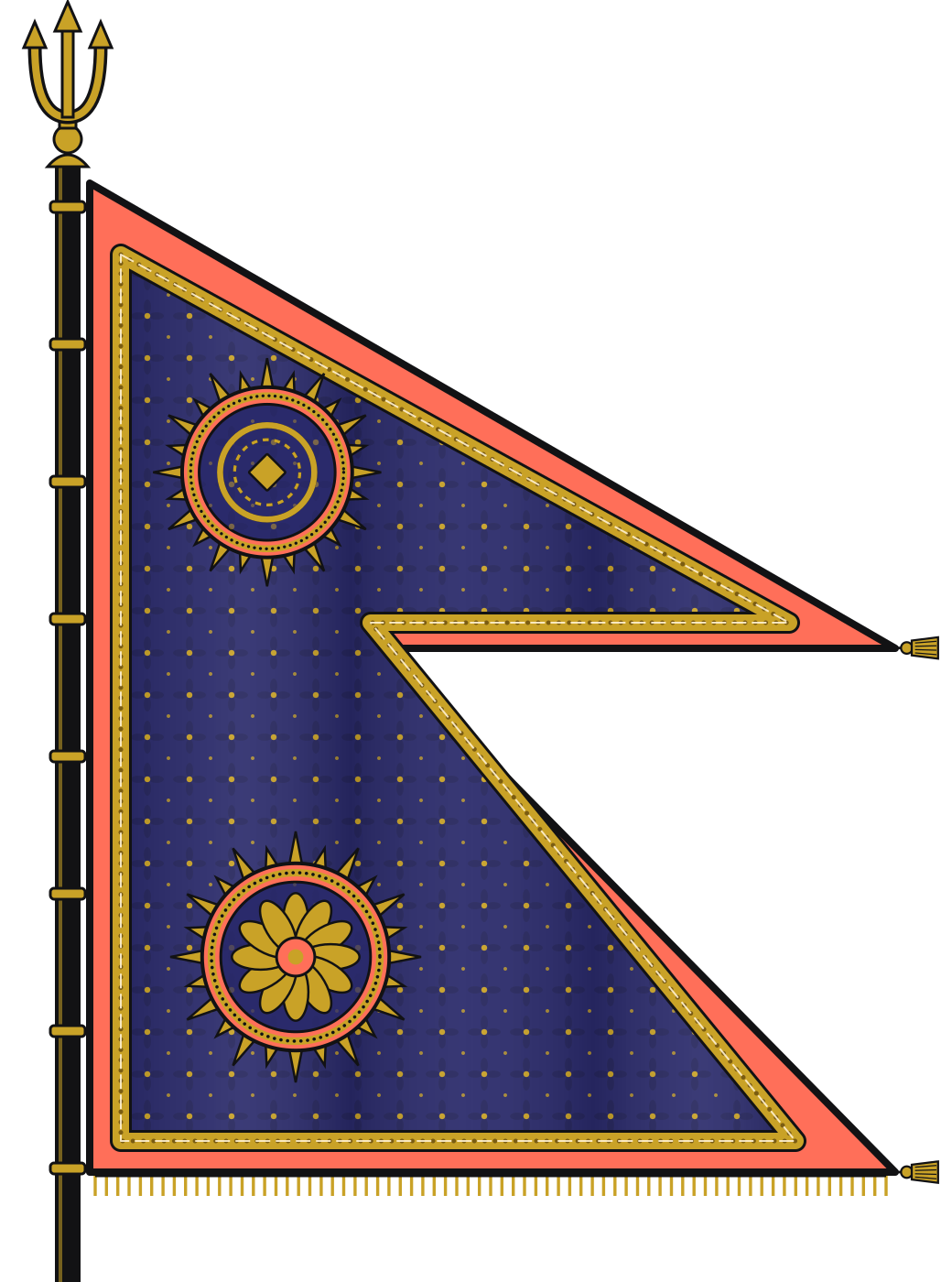
The Ramayana gives the vanaras their weapons and bodies, not a banner or emblem: Griffith's verse names the brandished tree and the loosened rock[3]. The main emblem is a placeholder until a documented symbol is found.
| Part of the kit | This clan |
|---|---|
| Field | Deep Indigo #2A2A6B |
| Accent | Warm Red-Orange #FF6F59 |
| Emblem colour | Metallic Gold #C9A227 |
| Zari metal | Gold |
| Main emblem | A leaping monkey warrior |
| Second image | A floating stone |
| Night and day | Every visual accessory has two versions: by night the emblem on the dark field, by day the clan's field colour on cloth woven from its metal. |
6. Flags
Every clan has every flag type; the type says the occasion and the colours say the clan. The outlined card is the flag the Atlas assigns.
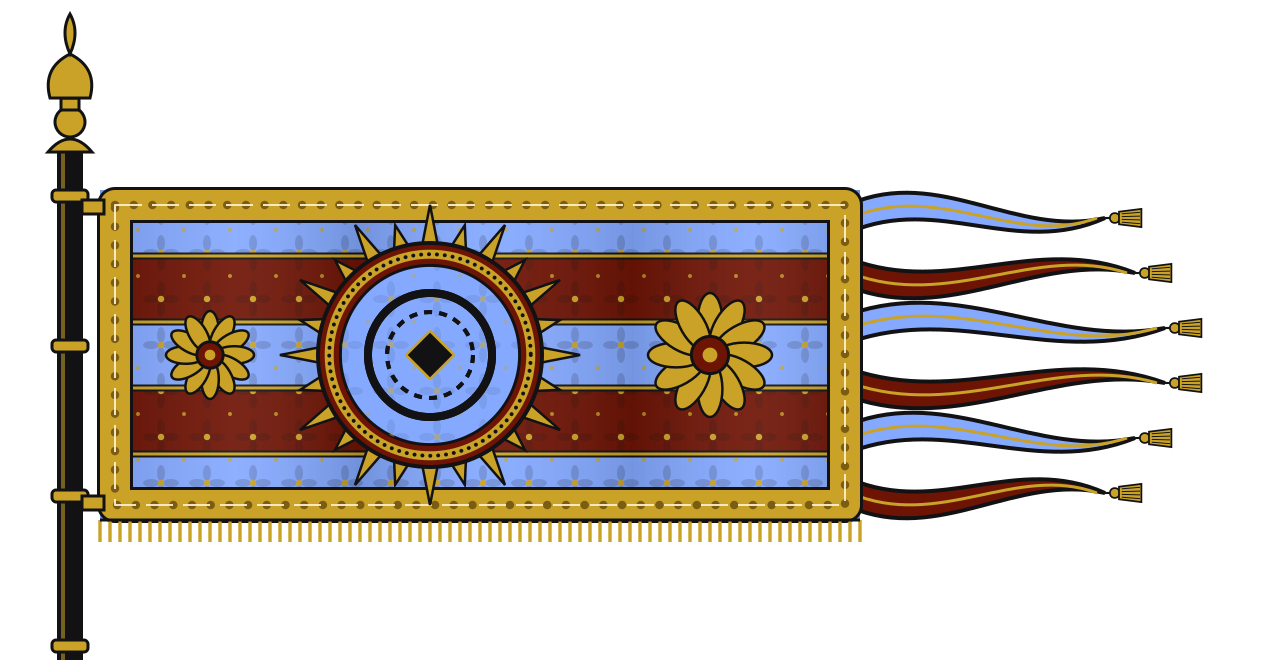




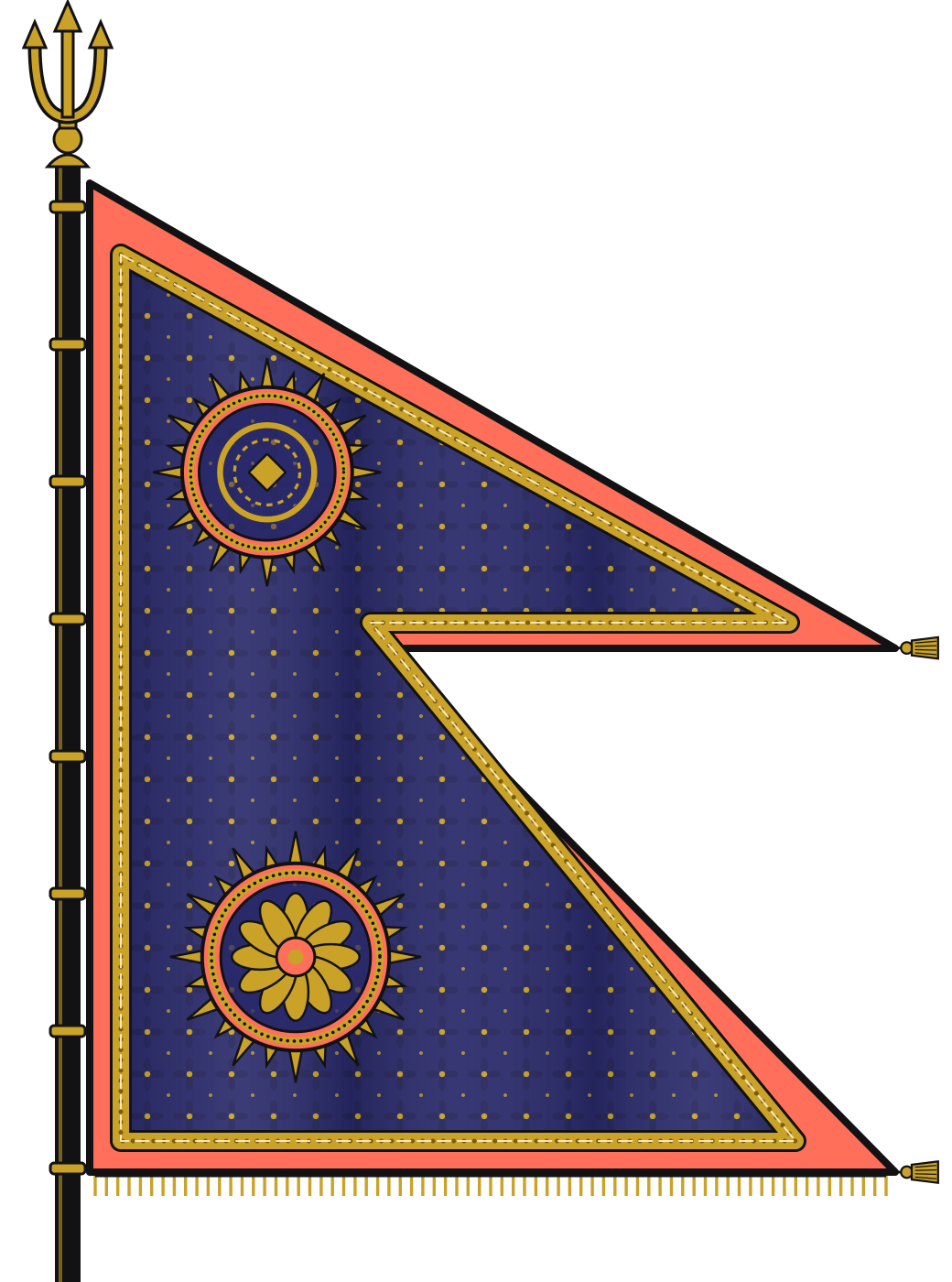

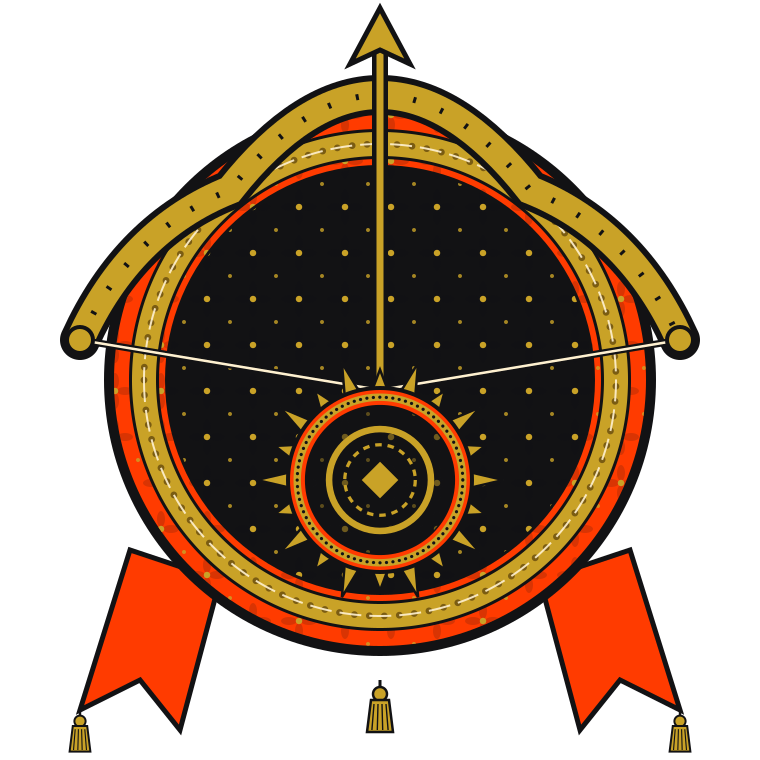
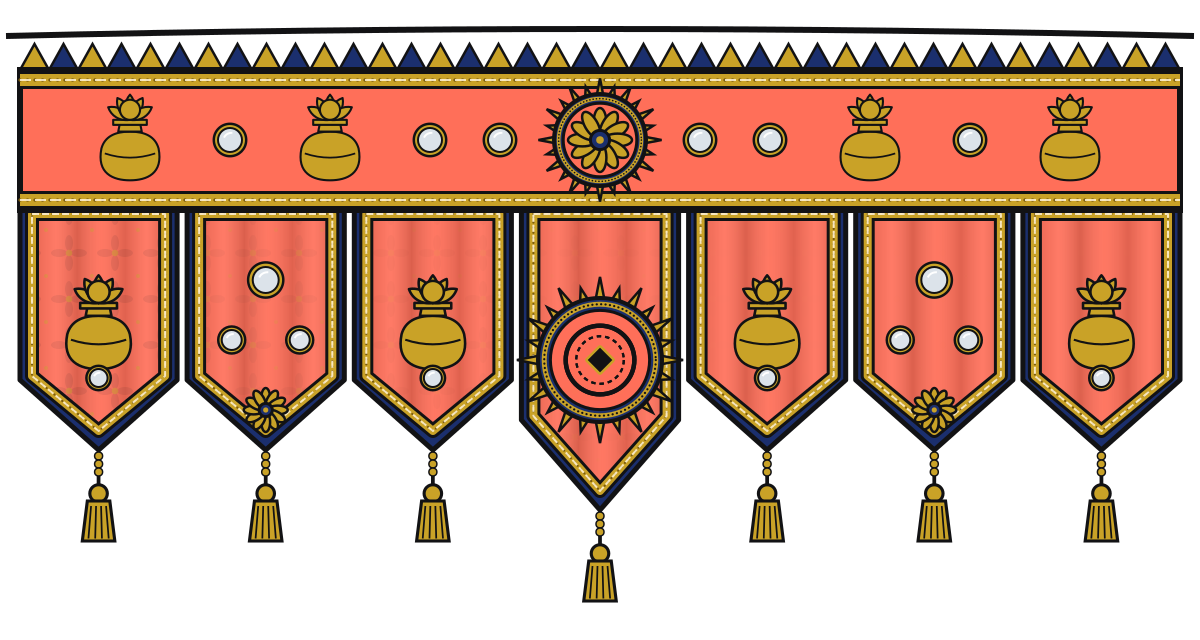
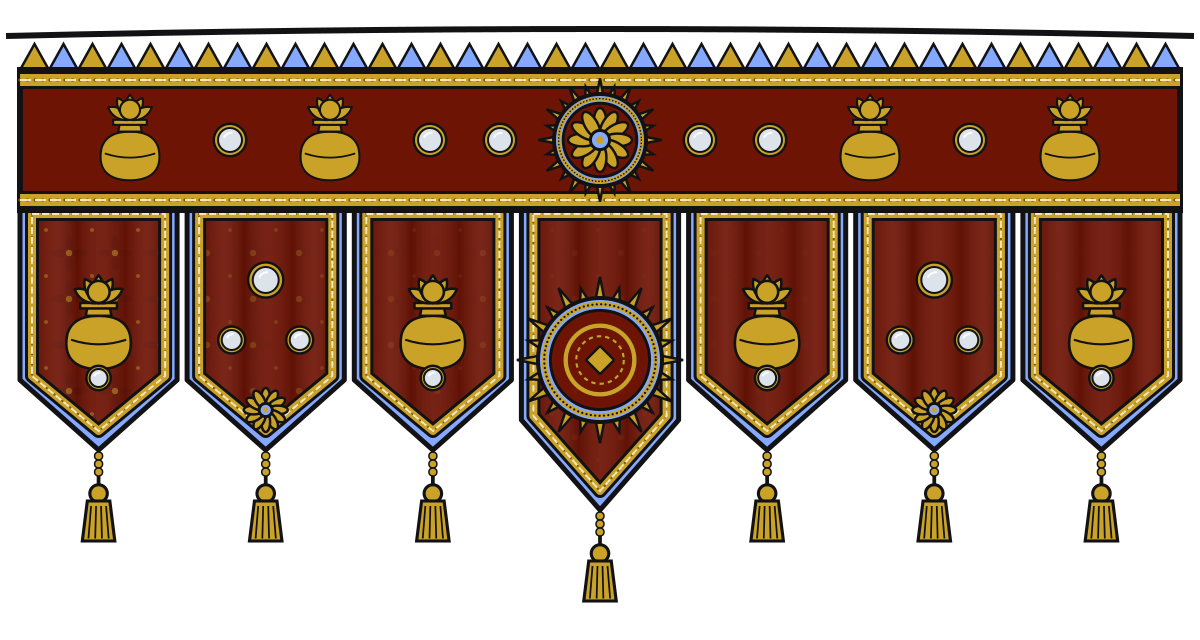

Historic banner
Arjuna's banner in the Mahabharata bore Hanuman (Kapidhvaja)
New flag types
| Accessory | For this clan | Basis |
|---|---|---|
| A9 Pota-dhvaja · ship and trade flag For ships, caravans and markets | Not yet designed for this clan | Design |
| A10 Utsava-patāka · festival flag Light, bright flag for fairs and festivals | Not yet designed for this clan | Design |
| A11 Shoka-dhvaja · mourning flag White cloth with the emblem outline in the clan's metal | Not yet designed for this clan | Design |
7. Regalia
| Accessory | For this clan | Basis |
|---|---|---|
| E1 Chhatra · house parasol The ceremonial umbrella | Not yet designed for this clan | Design |
| E2 Chamara · fly-whisks The pair of whisks beside the head of the house | Not yet designed for this clan | Design |
| E3 Danda · staff of office Staff or scepter | Not yet designed for this clan | Design |
| E4 Simhasana · seat The seat of the house, covered in clan cloth | Not yet designed for this clan | Design |
| E5 Khetaka · shield A round shield; the Changi and Dhanush are its flag forms | Not yet designed for this clan | Regional tradition |
| E6 Kula-ayudha · clan weapon The weapon the clan honours | Uprooted trees and loosened rocks, with tooth and nail: the vanaras' fighting weapons legend Griffith, Book I, Canto XVI: "The brandished tree, the loosened rock" and "tooth and nail"[3] | Documented |
8. Worn
| Accessory | For this clan | Basis |
|---|---|---|
| F1 Kula-vastra · clan cloth The clan's woven pattern in its kit colours | Not yet designed for this clan | Design |
| F2 Kirti-vastra · honour cloth A cloth earned for a deed, not inherited | Not yet designed for this clan | Design |
| F3 Kula-mala · garland flower The flower or leaf the clan wears as a garland | Not yet found for this clan | Under research |
| F4 Chinha · house pin A metal badge with the pin emblem | Not yet designed for this clan | Design |
9. Records
| Accessory | For this clan | Basis |
|---|---|---|
| H1 Clan words A traditional line in the native script | सुग्रीवो नाम धर्मात्मा कश्चिद्वानरयूथपः · “Sugriva by name, a righteous leader of the vanara troops” Valmiki Ramayana, Kishkindha Kanda sarga 3, verse 18[5] | Design |
| H2 Biruda · titles The house's title or titles | Not yet found for this clan | Under research |
| H3 Prashasti · praise genealogy The lineage as written at the head of a grant | Not yet found for this clan | Under research |
| H4 Vahi · clan register The book of the clan's births, marriages and deaths | Not yet found for this clan | Under research |
| H5 Rana-ghosha · war cry The clan's cry in battle or celebration | Not yet found for this clan | Under research |
10. VishwaVit · knower of the world
Game values are design choices for this project, not historical claims.
References
- Wikipedia, Kishkindha, read 2026-10-10, https://en.wikipedia.org/wiki/Kishkindha
- Pragyata, On the Ramayana trail: Kishkindha at Hampi, read 2026-10-10, https://pragyata.com/on-the-ramayana-trail-kishkindha-at-hampi/
- Griffith (tr.), The Rámáyan of Válmíki, English verse, Project Gutenberg #24869 (Book I read), read 2026-10-10, https://gutenberg.org/cache/epub/24869/pg24869-images.html
- Wikipedia, Sugriva, read 2026-10-10, https://en.wikipedia.org/wiki/Sugriva
- Valmiki Ramayana, Kishkindhakanda sarga 3, Devanagari text (J. Smith / M. Tokunaga), sanskritdocuments.org, read 2026-10-10, https://sanskritdocuments.org/mirrors/ramayana/utf/4_kishkindhakanda_3.html
- Valmiki, Ramayana — the Solar line, Ayodhya, the Kovidara banner and the Aditya Hridayam hymn (Yuddha Kanda).
- Edgar Thurston and K. Rangachari, Castes and Tribes of Southern India, vol. 2 (Madras, 1909), Project Gutenberg eBook #42992, https://www.gutenberg.org/ebooks/42992