The Pentia are a Scheduled Tribe of Odisha, counted at 10,003 in the 2011 Census and placed in Koraput district[1][2]. They also call themselves Holuva, Halaba or Halba, and the 1901 Madras census recorded them as Pantia and Pentiya, Oriya betel-leaf sellers[3]. Thurston's 1909 account says that a group who came from Bastar settled at Pentikonna, and that the name Pentiya comes from that place[3]. Their village deity is Bhima Thakrani, whose shrine the KISS handbook records[1]. Their society had two endogamous sections, Bodo and Sanno, under a caste council headed by Bhatha Nayako[3].
01Faith and deities
The village deity whose shrine the KISS handbook gives for the Pentia[1]. The KulDevi in the Atlas is Majhighariani (homeland shrine, Rayagada), listed below from the sheet.
Majhighariani of Rayagada, goddess of the Koraput hills
The presiding goddess of the clan's homeland or capital: a link of place, not a recorded clan tie.
| Deity or tradition | Place in the clan's life | Evidence |
|---|---|---|
| Bhima Thakrani | Village deity; shrine for the Pentia | [1] |
| Kamilli | Female deity worshipped on Saturdays; a Pentia would take nothing from a house where she is worshipped, for fear she would require him to become her devotee (1909) | [3] |
| Jagannatha of Puri | Offerings sent from the Puri temple for the readmission rite (1909) | [3] |
| Majhighariani (KulDevi) | Goddess of the homeland shrine in Rayagada; the KulDevi in the Atlas | From the Atlas |
02Temples
No temple of the Pentia is recorded in the sources read.
Built by the clan
Not recorded.
Given patronage or grants by the clan
Not recorded.
03Languages and scripts
| Language or script | Kind | Under the clan | Evidence |
|---|---|---|---|
| Halba research | Language named in 1909 | Pentia; easily understood by Oriya speakers | [3] |
| Odia | Listed with Holva as the language of the Pentia | Pentia (OSTM listing) | [4] |
| Desia (Odia variety) | Lingua franca of the area's ethnic groups | Not stated for the Pentia | [5] |
04Books and literature
No book of or about the Pentia is recorded in the sources read. The 1909 record in Castes and Tribes of Southern India is the main source for this codex[3].
Written during the clan's history
Not recorded.
Given patronage by the clan
Not recorded.
05Thinkers and scholars
Not recorded.
No thinker or scholar of the Pentia is recorded in the sources read.
06Art and architecture
No art, architecture, textile or craft of the Pentia is recorded in the sources read.
Painting and wall art
Not recorded.
Sculpture and temple art
Not recorded.
Temple and building architecture
Not recorded.
Weaving and textiles
Not recorded.
Clothing and jewellery
Not recorded.
Coins, pottery and crafts
Not recorded.
07History
Names and settlement (1901 to 1909 records)
The 1901 Madras census recorded the Pentia as Pantia as well as Pentiya, Oriya betel-leaf (panno) sellers[3].
Thurston's 1909 record, from C. Hayavadana Rao, says that numbers of the people migrated from Bastar (Bustar) and settled at Pentikonna, and were so called Pentikonaya or Pentiya[3]. In the Jeypore Agency tracts, the 1909 record says, they were cultivators[3].
Other names given for them are Holuva, Halaba and Halba[3][4].
Jeypore
The Atlas lists the Jeypore kingdom as the historical polity of the Pentia. Jeypore was founded by Maharajah Veer Vikram Dev, established in 1648, and was defeated by the East India Company in 1777[6]. The sources read do not say which kingdom the Pentia served directly.
08Journey and migrations
One move is recorded in the sources read.
| When | From | To | Why | Evidence |
|---|---|---|---|---|
| Before 1909 | Bastar (Bustar) | Pentikonna | Settlement; the place gave the name Pentiya, per C. Hayavadana Rao | [3] |
09Seats and lands
| Place | Role | Where today |
|---|---|---|
| Pentikonna | Settlement of the people from Bastar, 1909 record | Location not given in the sources read |
| Bastar (Bustar) | Place the people came from, 1909 record | Not checked |
| Jeypore | Historical kingdom in the Atlas | Koraput district, Odisha[6] |
| Koraput | Homeland in the Atlas; OSTM gives the region as Koraput | Odisha[1][4] |
10Notable figures
| Name | Role | Era | Known from |
|---|---|---|---|
| Bhatha Nayako | Head of a local centre of the caste; burns the tongue in the readmission rite | 1909 record | [3] |
11Allies, rivals and marriages
| People | Relationship | When |
|---|---|---|
| Brahmans | Receive rice and other gifts once a year | New-moon day of Bhadrapadam (1909 record) |
| Holva (ST-104) | Separate entry in the Odisha ST list; its name is close to the Pentia self-name Holuva or Haluva. Any link is not checked | Today[4][2] |
12Society and livelihood
Thurston (1909) describes a highly organised caste with two endogamous sections. Marriage: a man may claim his paternal aunt's daughter; the groom's party lodges in a separate house; a pandal of nine sal poles (groom) and five (bride) is built; a Desari officiates; the couple make seven rounds; widow remarriage and levirate are allowed; the dead are burnt, with ten days of pollution and a caste feast on the tenth day[3].
Government and social order
| Institution or group | What it was | Evidence |
|---|---|---|
| Bodo section | The big or genuine section; its septs are Kurum, Bhag, Nag and Surya (1909) | [3] |
| Sanno section | The little section (1909) | [3] |
| Caste council | Head of a local centre, Bhatha Nayako, assisted by Pradhani, Umriya Nayako and Dolayi (1909) | [3] |
| Caste messenger | Cholano carries a silver baton to summon castemen (1909) | [3] |
| Readmission rite | After a council trial, at a stream: the tongue is burned with gold or silver wire or ornament, offerings come from the Jagannatha temple at Puri, a feast is held with the Nayako eating first, cloths are given to the elders, and cooked rice is pushed into the stream (1909) | [3] |
Livelihood over time
| Era | Livelihood | Evidence |
|---|---|---|
| 1909, Jeypore Agency tracts | Cultivators | [3] |
| Today (undated) | Mostly landless; agricultural and industrial labour; vegetables in home gardens; roots and tubers from the forest | [4] |
13Sub-clans and related clans
Thurston (1909) gives two endogamous sections, Bodo (big or genuine) and Sanno (little). The Bodo are divided into septs. The Holva is a separate Scheduled Tribe in the Odisha list.
| Clan | Relation | Where | Size | In the Atlas | Evidence |
|---|---|---|---|---|---|
| Bodo | Sub-clan | The big or genuine section, 1909 record | new clan candidate | [3] | |
| Sanno | Sub-clan | The little section, said by the record to be illegitimate descendants of the Bodo | new clan candidate | [3] | |
| Kurum | Sub-clan | Bodo sept; tortoise | new clan candidate | [3] | |
| Bhag | Sub-clan | Bodo sept; tiger | new clan candidate | [3] | |
| Nag (Pentia sept) | Sub-clan | Bodo sept; cobra. Not the Nag of ST-476 (ID) | new clan candidate | [3] | |
| Surya | Sub-clan | Bodo sept; sun | new clan candidate | [3] | |
| Holva | Related people | Odisha, Koraput; ST-104 is the ID in the Atlas; a separate ST entry, its name close to the Pentia self-name Holuva; link not checked | 28,149, 2011 Census[2] | ST-104 | [4] |
Clans marked "new clan candidate" are not in the Atlas yet.
14Surnames
The 1909 record gives one caste title, Nayako. No family surname is recorded there.
| Surname | Clan or sub-clan | Where | People with this surname | Also used by other communities |
|---|---|---|---|---|
| Nayako | Pentia | not yet counted | Not checked |
Counts are of everyone with the surname, from the cited source and year, not only members of this clan. A surname shared with other communities says nothing about any one person's origin.
15Songs and music
No song of the Pentia is recorded in the sources read.
None recorded yet.
16Poems, lullabies and children's rhymes
None recorded yet.
17Stories, legends and proverbs
Stories and legends
Not recorded.
Proverbs and sayings
Not recorded.
18Festivals and fairs
| Festival or fair | When | Where | What happens |
|---|---|---|---|
| New-moon day of Bhadrapadam | Once a year, September to October | Not stated | Rice and other things are given to Brahmans (1909 record)[3] |
19Food, dress and games
Food
Not recorded.
Dress
Not recorded.
Games and martial arts
Not recorded.
Tags: living still practised · revived brought back after a break · lost known only from records · research reported but not yet confirmed from a source. Songs and poems under copyright are listed by title only; restricted or sacred material is noted without its content.
20Status today
The Pentia are listed as a Scheduled Tribe of Odisha, with 10,003 people in the 2011 Census[2][1].
Recognised heritage
| What | Recognition | Evidence |
|---|---|---|
| Profile on the Odisha State Tribal Museum's 'Tribes of Odisha' page | Credited to SCSTRTI | [4] |
Not yet reviewed by the Pentia community.
21For children
The shrine on the hill
The Pentia are a people of Koraput district in Odisha. About ten thousand of them were counted in the 2011 Census. A group of them came from Bastar and settled at a place called Pentikonna. From that place they took the name Pentiya. The Pentia keep a shrine for Bhima Thakrani, their village deity. Their people are divided into two sections, the Bodo and the Sanno. The Bodo have groups called septs, named for animals and the sun.
Written for this project
Riddle: Which village deity has a shrine kept by the Pentia? (Bhima Thakrani)
22Across the project
| Project | What carries this clan | Status |
|---|---|---|
| Atlas of the Janas | Homeland Koraput; the 1909 settlement at Pentikonna | Pin not yet placed |
| KulDevi and GrahDevi | KulDevi Majhighariani, homeland shrine of Rayagada; GrahDevi forms: Brahmani, Maheshvari, Kaumari, Vaishnavi, Varahi, Indrani, Chamunda, Narasimhi | From the Atlas |
| Planet naming | Not checked against the planet registers yet | To check |
| Renaming and waters | No place or water name drawn from the Pentia yet | — |
23Open questions
- Naming date: the 1901 Madras census already recorded Pentiya[3], while the 1909 record gives the Pentikonna origin as C. Hayavadana Rao's account. The date of the name is not sourced; the dek was reworded to 'per the 1909 record' to match.
- Native-script name and script of the people: none in the sources read.
- Is Halba (ST-097 in the Atlas, listed for Maharashtra) the same name as the Halba of the 1909 record? Not checked.
- Which deity is chief today: Bhima Thakrani (KISS) or the sheet's KulDevi Majhighariani? Kamilli is from the 1909 record.
- Are the Bodo and Sanno sections, and the septs Kurum, Bhag, Nag and Surya, still named today? No present-day source read.
- Surname bearers: no count sourced.
- Wikisource Vizagapatam gazetteer, Page:Vizagapatam.djvu/291 (unfetched): may mention Pentia or Halba.
- Clan words, seal, coin, war cry, clan weapon, garland flower and guardian tree: none found in the sources read.
- Current speech of Halba against Odia: no survey read.
- Whether the Holva (ST-104) is related to the Pentia: not checked.
- Pentikonna's location: the 1909 record gives cultivation in the Jeypore Agency tracts[3] but does not place Pentikonna itself. Not checked.
24Astitva
अस्तित्व · being, existence: everything by which the clan is known
Only the 1909 totemic septs, the caste title and the messenger's baton are recorded for the Pentia[3].
Every clan has every accessory, royal objects included. Each one says how it is known: Documented This clan's own object is recorded. · Regional tradition Recorded for the region or for peoples like this one, not for this clan. · Design Made for this project, with no historical claim. · Under research To be found for this clan from sources. Legends and titles are written in the clan's own script.
1. Seals and coins
| Accessory | For this clan | Basis |
|---|---|---|
| B1 Rajamudra · house seal Round seal with the clan emblem and a short legend in the clan's script | Not yet designed for this clan | Design |
| B2 Anguliya-mudra · signet ring Personal seal ring of the head of the house | Not yet designed for this clan | Design |
| B3 Chhapa · house stamp Ink or block stamp for letters, goods and cloth | Not yet designed for this clan | Design |
| B4 Tamrapatra · charter plate Copper-plate grant on a ring, closed with the house seal | Not yet designed for this clan | Design |
| B5 Shreni-mudra · guild or trade seal Seal for the clan's trade, craft or caravan | Not yet designed for this clan | Design |
| C1 Clan coin Emblem or deity on one side, a legend in the clan's script | Not yet designed for this clan | Design |
| C2 Coin die The die that strikes the coin | Not yet designed for this clan | Design |
2. Living symbols
| Accessory | For this clan | Basis |
|---|---|---|
| I1 Totem trio The tree, bird and animal the clan protects | Septs: Kurum (tortoise), Bhag (tiger), Nag (cobra), Surya (sun) Totemic septs of the Bodo section, 1909[3] | Documented |
| I2 Kaval-maram · guardian tree The tree that stands at the clan's seat | Not yet found for this clan | Under research |
3. Stone and gate
| Accessory | For this clan | Basis |
|---|---|---|
| G1 Torana · gateway The built gate of the seat; the cloth Toran hangs in it | Not yet designed for this clan | Regional tradition |
| G2 Viragallu · hero stone Carved panel stone for a member who died defending the clan | Not yet designed for this clan | Regional tradition |
| G3 Kula-shila · clan stones Standing and table stones that remember the ancestors | Not yet designed for this clan | Design |
| G4 Jayastambha · victory pillar A pillar raised for a victory | Not yet designed for this clan | Design |
| G5 Sima-shila · boundary stone Marks the clan's land, with a line in the native script | Not yet designed for this clan | Design |
4. Sounds
| Accessory | For this clan | Basis |
|---|---|---|
| D1 Pancha-mahashabda · five great sounds The right to five instruments | Not yet designed for this clan | Design |
| D2 Shankha · clan conch The clan's own named war conch | Not yet designed for this clan | Design |
| D3 Murasu · house drums Three drums: war, charity and justice | Not yet designed for this clan | Design |
5. Kit: colours, metals and emblems
The recorded symbols of the Pentia are the 1909 sept totems and the caste messenger's silver baton[3]. The OSTM tribes page gives no totems for the Pentia[4].
| Part of the kit | This clan |
|---|---|
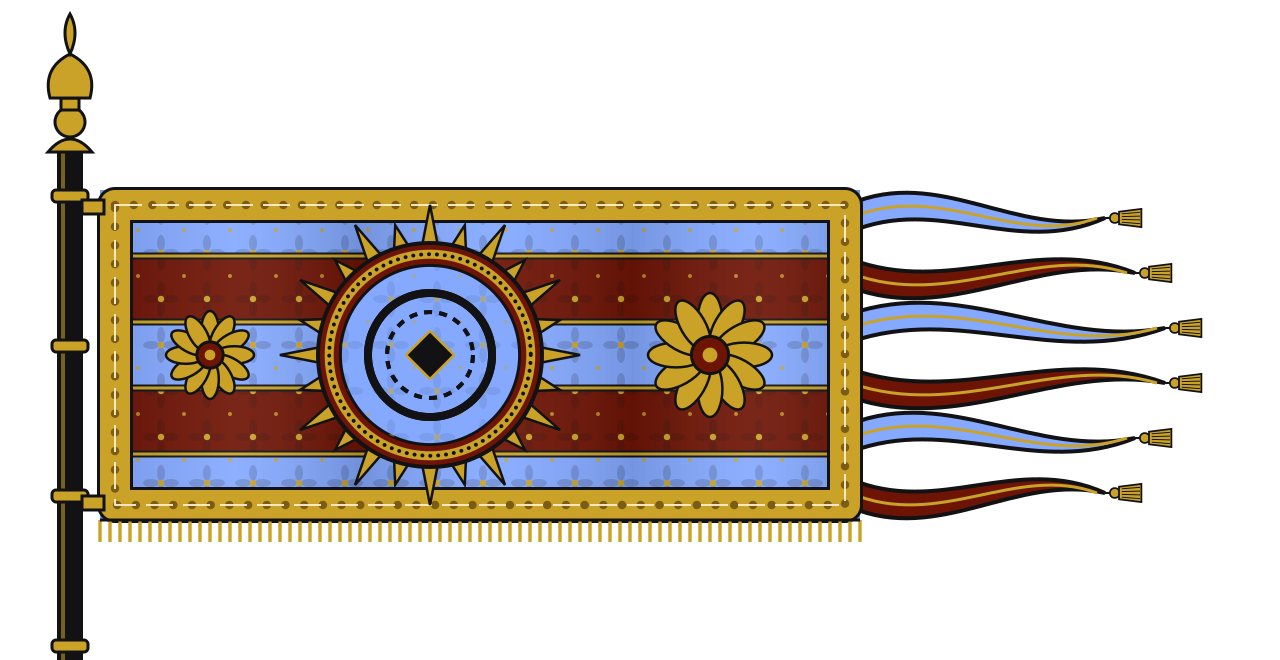
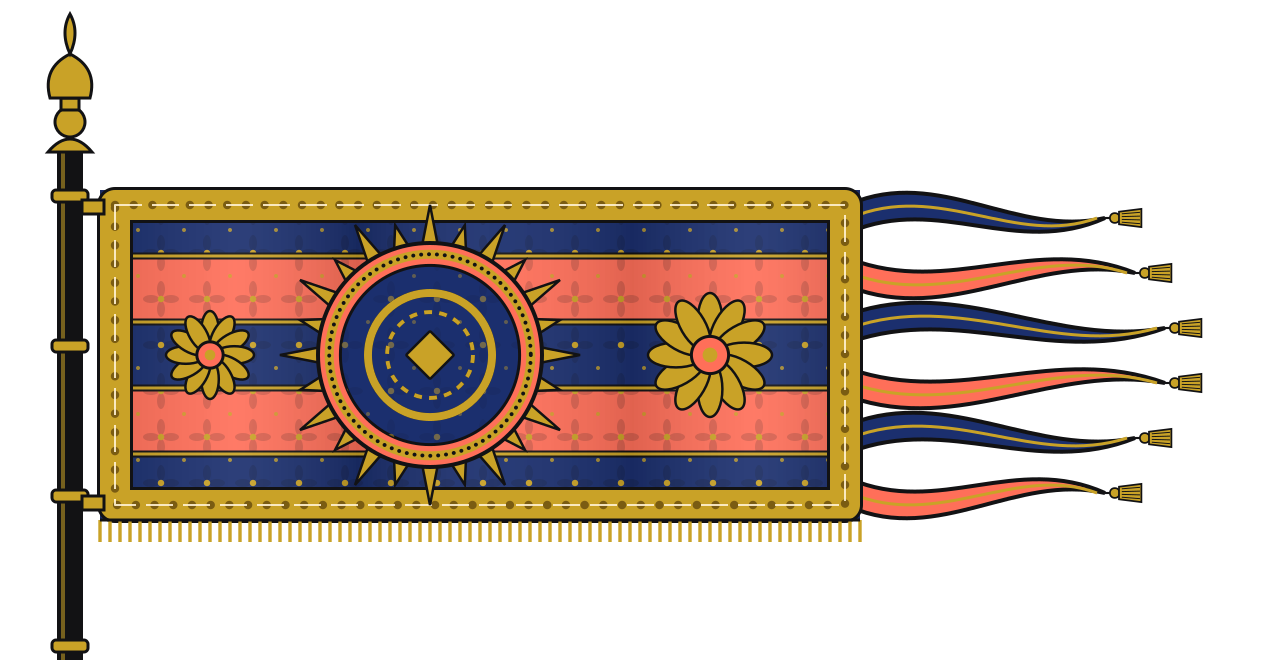
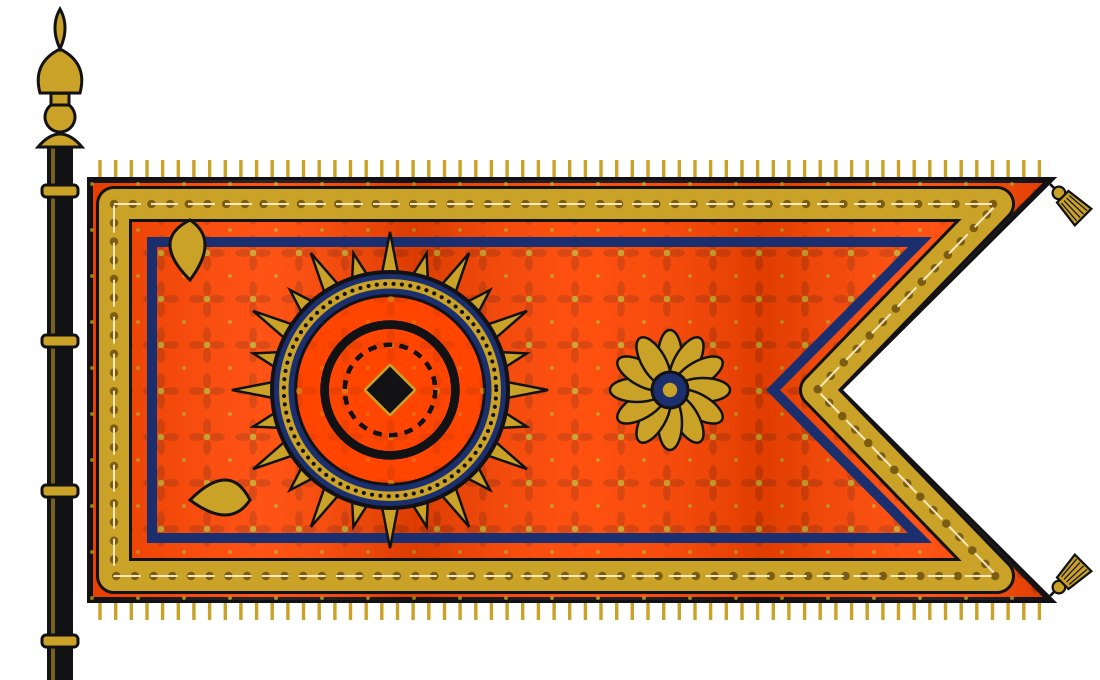
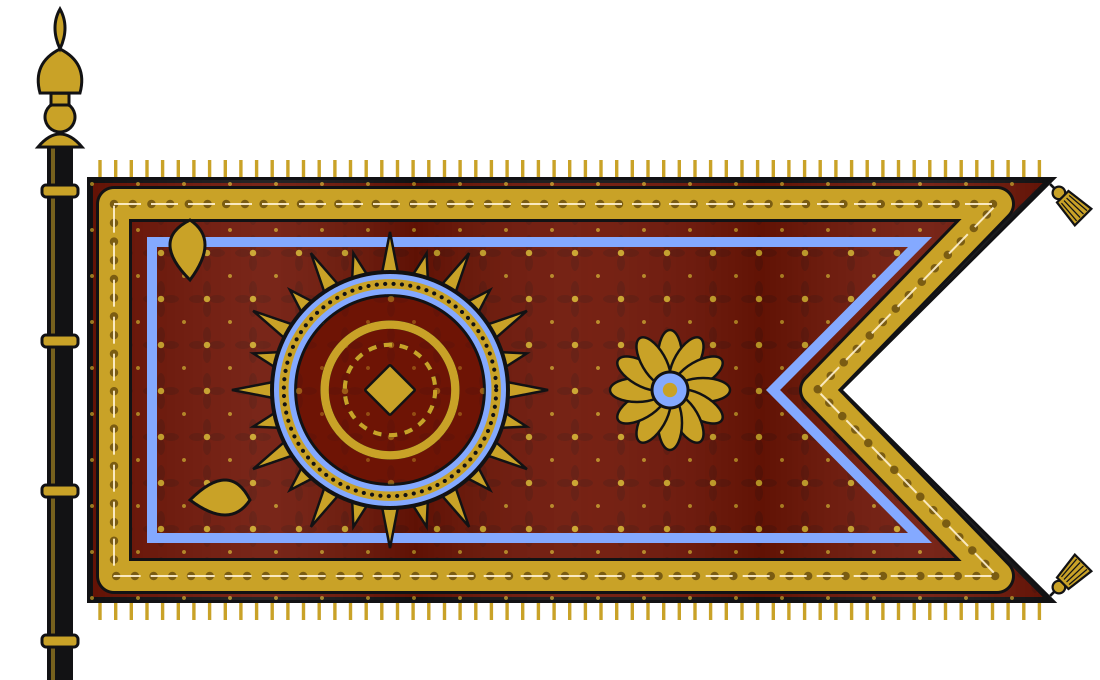
| Field | Warm Red-Orange #FF6F59 |
| Accent | Intense Electric Blue #84A9FF |
| Emblem colour | Charcoal Black #121214 |
| Zari metal | Gold |
| Main emblem | A plateau with a tree |
| Second image | — |
| Night and day | Every visual accessory has two versions: by night the emblem on the dark field, by day the clan's field colour on cloth woven from its metal. |
6. Flags
Every clan has every flag type; the type says the occasion and the colours say the clan. The outlined card is the flag the Atlas assigns.

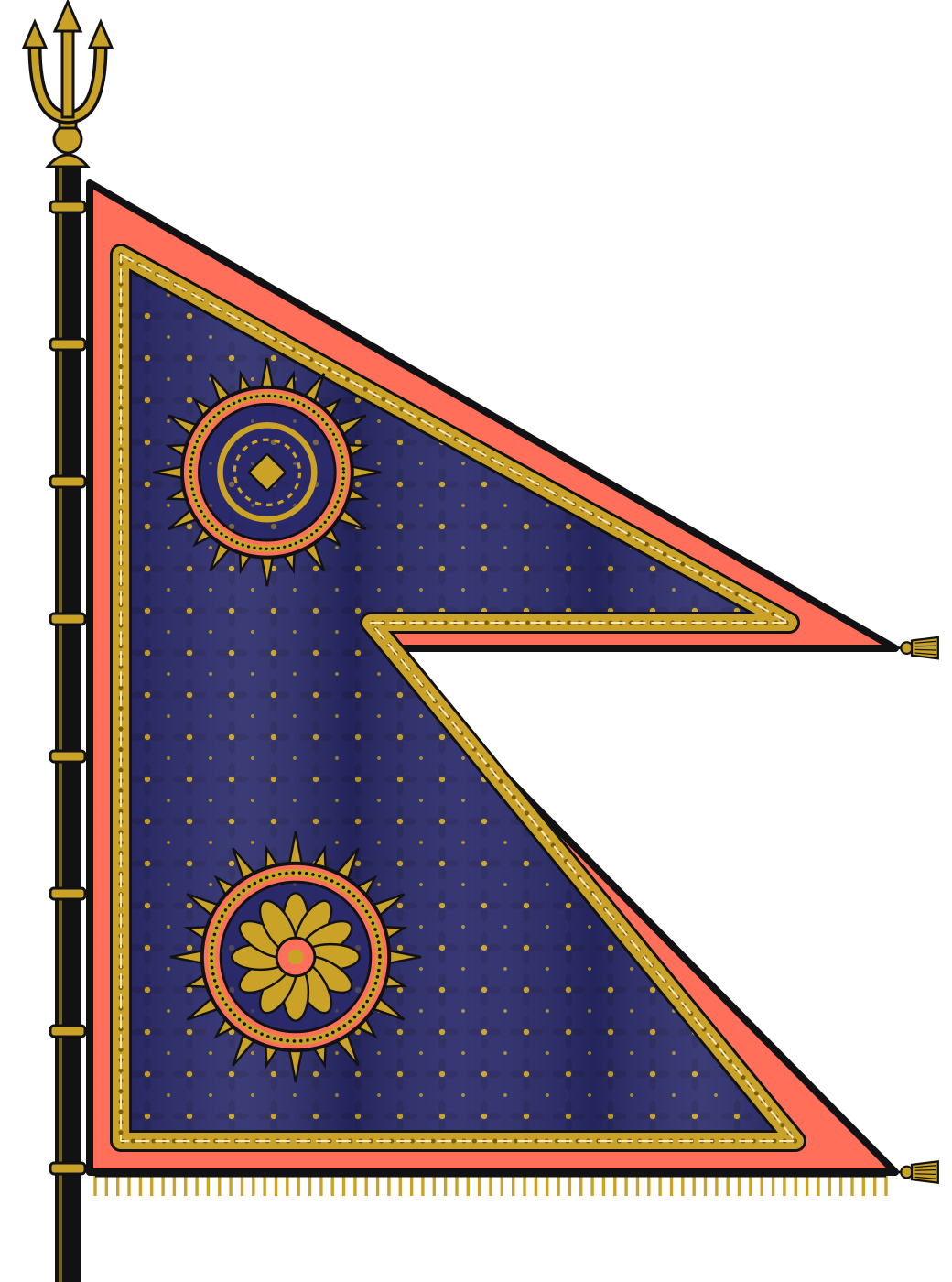

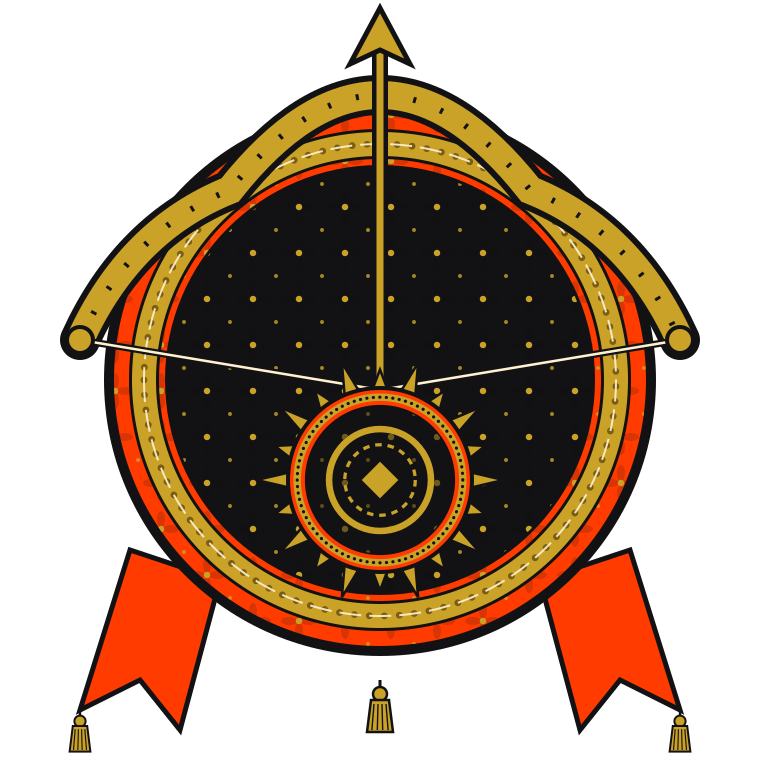
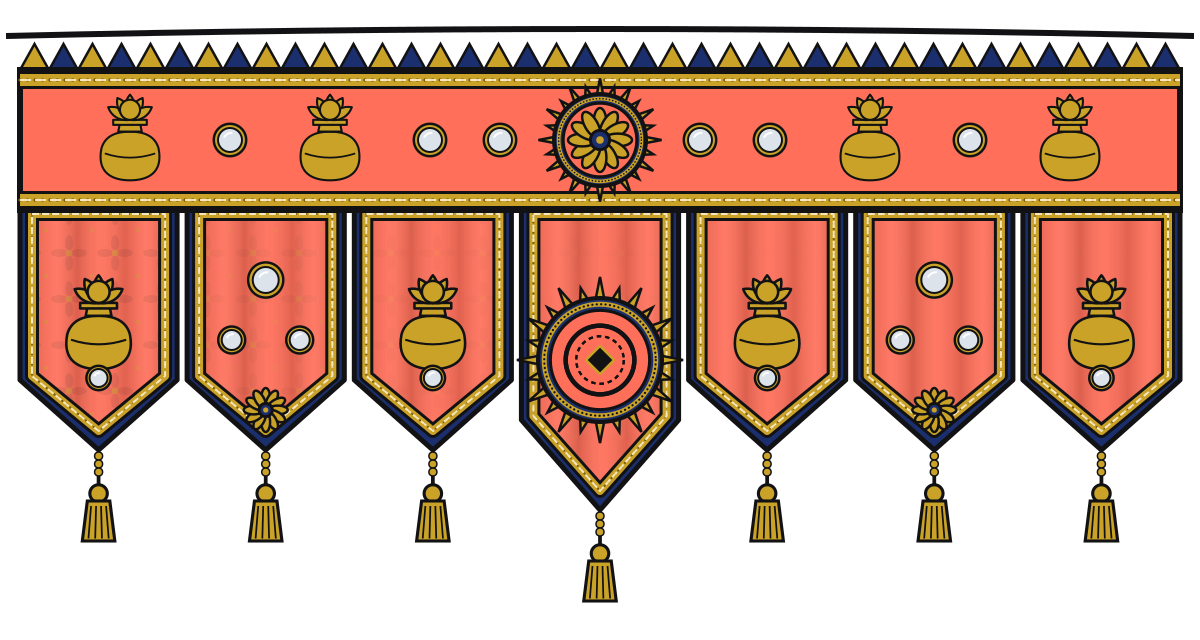
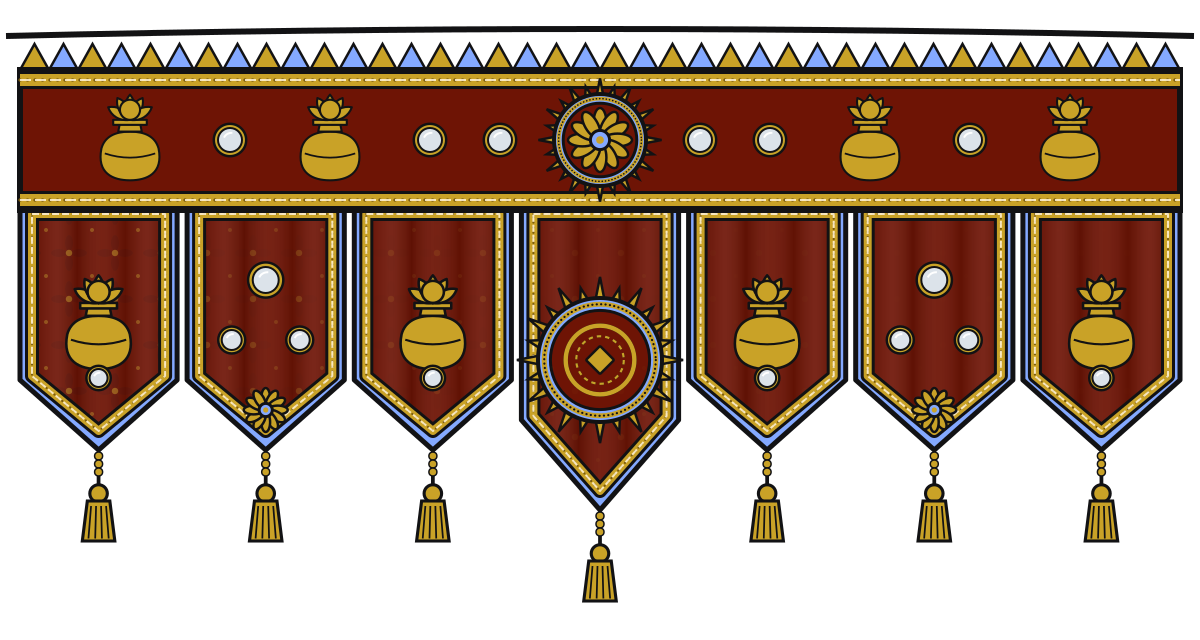
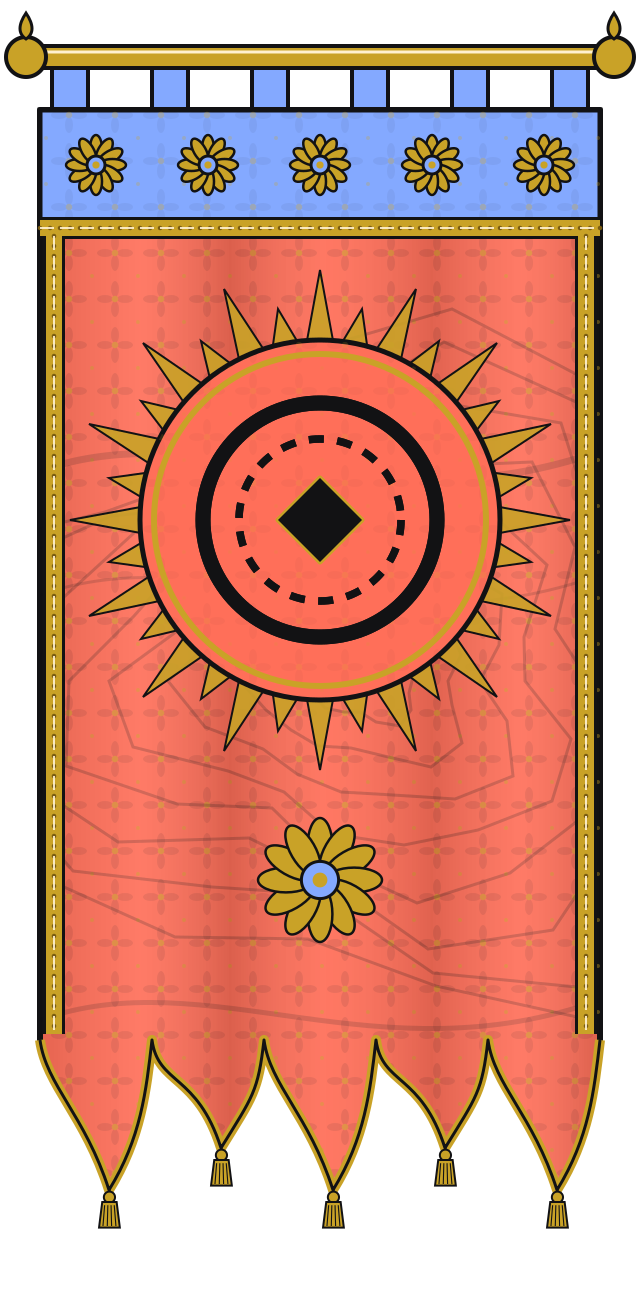
Historic banner
None known
New flag types
| Accessory | For this clan | Basis |
|---|---|---|
| A9 Pota-dhvaja · ship and trade flag For ships, caravans and markets | Not yet designed for this clan | Design |
| A10 Utsava-patāka · festival flag Light, bright flag for fairs and festivals | Not yet designed for this clan | Design |
| A11 Shoka-dhvaja · mourning flag White cloth with the emblem outline in the clan's metal | Not yet designed for this clan | Design |
7. Regalia
| Accessory | For this clan | Basis |
|---|---|---|
| E1 Chhatra · house parasol The ceremonial umbrella | Not yet designed for this clan | Design |
| E2 Chamara · fly-whisks The pair of whisks beside the head of the house | Not yet designed for this clan | Design |
| E3 Danda · staff of office Staff or scepter | Silver baton of the caste messenger Cholano, used to summon castemen Carried to summon castemen to the council, 1909[3] | Documented |
| E4 Simhasana · seat The seat of the house, covered in clan cloth | Not yet designed for this clan | Design |
| E5 Khetaka · shield A round shield; the Changi and Dhanush are its flag forms | Not yet designed for this clan | Regional tradition |
| E6 Kula-ayudha · clan weapon The weapon the clan honours | Not yet found for this clan | Under research |
8. Worn
| Accessory | For this clan | Basis |
|---|---|---|
| F1 Kula-vastra · clan cloth The clan's woven pattern in its kit colours | Not yet designed for this clan | Design |
| F2 Kirti-vastra · honour cloth A cloth earned for a deed, not inherited | Not yet designed for this clan | Design |
| F3 Kula-mala · garland flower The flower or leaf the clan wears as a garland | Not yet found for this clan | Under research |
| F4 Chinha · house pin A metal badge with the pin emblem | Not yet designed for this clan | Design |
9. Records
| Accessory | For this clan | Basis |
|---|---|---|
| H1 Clan words A traditional line in the native script | · “” No line of the Pentia's own was found in the sources read. | Documented |
| H2 Biruda · titles The house's title or titles | Nayako, the caste title; officers Bhatha Nayako, Pradhani, Umriya Nayako, Dolayi Caste title and officers, 1909[3] | Documented |
| H3 Prashasti · praise genealogy The lineage as written at the head of a grant | Not yet found for this clan | Under research |
| H4 Vahi · clan register The book of the clan's births, marriages and deaths | Not yet found for this clan | Under research |
| H5 Rana-ghosha · war cry The clan's cry in battle or celebration | Not yet found for this clan | Under research |
10. VishwaVit · knower of the world
Game values are design choices for this project, not historical claims.
References
- Sushree Mohanty, Indigenous Colours of Odisha: Handbook on 62 Tribes (KISS), read 2026-10-20, https://kissnew.kiss.ac.in/wp-content/uploads/2026/05/Indigenous-Colours-of-Odisha-Handbook-on-62-Tribes-Sushree-Mohanty.pdf
- Wikipedia, List of Scheduled Tribes in Odisha, read 2026-10-20, https://en.wikipedia.org/wiki/List_of_Scheduled_Tribes_in_Odisha
- Edgar Thurston and K. Rangachari, Castes and Tribes of Southern India, vol. 6 (Madras, 1909), Project Gutenberg eBook #42996, https://www.gutenberg.org/ebooks/42996
- Odisha State Tribal Museum (SCSTRTI), Tribes of Odisha: Pentia, read 2026-10-28, https://ostm.in/?p=5481
- Wikipedia, Desia language, read 2026-10-28, https://en.wikipedia.org/wiki/Desia_language
- Wikipedia, Jeypore, read 2026-10-25, https://en.wikipedia.org/wiki/Jeypore