Mulaka was a small kingdom west of Asmaka, which annexed it during the Mahajanapada period[1]. Its area included Paithan, the ancient Pratishthana on the Godavari[1][2]. Pali sources place the Alaka or Mulaka, the district around Paithan, near Bavari's hermitage in Assaka territory[3]. Pratishthana later served as a Satavahana capital[2]. No Mulaka ruler, inscription or text of their own is recorded in the sources read.
01Faith and deities
KulDevi from the Atlas (basis: homeland shrine; family Navadurga). No source read ties her to the Mulakas; she is listed under Maharashtra without community ties[4].
Tulja Bhavani, goddess of the western Deccan[4]
The presiding goddess of the clan's homeland or capital: a link of place, not a recorded clan tie.
| Deity or tradition | Place in the clan's life | Evidence |
|---|---|---|
| Shiva and Parvati | Invoked in the Ila story of Pratishthana; not tied to the Mulakas | [2] |
| Munisuvratnath (20th Tirthankar) | Black sand idol at a Jain kshetra at Paithan; not tied to the Mulakas | [2] |
02Temples
Under research. No temple built or patronised by the Mulakas is sourced. Paithan's temples are the town's: the Munisuvratnath Digambar Jain kshetra, the Eknath and Jagnade shrines, the Geeta Mandir, twelve Jyotirlinga temples, Tirth Khamb and a Maulana Sahab dargah[2].
Built by the clan
Not recorded.
Given patronage or grants by the clan
Not recorded.
03Languages and scripts
| Language or script | Kind | Under the clan | Evidence |
|---|---|---|---|
| Pali | Forms Alaka and Mulaka appear in Pali texts | Name forms only; no Mulaka text | [3] |
| Sanskrit | Language of the town's ancient names | Not sourced for the Mulakas | [2] |
| Marathi living | Language of the saints' works at Paithan | Not sourced for the Mulakas | [2] |
04Books and literature
No Mulaka text is recorded. The works below mention the Mulaka region or the town.
Written in the clan's lands during its era
| Work | Author | Kind | When | Link to the clan |
|---|---|---|---|---|
| Sutta Nipata | No author given in the extract | Pali text, with commentary | Not dated in the extract | Verses 976-7 on Bavari's hermitage[1] |
| Periplus of the Erythraean Sea | Author not named in the extract | Not given in the extract | 1st century | Mentions Paithan[2] |
Given patronage by the clan
Not recorded.
05Thinkers and scholars
Not recorded.
No Mulaka thinker is sourced. The saints and scholars named on the Paithan page are the town's, not linked to the Mulakas[2].
06Art and architecture
No art of the Mulakas is sourced. Paithani silk saris with gold or silver borders are the town's craft, prized in western markets[2]; no link to the clan is given.
Painting and wall art
Not recorded.
Sculpture and temple art
Not recorded.
Temple and building architecture
Not recorded.
Weaving and textiles
Not recorded.
Clothing and jewellery
Not recorded.
Coins, pottery and crafts
Not recorded.
07History
Mahajanapada period
Mulaka was a small kingdom west of Asmaka, which annexed it; Asmaka then became Avanti's southern neighbour[1]. The Mulaka area included Paithan, the ancient Pratishthana[1][2].
Bavari's hermitage
The Sutta Nipata (vv. 976-7) has the Brahman guru Bavari leave Kosala and settle near a Godavari village in Assaka territory[1]. Pali sources place the Alaka or Mulaka, the district around Paithan, near that hermitage[3].
Pratishthana, a Satavahana capital
Paithan was a Satavahana capital from the 2nd century BCE to the 2nd century CE; the first ruler was Simuka[2]. The sources read do not say what became of the Mulaka kingdom in this period.
Legend of the town {LEG}
Paithan's legend has Sudyumna become Ila, cursed by Shiva near Manulaya; Vasistha advised Ila to establish the Somavamsa at Pratishthana[2]. This is the town's legend, not a record of the Mulakas.
08Journey and migrations
Two movements are recorded in the region. None is recorded for the Mulakas themselves.
| When | From | To | Why | Evidence |
|---|---|---|---|---|
| Undated (Sutta Nipata) | Kosala | A Godavari village in Assaka territory, near the Alaka or Mulaka | The Brahman guru Bavari left Kosala and settled there | [1][3] |
| Undated (Sutta Nipata) | Shravasti, by way of Saketa (Ayodhya) | Pratishthana | The Dakshinapatha road; Saketa was the first halt | [1] |
09Seats and lands
| Place | Role | Where today |
|---|---|---|
| Mulaka | Small kingdom west of Asmaka, annexed by it | Area around Paithan[3] |
| Pratishthana (प्रतिष्ठान; Pishtapura, Supratisthana) | Town in the Mulaka area; Satavahana capital | Paithan, on the Godavari, 56 km south of Aurangabad[2] |
10Notable figures
Not recorded.
11Allies, rivals and marriages
| People | Relationship | When |
|---|---|---|
| Asmaka (Assakas, ANC-013) | Annexed Mulaka; lay east of it on the Godavari | Mahajanapada period[1] |
12Society and livelihood
Nothing is sourced on the Mulakas' own society or institutions.
Government and social order
| Institution or group | What it was | Evidence |
|---|---|---|
| Mulaka kingdom | Small kingdom in the Mahajanapada period, annexed by Asmaka | [1] |
Livelihood over time
Not recorded.
13Sub-clans and related clans
No sub-clan, branch or gotra of the Mulakas is sourced. The entries below are the related peoples the sources name.
| Clan | Relation | Where | Size | In the Atlas | Evidence |
|---|---|---|---|---|---|
| Asmaka अश्मक | Related people | On the Godavari between Mulaka and Kalinga; capital Potali, mostly identified with Bodhan, Telangana | ANC-013 | [1][5] | |
| Kalinga | Related people | Beyond Asmaka on the Godavari; Dantapura in the Jataka | ANC-045 | [1][3] | |
| Avanti | Related people | Asmaka became Avanti's southern neighbour after annexing Mulaka | ANC-016 | [1] | |
| Rishikas | Related people | South-western Rishikas, located in Maharashtra (Mahabharata 8.8, as cited) | ANC-111 | [5] | |
| Satavahanas | Related people | Capital at Pratishthana (Paithan); Andhras and Andhra-bhrityas in the Puranas | same name as ANC-294: check | [2][6] |
Clans marked "new clan candidate" are not in the Atlas yet.
14Surnames
No surname of the Mulakas is sourced. The names below are Paithan family names from the town's history; the source does not link them to the Mulakas.
| Surname | Clan or sub-clan | Where | People with this surname | Also used by other communities |
|---|---|---|---|---|
| Kawale | None (Paithan family, royal priest) | Paithan | not yet counted | Not checked |
| Wakhare | None (Paithan family, moneylenders) | Paithan | not yet counted | Not checked |
| Sidlambe | None (Paithan family) | Paithan | not yet counted | Not checked |
| Kharge | None (Paithan family, temple founders) | Paithan | not yet counted | Not checked |
| Sarje | None (Paithan family, temple founders) | Paithan | not yet counted | Not checked |
| Jagnade | Teli (oil producer) caste, per the Paithan page | Paithan | not yet counted | Not checked |
Counts are of everyone with the surname, from the cited source and year, not only members of this clan. A surname shared with other communities says nothing about any one person's origin.
15Songs and music
None recorded yet.
16Poems, lullabies and children's rhymes
None recorded yet.
17Stories, legends and proverbs
Stories and legends
| Story | What happens | Told by | Evidence |
|---|---|---|---|
| Sudyumna becomes Ila legend | Sudyumna is changed into Ila; Shiva curses him near Manulaya; Vasistha advises Ila to found the Somavamsa at Pratishthana | Valmiki Ramayana, Uttara Kanda, Sarga 90 (as the Paithan page cites) | [2] |
Proverbs and sayings
Not recorded.
18Festivals and fairs
Not recorded.
19Food, dress and games
Food
Not recorded.
Dress
Not recorded.
Games and martial arts
Not recorded.
Tags: living still practised · revived brought back after a break · lost known only from records · research reported but not yet confirmed from a source. Songs and poems under copyright are listed by title only; restricted or sacred material is noted without its content.
20Status today
The Mulakas are a historical people. No present-day community is sourced as descended from them.
Not reviewed by the community; no present-day community is sourced for the Mulakas.
21For children
The Town at the Crossroads
Long ago, a small kingdom called Mulaka lay on the Godavari river, west of a bigger kingdom called Asmaka. Its land included a town called Pratishthana, which we now call Paithan. A long road, the Dakshinapatha, ran from Shravasti to the town. Later, Asmaka took over the small kingdom. Much later, Paithan became a capital for the Satavahana kings. The sources read record no Mulaka text or inscription, so the Mulakas' own stories are not known from them.
22Across the project
| Project | What carries this clan | Status |
|---|---|---|
| Atlas of the Janas | Seat: Pratishthana (Paithan), Maharashtra; no pin coordinates sourced | To check |
| KulDevi and GrahDevi | KulDevi Tulja Bhavani, family Navadurga; GrahDevi forms Shailaputri to Siddhidatri | From the Atlas |
| Planet naming | Not yet checked against the Tier registers | To check |
| Renaming and waters | The Godavari and Pratishthana are the region's names; no Mulaka name is recorded | — |
23Open questions
- Any Mulaka ruler, coin, inscription or text of their own: none found in the sources read.
- What became of the Mulaka kingdom after the Mahajanapada period, and whether the name survived the Satavahanas.
- Native script form of the clan name: none in the extracts, so none is given here.
- Unfetched leads: Notes on Assaka (unacademy); santsahitya.in Paithan page (Marathi); wisdomlib Mulaka; indicportal Asmaka Desa; brhat.in economy of ancient Maharashtra; Wikipedia Mahajanapadas; the Sutta Nipata text; Bombay Presidency Gazetteer; mahagazetteers.com.
- The cached page en-wikipedia-org-wiki-gautamiputra-satakarni mentions Mulaka; it is not in this pack and was not read.
- Present-day community, language and any sub-clan: none sourced.
- Contradiction to settle: the era c. 600–200 BCE (eyebrow and info) runs past the annexation, which the sources date only to the Mahajanapada period[1]; the Asmaka extract dates Asmaka itself to c. 700 BCE to 425 or 345 BCE[1]. No end date for Mulaka is sourced.
24Astitva
अस्तित्व · being, existence: everything by which the clan is known
Nothing is recorded for the Mulakas' seals, coins, titles or symbols. The entries below are regional, for the Paithan area or for a neighbouring people, and are not the Mulakas' own.
Every clan has every accessory, royal objects included. Each one says how it is known: Documented This clan's own object is recorded. · Regional tradition Recorded for the region or for peoples like this one, not for this clan. · Design Made for this project, with no historical claim. · Under research To be found for this clan from sources. Legends and titles are written in the clan's own script.
1. Seals and coins
| Accessory | For this clan | Basis |
|---|---|---|
| B1 Rajamudra · house seal Round seal with the clan emblem and a short legend in the clan's script | Regional: terracotta seal from Adam village, Nagpur district, that names the Asmaka janapada, a neighbour's seal Cited by Ajay Mitra Shastri (1998)[1] | Regional tradition |
| B2 Anguliya-mudra · signet ring Personal seal ring of the head of the house | Not yet designed for this clan | Design |
| B3 Chhapa · house stamp Ink or block stamp for letters, goods and cloth | Not yet designed for this clan | Design |
| B4 Tamrapatra · charter plate Copper-plate grant on a ring, closed with the house seal | Not yet designed for this clan | Design |
| B5 Shreni-mudra · guild or trade seal Seal for the clan's trade, craft or caravan | Not yet designed for this clan | Design |
| C1 Clan coin Emblem or deity on one side, a legend in the clan's script | No Mulaka coin is recorded. Regional: Satavahana coin types (ships, the Ujjain symbol, an arched hill, elephants, lions, horses, chaityas) Satavahana coin types, struck by the dynasty whose capital was Pratishthana[6] | Regional tradition |
| C2 Coin die The die that strikes the coin | Not yet designed for this clan | Design |
2. Living symbols
| Accessory | For this clan | Basis |
|---|---|---|
| I1 Totem trio The tree, bird and animal the clan protects | Not yet found for this clan | Under research |
| I2 Kaval-maram · guardian tree The tree that stands at the clan's seat | Not yet found for this clan | Under research |
3. Stone and gate
| Accessory | For this clan | Basis |
|---|---|---|
| G1 Torana · gateway The built gate of the seat; the cloth Toran hangs in it | Not yet designed for this clan | Regional tradition |
| G2 Viragallu · hero stone Carved panel stone for a member who died defending the clan | Not yet designed for this clan | Regional tradition |
| G3 Kula-shila · clan stones Standing and table stones that remember the ancestors | Not yet designed for this clan | Design |
| G4 Jayastambha · victory pillar A pillar raised for a victory | Not yet designed for this clan | Design |
| G5 Sima-shila · boundary stone Marks the clan's land, with a line in the native script | Not yet designed for this clan | Design |
4. Sounds
| Accessory | For this clan | Basis |
|---|---|---|
| D1 Pancha-mahashabda · five great sounds The right to five instruments | Not yet designed for this clan | Design |
| D2 Shankha · clan conch The clan's own named war conch | Not yet designed for this clan | Design |
| D3 Murasu · house drums Three drums: war, charity and justice | Not yet designed for this clan | Design |
5. Kit: colours, metals and emblems
The main emblem is a placeholder, not drawn yet. Pratishthana's finds are beads, terracotta, bangles and coins, none of them tied to the Mulakas[2].
| Part of the kit | This clan |
|---|---|
| Field | Deep Brick #7E2A1E |
| Accent | Intense Electric Blue #84A9FF |
| Emblem colour | Metallic Gold #C9A227 |
| Zari metal | Gold |
| Main emblem | A crossroads with milestones |
| Second image | — |
| Night and day | Every visual accessory has two versions: by night the emblem on the dark field, by day the clan's field colour on cloth woven from its metal. |
6. Flags
Every clan has every flag type; the type says the occasion and the colours say the clan. The outlined card is the flag the Atlas assigns.
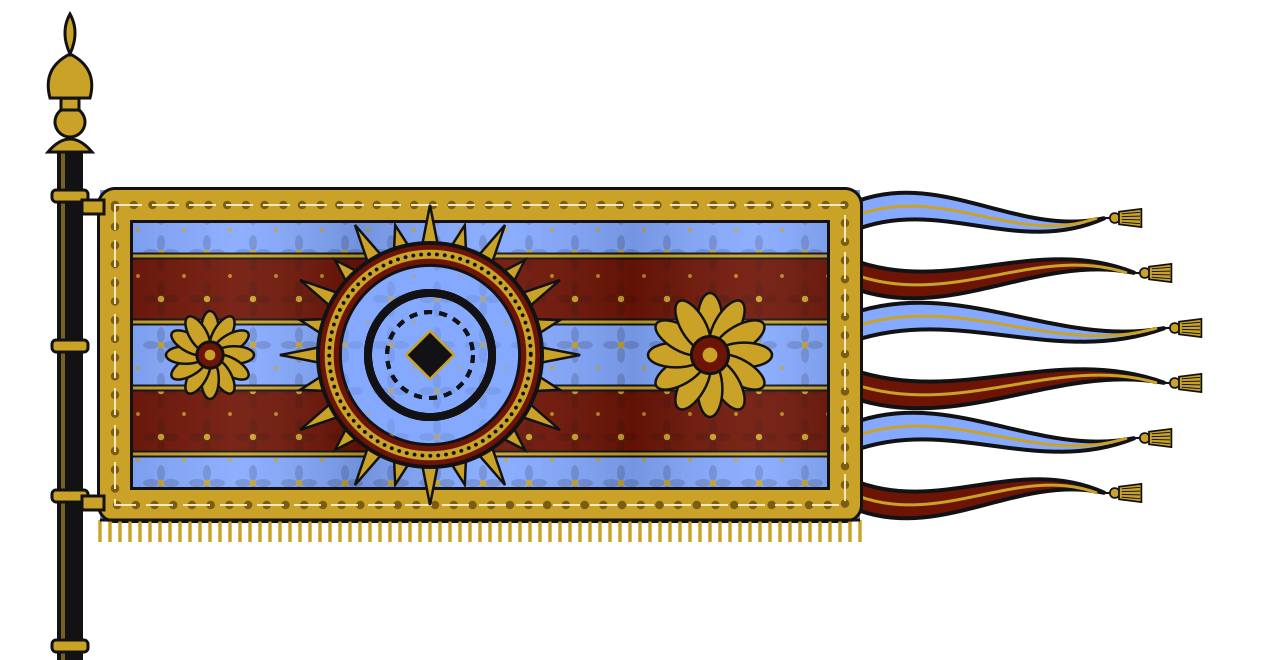
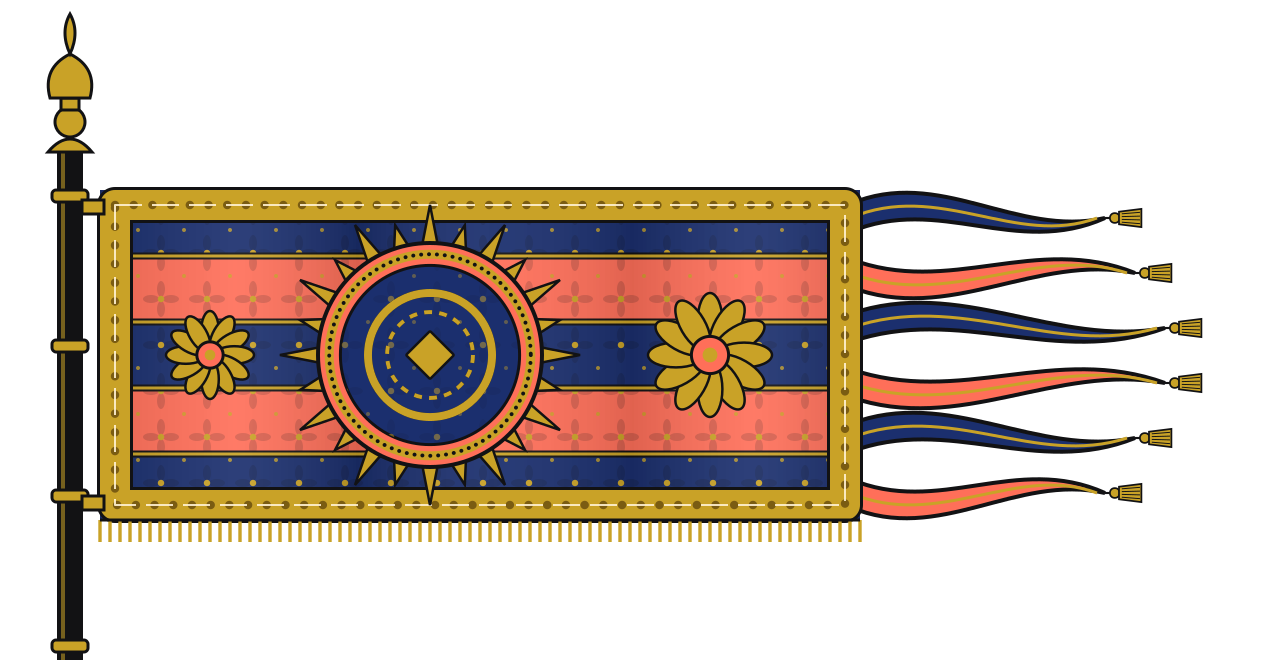
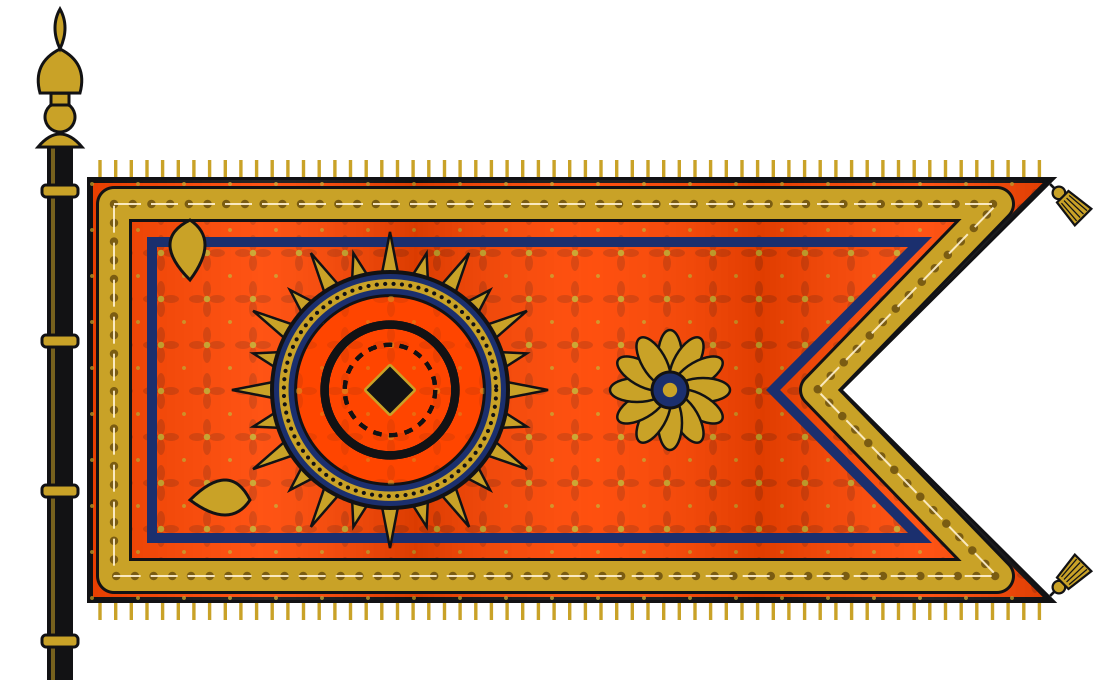
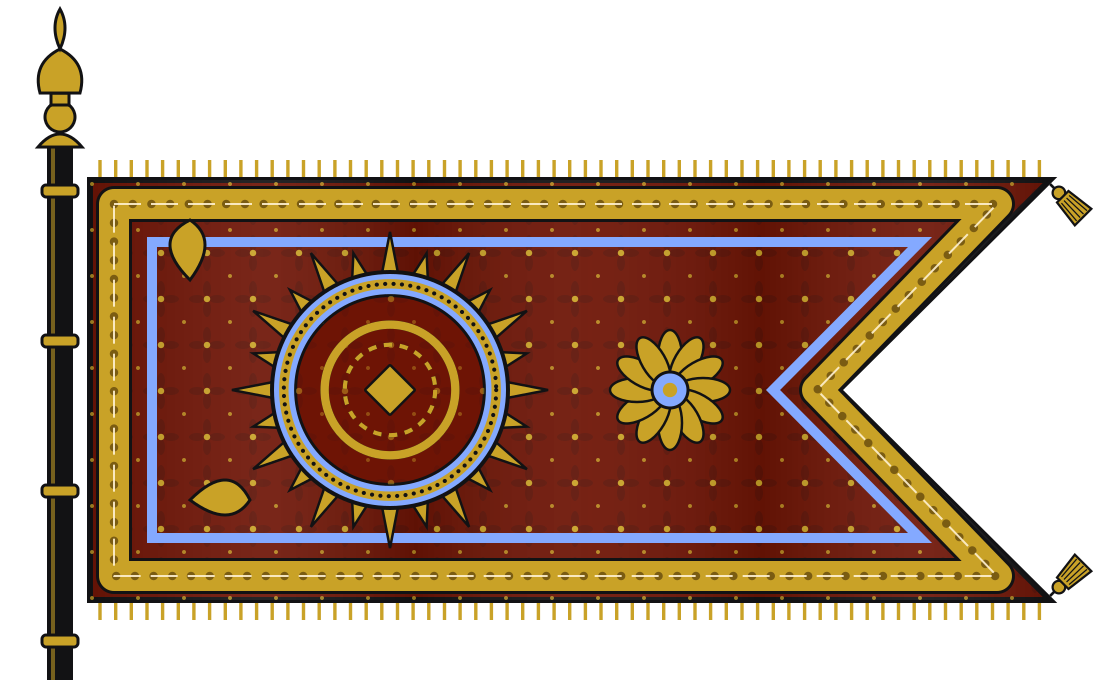

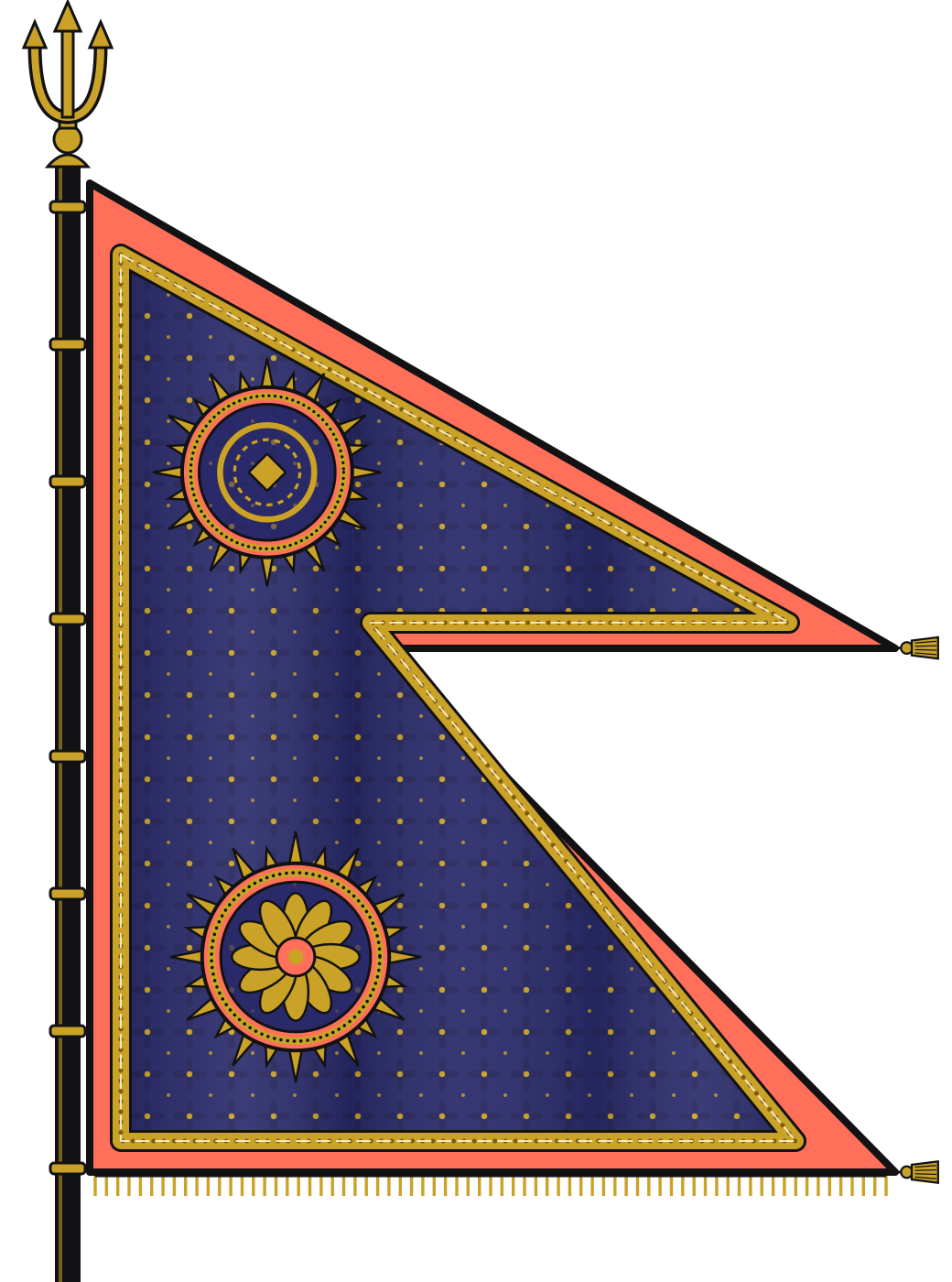

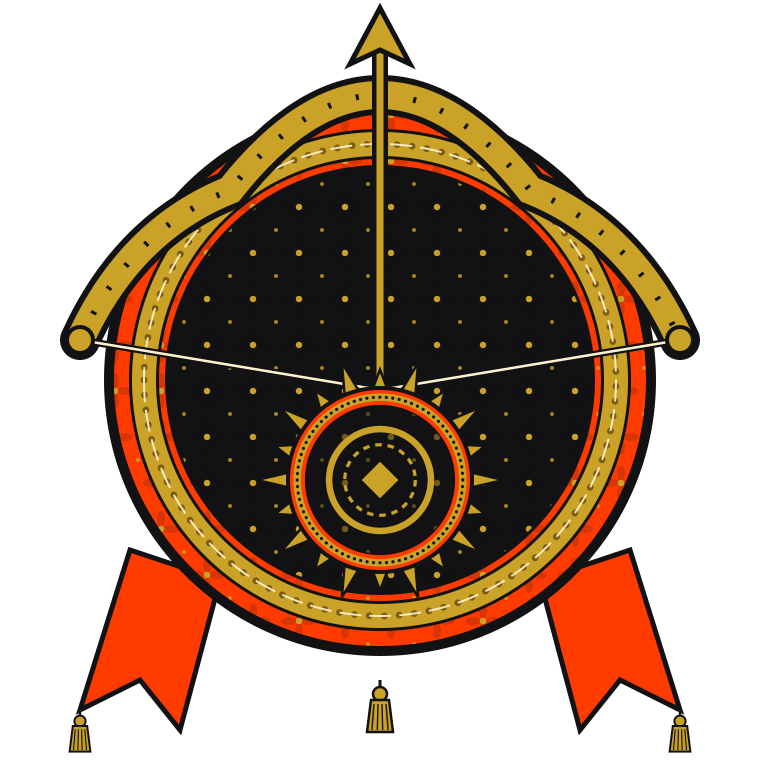
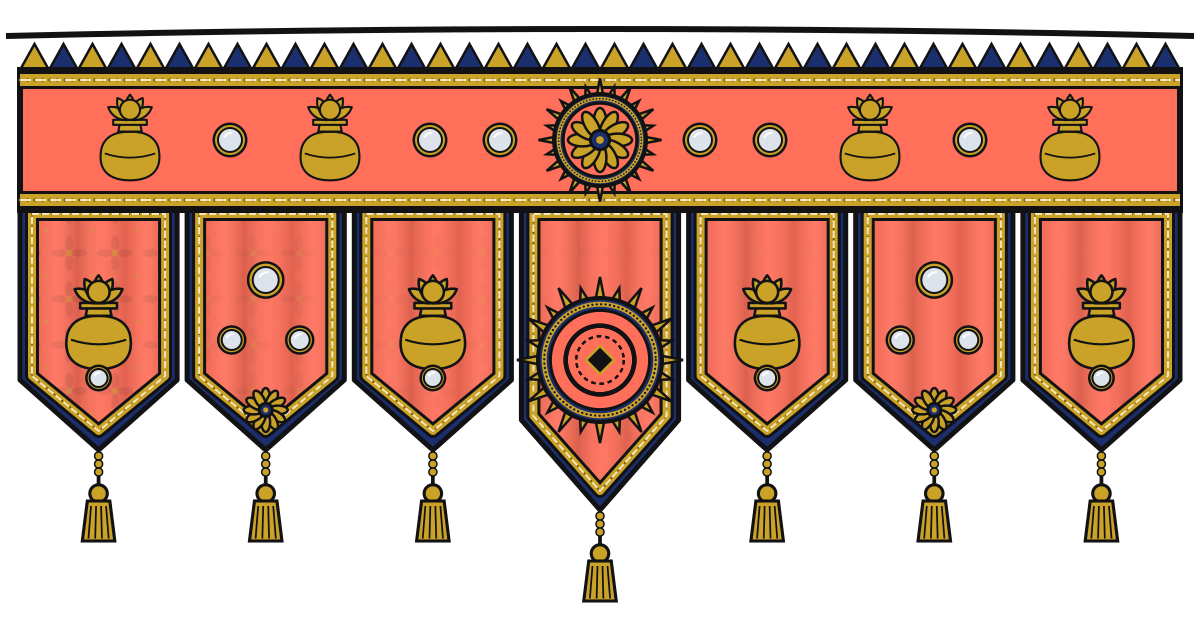
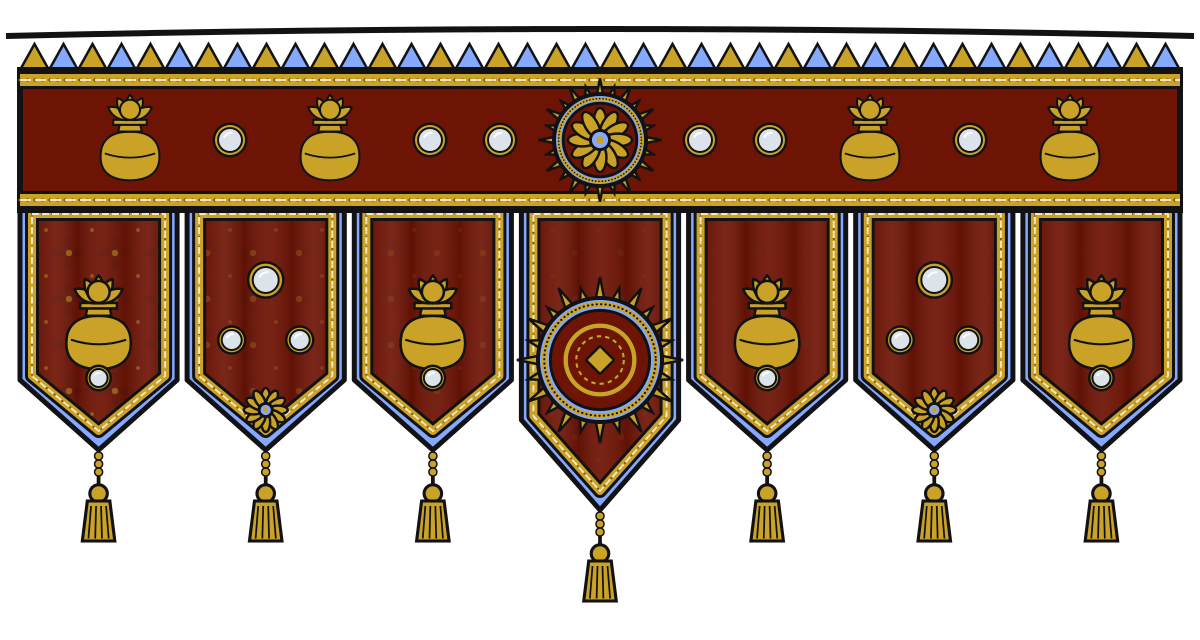

Historic banner
None known
New flag types
| Accessory | For this clan | Basis |
|---|---|---|
| A9 Pota-dhvaja · ship and trade flag For ships, caravans and markets | Not yet designed for this clan | Design |
| A10 Utsava-patāka · festival flag Light, bright flag for fairs and festivals | Not yet designed for this clan | Design |
| A11 Shoka-dhvaja · mourning flag White cloth with the emblem outline in the clan's metal | Not yet designed for this clan | Design |
7. Regalia
| Accessory | For this clan | Basis |
|---|---|---|
| E1 Chhatra · house parasol The ceremonial umbrella | Not yet designed for this clan | Design |
| E2 Chamara · fly-whisks The pair of whisks beside the head of the house | Not yet designed for this clan | Design |
| E3 Danda · staff of office Staff or scepter | Not yet designed for this clan | Design |
| E4 Simhasana · seat The seat of the house, covered in clan cloth | Not yet designed for this clan | Design |
| E5 Khetaka · shield A round shield; the Changi and Dhanush are its flag forms | Not yet designed for this clan | Regional tradition |
| E6 Kula-ayudha · clan weapon The weapon the clan honours | Not yet found for this clan | Under research |
8. Worn
| Accessory | For this clan | Basis |
|---|---|---|
| F1 Kula-vastra · clan cloth The clan's woven pattern in its kit colours | Not yet designed for this clan | Design |
| F2 Kirti-vastra · honour cloth A cloth earned for a deed, not inherited | Not yet designed for this clan | Design |
| F3 Kula-mala · garland flower The flower or leaf the clan wears as a garland | Not yet found for this clan | Under research |
| F4 Chinha · house pin A metal badge with the pin emblem | Not yet designed for this clan | Design |
9. Records
| Accessory | For this clan | Basis |
|---|---|---|
| H1 Clan words A traditional line in the native script | प्रतिष्ठान · “Pratiṣṭhāna, 'standing firmly': the ancient name of the seat, Paithan” Paithan page[2]. The seat's name, not a line of the Mulakas' own words. | Design |
| H2 Biruda · titles The house's title or titles | Regional: Trisamudratoyapitvahana, a title of the Satavahanas at Paithan Paithan page[2] | Regional tradition |
| H3 Prashasti · praise genealogy The lineage as written at the head of a grant | Not yet found for this clan | Under research |
| H4 Vahi · clan register The book of the clan's births, marriages and deaths | Not yet found for this clan | Under research |
| H5 Rana-ghosha · war cry The clan's cry in battle or celebration | Not yet found for this clan | Under research |
10. VishwaVit · knower of the world
Game values are design choices for this project, not historical claims.
References
- Wikipedia, "Asmaka", read 2026-10-10, https://en.wikipedia.org/wiki/Asmaka
- Wikipedia, "Paithan", read 2026-10-10, https://en.wikipedia.org/wiki/Paithan
- palikanon.com, "Assaka (Dictionary of Pali Proper Names, Malalasekera)", read 2026-10-10, https://www.palikanon.com/english/pali_names/ay/assaka.htm
- Wikipedia, "Kuladevata", read 2026-10-10, https://en.wikipedia.org/wiki/Kuladevata
- Wikipedia, "Asmaka kingdom", read 2026-10-10, https://en.wikipedia.org/wiki/Asmaka_kingdom
- Satavahana dynasty (Wikipedia, read 2026-10-09, Codex run 8): coin types, including the Ujjain symbol.