The Mahli, also written Mahali, are a Munda-group community whose members have long worked as palanquin bearers and bamboo workers[1][2]. They are recorded in Jharkhand, West Bengal, Odisha and Bihar[3], with a Bangladeshi branch whose forefathers are said to have come from the Buru Disham hills of Jharkhand over a century ago[1]. The main deity given in the sources is Surjahi, a solar deity, with Bar Pahari and Mansa Devi also named; the master-sheet KulDevi, Chhinnamasta of Rajrappa, is project data that no source read ties to the Mahli[1][2]. They are a Scheduled Tribe in Jharkhand, West Bengal and Odisha, where the 2011 lists give 152,663 Mahli in Jharkhand[4][5][6]. Their language, Mahali, has no written form; a Romanized alphabet was tried in schools in Bangladesh[1].
01Faith and deities
Chhinnamasta of Rajrappa, Jharkhand
The presiding goddess of the clan's homeland or capital: a link of place, not a recorded clan tie.
| Deity or tradition | Place in the clan's life | Evidence |
|---|---|---|
| Surjahi | Solar deity (Tribal Research Institute); main deity (Wikipedia) | [1][2] |
| Bar Pahari, Barpahadi Deo | Mountain deity; chief deity (Soni) | [3][1] |
| Mansa Devi | Chief deity (Soni); also named by the Tribal Research Institute | [3][2] |
| Ork Bonga | House deity of each clan (Soni) | [3] |
| Dharam and Garam | Enshrined beneath a very old tree (Soni) | [3] |
| Village sacred grove | Each village has one (Soni) | [3] |
| Marang Buru | Supreme deity, as among the Santal (Odisha IPR 2020) | [7] |
| Bana Kuanri, Manreiko Tureiko, Babaji, Bada Chandi, Rang Chandi | Named in the Odisha news item; their role is not stated | [7] |
| Gaurang Mahaprabhu | Some worship him on Dol Jatra (Soni) | [3] |
| Chhinnamasta (KulDevi) | Master-sheet KulDevi, Rajrappa, Jharkhand; no source read ties it to the Mahli | Atlas |
02Temples
No temple built or patronised by the Mahli is named in the extracts. Their shrines in the sources are the house deity, the shrine under the old tree and the village sacred grove[3].
Built by the clan
Not recorded.
Given patronage or grants by the clan
Not recorded.
03Languages and scripts
| Language or script | Kind | Under the clan | Evidence |
|---|---|---|---|
| Mahali living | Munda-group language; first language | The Mahli[1] | |
| Santali living | Munda language; second language (Wikipedia), mother tongue in the Jharkhand page | The Mahli[1][2] | |
| Sadri or Sadari living | Regional language; mother tongue (Tribal Research Institute); spoken in Bihar and Jharkhand (Soni) | [2][3] | |
| Mundari living | Munda language; mother tongue (Tribal Research Institute) | [2] | |
| Bengali, Odia, Hindi living | Regional languages; second languages (Wikipedia); Bengali and Santali in West Bengal (Soni) | [1][3] | |
| Romanized Mahle alphabet research | Experimental Romanized alphabet devised by Zakarias Dumri, used in three schools (MAASAUS 2009) | [1] |
04Books and literature
The extracts name no book written by the Mahli. Accounts written about them include Risley (1891, as Soni cites him), Russell (1916), Roy Choudhury (1970, as Wikipedia cites him) and Soni (2016); see thinkers.
Written during the clan's history
Not recorded.
Given patronage by the clan
Not recorded.
05Thinkers and scholars
| Name | Field | Era | Contribution |
|---|---|---|---|
| Amit Soni | Anthropology | 2016 | Mahali Culture and Social Change in West Bengal (North Bengal Anthropologist)[3] |
| R. V. Russell | Ethnography | 1916 | Tribes and Castes of the Central Provinces, vol. 3, lists the Mahali among the Munda sub-castes[8] |
| Risley | Ethnography | 1891 | Palanquin bearers making bamboo craft (cited by Soni)[3] |
| Zakarias Dumri | Language and script | Not dated | Devised the Romanized Mahle alphabet[1] |
| Sushree Mohanty | Tribal handbook | Not dated | Indigenous Colours of Odisha: Handbook on 62 Tribes gives the Mahali districts and population[9] |
The extracts name no Mahli-born scholar other than Zakarias Dumri.
06Art and architecture
The sources name bamboo basketry and drums. No painting, sculpture or textile of the Mahli is recorded.
Painting and wall art
Not recorded.
Sculpture and temple art
Not recorded.
Temple and building architecture
| Art form | What it is | Era | Evidence |
|---|---|---|---|
| Houses | Two or three rooms with mud walls and thatched or tiled roofs | Living | [7] |
Weaving and textiles
Not recorded.
Clothing and jewellery
Not recorded.
Coins, pottery and crafts
| Art form | What it is | Era | Evidence |
|---|---|---|---|
| Bamboo basketry | Baskets, machi (stool), soop (winnowing fan), chatai (mat), raincaps and umbrellas | Living | [3] |
| Dali, kula and tungki | Basket (dali), rice-processing tool (kula; Hatak in their language), salt pot (tungki) and hand fans | Living | [1] |
| Broomsticks, fences, fish traps | Bamboo work in Odisha | Living | [10] |
| Conch and cowrie ornaments | Ornaments worn by the Mahli (Soni) | Living | [3] |
07History
Palanquin bearers and bamboo workers
Risley (1891), as Soni records him, described the Mahli as palanquin bearers making bamboo craft[3].
Russell (1916) lists the Mahali among the Munda sub-castes[8].
Indigo labour in Bengal
Soni records that the Mahli were brought to West Bengal from undivided Bihar as indigo labourers under British rule[3].
Some scholars consider them an offshoot of the Santal[3][1].
Moves to Odisha and Bangladesh
The Odisha State Tribal Museum says the Mahali are thought to have migrated to Odisha from Jharkhand and West Bengal[10].
The Wikipedia page says Bangladeshi Mahali forefathers came from the Buru Disham hills of Jharkhand over a century ago, a claim it gives from Zakarias Dumri[1].
08Journey and migrations
The sources date these moves loosely or not at all. Soni records the Chota Nagpur plateau as the native place, and some scholars identify Santhal Pargana as the main cultural area[3].
| When | From | To | Why | Evidence |
|---|---|---|---|---|
| Under British rule (date not given) | Undivided Bihar | West Bengal | Indigo labour | [3] |
| Over a century ago (as the page says) | Buru Disham hills, Jharkhand | Bangladesh (Rajshahi, Joypurhat, Dinajpur, Rangpur, Sylhet) | Not stated | [1] |
| Date not given | Jharkhand and West Bengal | Odisha | Not stated | [10] |
09Seats and lands
| Place | Role | Where today |
|---|---|---|
| Chota Nagpur plateau; Santhal Pargana | Native place as Soni records it; some scholars take Santhal Pargana as the main cultural area | Jharkhand (Atlas homeland) |
| Gumla district | Bamboo service community among the service communities of the area (Mandar paper) | Jharkhand[11] |
| Soso village, Ranchi district | Gorayat Mahli named as drum makers (Globalinch, as the page says) | Jharkhand[12] |
| Jangalmahal | High concentration: Purulia, Bankura, Jhargram and parts of Paschim Medinipur | West Bengal[13] |
| West Bengal districts | North and South 24 Parganas, Jalpaiguri, Darjeeling, Nadia, Uttar and Dakshin Dinajpur, Purulia, Bardhaman, Bankura, Birbhum, Malda, Murshidabad, Paschim and Purba Medinipur, Howrah, Hooghly, Kolkata, Koch Bihar (Soni's list) | West Bengal[3] |
| Mayurbhanj, Sundargarh, Keonjhar | Odisha districts; the handbook spells them Sundergarh | Odisha[9][7] |
| Rajshahi, Joypurhat, Dinajpur, Rangpur, Sylhet | Bangladeshi Mahali districts named by Wikipedia | Bangladesh[1] |
| Assam | Recorded at 13,452 (1951 estimate, as Wikipedia gives it) | Assam[1] |
10Notable figures
| Name | Role | Era | Known from |
|---|---|---|---|
| Ghasi Ram Mahli | Poet | Not dated | [1] |
| Surya Singh Besra | Politician | Not dated | [1] |
| Zakarias Dumri | Director of MAASAUS; devised the Romanized Mahle alphabet | Not dated (alphabet used in three schools, MAASAUS 2009) | [1] |
11Allies, rivals and marriages
| People | Relationship | When |
|---|---|---|
| Santal | Some scholars treat the Mahli as an offshoot; Soni calls them a branch of the Santal; share the septs Hansda, Hemron, Murmu and Saren | Not dated[3][1] |
| Munda | Russell lists the Mahali among the Munda sub-castes; the Mahli Munda form one division | 1916[8] |
| Oraon and Kol | Named with the Munda as clan-group names and as Mahali sub-groups (Soni) | Not dated[3] |
| Kumarbhag Paharia and Mal Paharia | Related peoples (Wikipedia) | Not dated[1] |
| Bhumij, Ho, Bhuia, Kurmi, Santhal, Munda | Peoples the Mahli live alongside (Soni) | Not dated[3] |
| Ghasi, Lohara, Chik-Badaik, Kumhar | Service communities of the Gumla area in the Mandar paper; the Mahli are the bamboo workers among them | Not dated[11] |
12Society and livelihood
The Mahli are patriarchal, and children take the father's family name[1]. Their society is divided into endogamous divisions and exogamous totemic clans with a village council.
Government and social order
| Institution or group | What it was | Evidence |
|---|---|---|
| Endogamous divisions | Bansphor, Patar, Sulunkhi, Tanti and Mahli Munda; Soni also lists Oraon and Kol Mahali; marriage within close relatives or the own tribe is prohibited | [1][3] |
| Totemic clans and sub-clans | Clans (jati) are totemic, with sub-clans (khunt); the Pirahi sub-clan avoids round pumpkin | [3] |
| Panchayat | Headed by a Mukhiya, Manjhihadam or Parganait; officials are Paranik, Gurit, Pujari or Naike, and Pargana | [3] |
| Village council | Naya (priest), Majhi (headman), Gadeat (messenger) and the elders | [7] |
| Marriage | Bapla marriage, in two forms (Angir Bapla and Sunum Bapla); bride-price Rs 48–64; three rounds around a sal-leaf booth | [1][3] |
| Funerals | The dead are cremated | [1] |
Livelihood over time
| Era | Livelihood | Evidence |
|---|---|---|
| Traditional | Palanquin bearing and bamboo craft | [3][10] |
| After migration to Bengal | Indigo labour under British rule | [3] |
| Today | Bamboo work, baskets, broomsticks, fences and fish traps; some farming and wage labour (OSTM); wage earning and some cultivation (IPR) | [10][7] |
13Sub-clans and related clans
Five endogamous divisions, totemic clans (jati) with sub-clans (khunt), and septs named in the sources. Each list is kept as its source prints it.
| Clan | Relation | Where | Size | In the Atlas | Evidence |
|---|---|---|---|---|---|
| Bansphor Mahli | Sub-clan | same name as ST-368: check | [3][7][1] | ||
| Patar | Sub-clan | same name as ST-521: check | [7][3] | ||
| Sulunkhi | Sub-clan | same name as ST-497: check | [7][3] | ||
| Tanti | Sub-clan | same name as ST-500: check | [7][3] | ||
| Mahli Munda | Sub-clan | new clan candidate | [1][2] | ||
| Oraon | Related people | ST-241 | [3] | ||
| Kol | Related people | ST-141 | [3] | ||
| Dumriar | Sub-clan | same name as ST-387: check | [1][2] | ||
| Gundli | Sub-clan | new clan candidate | [1][2] | ||
| Kerketta | Sub-clan | same name as ST-405: check | [1][2] | ||
| Mahukal | Sub-clan | new clan candidate | [1][2] | ||
| Tirki | Sub-clan | same name as ST-559: check | [1][2] | ||
| Tunduar | Sub-clan | new clan candidate | [1][2] | ||
| Turu | Sub-clan | new clan candidate | [1][2] | ||
| Bhuktuar | Sub-clan | new clan candidate | [1][2] | ||
| Lang Chenre | Sub-clan | new clan candidate | [1][2] | ||
| Sanga | Sub-clan | same name as ST-552: check | [1][2] | ||
| Barwar | Sub-clan | same name as ST-371: check | [1] | ||
| Induar | Sub-clan | same name as ST-395: check | [1] | ||
| Kantiar | Sub-clan | new clan candidate | [1] | ||
| Kasriar | Sub-clan | new clan candidate | [1] | ||
| Kendriar | Sub-clan | new clan candidate | [1] | ||
| Kathargachh | Sub-clan | same name as ST-402: check | [1] | ||
| Mandi | Sub-clan | new clan candidate | [3] | ||
| Murmu | Sub-clan | new clan candidate | [3] | ||
| Basaki | Sub-clan | new clan candidate | [3] | ||
| Basara | Sub-clan | new clan candidate | [3] | ||
| Hembrom | Sub-clan | new clan candidate | [3] | ||
| Hansda | Sub-clan | new clan candidate | [3] | ||
| Tudu | Sub-clan | new clan candidate | [3] | ||
| Kisku | Sub-clan | new clan candidate | [3] | ||
| Soren | Sub-clan | new clan candidate | [3] | ||
| Chode | Sub-clan | new clan candidate | [3] | ||
| Samah | Sub-clan | new clan candidate | [3] | ||
| Pirahi | Sub-clan | new clan candidate | [3] | ||
| Khangar | Sub-clan | same name as ST-406: check | [3] | ||
| Hemron | Sub-clan | new clan candidate | [2][1] | ||
| Saren | Sub-clan | new clan candidate | [2][1] | ||
| Santal | Parent people | 2,512,331 in West Bengal, 2011[5] | ST-280 | [3][1] | |
| Munda | Parent people | 1,229,221 in Jharkhand, 2011[4] | ST-229 | [1][8] | |
| Kumarbhag Paharia | Related people | new clan candidate | [1] | ||
| Mal Paharia | Related people | 135,797 in Jharkhand, 2011[4] | ST-183 | [1] | |
| Nagpuriya | Related people | Bangladesh | new clan candidate | [1] | |
| Sikroya | Related people | Bangladesh | new clan candidate | [1] | |
| Rajmahle | Related people | Bangladesh | new clan candidate | [1] |
Clans marked "new clan candidate" are not in the Atlas yet.
14Surnames
The Wikipedia page gives nine family names, cited to Prothom Alo (2009)[1]. Surname counts are not sourced.
| Surname | Clan or sub-clan | Where | People with this surname | Also used by other communities |
|---|---|---|---|---|
| Dumri | not yet counted | Not checked | ||
| Bare | not yet counted | Not checked | ||
| Karkusho | not yet counted | Not checked | ||
| Kauria | not yet counted | Not checked | ||
| Khanger | not yet counted | Not checked | ||
| Mandri | not yet counted | Not checked | ||
| Hansda | Hansda (totemic clan, Soni) | not yet counted | Yes | |
| Baske | not yet counted | Not checked | ||
| Besra | not yet counted | Not checked |
Counts are of everyone with the surname, from the cited source and year, not only members of this clan. A surname shared with other communities says nothing about any one person's origin.
15Songs and music
Mahali men and women dance and sing folk songs together (Soni), and sing and dance on every festive occasion (Odisha IPR 2020). The Jhumer dance is prominent, though many of the present generation do not know it well (Wikipedia)[3][7][1].
None recorded yet.
Instruments and styles
| Instrument or style | What it is | Evidence |
|---|---|---|
| Mandar | A drum; Globalinch calls it barrel-shaped and peculiar to Santhali music; Globalinch names Gorayat Mahli among its makers at Soso village, Ranchi | [12] |
| Dhol and nagara | Drums the Mahali historically made (Wikipedia, citing Jewitt 2019) | [1] |
| Jhumer | Prominent dance; many of the current generation do not know it well | [1] |
16Poems, lullabies and children's rhymes
No lullaby, rhyme, riddle or poem of the Mahli is in the extracts.
None recorded yet.
17Stories, legends and proverbs
Stories and legends
| Story | What happens | Told by | Evidence |
|---|---|---|---|
| Gua Hembrom | A woman expelled from the clan gives birth beneath an arecanut tree | Recorded by Soni (2016)[3] | [3] |
| Sigi Tudu | Girls die on pointed sticks in a pond | Recorded by Soni (2016)[3] | [3] |
| Silbindha Hansda | Two men kill a harmful kite at a king's request | Recorded by Soni (2016)[3] | [3] |
| Bodhwar | An ancestor brings soiled water for rituals | Recorded by Soni (2016)[3] | [3] |
Proverbs and sayings
Not recorded.
18Festivals and fairs
| Festival or fair | When | Where | What happens |
|---|---|---|---|
| Bangri, Hariyari, Nawakhani | Not dated | Not stated | Listed by Wikipedia and the Tribal Research Institute; rites not described[1][2] |
| Jitiya Parbon, Syurjahi Puja, Goal Puja | Bhadra and Falgun (as Wikipedia gives them) | Not stated | Households refrain from household work on festival days[1] |
| Hari Pooja | Baisakh | West Bengal (Soni) | Listed; rites not described[3] |
| Mansa Pooja | Jyestha, Sravan and Ashwin | West Bengal (Soni) | Listed; rites not described[3] |
| Karam | Bhadra | West Bengal (Soni) | Listed; rites not described[3] |
| Kali, Garia and Goyal Pooja | Aghan | West Bengal (Soni) | Listed; rites not described[3] |
| Tushu | Paush | West Bengal (Soni) | Listed; rites not described[3] |
| Maghi or Akhani | Magh | West Bengal (Soni) | Listed; rites not described[3] |
| Sarhul | Falgun and Chaitra | West Bengal (Soni) | Listed; rites not described[3] |
| Dol Jatra | Dol Jatra | West Bengal (Soni) | Some worship Gaurang Mahaprabhu[3] |
| Baha, Sharai, Maa-mane | Not dated | Odisha (IPR 2020) | Listed; rites not described[7] |
| Sohari or Soharai | Not dated | West Bengal (Soni) | Listed; rites not described[3] |
19Food, dress and games
Food
| Item | What it is | Evidence |
|---|---|---|
| Hadia | Rice beer | [3] |
| Meat | Non-vegetarian (Soni); the Wikipedia page says they do not eat crab, oyster or pork | [3][1] |
Dress
Not recorded.
Games and martial arts
Not recorded.
Tags: living still practised · revived brought back after a break · lost known only from records · research reported but not yet confirmed from a source. Songs and poems under copyright are listed by title only; restricted or sacred material is noted without its content.
20Status today
The Mahli are a Scheduled Tribe in India and a recognised small ethnic group in Bangladesh, with the 2011 counts in the state lists[4][5][6].
Who carries the name today
| Community | Link | Basis | Evidence |
|---|---|---|---|
| Mahali of Bangladesh (30,000, 2009) | Documented | [1] | |
| Bangladeshi Mahali forefathers from the Buru Disham hills | Community tradition | [1] |
Recognised heritage
| What | Recognition | Evidence |
|---|---|---|
| Scheduled Tribe (India) | Official state lists; the Ministry list dated 09-07-2024 | [5] |
| Odisha Scheduled Tribe, not PVTG | Recorded by the Odisha State Tribal Museum | [10] |
| Recognised small ethnic group (Bangladesh) | Listed under the Bangladesh Small Ethnic Groups Cultural Institutions Act (list of 50, 2019), per the Atlas | Atlas |
| Romanized Mahle alphabet | Used experimentally in three schools in Bangladesh (Damkurahat, Paba, Rajshahi) | [1] |
Not yet reviewed by the community. No review by the community appears in the extracts.
21For children
The bamboo basket
The Mahli live in Jharkhand, Odisha, West Bengal and Bihar, and some families live in Bangladesh. Many Mahli are known for their work with bamboo. They make baskets, mats and fans from bamboo. Long ago, some Mahli carried palanquins for other people. At festivals they sing and dance together. Their language is called Mahali, and it has no written form. Their main deity is Surjahi, a solar deity.
Written for this project
22Across the project
| Project | What carries this clan | Status |
|---|---|---|
| Atlas of the Janas | Home areas from Soni, Vajiram and Ravi and the KISS handbook; pin not set (no coordinates in the extracts) | To check |
| KulDevi and GrahDevi | KulDevi Chhinnamasta (Rajrappa) and the Mahavidya family; no source read ties them to the Mahli | From the Atlas |
| Planet naming | Not yet checked against the Tier registers | To check |
| Renaming and waters | No place or water name drawn from the Mahli in the extracts | — |
23Open questions
- Population totals disagree: Soni prints 259,623 for India, Wikipedia 155,023 (2011). Wikipedia gives West Bengal Mahli as 2,360, the list 2,609. Check the census tables.
- Are Mahali and Mahli one people? The lists print both names in West Bengal (Mahali 81,594; Mahli 2,609) and both are used for the same community in the sources.
- Patar: Soni's 'Patar or Ghasi', the Odisha news item's Patar, and Wikipedia's 'pahar Mahli' may be one division or two. Check the primary text of Russell (1916).
- Mandar makers: the Mandar paper names the Ghasi as the traditional makers and says other service communities lack the skill; Globalinch names Gorayat Mahli as drum makers at Soso village. Reconcile against fieldwork.
- Main deity: Wikipedia gives Surjahi; Soni gives Barpahadi Deo and Mansa Devi as chief deities. Check Soni's full text for Surjahi.
- Clan names shared with the Santal (Murmu, Hansda, Hembrom, Tudu, Kisku, Soren, Hemron, Saren): which are Mahli sub-clans and which only Santal? Soni and TRI list them as Mahli septs; Wikipedia names Hansda, Hemron, Murmu and Saren as also found among the Santal.
- Contradiction: the clans list tags Bansphor, Patar, Sulunkhi, Tanti and Mahli Munda as sub-clans, but the society section lists them as endogamous divisions (Wikipedia, IPR, Soni). Oraon and Kol are tagged related in the clans list, but Soni names them as endogamous sub-groups in the society section. Check the relation labels against the sources.
- Surnames: the nine family names are cited to Prothom Alo (2009) through Wikipedia. Check the source for their location and bearer counts.
- Migration: the dates of the Bangladesh and Odisha moves are not given. Check Odisha State Tribal Museum and the Mahali Wikipedia citations.
- Romanized Mahle alphabet: check the MAASAUS 2009 source for the schools and years.
- Community review: no review by the Mahli is recorded.
- The master-sheet KulDevi (Chhinnamasta, Rajrappa) and the Tier naming are not yet tied to the Mahli by any source.
- Lang code: the pack proposed 'mah', which is the ISO 639-2 code for Marshallese, not Mahali. The page uses 'en' until a correct Mahali code is confirmed.
24Astitva
अस्तित्व · being, existence: everything by which the clan is known
The sources record clan totems and a shrine under an old tree. No seal, coin, title, war cry or boundary stone is recorded for the Mahli[3][1].
Every clan has every accessory, royal objects included. Each one says how it is known: Documented This clan's own object is recorded. · Regional tradition Recorded for the region or for peoples like this one, not for this clan. · Design Made for this project, with no historical claim. · Under research To be found for this clan from sources. Legends and titles are written in the clan's own script.
1. Seals and coins
| Accessory | For this clan | Basis |
|---|---|---|
| B1 Rajamudra · house seal Round seal with the clan emblem and a short legend in the clan's script | Not yet designed for this clan | Design |
| B2 Anguliya-mudra · signet ring Personal seal ring of the head of the house | Not yet designed for this clan | Design |
| B3 Chhapa · house stamp Ink or block stamp for letters, goods and cloth | Not yet designed for this clan | Design |
| B4 Tamrapatra · charter plate Copper-plate grant on a ring, closed with the house seal | Not yet designed for this clan | Design |
| B5 Shreni-mudra · guild or trade seal Seal for the clan's trade, craft or caravan | Not yet designed for this clan | Design |
| C1 Clan coin Emblem or deity on one side, a legend in the clan's script | Not yet designed for this clan | Design |
| C2 Coin die The die that strikes the coin | Not yet designed for this clan | Design |
2. Living symbols
| Accessory | For this clan | Basis |
|---|---|---|
| I1 Totem trio The tree, bird and animal the clan protects | Totems per sub-clan: blue bird (Mandi); shol fish (Murmu); lal not sak, as Soni prints it (Basaki); hawk (Basara); arecanut (Hembrom); wild duck or goose (Hansda); rat (Tudu); kingfisher (Kisku); Pleiades (Soren); lizard (Chode); a grass (Samah); jackdaw (Khangar). Septs: banyan (Barwar), wild fig (Dumriar), jackfruit tree (Kathargachh), eel (Induar) | Documented |
| I2 Kaval-maram · guardian tree The tree that stands at the clan's seat | Dharam and Garam enshrined beneath a very old tree; each village has a sacred grove | Documented |
3. Stone and gate
| Accessory | For this clan | Basis |
|---|---|---|
| G1 Torana · gateway The built gate of the seat; the cloth Toran hangs in it | Not yet designed for this clan | Regional tradition |
| G2 Viragallu · hero stone Carved panel stone for a member who died defending the clan | Not yet designed for this clan | Regional tradition |
| G3 Kula-shila · clan stones Standing and table stones that remember the ancestors | Not yet designed for this clan | Design |
| G4 Jayastambha · victory pillar A pillar raised for a victory | Not yet designed for this clan | Design |
| G5 Sima-shila · boundary stone Marks the clan's land, with a line in the native script | Not yet designed for this clan | Design |
4. Sounds
| Accessory | For this clan | Basis |
|---|---|---|
| D1 Pancha-mahashabda · five great sounds The right to five instruments | Not yet designed for this clan | Design |
| D2 Shankha · clan conch The clan's own named war conch | Not yet designed for this clan | Design |
| D3 Murasu · house drums Three drums: war, charity and justice | Not yet designed for this clan | Design |
5. Kit: colours, metals and emblems
No seal, coin, flag or banner is recorded for the Mahli, and the Atlas lists no historic banner. The main emblem, is a bamboo basket for their craft: a design idea, not a documented symbol.
| Part of the kit | This clan |
|---|---|
| Field | Warm Red-Orange #FF6F59 |
| Accent | Deep Indigo #2A2A6B |
| Emblem colour | Charcoal Black #121214 |
| Zari metal | Gold |
| Main emblem | A bamboo basket |
| Second image | — |
| Night and day | Every visual accessory has two versions: by night the emblem on the dark field, by day the clan's field colour on cloth woven from its metal. |
6. Flags
Every clan has every flag type; the type says the occasion and the colours say the clan. The outlined card is the flag the Atlas assigns.
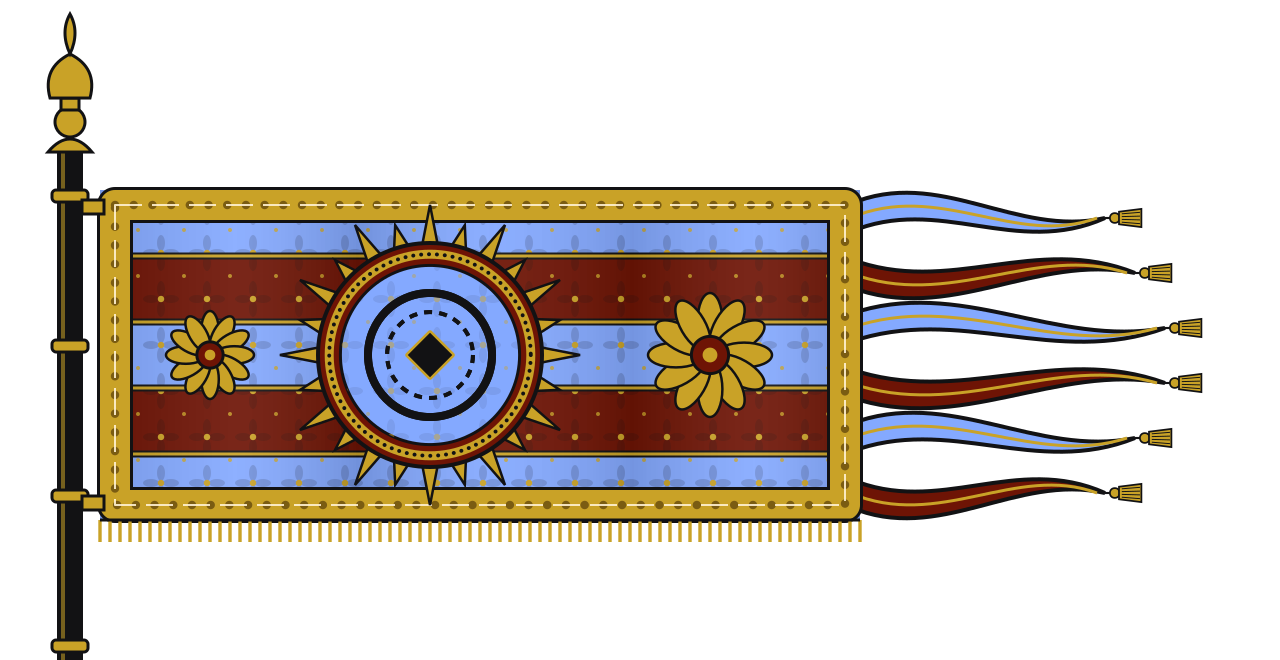
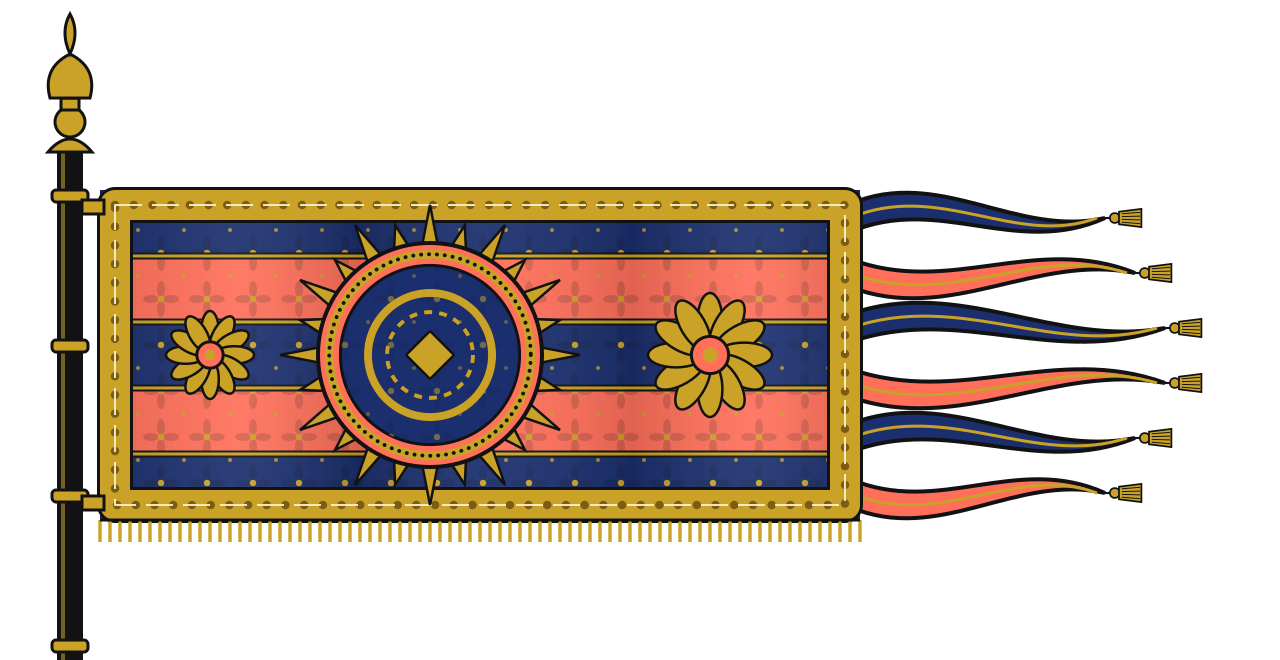
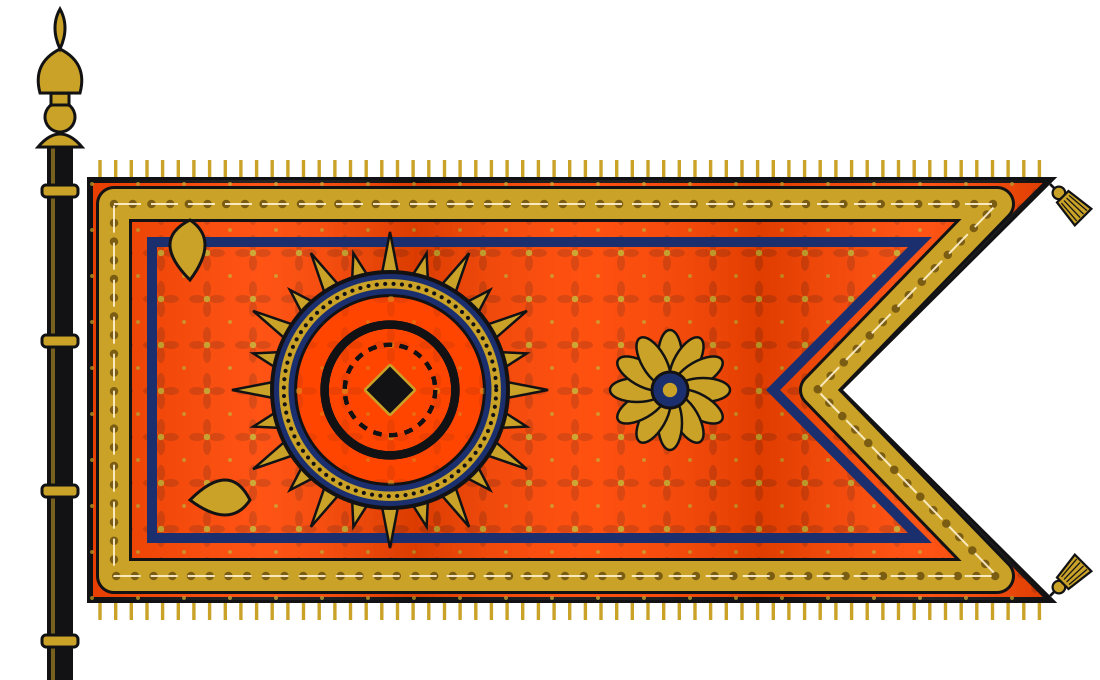
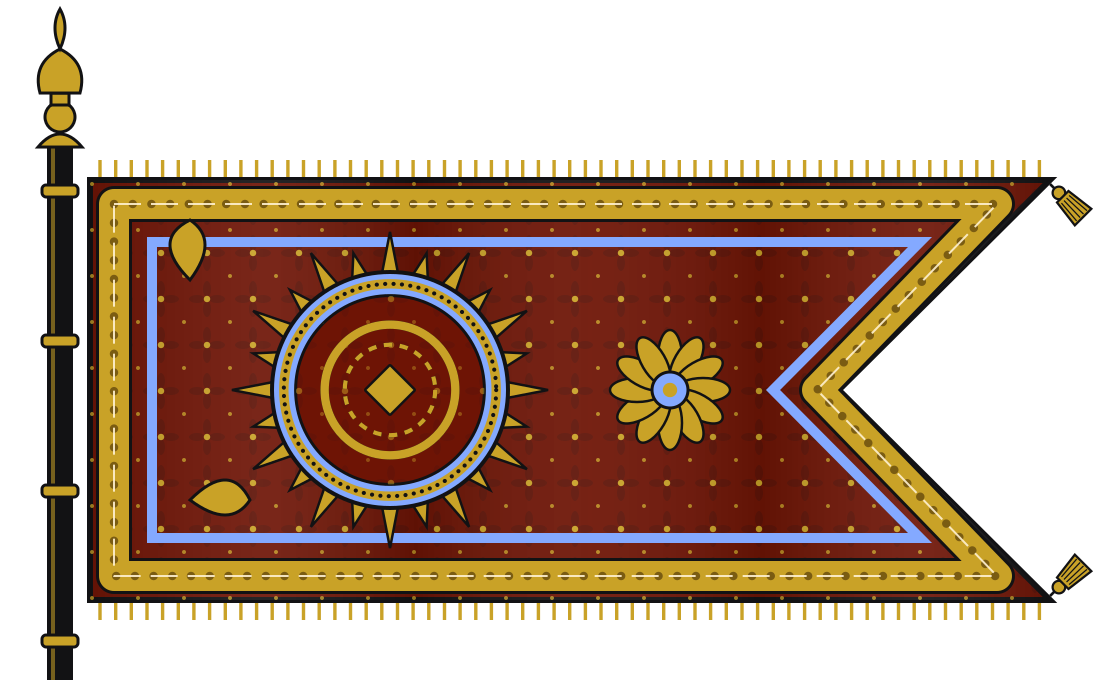
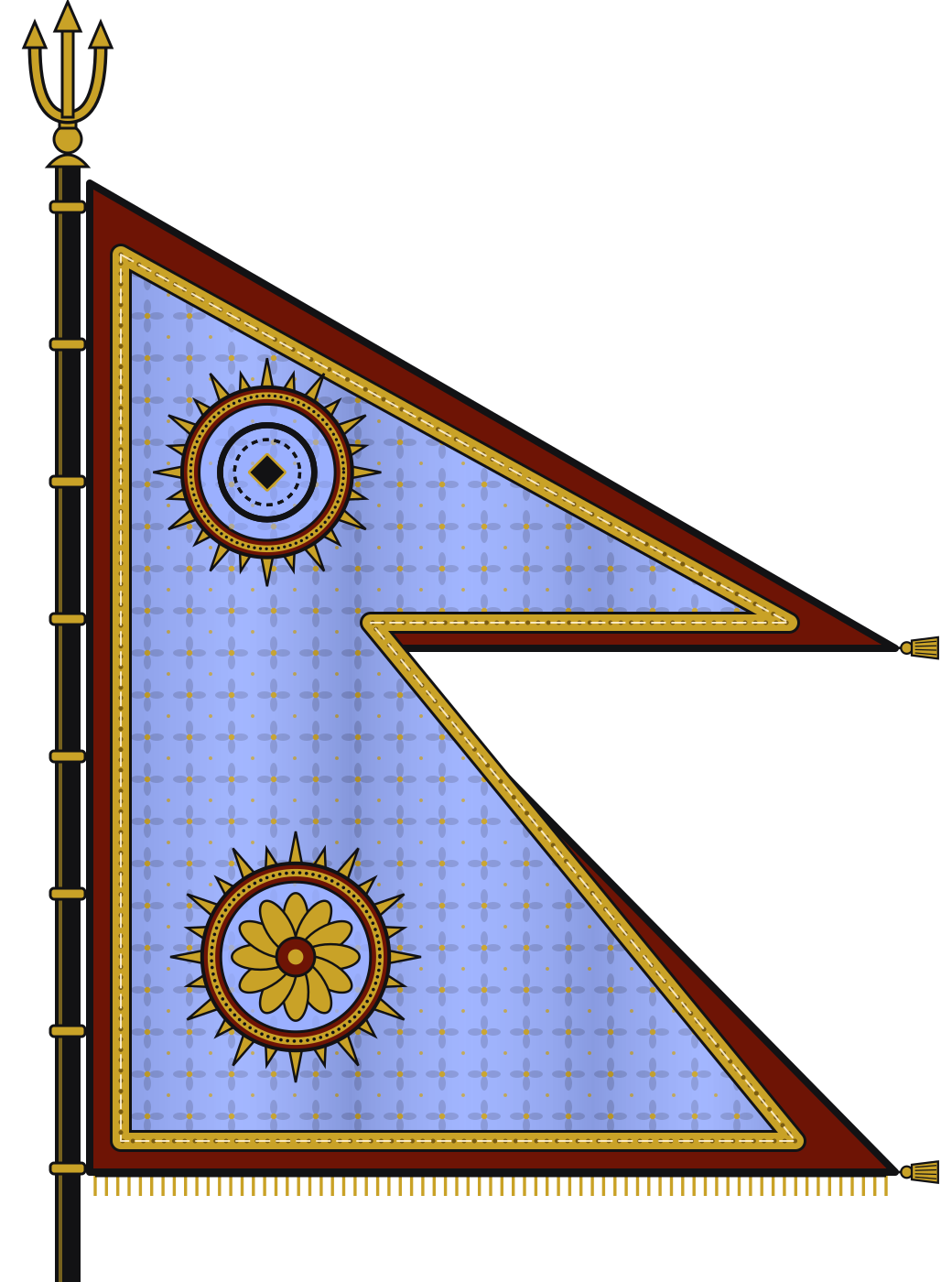
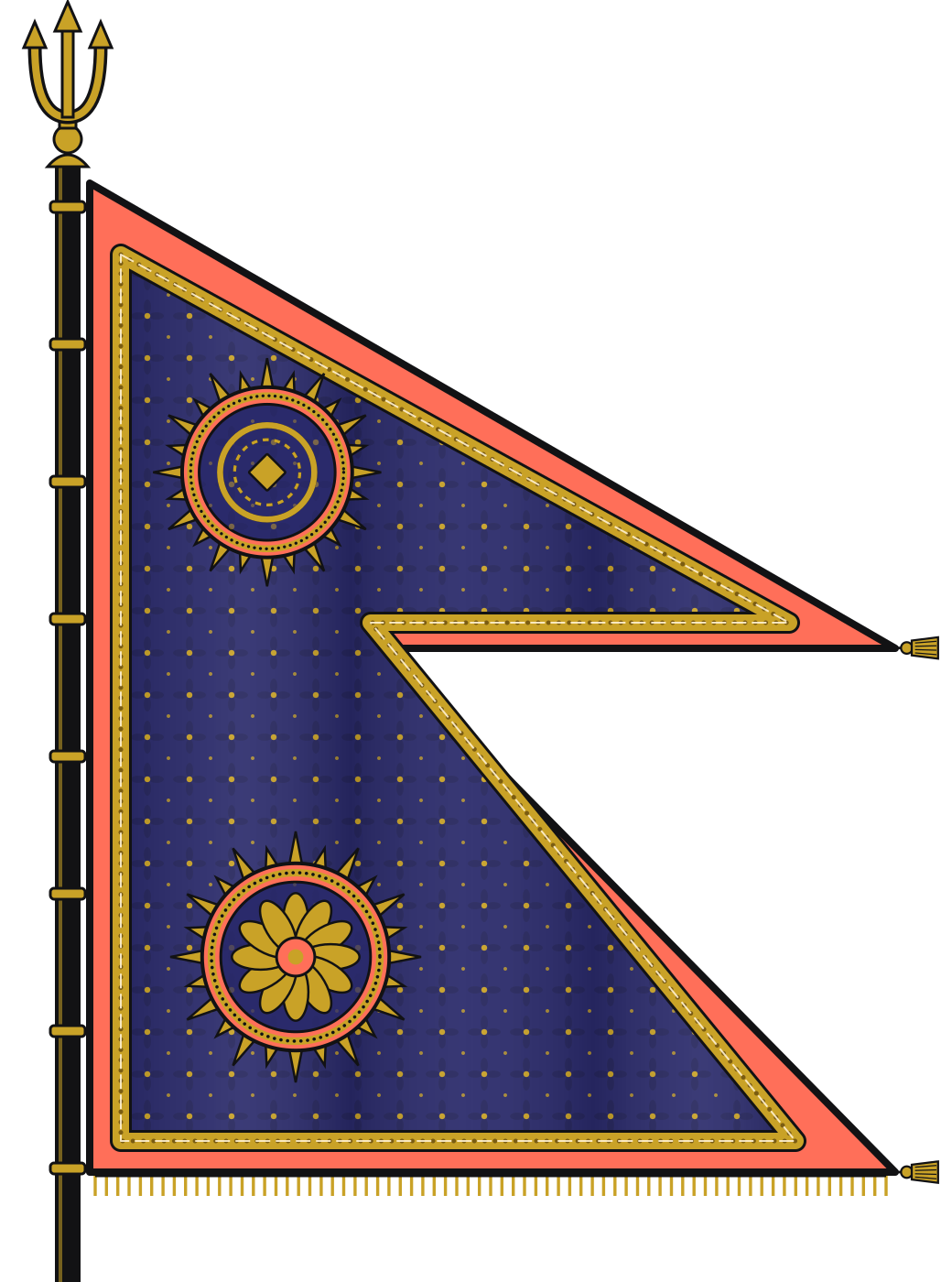

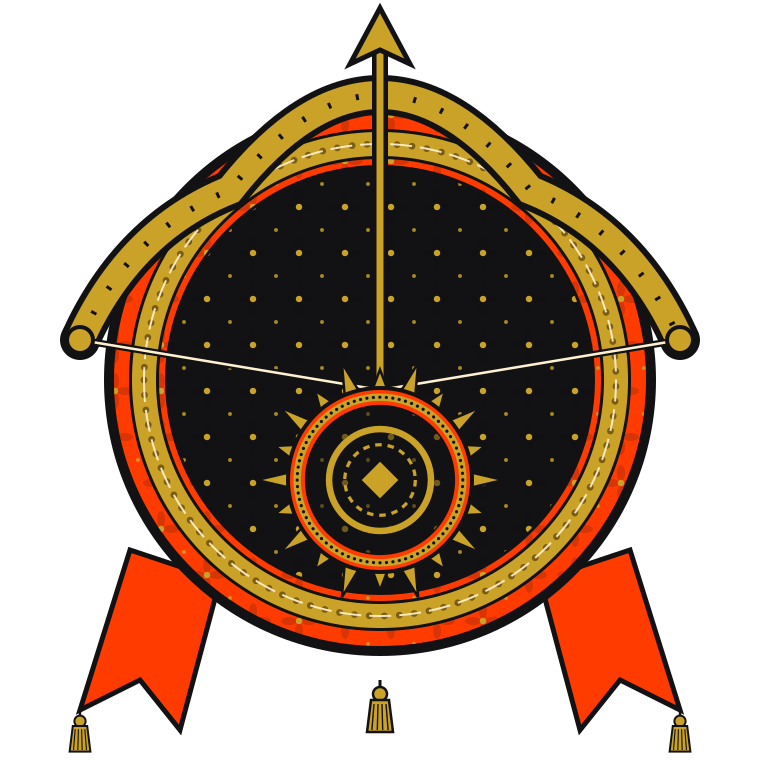
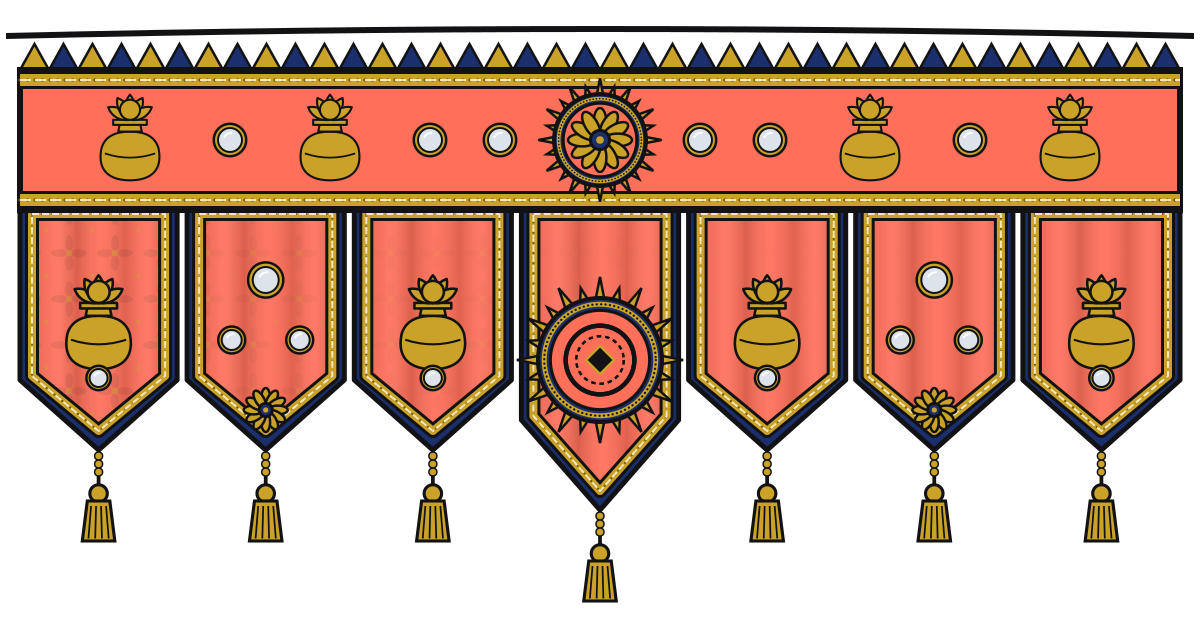
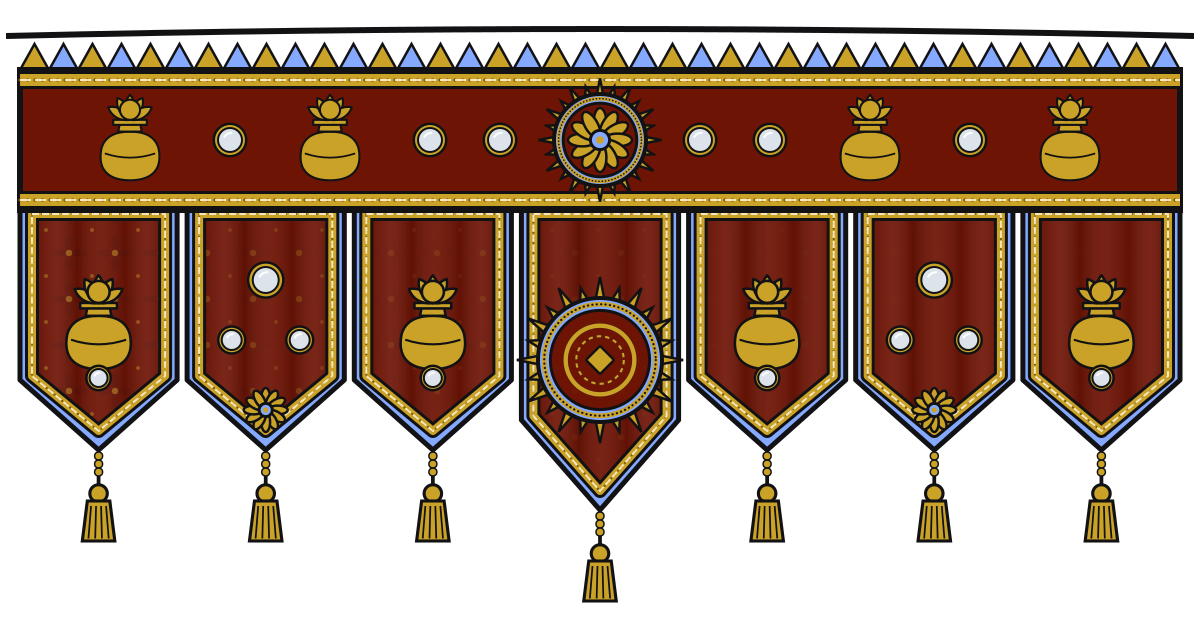
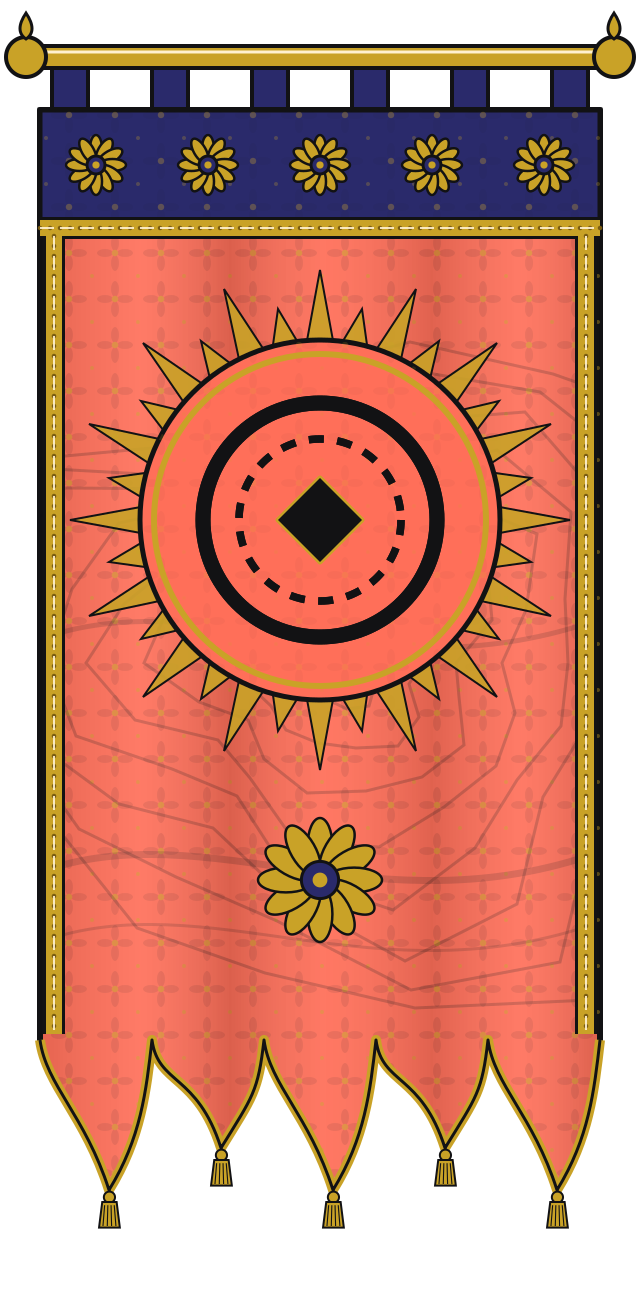
Historic banner
None known
New flag types
| Accessory | For this clan | Basis |
|---|---|---|
| A9 Pota-dhvaja · ship and trade flag For ships, caravans and markets | Not yet designed for this clan | Design |
| A10 Utsava-patāka · festival flag Light, bright flag for fairs and festivals | Not yet designed for this clan | Design |
| A11 Shoka-dhvaja · mourning flag White cloth with the emblem outline in the clan's metal | Not yet designed for this clan | Design |
7. Regalia
| Accessory | For this clan | Basis |
|---|---|---|
| E1 Chhatra · house parasol The ceremonial umbrella | Not yet designed for this clan | Design |
| E2 Chamara · fly-whisks The pair of whisks beside the head of the house | Not yet designed for this clan | Design |
| E3 Danda · staff of office Staff or scepter | Not yet designed for this clan | Design |
| E4 Simhasana · seat The seat of the house, covered in clan cloth | Not yet designed for this clan | Design |
| E5 Khetaka · shield A round shield; the Changi and Dhanush are its flag forms | Not yet designed for this clan | Regional tradition |
| E6 Kula-ayudha · clan weapon The weapon the clan honours | Not yet found for this clan | Under research |
8. Worn
| Accessory | For this clan | Basis |
|---|---|---|
| F1 Kula-vastra · clan cloth The clan's woven pattern in its kit colours | Not yet designed for this clan | Design |
| F2 Kirti-vastra · honour cloth A cloth earned for a deed, not inherited | Not yet designed for this clan | Design |
| F3 Kula-mala · garland flower The flower or leaf the clan wears as a garland | Not yet found for this clan | Under research |
| F4 Chinha · house pin A metal badge with the pin emblem | Not yet designed for this clan | Design |
9. Records
| Accessory | For this clan | Basis |
|---|---|---|
| H1 Clan words A traditional line in the native script | Sing and dance on every festive occasion (paraphrase of the source) · “” Odisha Information and Public Relations news item on a virtual tour of the Mahali community (2020)[7] | Documented |
| H2 Biruda · titles The house's title or titles | Not yet found for this clan | Under research |
| H3 Prashasti · praise genealogy The lineage as written at the head of a grant | Not yet found for this clan | Under research |
| H4 Vahi · clan register The book of the clan's births, marriages and deaths | Not yet found for this clan | Under research |
| H5 Rana-ghosha · war cry The clan's cry in battle or celebration | Not yet found for this clan | Under research |
10. VishwaVit · knower of the world
Game values are design choices for this project, not historical claims.
References
- Wikipedia, Mahali people, read 2026-10-22, https://en.wikipedia.org/wiki/Mahali_people
- Dr. Ramdayal Munda Tribal Welfare Research Institute, Jharkhand, Mahli, read 2026-10-22, https://trijharkhand.in/en/mahli
- Amit Soni, Mahali Culture and Social Change in West Bengal, North Bengal Anthropologist vol. 4 (2016), 23-31, read 2026-10-22, https://ir.nbu.ac.in/bitstreams/8905c70f-64b8-425e-9848-f4c67e4ae877/download
- Wikipedia, Tribes of Jharkhand, read 2026-10-20, https://en.wikipedia.org/wiki/Tribes_of_Jharkhand
- Wikipedia, List of Scheduled Tribes in West Bengal, read 2026-10-21, https://en.wikipedia.org/wiki/List_of_Scheduled_Tribes_in_West_Bengal
- Wikipedia, List of Scheduled Tribes in Odisha, read 2026-10-20, https://en.wikipedia.org/wiki/List_of_Scheduled_Tribes_in_Odisha
- Dr. Jyotirmati Samantaray, Information and Public Relations Dept, Odisha, news item on a virtual tour of the Mahali community, 5 Dec 2020, read 2026-10-22, https://inpr.odisha.gov.in/sites/default/files/2020-12/newsjyotirmati-5122020EEE.pdf
- R. V. Russell, The Tribes and Castes of the Central Provinces of India, vol. 3 (1916), Project Gutenberg #41424, read 2026-10-10, https://gutenberg.org/cache/epub/41424/pg41424-images.html
- Sushree Mohanty, Indigenous Colours of Odisha: Handbook on 62 Tribes (KISS), read 2026-10-20, https://kissnew.kiss.ac.in/wp-content/uploads/2026/05/Indigenous-Colours-of-Odisha-Handbook-on-62-Tribes-Sushree-Mohanty.pdf
- Odisha State Tribal Museum, Mahali, read 2026-10-22, https://ostm.in/?p=5470
- Serials Publications journal abstract, Mandar makers of Chhotanagpur (journal paper; title not printed in extract), read 2026-10-10, https://serialsjournals.com/abstract/74102_1-ahok.pdf
- Global INCH, Musical Instruments of Jharkhand, read 2026-10-10, https://www.globalinch.org/craft/musical-instruments-of-jharkhand/
- Vajiram and Ravi, Tribes of West Bengal, read 2026-10-21, https://vajiramandravi.com/current-affairs/tribes-of-west-bengal/