The Kurus were a Vedic people of north India, formed in the Middle Vedic period (c. 1200–900 BCE) when the Bharata and Puru tribes joined after the Battle of the Ten Kings[1]. Their realm, between the Sarasvati and the Ganga, is described by scholars as the first state-level society recorded in the subcontinent, and its kings and priests arranged the Vedic hymns into collections and standardised the great Srauta rituals[1]. Archaeologists link the realm with the Painted Grey Ware culture[1]. By the Buddha's time the Kurus were a minor state, but their memory became the Mahabharata, whose war is set at Kurukshetra[1][2].
01History
Union of the Bharatas and Purus (c. 1200–900 BCE)
After the Battle of the Ten Kings, the Bharata and Puru tribes merged into the Kuru union, which became the first political centre of the Vedic period and was dominant from roughly 1200 to 800 BCE[1]. Its first capital was Asandivat, identified with Assandh in Haryana[1].
Parikshit and Janamejaya (Middle Vedic period)
The Atharvaveda praises Parikshit, “king of the Kurus”, for a prosperous realm, and the Shatapatha Brahmana remembers his son Janamejaya as a conqueror who performed the horse sacrifice[1]. Under these kings the Kuru state was consolidated and the Srauta rituals were developed[1].
Decline (late Vedic period)
Vedic sources record that the Kurus declined after a defeat by the non-Vedic Salvas, and the centre of Vedic culture shifted east to Panchala[1]. Later, semi-legendary accounts in the Puranas and the Mahabharata say a Ganga flood destroyed Hastinapura and the royal seat moved to Kaushambi; by the 6th century BCE the line had split into the Kuru and Vatsa kingdoms[1][3].
A Mahajanapada and a republic (c. 6th–4th century BCE)
The Anguttara Nikaya lists Kuru among the sixteen Mahajanapadas[4]. Buddhist sources describe it as a minor state under a chieftain, Koravya, and later as a gana-sangha (republic); by the 5th century BCE it was “something of a backwater”[1]. The infobox of the main reference dates its end to c. 345 BCE[1].
After the kingdom {LATER}
The Mauryas took the region in the late 4th century BCE and the Guptas in the 4th century CE; Harsha ruled from Thanesar, beside Kurukshetra, in the 7th century[5]. Traditions of the Kurus grew into the Mahabharata, mostly composed c. 400 BCE–400 CE[1].
02Journey and migrations
The Kurus moved from herding in the Punjab to farming in the Doab, and their royal line moved east and south as their power waned.
| When | From | To | Why | Evidence |
|---|---|---|---|---|
| c. 1200–900 BCE | Punjab | Haryana and the Ganga–Yamuna Doab | Semi-nomadic pastoral clans settled; rice and barley farming grew more important | [1] |
| Middle Vedic period | Asandivat (Assandh) | Hastinapura and Indraprastha | The later main cities of the realm | [1] |
| After c. 800 BCE legend | Hastinapura | Kaushambi | A Ganga flood in King Nichakshu's reign, in the Mahabharata and Puranas; Lal found a flood scar at Hastinapura, but a 2021–22 dig found no flood evidence | [3] |
| By the 6th century BCE | Kuru line | Vatsa kingdom (Kaushambi) | The dynasty split into Kuru and Vatsa branches | [1] |
03Seats and lands
| Place | Role | Where today |
|---|---|---|
| Asandivat | First capital | Assandh, Haryana |
| Hastinapura | Capital; city of the epic | Hastinapur, Meerut district, Uttar Pradesh |
| Indraprastha | Capital in the epic | Purana Qila, Delhi |
| Kurukshetra | Sacred land between the Sarasvati and Drishadvati; field of the epic war | Kurukshetra district, Haryana |
| Kurujangala | Wild forest tract from the Kamyaka forest to the Khandava forest | Haryana–Delhi |
| Katha | Painted Grey Ware site; local tradition of a Raja Ror | Baghpat district, Uttar Pradesh |
04Notable figures
| Name | Role | Era | Known from |
|---|---|---|---|
| Kuru legend | Founding king | Legendary | Puranas; Kurukshetra named after him[5] |
| Dhritarashtra Vaichitravirya | King | c. 1200–900 BCE | Kathaka Samhita, as a descendant of Sudas[1] |
| Parikshit | King | Middle Vedic | Atharvaveda XX.127[1] |
| Janamejaya | King; horse sacrifice | Middle Vedic | Shatapatha Brahmana[1] |
| Koravya | Chieftain, of the Yuddhitthila gotra | c. 5th century BCE | Buddhist sources[1] |
| Nichakshu legend | King who moved the seat to Kaushambi | Legendary | Mahabharata and Puranas[3] |
| Bhishma, Dhritarashtra, Pandu, Yudhishthira, Arjuna, Duryodhana legend | Kuru princes of the epic | Legendary | Mahabharata[2] |
05Allies, rivals and marriages
| People | Relationship | When |
|---|---|---|
| Panchalas | Eastern neighbours; Keshin Dalbhya of Panchala was nephew of a Kuru king; Vedic culture's centre later moved there | Middle–late Vedic |
| Salvas | Non-Vedic rivals who defeated the Kurus | Late Vedic |
| Vatsas | Branch of the Kuru line at Kaushambi | By 6th century BCE |
| Matsyas and Shurasenas | Southern neighbours | Vedic–Mahajanapada |
| Kulindas (Kunindas) | Northern neighbours | Vedic–Mahajanapada |
| Gandharas legend | Gandhari of Gandhara married Dhritarashtra | Epic |
| Kambojas legend | Horsemen who fought for the Kauravas | Epic |
06Society and livelihood
The Kurus turned a herding tribe into a kingdom with officers, councils and a fourfold social order.
Government and social order
| Institution or group | What it was | Evidence |
|---|---|---|
| King and officers | A rudimentary administration: purohita (priest), village headman, army chief, food distributor, emissary, herald and spies | [1] |
| Sabha and Samiti | Two assemblies beside the king | [1] |
| Four varnas | The fourfold order replaced the older Arya/Dasa division; Brahmin priests and Kshatriya nobles stood above the Arya commoners (later Vaishyas) and Dasa labourers (later Shudras) | [1] |
| Tribute (bali) | Taken from commoners and weaker neighbouring tribes | [1] |
| Forms of government | Elective monarchy (c. 1200–700 BCE), confederation (700–500 BCE), gana-sangha (500–345 BCE) | [1] |
Livelihood over time
| Era | Livelihood | Evidence |
|---|---|---|
| Before c. 1200 BCE | Semi-nomadic cattle herding | [1] |
| c. 1100–800 BCE | Farming of rice and barley; copper; cattle kept and eaten (Hastinapura Period II) | [1][3] |
| Middle Vedic | Surplus production and specialised artisans; iron (śyāma ayas) first named in the Atharvaveda | [1] |
| c. 6th–3rd century BCE | Towns with iron and coins at Hastinapura; karshapana currency | [3][1] |
07Sub-clans and related clans
The Kuru state was a union of older tribes, and its royal line branched; the sources name these relatives.
| Clan | Relation | Where | Size | In the Atlas | Evidence |
|---|---|---|---|---|---|
| Bharatas भरत | Parent people | Punjab–Haryana | ANC-022 | Merged with the Purus to form the Kurus[1] | |
| Purus पुरु | Parent people | Punjab–Haryana | ANC-107 | Merged with the Bharatas to form the Kurus[1] | |
| Vatsas वत्स | Branch | Kaushambi | ANC-144 | Split from the Kuru dynasty by the 6th century BCE[1] | |
| Kauravas and Pandavas कौरव · पाण्डव | Branch | Hastinapura and Indraprastha | same name as ANC-275: check | Two branches of the Kuru dynasty in the Mahabharata legend[1][2] | |
| Ishukara | Branch | Kuru country | same name as ANC-270: check | Small state after the main dynasty moved[1] | |
| Kawar (Kanwar) कंवर | Related people | Chhattisgarh, Jharkhand, MP, Maharashtra, Odisha, Bihar | ST-126 | Community tradition of descent from a Kaurava (claimed)[6] |
Clans marked "new clan candidate" are not in the Atlas yet.
08Surnames
Not recorded.
09Faith and deities
The Kuru kings built their power on the great Srauta rituals, including the horse sacrifice, which their priests standardised[1].
Bhadrakali of Kurukshetra, Shakti Peetha[7]
The presiding goddess of the clan's homeland or capital: a link of place, not a recorded clan tie.
| Deity or tradition | Place in the clan's life | Evidence |
|---|---|---|
| Srauta ritual gods | Sacrifices such as the ashvamedha asserted the king's rule | [1] |
| Bhadrakali (KulDevi) | Goddess of the Shakti Peetha at Thanesar, Kurukshetra; in legend the Pandavas offered their horses here after the war | [7] |
| Krishna and the Gita later | Kurukshetra is the land of the Bhagavad Gita; Jyotisar marks where it was spoken | [5] |
| Tirthankaras later | Jain belief makes Hastinapura the birthplace of three Tirthankaras | [3] |
10Temples
The Kuru age came before stone temples; its worship was at fire altars. The shrines below were built much later at Kuru places.
Built by the clan
Not recorded.
Given patronage or grants by the clan
Not recorded.
Later temples in the clan's lands
| Temple | Deity | Built | Where |
|---|---|---|---|
| Bhadrakali Temple (Devikoop) | Bhadrakali | Date not sourced | Thanesar, Kurukshetra[7] |
| Brahma Sarovar and Sannihit Sarovar | Sacred tanks | Date not sourced | Kurukshetra[5] |
| Pandeshwar Temple legend | Shiva; legend says Yudhishthira set up the linga | Date not sourced | Hastinapur[3] |
| Digambar Jain Bada Mandir | Tirthankaras | c. 1801, under Raja Harsukh Rai | Hastinapur[3] |
| Jambudweep | Model of Jain cosmology | 1985 | Hastinapur[3] |
11Languages and scripts
| Language or script | Kind | Under the clan | Evidence |
|---|---|---|---|
| Vedic Sanskrit | Language of ritual and hymn | The Vedic collections were arranged in Kuru lands | [1] |
| No script | Writing | The Kuru age was oral; Brahmi appears only after it | [8] |
| Haryanvi living | Regional language today | Spoken round Kurukshetra; Hindi is official | [5] |
12Books and literature
The Kurus did not write books; their priests composed and memorised texts that were written down centuries later.
Written in the clan's lands during its era
| Work | Author | Kind | When | Link to the clan |
|---|---|---|---|---|
| Rigveda (arranged) | Kuru priests (scholarly view) | Hymn collection | Middle Vedic | Kuru kings and priests gathered clan hymns into the bulk of the collection[1] |
| Samaveda, Yajurveda, Atharvaveda | Kuru priests (scholarly view) | Vedic collections | Middle Vedic | Compiled in the Kuru realm; the Atharvaveda praises Parikshit[1] |
| Kathaka Samhita | Kathaka school | Yajurveda | c. 1200–900 BCE | Names the Kuru king Dhritarashtra Vaichitravirya[1] |
| Shatapatha Brahmana | Tradition | Ritual prose | Late Vedic | Remembers Janamejaya's horse sacrifice[1] |
Given patronage by the clan
| Work | Author | What the clan gave | When | Evidence |
|---|---|---|---|---|
| Mahabharata later | Vyasa (tradition) | Epic built on Kuru traditions | Mostly c. 400 BCE–400 CE | [1][2] |
13Thinkers and scholars
| Name | Field | Era | Contribution |
|---|---|---|---|
| Vyasa legend | Poet, compiler | Legendary | Traditional author of the Mahabharata, and part of the Kuru family tree in it[1][2] |
The priests who arranged the Vedas in the Kuru realm are not named in the sources used here.
14Art and architecture
Little Kuru art survives besides pottery. The Painted Grey Ware itself is the realm's signature craft.
Painting and wall art
Not recorded.
Sculpture and temple art
Not recorded.
Temple and building architecture
| Art form | What it is | Era | Evidence |
|---|---|---|---|
| Fortified towns | The largest Painted Grey Ware towns had ditches, moats and earth banks with wooden palisades | c. 1100–800 BCE | Archaeology[1] |
Weaving and textiles
Not recorded.
Clothing and jewellery
Not recorded.
Coins, pottery and crafts
| Art form | What it is | Era | Evidence |
|---|---|---|---|
| Painted Grey Ware | Fine grey pottery painted in black; the archaeological marker of the Kuru realm | c. 1100–800 BCE | Hastinapura Period II[3][1] |
15Songs and music
None recorded yet.
16Poems, lullabies and children's rhymes
17Stories, legends and proverbs
Stories and legends
| Story | What happens | Told by | Evidence |
|---|---|---|---|
| The boons of King Kuru legend | Vishnu grants Kuru that the land will bear his name and that those who die there go to heaven | Vamana Purana | [5] |
| The war of the cousins legend | The Kauravas and Pandavas, two branches of the Kuru line, fight at Kurukshetra | Mahabharata | [2][1] |
| The flood of Hastinapura legend | The Ganga carries away the city in Nichakshu's reign and the court moves to Kaushambi | Mahabharata and Puranas | [3] |
| The horses for the goddess legend | After the war the Pandavas offer their horses to Bhadrakali | Temple tradition | [7] |
Proverbs and sayings
Not recorded.
18Festivals and fairs
| Festival or fair | When | Where | What happens |
|---|---|---|---|
| International Gita Mahotsav later living | Margashirsha Shukla Ekadashi | Kurukshetra | Marks the day Krishna spoke the Gita to Arjuna[5] |
| Somavati Amavasya bath living | New moon on a Monday | Brahma Sarovar, Kurukshetra | Hundreds of thousands bathe[5] |
| Eclipse bath living | Solar eclipses | Brahma Sarovar and Sannihit Sarovar | Bathing believed to free from sin[5] |
| 48 kos parikrama living | Pilgrimage | Round Kurukshetra (about 90 km) | A walk round the holy land[5] |
| Horse offering living | When a wish is granted | Bhadrakali Temple, Thanesar | Devotees offer terracotta and metal horses[7] |
| Kartik Mela living | Kartik | Hastinapur | One of the town's yearly fairs[3] |
19Food, dress and games
Food
| Item | What it is | Evidence | |
|---|---|---|---|
| Rice, barley and cattle | Rice and barley farming; large numbers of cattle bones with cut marks at Hastinapura Period II | c. 1100–800 BCE | [1][3] |
Dress
Not recorded.
Games and martial arts
Not recorded.
Tags: living still practised · revived brought back after a break · lost known only from records · research reported but not yet confirmed from a source. Songs and poems under copyright are listed by title only; restricted or sacred material is noted without its content.
20Status today
The Kuru kingdom ended in the 4th century BCE. Its land is now Haryana, Delhi and western Uttar Pradesh, and Kurukshetra and Hastinapur are pilgrimage towns for Hindus and Jains[1][5][3]. No community has a documented descent from the Kuru kings; the Kawar claim it by tradition.
Who carries the name today
| Community | Link | Basis | Evidence |
|---|---|---|---|
| Kawar (ST-126) | Scheduled Tribe in Bihar, Chhattisgarh, Jharkhand, MP, Maharashtra and Odisha (list dated 09-07-2024) | Community tradition | The community holds that its name comes from Kaurava; Trivedi (1971) reads it as a corruption of Kaurava for soldiers of the Ratanpur chiefs[6][9] |
Recognised heritage
| What | Recognition | Evidence |
|---|---|---|
| Kurukshetra | Declared a holy city by the government (2017) | [5] |
| Hastinapur Sanctuary | Wildlife sanctuary since 1986 | [3] |
Not reviewed by any community.
21For children
The city of elephants
Long ago, by the river Ganga, stood a city called Hastinapura, the city of elephants. It was the home of the Kuru kings. One year the great river rose and carried much of the city away. The king packed up his court and moved far down the river to Kaushambi. Thousands of years later, an archaeologist named B. B. Lal dug at Hastinapur and found grey pots painted with black lines. Some scholars think a flood scar runs through the old layers; others who dug there later did not find one. Whose story is right? Archaeologists are still finding out.
Written for this project
Riddle: I am a field, but no one ploughs me for a harvest; I am famous for a battle and a song. What am I? (Kurukshetra, where the Gita was spoken)
22Across the project
| Project | What carries this clan | Status |
|---|---|---|
| Atlas of the Janas | Pin between Hastinapura and Indraprastha (ANC-069), era c. 1200–400 BCE; area drawn from the Codex | Live |
| KulDevi and GrahDevi | Bhadrakali of Kurukshetra, Shakti Peetha (homeland shrine) | From the Atlas[7] |
| Planet naming | Not yet checked against the Tier registers | To check |
| Renaming and waters | Sarasvati, Drishadvati and Aruna are candidates; not yet checked against the renaming register | To check |
23Open questions
- Is there a citable source for Uttara Kuru and for the Kuru-Panchala union in the Brahmanas?
- Hastinapura flood: weigh Lal (1955) against Garnayak (Puratattva 2022) with the papers themselves.
- Primary text references (Atharvaveda XX.127, Shatapatha Brahmana on Janamejaya, Kathaka Samhita) should be cited from editions, not via an encyclopedia.
- Are there sourced Haryanvi songs, rhymes or proverbs about Kurukshetra with clear rights?
- Surnames: does any count with year link Kaurav or Kuru to a community?
- When was the Bhadrakali shrine at Thanesar built?
24Visual identity
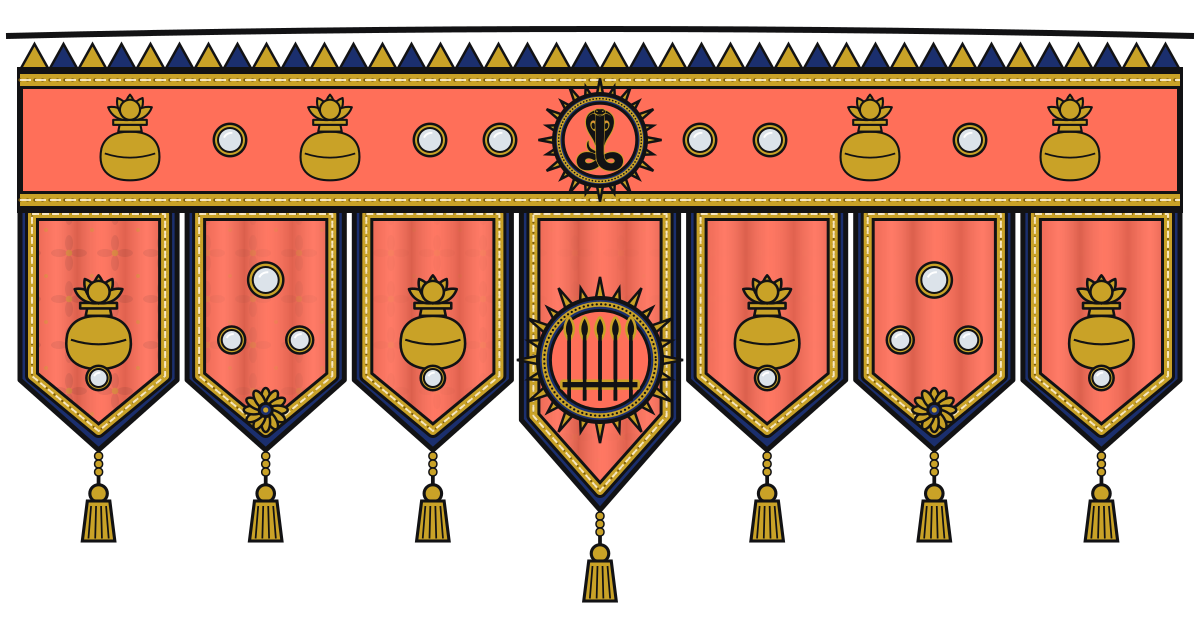
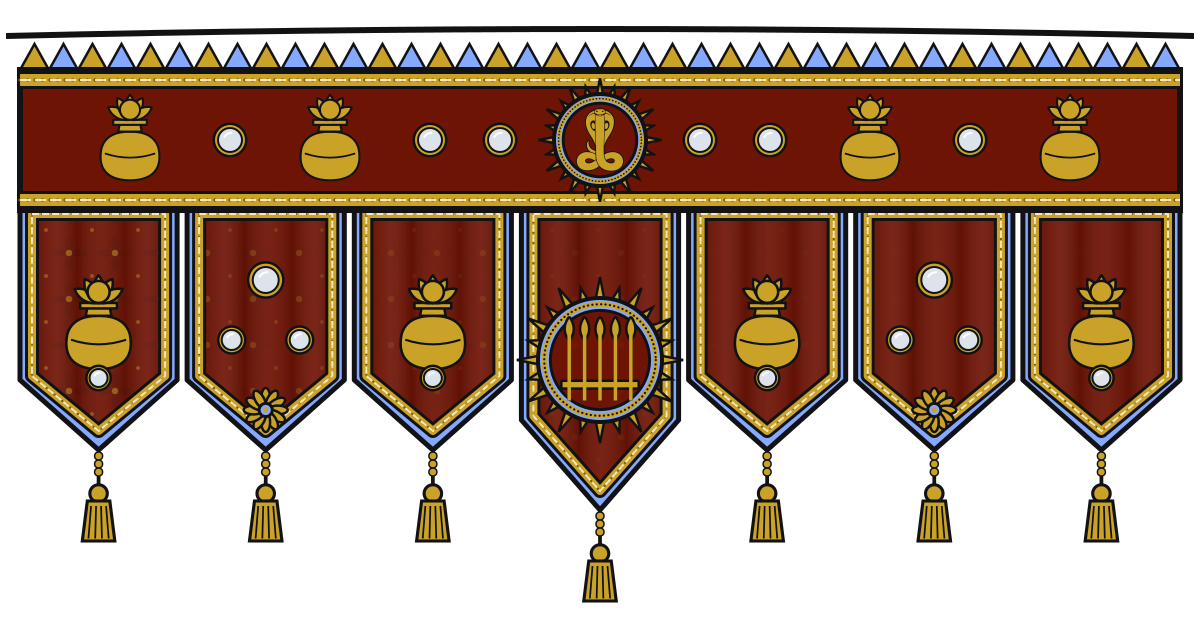
The Atlas records the epic banners: Duryodhana's bore a jewelled serpent, and Bhishma's a palmyra tree with five stars[2]. The clan's flag is a Vaijayanti, the banner of victory, for a people remembered for a great war.

Every flag type for this clan
The same two emblems on every flag type (the Toran included) in bright and deep colours, plus the hanging banner. The outlined card is the clan's own flag.











25VishwaVit
Knower of the world
Game values are design choices for this project, not historical claims.
References
- Kuru kingdom (Wikipedia, read 2026-10-07), citing M. Witzel, “Early Sanskritization: Origins and Development of the Kuru State” (1995), G. Samuel (2010) and H. C. Raychaudhuri (1953).
- Mahabharata (Vyasa, by tradition; composed mostly c. 400 BCE–400 CE) — the Kuru dynasty, the war at Kurukshetra, the banners of the Kuru princes and the line “yato dharmas tato jayah”.
- Hastinapur (Wikipedia, read 2026-10-07), citing B. B. Lal (1955) and Garnayak (Puratattva, 2022) — excavations, temples, Census 2011.
- Anguttara Nikaya — the list of sixteen Mahajanapadas.
- Kurukshetra (Wikipedia, read 2026-10-07) — bounds, tirthas, festivals, later history.
- Tribal Research Institute, Jharkhand, Kanwar (read 2026-10-07) — origin tradition, divisions, septs, language and deities.
- Haryana Tourism, Bhadrakali Temple (read 2026-10-07) — the Shakti Peetha at Thanesar and its horse offerings.
- Brahmi script — earliest datable use in Ashoka's inscriptions (3rd century BCE).
- Ministry of Tribal Affairs, State/UT-wise list of Scheduled Tribes (Constitution (ST) Order 1950 as amended; list dated 09-07-2024), via the Atlas entries ST-015 and ST-093.