The Kulis are a Scheduled Tribe of Odisha, listed for the whole State from the Constitution (Scheduled Tribes) Order of 1950 and notified as ST statewide by the 1976 Amendment Act[1]. The 2011 Census counted 13,689 of them[2][3]. The Odisha State Tribal Museum says their name is believed to come from kula, a dumb-bell used for carding cotton, which it gives as their major past occupation[4]. In 2018 the Supreme Court held that Kulis includes the Kuli community, since Kulis is the plural of Kuli[1]. The extracts name no deity, temple or clan, so the main deity shown is the project's KulDevi, and the page says so.
01Faith and deities
The Atlas gives Samaleswari of Sambalpur as the KulDevi, on the homeland-shrine basis. This is project data, not a sourced deity of the clan. No source names a Kuli or Kulis deity or links them to Samaleswari: the 2012 Orissa Review article and the Tribal Tribune Samalai article do not name Kulis[5][6], and nor does the 2025 Zenodo record[7].
Samaleswari of Sambalpur, goddess of western Odisha
The presiding goddess of the clan's homeland or capital: a link of place, not a recorded clan tie.
| Deity or tradition | Place in the clan's life | Evidence |
|---|---|---|
| Clan gods and goddesses | Mostly animals and birds; none is named in the extracts | [8] |
| Many gods and goddesses | Religious life is centred on several deities, none named | [8] |
02Temples
The Kuli weave cloth for ritual use and make wicks used in temples to worship deities; the review names no temple[8]. No temple is recorded as built or patronised by the Kulis in the extracts.
Built by the clan
Not recorded.
Given patronage or grants by the clan
Not recorded.
03Languages and scripts
| Language or script | Kind | Under the clan | Evidence |
|---|---|---|---|
| Odia living | Language of the people, as the museum gives it | Under the Kulis | [4] |
| Kuli dialect | A special dialect the 2014 book includes, given in Odia and English versions | Kuli | [8] |
04Books and literature
The 2014 study is the main book on the Kulis in the extracts. It is not online, so its content is known here only from the review.
Written during the clan's history
| Work | Author | Kind | When | Link to the clan |
|---|---|---|---|---|
| Kuli: A Tribe of Odisha | Meera Swain | Study of twelve villages and one urban colony in four districts | 2014 | Reviewed in The Tribal Tribune[8] |
Given patronage by the clan
Not recorded.
05Thinkers and scholars
| Name | Field | Era | Contribution |
|---|---|---|---|
| Meera Swain | Not stated | 2014 | Author of Kuli: A Tribe of Odisha[8] |
| Anjali Sahoo | Reviewer | Vol. 7 issue 2 of The Tribal Tribune | Review of the 2014 book[8] |
No other scholar of the Kulis is named in the extracts.
06Art and architecture
The extracts record weaving as the Kulis' craft. No painting, sculpture or architecture is recorded.
Painting and wall art
Not recorded.
Sculpture and temple art
Not recorded.
Temple and building architecture
Not recorded.
Weaving and textiles
| Art form | What it is | Era | Evidence |
|---|---|---|---|
| Coarse cotton dhotis and saris | Woven by the Kulis and sold in local markets | [4] |
Clothing and jewellery
Not recorded.
Coins, pottery and crafts
| Art form | What it is | Era | Evidence |
|---|---|---|---|
| Cotton carding (kula dumb-bell) | The tool the name is believed to come from, and their major past occupation | [4] |
07History
Name and past occupation
The Odisha State Tribal Museum says the name Kuli is believed to derive from kula, a dumb-bell used for carding cotton, which was their major past occupation[4]. The Tribal Tribune review says they moved from food gathering as forest dwellers to weaving and cultivation[8].
Documents describe the Kuli as a community of weavers, earlier forest dwellers, who wove a very coarse cloth[1].
Scheduled Tribe status, 1950 to 1976
The Constitution (Scheduled Tribes) Order of 1950 listed Kulis as an ST for the whole of Odisha. A 1956 modification order declared Kuli a Scheduled Caste in Sambalpur district only, while Kulis stayed ST statewide. The 1976 Amendment Act removed Kuli from the SC list for Odisha and notified Kulis as an ST for the whole State[1].
Kuli and Kulis in the courts
The Orissa High Court, in Sebaram Meher v. State of Orissa, held that Kuli and Kulis are not different. The Commissioner for SC and ST's 24th report (December 1977) said Kuli was deleted from the SC list because the Kulis were already ST[1].
The Supreme Court, 2018
In State of Orissa v. Dasarathi Meher the Supreme Court dismissed Odisha's appeal. It held that Kulis includes the Kuli community, and that no separate community called Kulis exists, since Kulis is the plural of Kuli[1]. Odisha's counsel argued that courts cannot add a tribe; the respondents argued that Kulis is only the plural[1].
08Journey and migrations
The extracts record no migration for the Kulis. Their move from forest gathering to weaving and cultivation is not dated[8].
Not recorded.
09Seats and lands
| Place | Role | Where today |
|---|---|---|
| Bolangir and Sambalpur | Where the Kulis are mainly concentrated | Odisha[4] |
| Much of Odisha | Scattered across much of the State | Odisha[4] |
| Bolangir, Baragarh, Subarnpur, Sambalpur | The four districts of the 2014 study's twelve villages and one urban colony, as the review prints them | Odisha[8] |
| Bargarh, Bolangir, Sambalpur | Districts as the KISS handbook prints them | Odisha[3] |
10Notable figures
Not recorded.
11Allies, rivals and marriages
| People | Relationship | When |
|---|---|---|
| Other castes | Some deny Kuli barbers and washermen; marriage with other castes brings excommunication and fines, as the review reports the book | Not dated[8] |
12Society and livelihood
The review describes classificatory kin terms, a patriarchal family with a male head, and a political organisation that runs from the family up to the Kuli Sabha, with features of egalitarianism[8].
Government and social order
| Institution or group | What it was | Evidence |
|---|---|---|
| Kuli Sabha | The top of the political organisation, which runs from the family up to it | [8] |
| Clan heads | Custodians of their clans, who enforce prescriptions and taboos | [8] |
| Male household head | Holds authority in the family | [8] |
Livelihood over time
| Era | Livelihood | Evidence |
|---|---|---|
| Past | Forest dwellers who gathered food, then took up weaving and cultivation | [8][4] |
| 2014 study | Women mainly in household work and weaving, seasonal collection of firewood, roots and tubers; some daily wage work | [8] |
| Today (OSTM) | Mainly weavers, with cultivation and agricultural labour | [4] |
13Sub-clans and related clans
No sub-clan, branch or gotra is named in the extracts. The 2018 ruling treats Kuli as the singular of Kulis, the same community, so it is not listed as a separate clan[1]. The review says clan heads are custodians of their clans, but names none[8].
Not recorded.
14Surnames
No surname is given in the extracts.
Not recorded.
15Songs and music
No song is named or quoted in the extracts.
None recorded yet.
16Poems, lullabies and children's rhymes
None recorded yet.
17Stories, legends and proverbs
Stories and legends
Not recorded.
Proverbs and sayings
Not recorded.
18Festivals and fairs
Not recorded.
19Food, dress and games
Food
Not recorded.
Dress
Not recorded.
Games and martial arts
Not recorded.
Tags: living still practised · revived brought back after a break · lost known only from records · research reported but not yet confirmed from a source. Songs and poems under copyright are listed by title only; restricted or sacred material is noted without its content.
20Status today
The Kulis are a living community, listed as a Scheduled Tribe of Odisha since 1950[1], counted at 13,689 in the 2011 Census[2].
Recognised heritage
| What | Recognition | Evidence |
|---|---|---|
| Scheduled Tribe status | Listed for the whole of Odisha from 1950; the 1976 Amendment Act notified Kulis as ST statewide[1] | |
| Supreme Court, 2018 | Kulis includes the Kuli community; Kulis is the plural of Kuli[1] |
Not yet reviewed by the Kulis community; the extracts contain no community review.
21For children
The weavers of Odisha
Long ago, the Kulis lived as forest dwellers in Odisha, and they gathered food from the forest. Later they took up weaving and cultivation. They made a very coarse cotton cloth, and they still weave dhotis and saris to sell in local markets. Their name is believed to come from a tool called kula, which they used to card cotton. In 2018 the Supreme Court of India held that the Kulis include the Kuli community.
22Across the project
| Project | What carries this clan | Status |
|---|---|---|
| Atlas of the Janas | Districts for a footprint: Bargarh, Bolangir and Sambalpur (KISS handbook); Subarnpur as the review prints it. No footprint drawn yet | To check |
| KulDevi and GrahDevi | KulDevi Samaleswari and the nine Navadurga forms of the GrahDevi. The sources do not link them to the Kulis | From the Atlas |
| Planet naming | Under research: no planet name is in the extracts | To check |
| Renaming and waters | The Kuli and Kulis names: the 1956 and 1976 orders and the 2018 ruling (see History). No water name is in the extracts | From sources |
23Open questions
- Native-script name: none of the extracts gives one. The Odia form the researcher proposed is unconfirmed and is not printed. Find the Odia name in Meera Swain's 2014 book or in the Census 1961 Vol XIII Part V-B.
- Clan words: no line of the Kulis is in the extracts. Find a cited line, or an inscription or seal legend.
- Clan gods and goddesses: none is named. Lead: Meera Swain's 2014 book (not online).
- Samaleswari as KulDevi: the sheet's link rests on the homeland shrine. No source connects the Kulis to her, so this stays project data until a source does.
- Sub-clans, gotras and surnames: none in the extracts. Lead: Census 1961 Vol XIII Part V-B (southasiacommons, not read).
- Joshua Project entry for the Kuli (peoplegroups and joshuaproject records were seen in search only, not read).
- The AIR 2018 SC 4998 judgment was seen only as a search result; read it for the exact holding.
- Songs, lullabies, proverbs, festivals and food: the 2014 book is the lead, and it is not online.
- Community review of this page.
24Astitva
अस्तित्व · being, existence: everything by which the clan is known
The extracts record one object for the Kulis: the cloth woven for ritual use. Their clan gods are mostly animals and birds, and none is named[8].
Every clan has every accessory, royal objects included. Each one says how it is known: Documented This clan's own object is recorded. · Regional tradition Recorded for the region or for peoples like this one, not for this clan. · Design Made for this project, with no historical claim. · Under research To be found for this clan from sources. Legends and titles are written in the clan's own script.
1. Seals and coins
| Accessory | For this clan | Basis |
|---|---|---|
| B1 Rajamudra · house seal Round seal with the clan emblem and a short legend in the clan's script | Not yet designed for this clan | Design |
| B2 Anguliya-mudra · signet ring Personal seal ring of the head of the house | Not yet designed for this clan | Design |
| B3 Chhapa · house stamp Ink or block stamp for letters, goods and cloth | Not yet designed for this clan | Design |
| B4 Tamrapatra · charter plate Copper-plate grant on a ring, closed with the house seal | Not yet designed for this clan | Design |
| B5 Shreni-mudra · guild or trade seal Seal for the clan's trade, craft or caravan | Not yet designed for this clan | Design |
| C1 Clan coin Emblem or deity on one side, a legend in the clan's script | Not yet designed for this clan | Design |
| C2 Coin die The die that strikes the coin | Not yet designed for this clan | Design |
2. Living symbols
| Accessory | For this clan | Basis |
|---|---|---|
| I1 Totem trio The tree, bird and animal the clan protects | Clan gods and goddesses, mostly animals and birds; none named The review reports the clan gods of the Kuli as animals and birds; no tree, bird or animal is named[8] | Documented |
| I2 Kaval-maram · guardian tree The tree that stands at the clan's seat | Not yet found for this clan | Under research |
3. Stone and gate
| Accessory | For this clan | Basis |
|---|---|---|
| G1 Torana · gateway The built gate of the seat; the cloth Toran hangs in it | Not yet designed for this clan | Regional tradition |
| G2 Viragallu · hero stone Carved panel stone for a member who died defending the clan | Not yet designed for this clan | Regional tradition |
| G3 Kula-shila · clan stones Standing and table stones that remember the ancestors | Not yet designed for this clan | Design |
| G4 Jayastambha · victory pillar A pillar raised for a victory | Not yet designed for this clan | Design |
| G5 Sima-shila · boundary stone Marks the clan's land, with a line in the native script | Not yet designed for this clan | Design |
4. Sounds
| Accessory | For this clan | Basis |
|---|---|---|
| D1 Pancha-mahashabda · five great sounds The right to five instruments | Not yet designed for this clan | Design |
| D2 Shankha · clan conch The clan's own named war conch | Not yet designed for this clan | Design |
| D3 Murasu · house drums Three drums: war, charity and justice | Not yet designed for this clan | Design |
5. Kit: colours, metals and emblems
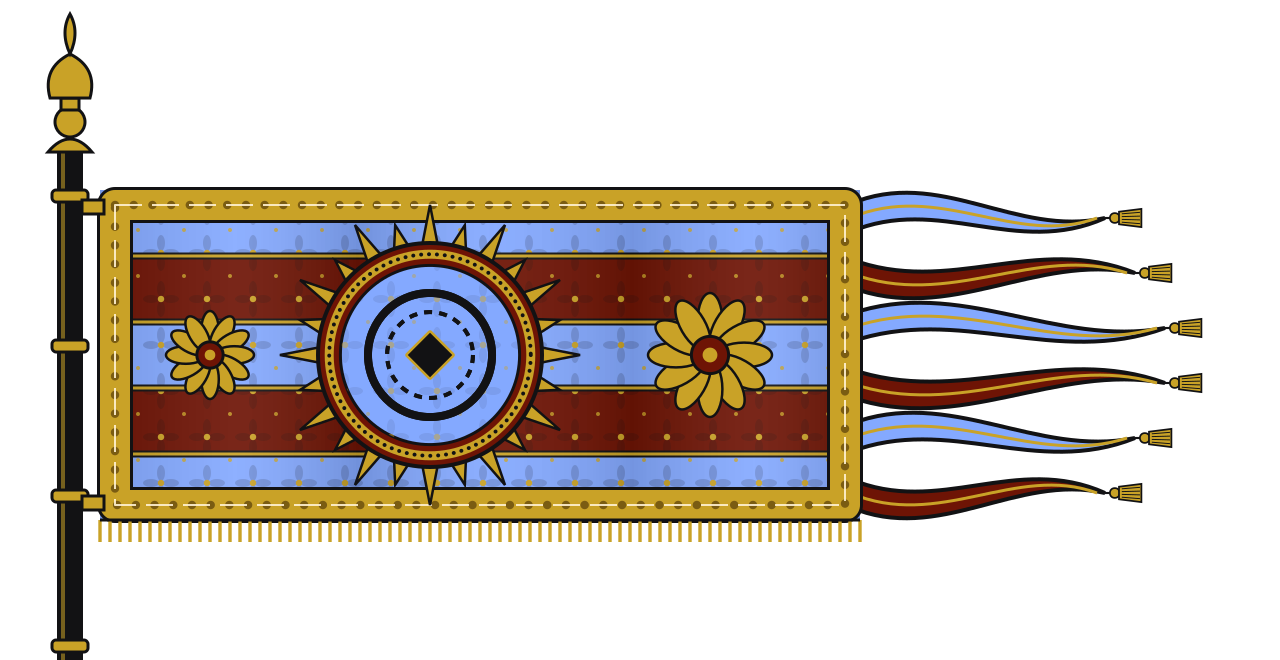
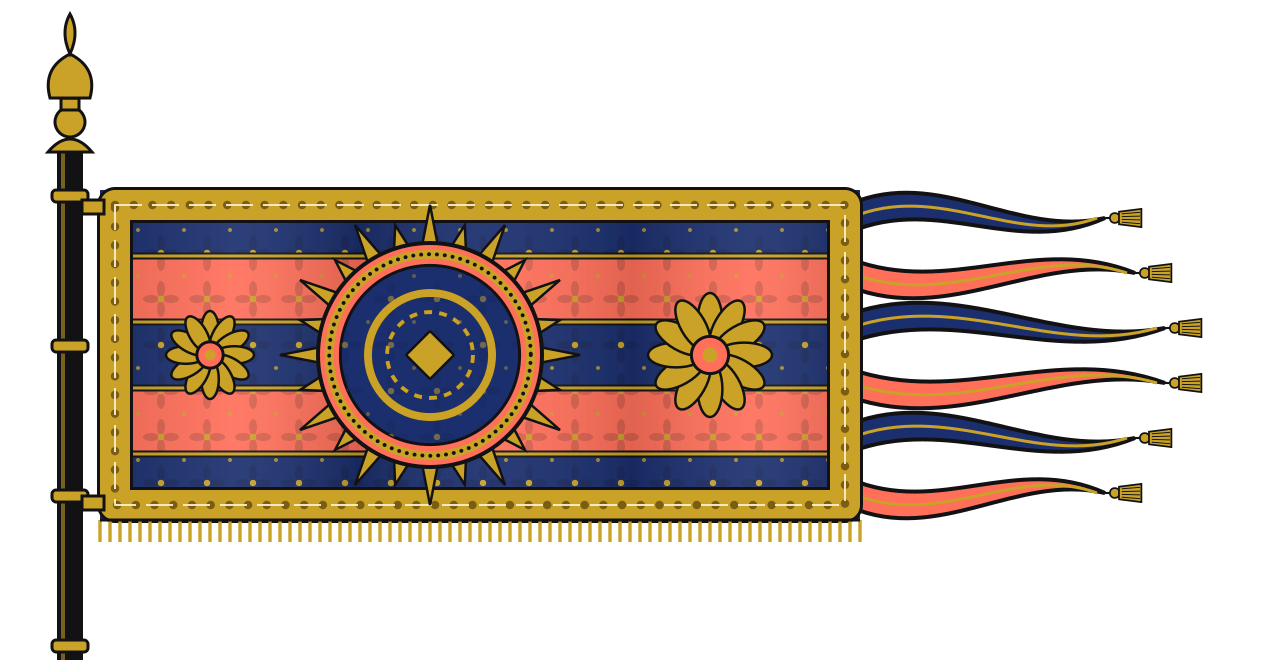
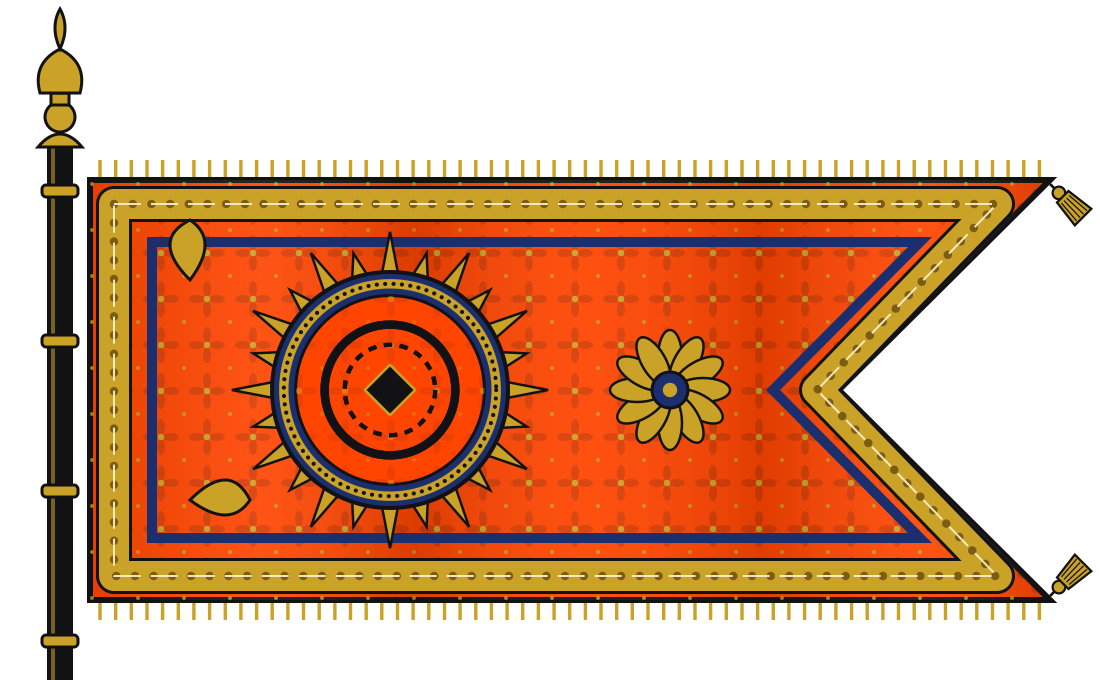
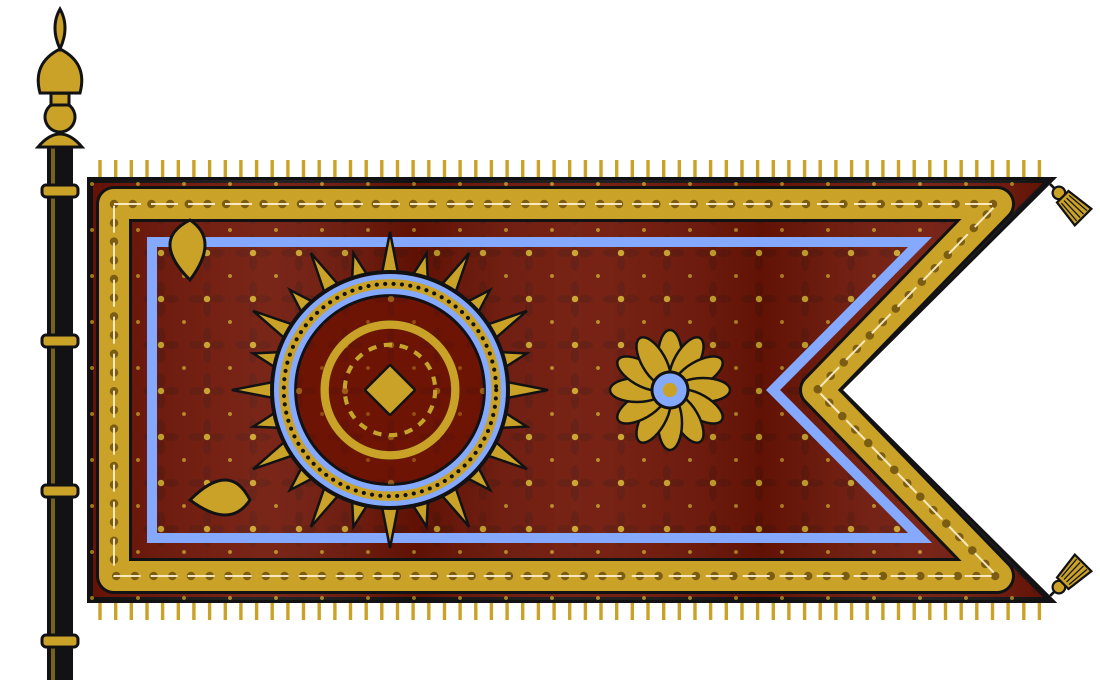
No Kulis emblem, seal or banner is in the extracts. The Atlas gives a sal tree and a great river, with the Changi crest as the flag type. These are design ideas from the sheet, not documented symbols.
| Part of the kit | This clan |
|---|---|
| Field | Warm Red-Orange #FF6F59 |
| Accent | Intense Electric Blue #84A9FF |
| Emblem colour | Charcoal Black #121214 |
| Zari metal | Gold |
| Main emblem | A sal tree |
| Second image | A great river |
| Night and day | Every visual accessory has two versions: by night the emblem on the dark field, by day the clan's field colour on cloth woven from its metal. |
6. Flags
Every clan has every flag type; the type says the occasion and the colours say the clan. The outlined card is the flag the Atlas assigns.
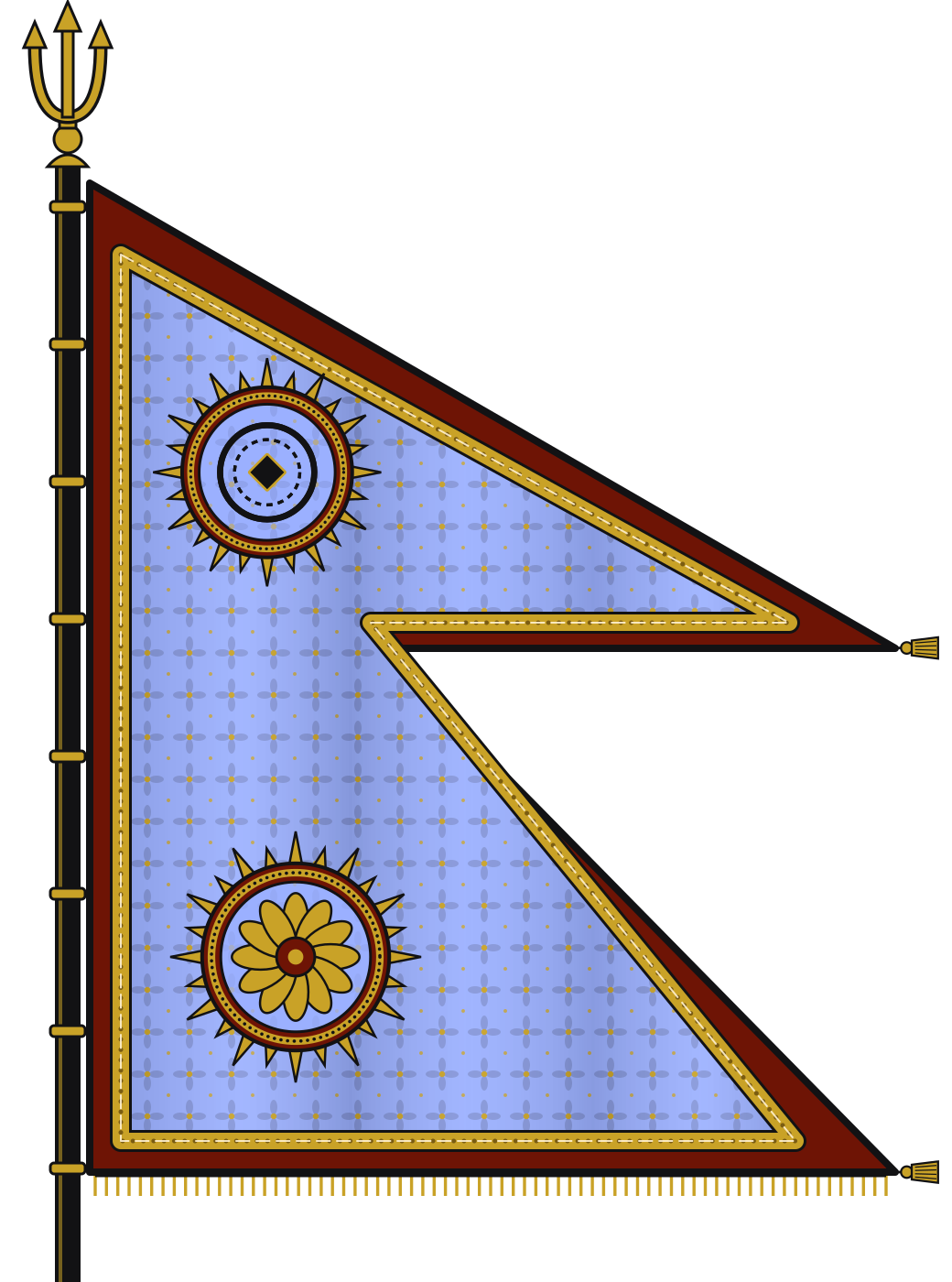
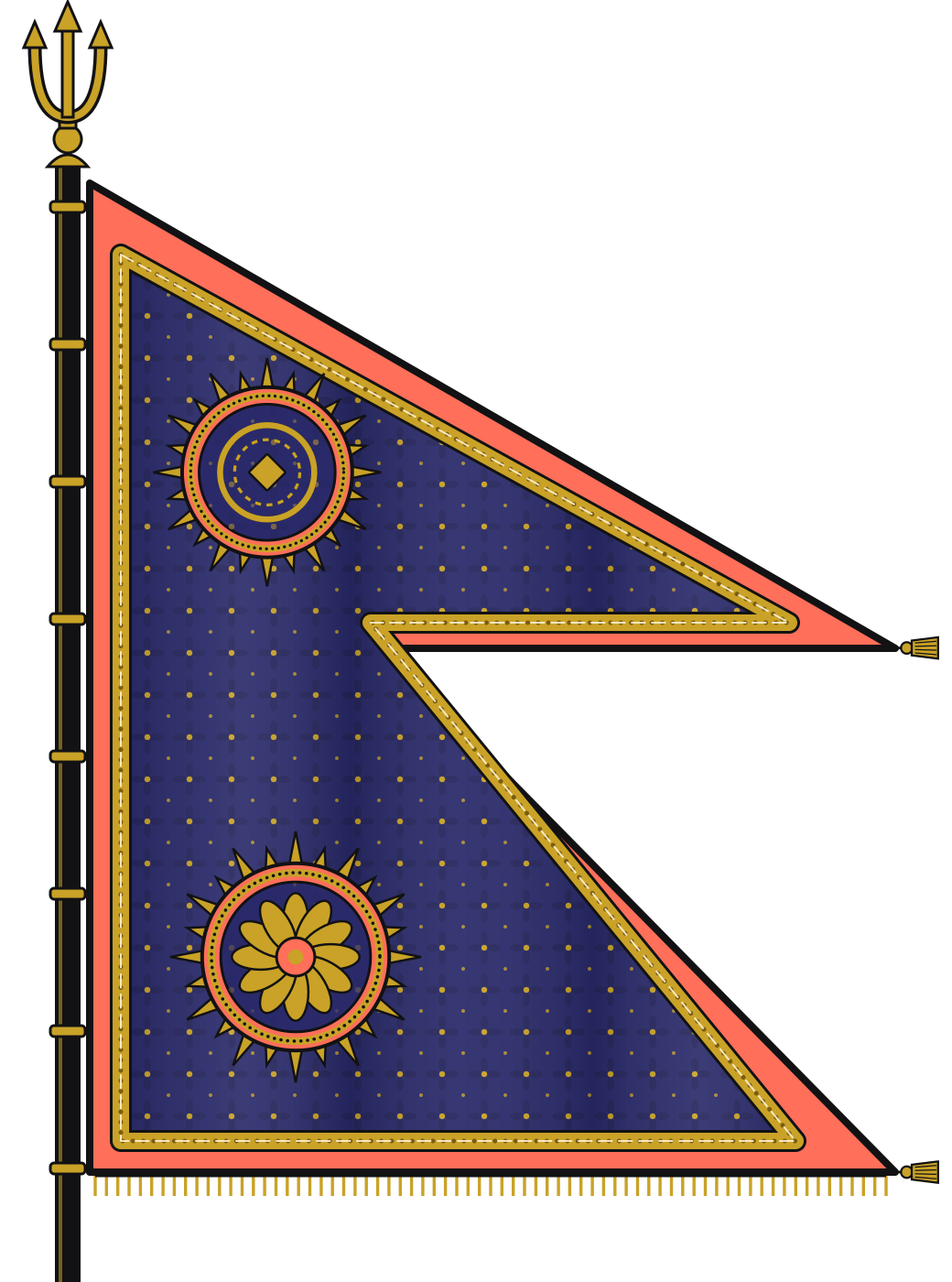

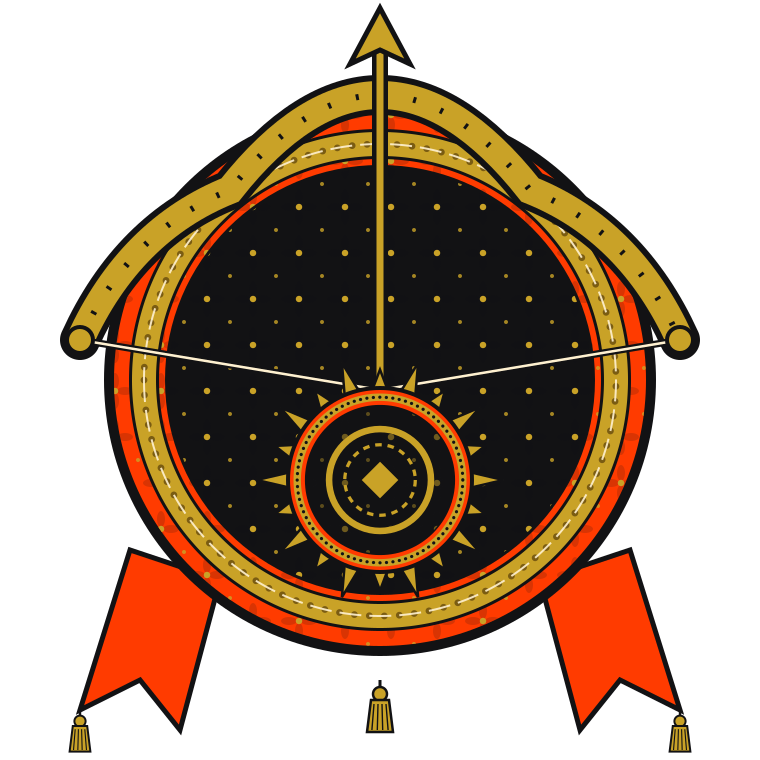
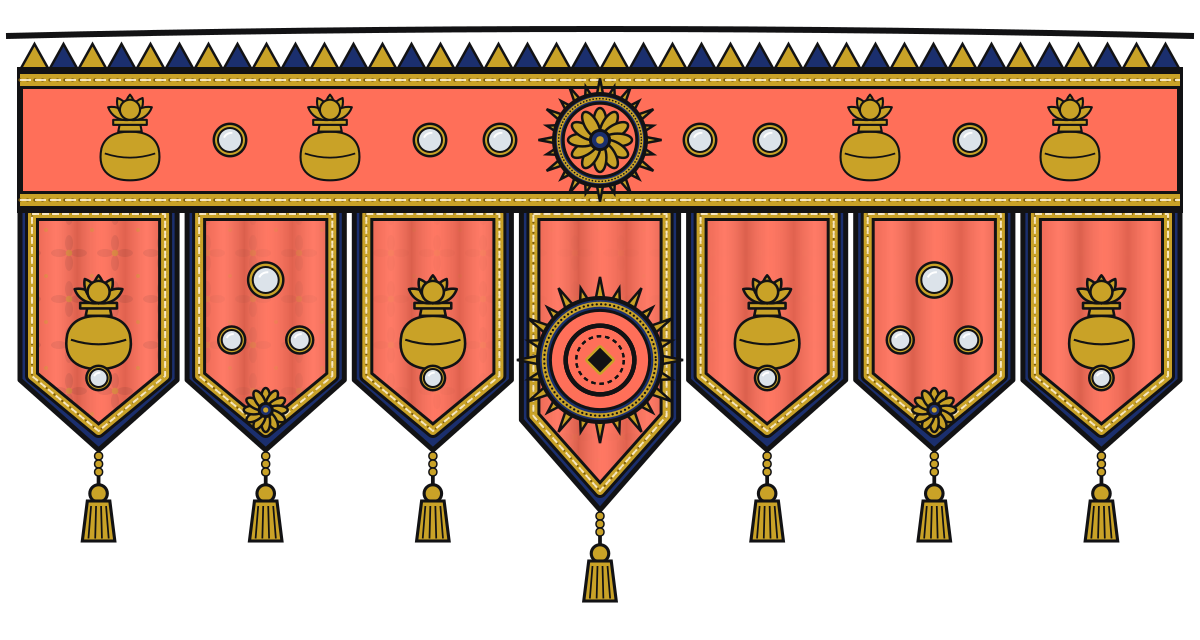
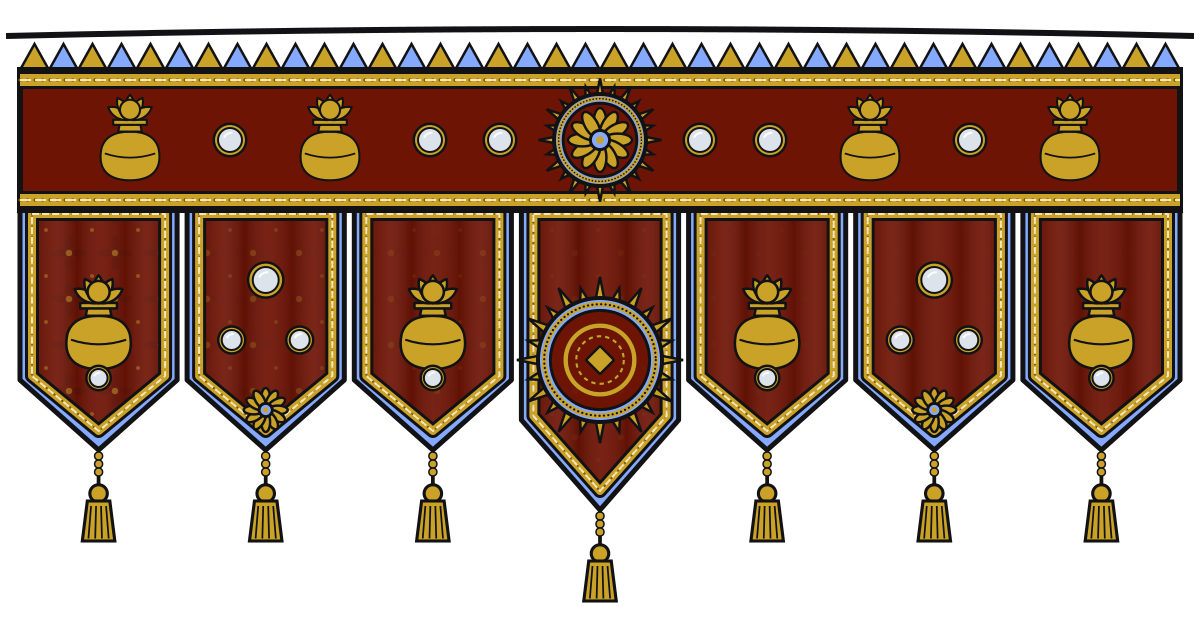
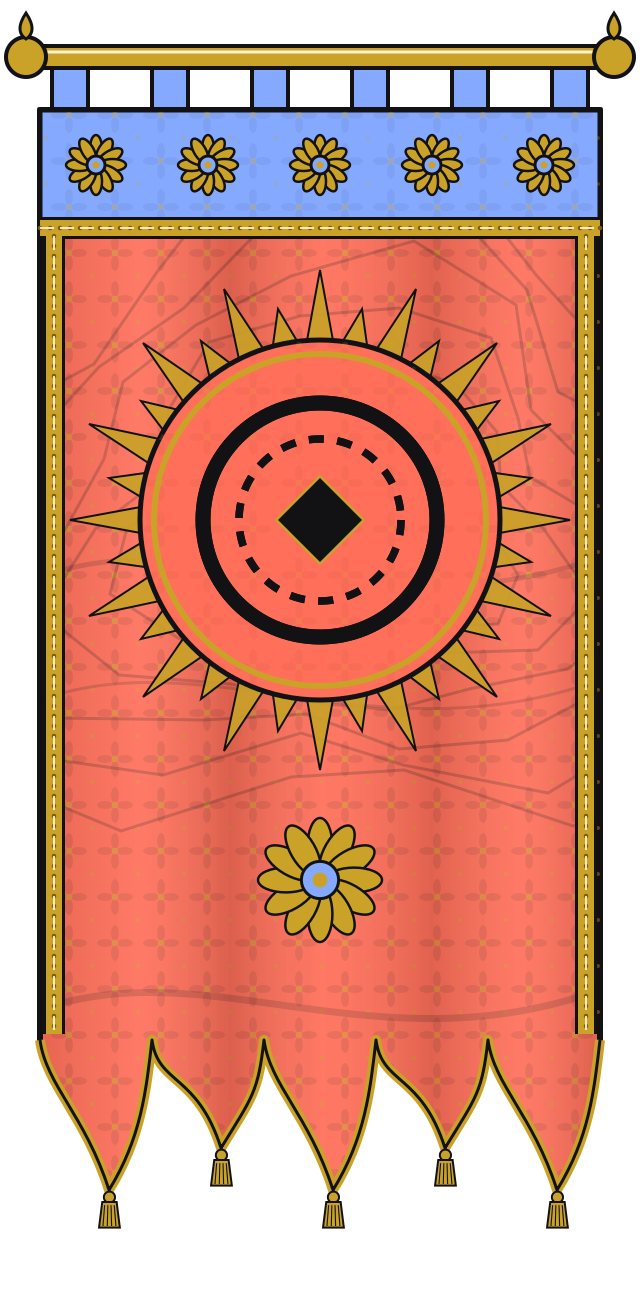
Historic banner
None known
New flag types
| Accessory | For this clan | Basis |
|---|---|---|
| A9 Pota-dhvaja · ship and trade flag For ships, caravans and markets | Not yet designed for this clan | Design |
| A10 Utsava-patāka · festival flag Light, bright flag for fairs and festivals | Not yet designed for this clan | Design |
| A11 Shoka-dhvaja · mourning flag White cloth with the emblem outline in the clan's metal | Not yet designed for this clan | Design |
7. Regalia
| Accessory | For this clan | Basis |
|---|---|---|
| E1 Chhatra · house parasol The ceremonial umbrella | Not yet designed for this clan | Design |
| E2 Chamara · fly-whisks The pair of whisks beside the head of the house | Not yet designed for this clan | Design |
| E3 Danda · staff of office Staff or scepter | Not yet designed for this clan | Design |
| E4 Simhasana · seat The seat of the house, covered in clan cloth | Not yet designed for this clan | Design |
| E5 Khetaka · shield A round shield; the Changi and Dhanush are its flag forms | Not yet designed for this clan | Regional tradition |
| E6 Kula-ayudha · clan weapon The weapon the clan honours | Not yet found for this clan | Under research |
8. Worn
| Accessory | For this clan | Basis |
|---|---|---|
| F1 Kula-vastra · clan cloth The clan's woven pattern in its kit colours | Cloth woven for ritual use; its pattern is not recorded The Kuli weave cloth for ritual use[8] | Documented |
| F2 Kirti-vastra · honour cloth A cloth earned for a deed, not inherited | Not yet designed for this clan | Design |
| F3 Kula-mala · garland flower The flower or leaf the clan wears as a garland | Not yet found for this clan | Under research |
| F4 Chinha · house pin A metal badge with the pin emblem | Not yet designed for this clan | Design |
9. Records
| Accessory | For this clan | Basis |
|---|---|---|
| H1 Clan words A traditional line in the native script | · “Under research” No Kulis or Kuli line is in the extracts. The sources give only the sense of the name: it is believed to come from kula, a dumb-bell used for carding cotton[4]. | Documented |
| H2 Biruda · titles The house's title or titles | Not yet found for this clan | Under research |
| H3 Prashasti · praise genealogy The lineage as written at the head of a grant | Not yet found for this clan | Under research |
| H4 Vahi · clan register The book of the clan's births, marriages and deaths | Not yet found for this clan | Under research |
| H5 Rana-ghosha · war cry The clan's cry in battle or celebration | Not yet found for this clan | Under research |
10. VishwaVit · knower of the world
Game values are design choices for this project, not historical claims.
References
- Murali Krishnan, Supreme Court on Kuli and Kulis (State of Orissa v. Dasarathi Meher), Bar and Bench, 27 Sept 2018, read 1 Nov 2026, link
- Wikipedia, List of Scheduled Tribes in Odisha, read 2026-10-20, https://en.wikipedia.org/wiki/List_of_Scheduled_Tribes_in_Odisha
- Sushree Mohanty, Indigenous Colours of Odisha: Handbook on 62 Tribes (KISS), read 2026-10-20, link
- Odisha State Tribal Museum (SCSTRTI), Tribes of Odisha: Kulis, read 1 Nov 2026, https://ostm.in/tribes_of_odisha/kulis/
- Prabhas Kumar Singh, "Festivals, Rituals and Vesas of Goddess Samalesvari of Sambalpur", Odisha Review, Oct 2012, pp. 14–20 (read 30 Oct 2026, KulDevi clan check).
- Kailash Chandra Das, "Samalai and Sitalasasti", The Tribal Tribune vol. 4 no. 4 (ISSN 2249 3433), undated (read 9 Oct 2026).
- Tutelary deities of south Odisha (Zenodo record 20544836), Zenodo (read 30 Oct 2026, KulDevi clan check).
- Anjali Sahoo, review of Meera Swain, Kuli: A Tribe of Odisha (The Freelancers, Bhubaneswar, 2014), The Tribal Tribune vol. 7 issue 2, read 1 Nov 2026, link