Kosala was one of the sixteen great realms (Mahajanapadas) of northern India, lying between the Himalayan foothills and the Ganga along the Sarayu river[1]. Its royal house, the Ikshvakus of the Solar line (Suryavamsha), is the dynasty of Rama in the Ramayana[2]. In the Buddha's lifetime Kosala was ruled from Shravasti by King Prasenajit, one of the most powerful kings of the age[3]. Within a few generations it was absorbed into Magadha.
01History
The Solar line
Epic and Puranic tradition traces the Kosala kings to Ikshvaku, son of Manu, founder of the Solar dynasty[5]. His descendants include Raghu, Dasharatha and Rama, whose rule from Ayodhya the Ramayana presents as the model of righteous kingship. The same epic describes the banner of Ayodhya's army bearing the Kovidara tree[2].
In the Vedic texts
The Shatapatha Brahmana places Kosala east of the Kuru–Panchala heartland. Its story of Videgha Mathava carrying the sacred fire eastward makes the Sadanira river (the Gandak) the boundary between Kosala and its eastern neighbour, Videha[6].
A great realm
Buddhist texts list Kosala among the sixteen Mahajanapadas[1]. By the 6th century BCE it had absorbed Kashi and held the Shakya republic of Kapilavastu under its overlordship. King Prasenajit (Pasenadi) ruled from Shravasti and became a lay follower of the Buddha[3]; the merchant Anathapindika gave the Jetavana monastery there, where tradition says the Buddha spent more rainy seasons than anywhere else[7].
Kosala and Magadha were linked by marriage. Prasenajit's sister married King Bimbisara of Magadha with a Kashi village as her dowry. When Ajatashatru seized the Magadhan throne the two realms went to war over it, and the peace was sealed by Ajatashatru's marriage to Prasenajit's daughter, Vajira[3].
The fall
Prasenajit was overthrown by his son Vidudabha, who then destroyed the Shakyas of Kapilavastu[8]. Kosala did not outlast Magadha's rise: by the 4th century BCE it was part of the Magadhan state that the Nandas and Mauryas would turn into an empire[9].
02Journey and migrations
Kosala's story is one of a people settling the rice country north of the Ganga, a royal seat that moved from Ayodhya to Shravasti, and a realm swallowed by Magadha whose old capital lived on under new rulers.
| When | From | To | Why | Evidence |
|---|---|---|---|---|
| Vedic period legend | Kuru–Panchala heartland | The Sadanira (Gandak) river | Videgha Mathava carries the sacred fire eastward; the Sadanira becomes the boundary between Kosala and Videha | [6] |
| c. 700–500 BCE | Vedic heartland to the west | Kosala, north of the Ganga | The Central Ganga plain enters the Iron Age and is the earliest rice country of South Asia; by 500 BCE Vedic people have spread to Kosala | [10] |
| 6th–5th century BCE | Ayodhya | Shravasti | The royal seat is at Shravasti in the Mahajanapada period; the reason for the move is not recorded | [10] |
| 5th century BCE | Kosala | Lands of the Shakyas, Koliyas and Kalamas | Vidudabha annexes the neighbouring republics after taking the throne | [10][8] |
| 5th–4th century BCE | Kosala | Magadha | Vidudabha is defeated and killed by Ajatashatru; Kosala is absorbed into Magadha | [10] |
| 2nd century BCE – 5th century CE later | Shravasti | Ayodhya (Saketa) | Later kings strike coins at Ayodhya; Saketa is renamed Ayodhya in the Gupta period, and an inscription of 436 CE calls Ayodhya the capital of Kosala | [10][11] |
03Seats and lands
| Place | Role | Where today |
|---|---|---|
| Ayodhya (Saketa) | Capital of the Solar line in the epics; later the city of Saketa | Ayodhya, Uttar Pradesh |
| Shravasti | Capital in the Buddha's time; site of the Jetavana monastery | Shravasti district, Uttar Pradesh |
| Sarayu river | The river of Ayodhya and the realm's heart | Ghaghara–Sarayu, Uttar Pradesh |
| Kashi | Neighbouring realm annexed by Kosala | Varanasi, Uttar Pradesh |
| Kapilavastu | Shakya republic under Kosala's overlordship | Near the India–Nepal border |
04Notable figures
| Name | Role | Era | Known from |
|---|---|---|---|
| Ikshvaku legend | Founder of the Solar line | Legendary | Puranas[5] |
| Rama legend | King of Ayodhya; the ideal of righteous rule | Legendary | Valmiki Ramayana[2] |
| Prasenajit (Pasenadi) | King at Shravasti; lay follower of the Buddha | c. 6th–5th century BCE | Pali Canon[3] |
| Mallika | Chief queen of Prasenajit; Buddhist devotee | c. 6th–5th century BCE | Pali Canon[3] |
| Anathapindika | Merchant of Shravasti who gave the Jetavana | c. 6th–5th century BCE | Pali Canon[7] |
| Vidudabha | Son who overthrew Prasenajit; destroyed Kapilavastu | c. 5th century BCE | Pali commentaries[8] |
05Allies, rivals and marriages
| People | Relationship | When |
|---|---|---|
| Magadha | Marriage ally, then rival; finally absorbed Kosala | c. 6th–4th century BCE |
| Kashi | Annexed; its villages became royal dowry | Before the 6th century BCE |
| Shakyas | Republic under Kosala's overlordship; destroyed by Vidudabha | c. 5th century BCE |
| Videha | Eastern neighbour across the Sadanira river | Vedic period |
06Society and livelihood
Kosala was one of the first states of the Ganga plain to move from rule by lineages to a monarchy, with many faiths and several subject republics.
Government and social order
| Institution or group | What it was | Evidence |
|---|---|---|
| Monarchy | One of the earliest states, with Magadha, to move from a lineage-based society to kingship | [10] |
| Overlordship of republics | At its peak Kosala held the Shakyas, Koliyas, Kalamas, Mallakas and Moriyas; Pasenadi's Kosala was suzerain of the Kalama republic | [10] |
| Royal officers | The general Bandhula, a Malla trained at Takshashila, served Pasenadi until the king had him killed | [10] |
| Priests and renouncers | Brahmin ritualists of the Shukla Yajurveda (Kanva school) beside wandering Buddhist, Jain and Ajivika teachers | [10][6] |
| Merchants (gahapati) | Rich householders such as Anathapindika of Shravasti, who bought the Jetavana for the Buddha's order | [7][12] |
| Towns | Ayodhya, Saketa and Shravasti, with smaller towns such as Setavya, Ukattha, Dandakappa, Nalakapana and Pankadha | [10] |
Livelihood over time
| Era | Livelihood | Evidence |
|---|---|---|
| c. 1450–700 BCE | Black and Red Ware culture, before the Iron Age | [10] |
| c. 700–300 BCE | Rice farming on the Ganga plain; fine Northern Black Polished pottery for the elite | [10][13] |
| 6th–5th century BCE | Town trade and luxury cloth (Kashi muslin); silver punch-marked coins | [14][15] |
| 2nd–1st century BCE later | Square copper coins of the Deva kings, found mostly at Ayodhya | [10] |
07Sub-clans and related clans
Kosala was a realm rather than a single clan: its royal house claimed the Ikshvaku line, and it ruled or bordered several peoples that have their own Atlas entries.
| Clan | Relation | Where | Size | In the Atlas | Evidence |
|---|---|---|---|---|---|
| Ikshvaku इक्ष्वाकु | Dynasty from this clan | Ayodhya and Shravasti | same name as ANC-269: check | Named a raja in the Rigveda; royal line of Kosala in the Puranas and Ramayana[10][5] | |
| Kashis | Related people | Varanasi | ANC-048 | Conquered under Mahakosala[10] | |
| Shakyas | Related people | Kapilavastu | ANC-120 | Under Kosala's overlordship; annexed by Vidudabha[10] | |
| Koliyas | Related people | Ramagrama; Devadaha | ANC-057 | Annexed by Vidudabha[10] | |
| Kalamas | Related people | Kesaputta | ANC-044 | Republic under Kosala's suzerainty[10] | |
| Mallas | Related people | Kushinagar and Pava | ANC-079 | Among the peoples within the realm at its peak[10] | |
| Moriyas | Related people | Pipphalivana | ANC-082 | Among the peoples within the realm at its peak[10] | |
| Videhas | Related people | East of the Sadanira | ANC-147 | Eastern neighbour; Kosala-Videha share a Vedic school[10][6] | |
| Dakshina Kosalas | Related people | Chhattisgarh and western Odisha | ANC-030 | Same name ("Southern Kosala") in the Atlas; the link is not yet researched | |
| Deva dynasty of Saketa | Dynasty from this clan | Ayodhya | same name as ANC-253: check | Post-Maurya kings of Kosala; Dhanadeva's inscription claims descent from Pushyamitra Shunga[10] | |
| Late Mitra dynasty of Kosala | Dynasty from this clan | Ayodhya | same name as ANC-257: check | Satyamitra, Aryamitra, Vijayamitra, Devamitra[10] |
Clans marked "new clan candidate" are not in the Atlas yet.
08Surnames
Not recorded.
09Faith and deities
Ancestor of the Solar line (Suryavamsha) from which the Kosala kings claimed descent. In the Ramayana, Rama prays to the Sun with the Aditya Hridayam before his final battle[2].
Pateshwari of Tulsipur, Shakti Peetha of Kosala[16]
The presiding goddess of the clan's homeland or capital: a link of place, not a recorded clan tie.
| Deity or tradition | Place in the clan's life | Evidence |
|---|---|---|
| Surya | Ancestral deity of the Solar line | Epics and Puranas[2][5] |
| Indra and Agni | Gods of the Vedic sacrifice performed by the kings | Shatapatha Brahmana[6]; Pasenadi's great sacrifice in the Yañña Sutta[3] |
| Vishnu as Rama | Rama, born in Ayodhya, later worshipped as Vishnu's avatar; the centre of Ayodhya's devotion today | Ramayana tradition[2] |
| The Buddha and the Tirthankaras | Buddhism flourished at Shravasti; Jain tradition makes Ayodhya the birthplace of Rishabhanatha and four other Tirthankaras, and Shravasti of Sambhavanatha | Pali Canon[3]; Jain tradition[17] |
10Temples
Kosala's great age came before stone temples were built in India. Its sacred places were fire altars, groves and Buddhist monasteries, so the list below records those; the famous temples of Ayodhya were built much later and are listed separately.
Built by the clan
| Temple | Deity | Built by | When | Where |
|---|---|---|---|---|
| Rajakarama | Buddhist nunnery | King Prasenajit | c. 5th century BCE | Shravasti[18] |
Given patronage or grants by the clan
| Temple | Deity | What the clan gave | When | Where |
|---|---|---|---|---|
| Jetavana monastery | The Buddha | Given by the merchant Anathapindika; frequented and supported by King Prasenajit | c. 5th century BCE | Shravasti[3][7] |
Later temples in the clan's lands
| Temple | Deity | Built | Where |
|---|---|---|---|
| Hanuman Garhi | Hanuman | 18th century | Ayodhya |
| Kanak Bhawan | Rama and Sita | Rebuilt 1891 | Ayodhya |
| Shri Ram Janmabhoomi Mandir | Rama | Consecrated 2024 | Ayodhya |
| Sobhnath Jain temple | Sambhavanatha | Ruins; medieval | Shravasti |
11Languages and scripts
| Language or script | Kind | Under the clan | Evidence |
|---|---|---|---|
| Vedic Sanskrit | Language of ritual | Used for the royal sacrifices and the Brahmana texts that name Kosala | [6] |
| Eastern Prakrit and Pali | Spoken language and scripture | The Buddha taught largely at Shravasti; his teachings were preserved in Pali | [3] |
| No script yet | Writing | Kosala flourished before writing came into use; the first scripts in the region are Ashokan Brahmi, after its fall | [19] |
| Awadhi | Later regional language | Named after Awadh (from Ayodhya); Tulsidas began the Ramcharitmanas, the Rama epic in Awadhi, at Ayodhya in 1574 | [20] |
12Books and literature
The kingdom of Kosala ended in the 4th century BCE. These works come from its lifetime or tell its story. Kosala's age was oral: texts were memorised and written down centuries later, so no book written for a Kosala king survives.
Written in the clan's lands during its era
| Work | Author | Kind | When | Link to the clan |
|---|---|---|---|---|
| Shatapatha Brahmana | Yajnavalkya and others (tradition) | Vedic ritual prose | c. 8th–6th century BCE | Text of the eastern Ganga realms; names Kosala and its borders[6] |
| Discourses of the Buddha (Pali Canon) | The Buddha and his disciples | Buddhist scripture, oral then written | c. 5th century BCE | Hundreds of discourses are set at the Jetavana in Shravasti, including the Kosala Samyutta about King Prasenajit[3][7] |
| Valmiki Ramayana | Valmiki (tradition) | Sanskrit epic | Composed c. 5th century BCE – 3rd century CE (debated) | The epic of Kosala's Solar line, set in Ayodhya[2] |
Given patronage by the clan
| Work | Author | What the clan gave | When | Evidence |
|---|---|---|---|---|
| Discourses given at the Jetavana | The Buddha | Royal protection and support for the Buddha's order at Shravasti, from King Prasenajit | c. 5th century BCE | [3] |
13Thinkers and scholars
| Name | Field | Era | Contribution |
|---|---|---|---|
| Vasishtha legend | Sage, royal priest | Legendary | Hereditary preceptor of the Ikshvaku kings in the epics[2] |
| Valmiki legend | Poet | Legendary | Traditional author of the Ramayana, the first Sanskrit epic, set in Kosala[2] |
| Makkhali Gosala | Philosopher | c. 5th century BCE | Founder of the Ajivika school; born near Shravasti according to the Bhagavati Sutra[21] |
| The Buddha | Philosopher (taught here) | c. 5th century BCE | A Shakya of Kosala's vassal republic; gave many of his teachings at Shravasti[3] |
No mathematicians or astronomers are recorded from the Kosala clan itself.
14Art and architecture
Kosala's own era (c. 7th–5th century BCE) comes before stone temples and stone sculpture in North India, so almost none of its art survives. What is known comes from pottery, coins, the Pali texts and reliefs carved a few centuries later that show Kosala stories. Each row says which kind of evidence it rests on.
Painting and wall art
| Art form | What it is | Era | Evidence |
|---|---|---|---|
| Painted hall (cittāgāra) | King Pasenadi kept a painted hall in his pleasure park at Shravasti; nuns were forbidden to go and look at it, which shows it was a known sight. None of the paintings survive. | 5th century BCE | Text only[22] |
Sculpture and temple art
| Art form | What it is | Era | Evidence |
|---|---|---|---|
| Jetavana purchase relief later | The best-known carving of a Kosala story: the merchant Anathapindika's carts cover Prince Jeta's park with coins to buy it for the Buddha. Carved at Bharhut, far from Kosala. | c. 100 BCE | Stone relief, Indian Museum, Kolkata[12] |
Temple and building architecture
| Art form | What it is | Era | Evidence |
|---|---|---|---|
| Monastery plan (ārāma) | The Jetavana and the Rajakarama at Shravasti: dwelling cells, assembly and service halls, halls with fireplaces, cloisters, wells and ponds, built in timber and brick rather than stone. | 5th century BCE | Vinaya description; excavated remains are later[23][18] |
Weaving and textiles
| Art form | What it is | Era | Evidence |
|---|---|---|---|
| Kāsi cloth (kāsikavattha) | Fine “Benares muslin”, the luxury cloth of the Pali texts. Kashi was part of Kosala in Pasenadi's time and was given away as a dowry village. | 6th–5th century BCE | Pali texts[14][9] |
Clothing and jewellery
| Art form | What it is | Era | Evidence |
|---|---|---|---|
| Dhoti, shawl and turban later | People in the reliefs that show Kosala stories wear the draped dhoti, an upper cloth and, for the wealthy, a large turban and heavy ear and neck ornaments. | c. 125–75 BCE | Bharhut reliefs[24] |
Coins, pottery and crafts
| Art form | What it is | Era | Evidence |
|---|---|---|---|
| Northern Black Polished Ware | Glossy, mirror-black fine pottery made for the elite; found at Shravasti and Ayodhya. | c. 700–200 BCE | Excavated pottery[13] |
| Silver punch-marked coins | One-sided silver karshapanas stamped with four symbols (an S-shape, a triskelion, a four-arrow sign, a star). | c. 500–400 BCE | Coins; attribution to Kosala by numismatists[15] |
15Songs and music
None recorded yet.
16Poems, lullabies and children's rhymes
None recorded yet.
17Stories, legends and proverbs
Stories and legends
| Story | What happens | Told by | Evidence |
|---|---|---|---|
| The fire that crossed the rivers legend | Videgha Mathava carries Agni east until the fire stops at the Sadanira, which becomes Kosala's border with Videha | Vedic priests | [6] |
| Rama of Ayodhya legend | The prince of the Solar line is exiled, wins back Sita and returns to rule Ayodhya | Valmiki and later Rama tellers | [2] |
| The park paved with coins | Anathapindika covers Prince Jeta's park with coins to buy it for the Buddha | Buddhist texts; Bharhut relief | [12][7] |
| Bandhula and the Licchavi tank | The Kosala general violates the Licchavis' sacred Abhiseka tank, starting hostilities; Pasenadi later has him killed | Buddhist tradition | [10] |
| Vidudabha's revenge | Shamed by the Shakyas over his mother's birth, Vidudabha seizes the throne and destroys Kapilavastu | Dhammapada commentary | [8] |
Proverbs and sayings
Not recorded.
18Festivals and fairs
| Festival or fair | When | Where | What happens |
|---|---|---|---|
| Ram Navami later living | Chaitra (March–April) | Ayodhya (Ramkot) | Rama's birthday, kept with great pomp; devotees come from across the world[11] |
| Deepotsav later living | Eve of Diwali | Ayodhya, Saryu ghats | Lamps lit along the river; 2,223,676 oil lamps in 2023 set a Guinness record[11] |
| Chaudah Kosi Parikrama later living | Yearly; 10 November in 2024 | Ayodhya | A 42 km walk round the holy city, often after a bath in the Saryu; about 3 million walkers in 2024[25] |
| Panchkosi Parikrama later living | Yearly, after the Chaudah Kosi | Ayodhya | Pilgrims walked it after the Chaudah Kosi in 2024[25] |
| Shivratri later living | Yearly | Nageshwarnath temple, Ayodhya | Kept with great splendour[11] |
19Food, dress and games
Food
Not recorded.
Dress
Not recorded.
Games and martial arts
Not recorded.
Tags: living still practised · revived brought back after a break · lost known only from records · research reported but not yet confirmed from a source. Songs and poems under copyright are listed by title only; restricted or sacred material is noted without its content.
20Status today
The kingdom of Kosala ended when Magadha absorbed it in the 5th–4th century BCE. Its land is roughly the Awadh region of Uttar Pradesh, reaching into south Nepal, and Ayodhya and Shravasti are great pilgrimage towns[10][11]. No community has a documented descent from the Kosala kings.
Who carries the name today
| Community | Link | Basis | Evidence |
|---|---|---|---|
| Rajput clans of the Solar line | Several clans claim descent from Surya through the Raghuvanshi or Ikshvaku line | Disputed | Historians (Vanina 2012, Wink 2002) call such epic genealogies unsubstantiated[26] |
| Dakshina Kosalas (ANC-030) | Shares the Kosala name in Chhattisgarh and western Odisha | Under research | See open questions |
Recognised heritage
| What | Recognition | Evidence |
|---|---|---|
| Deepotsav, Ayodhya | Guinness world record for oil lamps, 2023 | [11] |
| Jetavana relief from Bharhut | Indian Museum, Kolkata | [24] |
This page has not been reviewed by any community. Corrections are welcome and will be recorded here.
21For children
The park paved with coins
Long ago, in the city of Shravasti in Kosala, lived a kind merchant called Anathapindika. He wanted to give the Buddha a quiet garden. Prince Jeta owned the loveliest park, but he joked: "Cover the ground with coins and it is yours." So Anathapindika filled cart after cart with coins and covered the ground. The park became the Jetavana, where the Buddha taught for many rainy seasons. Long after, sculptors carved the carts and coins in stone, and you can still see them today.
Written for this project
Riddle: I grow on a king's banner but never need water. What am I? (The Kovidara tree on Ayodhya's flag)
22Across the project
| Project | What carries this clan | Status |
|---|---|---|
| Atlas of the Janas | Pin at Ayodhya and Shravasti (ANC-059), era c. 900–400 BCE | Live |
| KulDevi and GrahDevi | Devi Patan (Pateshwari of Tulsipur), homeland shrine; planets take the nine Navadurga forms | From the Atlas[16] |
| Planet naming | Star and planets not yet checked against the Tier registers | To check |
| Renaming and waters | Sarayu and Sadanira are candidates; not yet checked against the renaming register | To check |
23Open questions
- Why did the royal seat move from Ayodhya to Shravasti, and when?
- Is Dakshina Kosala (ANC-030) tied to the northern Kosala by people, dynasty or name only? Set out the traditions (Kaushalya, Kusha) with sources.
- Which Rajput or other communities claim Ikshvaku descent? List each claim with its source and the historians' view on both sides.
- Find a citable Awadhi sohar or lullaby about Rama's birth, with its rights status.
- Surnames: Kaushal, Raghuvanshi, Suryavanshi: counts with year and source, and who shares them.
- Devi Patan fair at Tulsipur: dates and practice.
24Visual identity
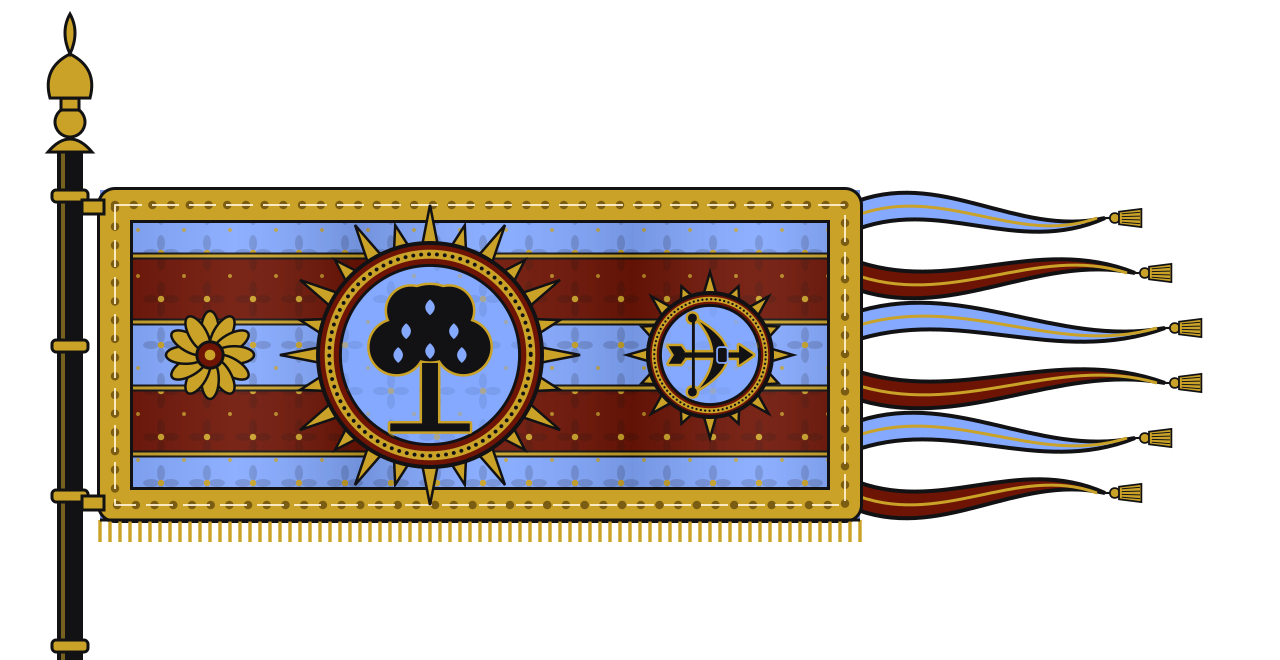
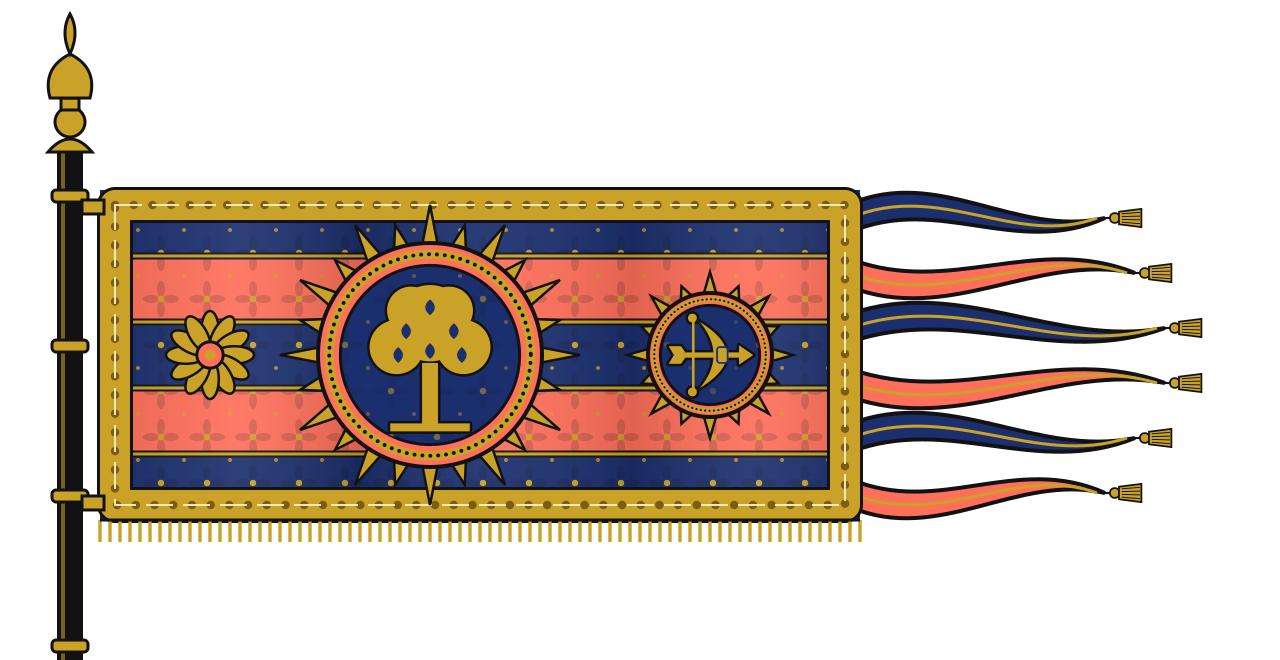
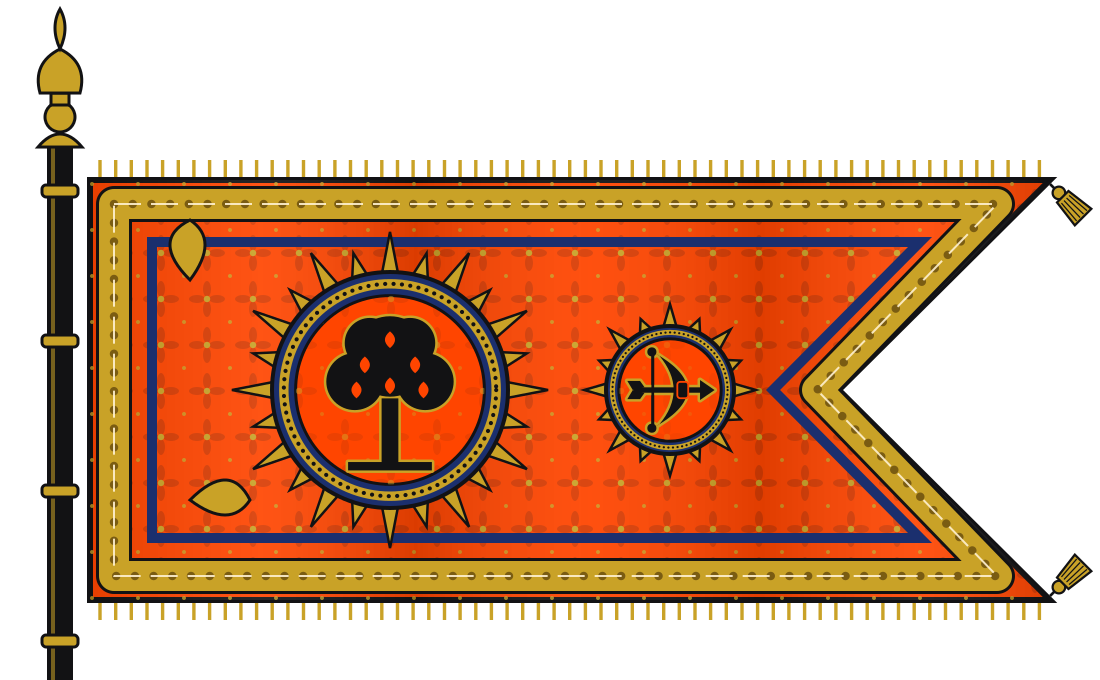
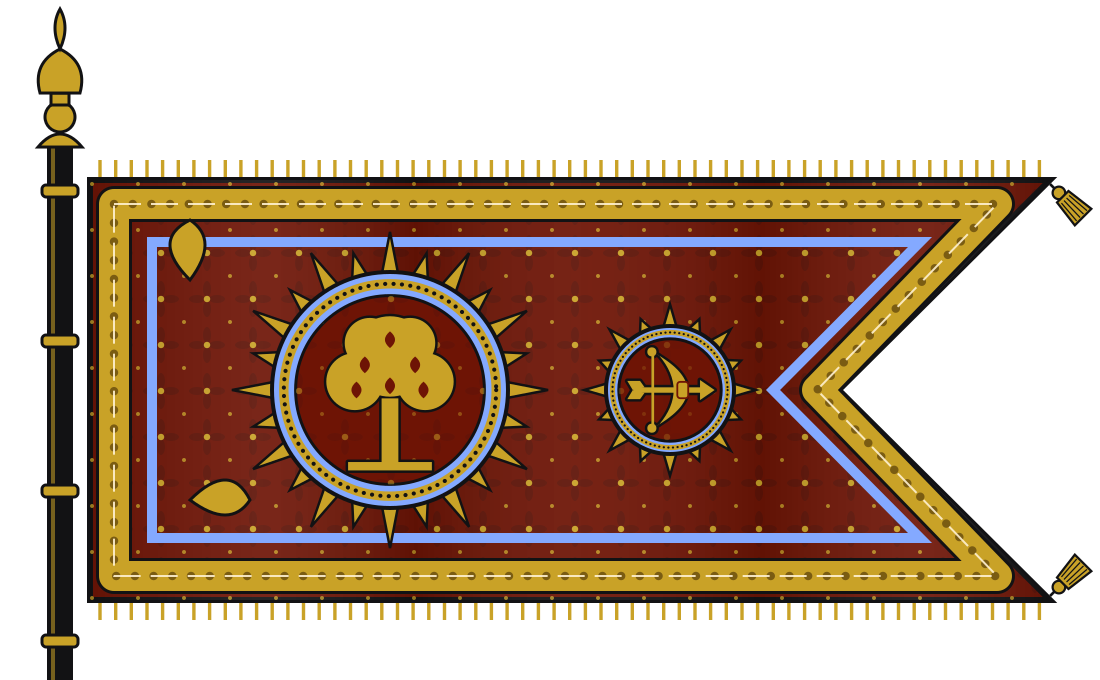
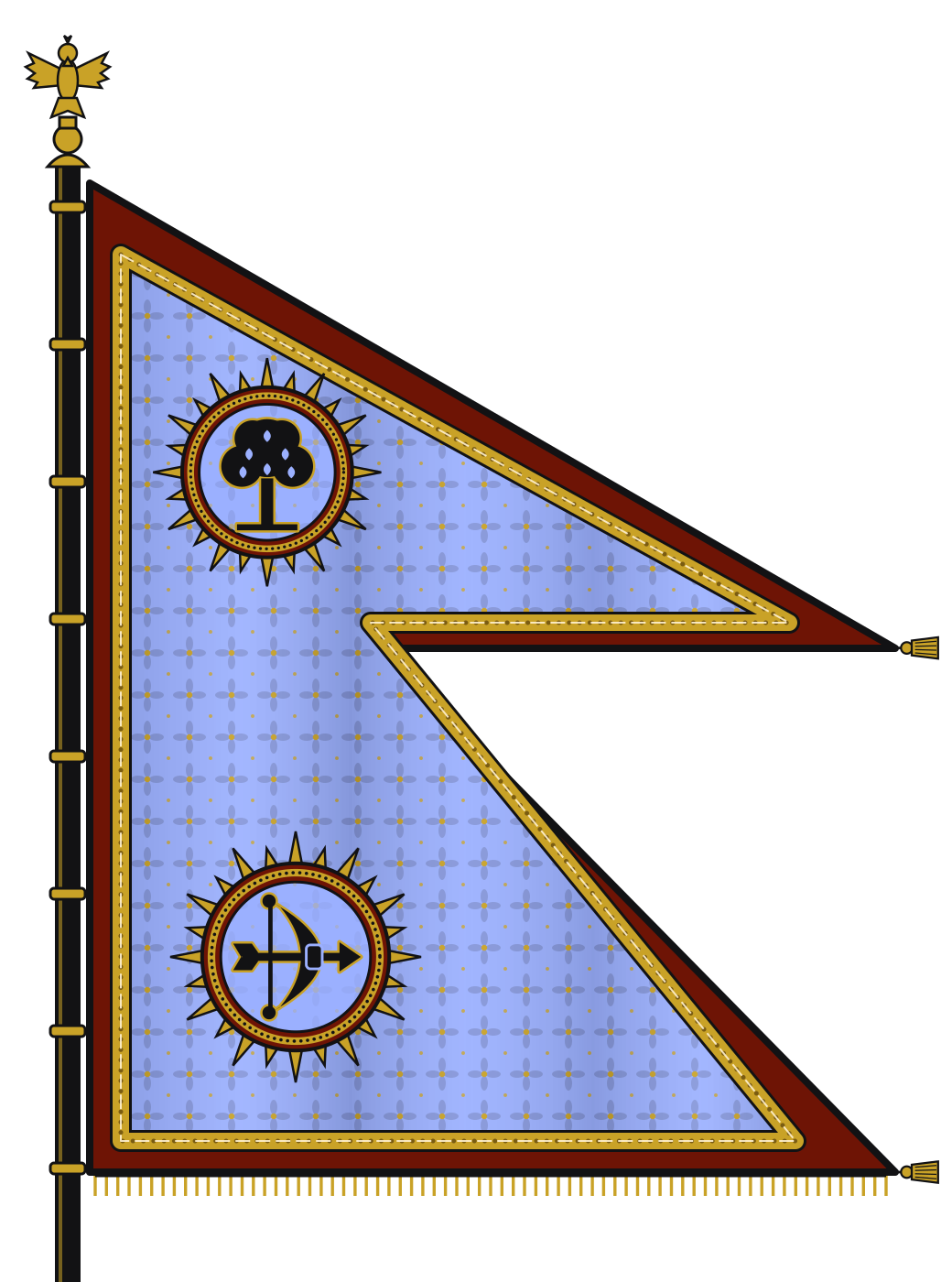
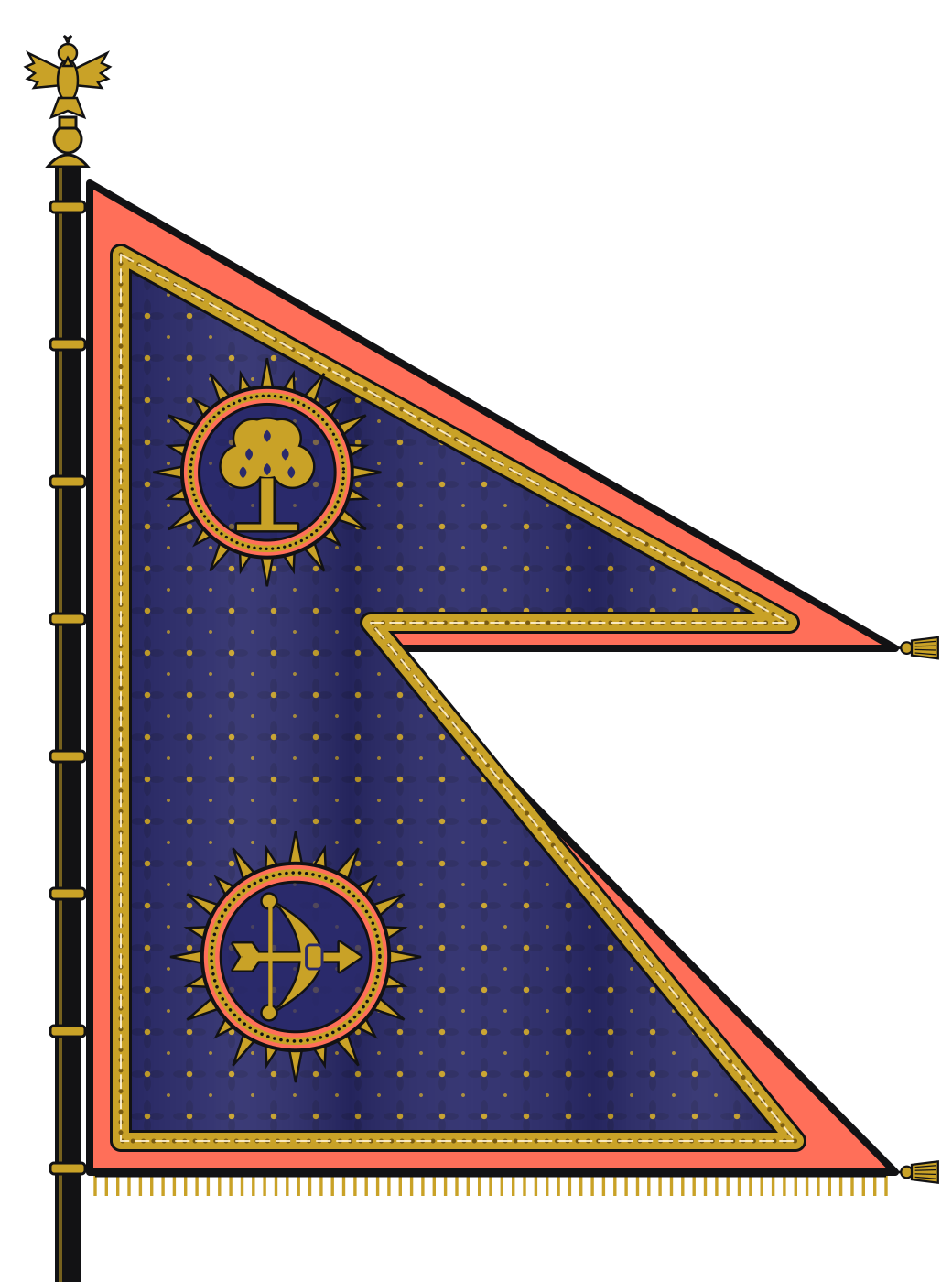
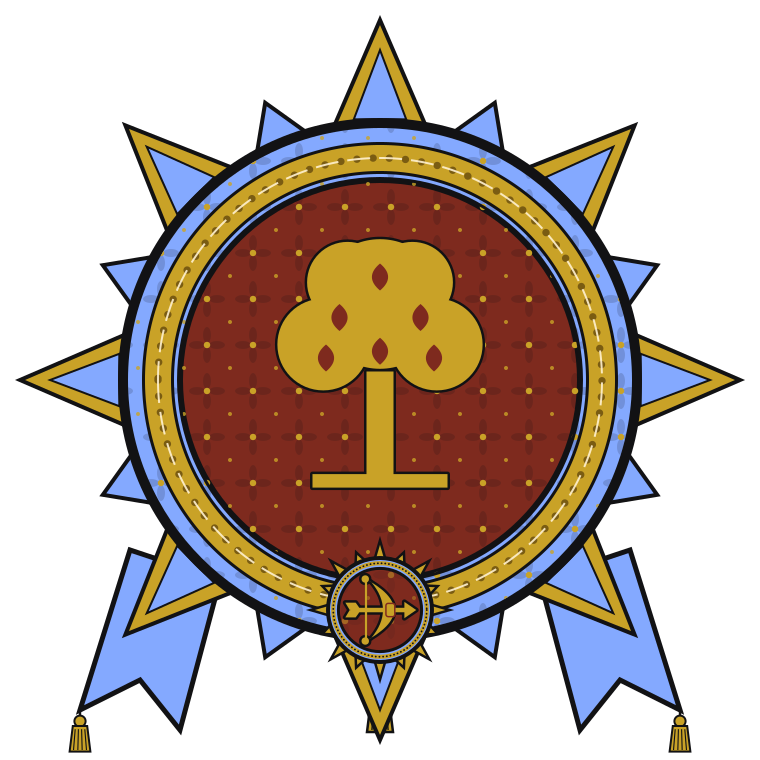
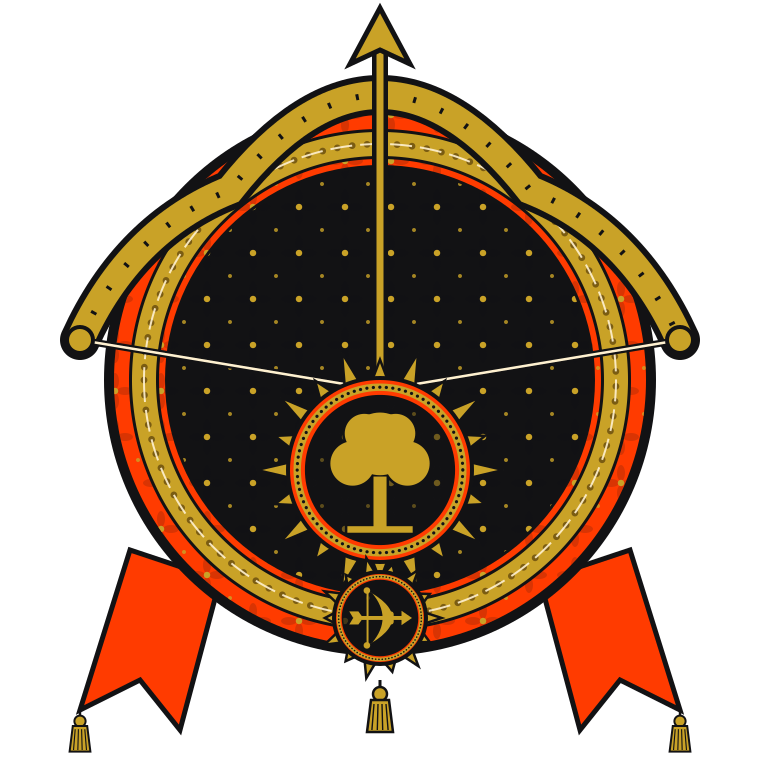
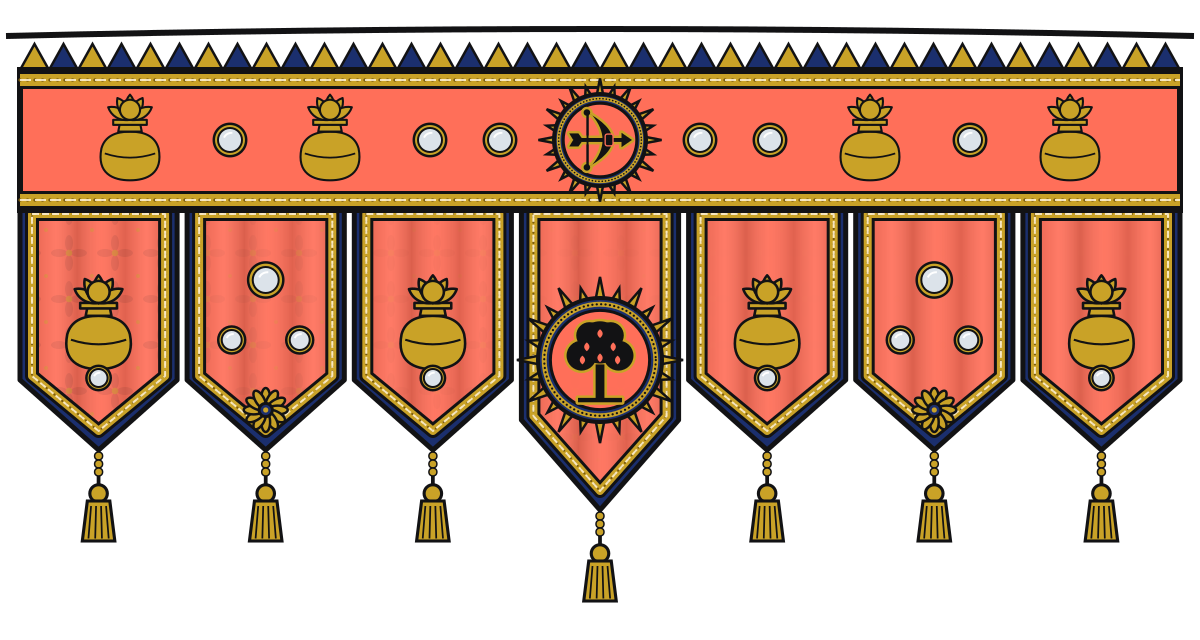
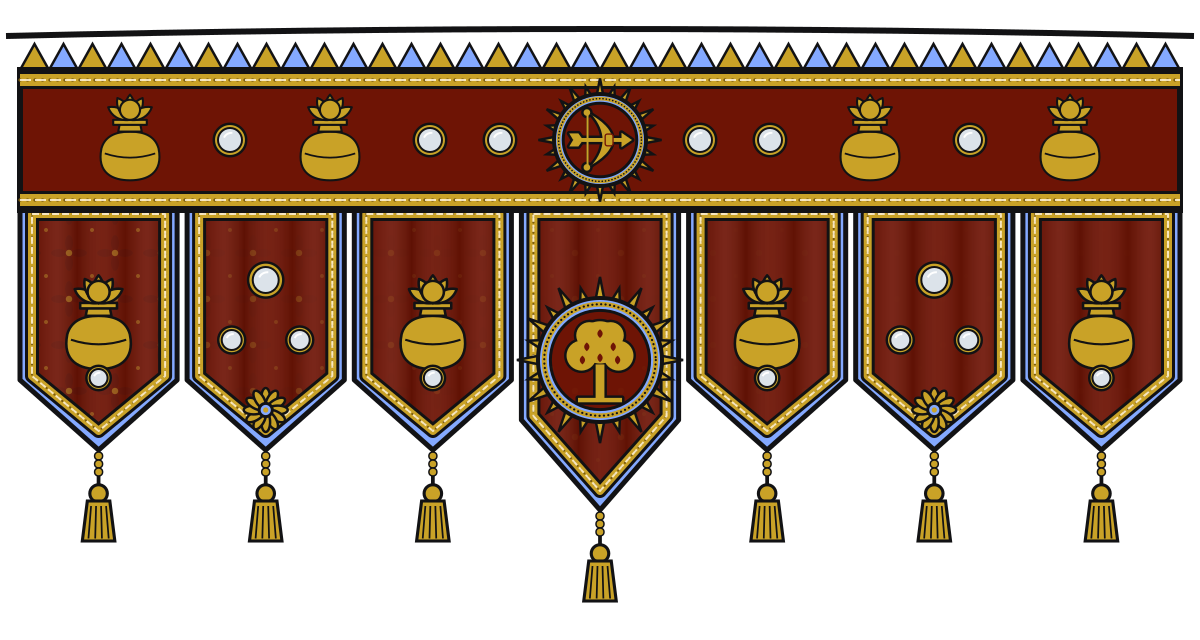
Ayodhya's historic banner is the Kovidara tree described in the Ramayana[2]. The clan's flag is a Dhvaja, the sacred state standard, because that banner hung from a pole as a sign of divine protection; a Garuda finial marks the Vaishnava tradition that surrounds Rama.
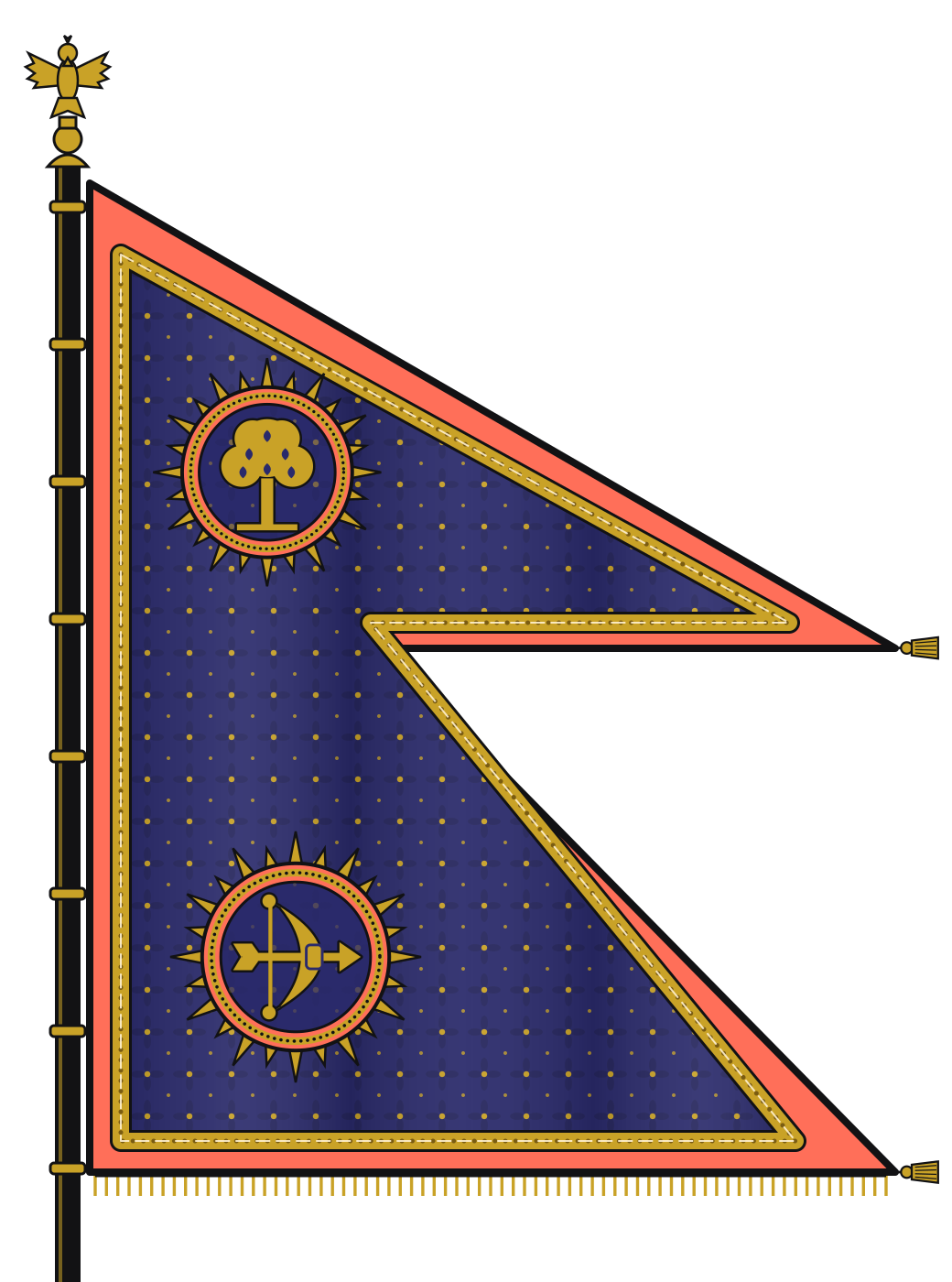
Every flag type for this clan
The same two emblems on every flag type (the Toran included) in bright and deep colours, plus the hanging banner. The outlined card is the clan's own flag.



25VishwaVit
Knower of the world
Game values are design choices for this project, not historical claims.
References
- Anguttara Nikaya — the list of sixteen Mahajanapadas.
- Valmiki, Ramayana — the Solar line, Ayodhya, the Kovidara banner and the Aditya Hridayam hymn (Yuddha Kanda).
- Samyutta Nikaya, Kosala Samyutta (SN 3) — King Pasenadi, his sacrifice (Yañña Sutta, SN 3.9) and the wars with Ajatashatru (SN 3.14–15).
- Manusmriti 8.15, “dharma eva hato hanti, dharmo rakṣati rakṣitaḥ”.
- Vishnu and Bhagavata Puranas — genealogies of the Ikshvaku line.
- Shatapatha Brahmana 1.4.1 — Videgha Mathava and the Sadanira boundary.
- Shravasti — Jetavana, Anathapindika and the Buddha's rainy seasons.
- Dhammapada commentary — Vidudabha and the destruction of Kapilavastu; the Rajakarama.
- Pasenadi — the end of the Kosala kingdom.
- Kosala (Wikipedia, read 2026-10-07), citing G. Samuel, The Origins of Yoga and Tantra (2010) and R. Thapar, The Past Before Us (2013).
- Ayodhya (Wikipedia, read 2026-10-07) — festivals, Census 2011, languages, Saketa and the Karamdanda inscription.
- Bharhut railing relief, c. 100 BCE, inscribed “Jetavana Anadhapediko deti kotisamthatena keta” — Anathapindika buying the Jetavana by covering it with coins; see Anathapindika.
- Northern Black Polished Ware — c. 700–200 BCE; sites include Shravasti and Ayodhya.
- Pali Text Society, Pali–English Dictionary, s.v. kāsika: “kāsikavattha, Benares muslin” (A. I.248; III.50) — wisdomlib.
- Kosala janapada silver karshapana, c. 500–400 BCE, four-symbol type (dealer catalogue attribution) — Indian Coin Shop.
- Balrampur district, places of interest — the Devi Patan temple at Tulsipur, the Shakti Peetha of the old Kosala country.
- Jain tradition (Kalpa Sutra and later Jain texts) — Tirthankaras born at Ayodhya and Shravasti.
- Rajakarama nunnery, built by Pasenadi — Mapping Buddhist Monasteries.
- Brahmi script — earliest datable use in Ashoka's inscriptions (3rd century BCE).
- Ramcharitmanas — begun by Tulsidas at Ayodhya in 1574.
- Bhagavati Sutra — birth of Makkhali Gosala at Saravana near Shravasti; Makkhali Gosala.
- Vinaya Pitaka, Bhikkhuni Vibhanga (Vin. iv.298) — King Pasenadi's cittāgāra (painted hall) in his park; see Dictionary of Pali Proper Names: Pasenadi.
- Jetavana — the monastery's rooms, halls, wells and ponds as described in the Vinaya.
- Bharhut — railing reliefs of c. 125–75 BCE, now mostly in the Indian Museum, Kolkata; figures shown in the dhoti.
- IANS, "Record 30 lakh devotees perform 14 Kosi Parikrama in Ayodhya", 10 November 2024 — ianslive.in.
- Rajput clans (Wikipedia, read 2026-10-07), citing E. Vanina (2012) and A. Wink (2002) on solar and lunar genealogies.