The Korwa are a forest and hill people of the Jashpur and Surguja uplands, on the Chhattisgarh–Jharkhand border, whom Russell's 1916 volume calls a Kolarian tribe of the Chota Nagpur plateau, about 34,000 of whom were returned in the Central Provinces in 1911[1]. Their principal deity in Sarguja, as recorded in 1916, is Khuria Rani, goddess of the Khuria plateau, whose small cave shrine is listed by Grottocenter[1][2]. Their speech, Korwa, is in the Munda branch of Austroasiatic, written in Devanagari, with 28,453 speakers in 2011[3]. Dalton, quoted in 1916, calls them the first settlers, and Egerton in 1880 praises the Korwa bowmen of Barwah[1][4].
01Faith and deities
Russell (1916) records that in Sarguja the principal deity is Khuria Rani, tutelary goddess of the Khuria plateau[1]. The Atlas gives her as the KulDevi, documented.
Khuria Rani: "in Sarguja their principal deity is Khuria Rani, the tutelary goddess of the Khuria plateau" (Russell and Hira Lal 1916; accepted by the owner 10 Oct 2026; family assigned by the sweep)[2]
A recorded tie between the clan and the goddess.
| Deity or tradition | Place in the clan's life | Evidence |
|---|---|---|
| Dulha Deo | Worshipped by the Korwas (Russell 1916) | [1] |
| Thakur Deo | A corn-god in a sacred grove where no tree or branch may be cut; protects from cholera and smallpox; a goat is the penalty for a breach | [1] |
| Sigri Dev, Gauria Dev, Mahadev, Parvati | Deities of the Pahari Korwa in modern accounts; native names सिग्री देव, गौरिया देव, महादेव, पार्वती | [5][6] |
| Dih (the Korwa's own deity) | Given as the own deity of the Korwa in Wikipedia, citing People of India (Uttar Pradesh), and TRI Jharkhand | [7][8] |
| Satbahini Devi | Worshipped by the Korwa | [7][8] |
| Diwar | A shrine to a goddess in each settlement | [7] |
| Baiga | Korwa Baigas are always chosen to propitiate the local spirits (Dalton, quoted in Russell 1916) | [1] |
02Temples
No temple built by the clan is recorded in the extracts. The Khuria Rani shrine is a small temple cave on the north-western corner of the Khuria plateau, which the Korwas of Sarguja venerate as their main goddess.
Built by the clan
Not recorded.
Given patronage or grants by the clan
| Temple | Deity | What the clan gave | When | Where |
|---|---|---|---|---|
| Khuria Rani cave shrine | Khuria Rani | Formerly 30 or 40 buffaloes, with goats (Russell 1916; Grottocenter); the Diwan's family makes a large sacrifice every third generation (Grottocenter) | Recorded 1916; Grottocenter cites DEY 1983 | Khuria plateau, Bagicha tahsil, Jashpur[2][1] |
03Languages and scripts
| Language or script | Kind | Under the clan | Evidence |
|---|---|---|---|
| Korwa language living | Munda branch of Austroasiatic; also called Ernga and Singli; self-name Bhashi | Devanagari; 28,453 speakers (2011); second languages Sadri, Chhattisgarhi, Kurukh | [3] |
| Devanagari | Script the extracts name for Korwa | The only script named | [3] |
| Koraku | Related language, closer to Santali (Anderson 2008) | Southern Mirzapur and Sonbhadra (UP), northern Surguja, Palamau and Garhwa (Jharkhand) | [3] |
04Books and literature
Only Hill Korwa still speak the language, and it is poorly documented (Anderson 2008, via Wikipedia). A 2022 SIL study (Behera) found Korwa and Koraku to be two distinct languages.
Written during the clan's history
| Work | Author | Kind | When | Link to the clan |
|---|---|---|---|---|
| Descriptive Ethnology of Bengal | Dalton | Ethnography | 1872 | [9][1] |
| The Tribes and Castes of the Central Provinces of India, vol. 3 | R. V. Russell | Ethnography | 1916 | [1] |
| An Illustrated Handbook of Indian Arms | Wilbraham Egerton | Arms handbook | 1880 | [4] |
| Korwa Lexicon | Bahl | Lexicon (Dumertoli dialect) | 1962 | [3] |
| The Hill Korwa | Shashishekhar Gopal Deogaonkar | Monograph | 1986 | [7] |
| The Pahari Korwa of Chhattisgarh | Manish Chandra Tudu | Journal article | 2025 | [10] |
Given patronage by the clan
Not recorded.
05Thinkers and scholars
| Name | Field | Era | Contribution |
|---|---|---|---|
| Dalton | Ethnography | 1872 | The account of the Korwa chiefs, dance and bows that Russell quotes[1] |
| R. V. Russell | Ethnography | 1916 | The Korwa article, compiled from Dalton, Kunte and others[1] |
| G. Grierson | Linguistics | Quoted in 1916 | The Korwa dialect is nearest Asuri[1] |
| Shashishekhar Gopal Deogaonkar | Monograph | 1986 | The Hill Korwa[7] |
| Manish Chandra Tudu | Economic study | 2025 | The Pahari Korwa of Chhattisgarh, in tradition and modernity[10] |
| Anderson | Language | 2008 | Korwa in the Munda branch; Koraku nearer Santali[3] |
No Korwa author is named in the extracts.
06Art and architecture
The extracts record architecture, crafts, tattoos and arms. No painting, sculpture or textile of the Korwa is recorded.
Painting and wall art
Not recorded.
Sculpture and temple art
Not recorded.
Temple and building architecture
| Art form | What it is | Era | Evidence |
|---|---|---|---|
| Kumba huts | Round conical huts thatched with grass and sal leaves; mud huts also | Modern | [7] |
Weaving and textiles
Not recorded.
Clothing and jewellery
| Art form | What it is | Era | Evidence |
|---|---|---|---|
| Tattoos | Patterns of dots on the arms, breasts and feet; a girl must be tattooed before she marries (Russell 1916); Deogaonkar (1986) places them on the wrists, neck, above the breasts, legs and ankles | 1916; 1986 | [1][7] |
Coins, pottery and crafts
| Art form | What it is | Era | Evidence |
|---|---|---|---|
| Bamboo supas | Made for income | Modern | [7] |
07History
Kolarian chain (Russell 1916)
Russell's summary records a Kolarian chain that links the Korwas to the Kurs (Korkus) or Muasis of Rewah[1]. Dalton, as Russell reports him, says the Korwas were the first settlers and at one time masters of the whole, and that Korwa Baigas are always chosen to propitiate the local spirits[1].
Chiefs of Sarguja and Jashpur
Within the twenty years before Dalton's account there were four Korwa notables holding manors: two in Sarguja and two in Jashpur. The Sarguja chiefs were at strife with the Sarguja Raja and lost manor after manor. The two Jashpur thanes stayed loyal in the Mutiny. One was the hereditary Diwan of Jashpur, lord of the Khuria and Maini mountain tract and, in Dalton's words, chief of perhaps two-thirds of the whole tribe. The other held the Kakia estate of twenty-two villages[1].
The census of 1911
About 34,000 Korwas were returned in the Central Provinces in 1911. The great bulk belonged to the Sarguja and Jashpur States, and a few to Bilaspur district[1].
Bowmen of Barwah, 1880
Egerton's Illustrated Handbook of Indian Arms (1880) says the Korwas of Barwah are formidable bowmen. Their barbed arrowheads are made by themselves from iron smelted in their own hills, and they use the battle-axe very adroitly[4].
Forest limits and the Dehari and Pahari division
Tudu (2025) records a legend that some Korwa took to forest theft and dacoity, and that Khudia landlords then allotted them land. Those who came to the plains are called Dehari Korwa, and those on the hills Pahari Korwa[10]. Srivastava (2007), cited by Tudu, holds the Pahari Korwa a branch of the Munda who migrated west from Chhotanagpur to the Khudia region of Jashpur[10]. The Forest Department's restrictions changed the Korwas' shifting cultivation (jhoonga kheti)[7][8].
A charge recorded in 1986
Deogaonkar (1986), as cited on Wikipedia, records that British writers claimed the Pahadi Korwas once ate dogs. The page gives it as the charge of those writers[7].
08Journey and migrations
The Korwa are recorded on the Chota Nagpur plateau and then in the uplands of Sarguja and Jashpur. The extracts give no dates for the later moves.
| When | From | To | Why | Evidence |
|---|---|---|---|---|
| Before 1872 (Dalton) | Chota Nagpur plateau | Sarguja and Jashpur | Kolarian chain (Russell's summary); Korwas first settlers (Dalton, as quoted) | [1] |
| Date not given (Srivastava 2007, cited by Tudu) | Chhotanagpur | Khudia region of Jashpur | Westward migration (a claim cited through Tudu) | [10] |
09Seats and lands
| Place | Role | Where today |
|---|---|---|
| Khuria plateau and Maini | Mountain tract of the Diwan of Jashpur, a Korwa family | Jashpur, Chhattisgarh |
| Sarguja (Surguja) | Korwa chiefs held manors here until they lost them to the Raja (Russell 1916) | Surguja, Chhattisgarh |
| Kakia estate | Estate of twenty-two villages held by a Korwa family (Russell 1916) | Not located in the extracts |
| Barwah | Korwas of Barwah, bowmen (Egerton 1880) | Not located in the extracts |
| Korba zamindari | Probably named after the Korwas (Russell 1916) | Bilaspur district, Chhattisgarh |
| Dumertoli | Village of the Korwa lexicon of Bahl (1962), Dumertoli dialect | Bagicha block, Jashpurnagar tehsil, Jashpur |
| Gangaikona and Kothipath | Study villages of the Pahari Korwa (Tudu 2025) | Bagicha block, Jashpur |
| Odisha (as Korua) | The Odisha list spells the people Korua; KISS districts Sundergarh, Mayurbhanj, Kalahandi | Odisha |
10Notable figures
| Name | Role | Era | Known from |
|---|---|---|---|
| The hereditary Diwan of Jashpur (a Korwa family; not named in the extract) | Lord of the Khuria and Maini tract; patron of Khuria Rani | 1916 | [1][2] |
| Holder of the Kakia estate (not named) | Chief of twenty-two villages; loyal in the Mutiny | Dalton's time | [1] |
| Chilhra legend | Youngest of seven brothers, hero of a hunting tale | Folk tale, as recorded in 1916 | [1] |
11Allies, rivals and marriages
| People | Relationship | When |
|---|---|---|
| Mundas | Korwa language is of the Munda branch[3] | Before separation (Russell 1916) |
| Mundari, Santali | The Korwa dialect resembles Mundari and Santali (Grierson, as Russell 1916 gives it) | 1916 |
| Asur (Asuri) | Grierson: the Korwa dialect is most closely related to Asuri | 1916 |
| Santals | Korwa dialect resembles Santali; the Manjhi title is used by both | 1916 |
| Korkus (Kurs, Muasi) | Crooke thinks the Korwas and Korkus are one tribe; Grierson dissents (Russell 1916) | 1916 |
| Koraku | Korwa subtribe; Koraku is also the name of a language, closer to Santali (Anderson 2008) | Recorded in 1916; modern (Wikipedia) |
| Kodaku | In Jharkhand, one quarter of the Korwa and Kodaku group (Wikipedia); call their language Korwa | Modern (Wikipedia) |
| Baigas and Birjias | Korwa Baigas propitiate local spirits; the Birjias are probably the offspring of mixed Korwa-Birjia marriages, an offshoot of the Baigas | 1916 |
| Halbas, Lodhis | Tell the same scarecrow origin legend as the Korwas (Russell 1916) | 1916 |
| Ahirs (herdsmen) | Dacoity on travellers and Ahir herdsmen, in Dalton's time (Russell 1916) | 1916 |
12Society and livelihood
Russell (1916) describes the Korwa as a tribe divided into exogamous septs, and modern accounts report nuclear families and their own panchayat. Tudu's 2023 fieldwork counted 17 families (133 people) at Gangaikona and 13 families (183 people) at Kothipath.
Government and social order
| Institution or group | What it was | Evidence |
|---|---|---|
| Exogamous septs | Marriage within the sept is forbidden; the tribe is divided into totemistic exogamous septs (Russell 1916) | [1] |
| Own panchayat | Settles offences within the community (IASGyan, which cites no source for this) | [6] |
| Families | Nuclear families; patriarchal (IASGyan; Tudu 2025) | [6][10] |
| Marriage | Bride-price Rs. 12; a widow usually marries her husband's younger brother (Russell 1916) | [1] |
| Burial | The dead are buried with the head to the south and a little rice; the hut is broken down after a death (Russell 1916); children under five are buried under the house or a banyan | [1] |
Livelihood over time
| Era | Livelihood | Evidence |
|---|---|---|
| Dalton's time (before 1872) | New clearings, homesteads moved every two or three years; rice, vetches, millets, pumpkins, yams, chillies and arrowroot; expert hunters; dacoity on travellers and Ahir herders (Russell 1916) | [1][9] |
| Modern (Wikipedia, TRI) | Jhoonga kheti (trimmed forest, lentil, about 20 kg per family); forest produce such as mahua, sal and tendu leaves; fishing; farm labour | [7][8][5] |
| 2023 fieldwork (Tudu 2025) | Gathering mahua, kendu, pear, banana, mango, tamarind, jamun and jackfruit; hunting and fishing; shifting cultivation cleared in February–March and sown after the May–June rains; cows, goats, pigs and chickens; young men migrate to brick kilns at Gorakhpur; slingshot and bamboo fish trap | [10] |
13Sub-clans and related clans
Sub-groups, septs and related peoples named in the extracts. Those with a master-sheet ID are linked; the rest become new clan candidates.
| Clan | Relation | Where | Size | In the Atlas | Evidence |
|---|---|---|---|---|---|
| Pahari Korwa | Sub-clan | Hill tracts; study villages Gangaikona and Kothipath in Bagicha block, Jashpur (Tudu 2025); also called Benwaria, from bewar shifting cultivation (Russell 1916) | same name as ST-482: check | [1][10][6] | |
| Diharia Korwa | Sub-clan | Villages (dih) and cultivators; also called Kisan Korwa (Russell 1916); Dih or Dil (Wikipedia) | same name as ST-442: check | [1][7][8] | |
| Dam (Dandh) Korwa | Sub-clan | Not stated in the extracts | same name as ST-438: check | [7][8] | |
| Agaria Korwa | Sub-clan | Not stated in the extracts; may or may not be the Agariya of the sheet (ST-003), not linked | same name as ST-450: check | [7][8] | |
| Koraku | Sub-clan | Subtribe; the name means young men (Russell 1916) | same name as ST-451: check | [1][3] | |
| Hezda | Sub-clan | Pahadia sept; intermarries and interdines with Samati, Edikhar, Madikhar (Deogaonkar 1986) | new clan candidate | [7][8] | |
| Samati | Sub-clan | Pahadia sept (Deogaonkar 1986) | new clan candidate | [7] | |
| Edikhar | Sub-clan | Pahadia sept (Deogaonkar 1986) | new clan candidate | [7] | |
| Madikhar | Sub-clan | Pahadia sept (Deogaonkar 1986) | new clan candidate | [7] | |
| Dewanihar | Sub-clan | Deharia sept (Deogaonkar 1986) | new clan candidate | [7] | |
| Dhanuhar | Sub-clan | Deharia sept (Deogaonkar 1986) | same name as ST-526: check | [7] | |
| Majhi (Deharia sept) | Sub-clan | Deharia sept; Majhi is also the honorific Korwas use (Russell 1916); not linked to the sheet's Majhi (ST-181) | new clan candidate | [7][1] | |
| Guleria | Sub-clan | One of the seven exogamous clans (People of India, cited on Wikipedia) | new clan candidate | [7][8] | |
| Haril | Sub-clan | One of the seven exogamous clans | new clan candidate | [7][8] | |
| Huhar | Sub-clan | One of the seven exogamous clans | new clan candidate | [7][8] | |
| Leth | Sub-clan | One of the seven exogamous clans | new clan candidate | [7][8] | |
| Munda (Korwa clan) | Sub-clan | One of the seven exogamous clans; a clan name, not the Munda people | new clan candidate | [7][8] | |
| Mura | Sub-clan | One of the seven exogamous clans | same name as ST-474: check | [7][8] | |
| Pahari (exogamous clan) | Sub-clan | One of the seven exogamous clans; a clan name, not the Pahari Korwa group | new clan candidate | [7][8] | |
| Birjia | Related people | Offshoot of the Baigas; probably of mixed Korwa descent (Russell 1916) | ST-041 | [1] | |
| Baiga | Related people | Korwa Baigas propitiate local spirits (Dalton, quoted in Russell 1916) | ST-014 | [1] | |
| Korku | Related people | Crooke thinks the Korwas and Korkus are one tribe; Grierson dissents (Russell 1916) | ST-156 | [1] | |
| Kharia | Related people | Linked in the Atlas; no detail in the extracts | ST-130 | [1] | |
| Khairwar | Related people | Linked in the Atlas; no detail in the extracts | ST-127 | [1] | |
| Munda | Related people | Korwa language is of the Munda branch (Wikipedia) | ST-229 | [3][1] | |
| Santal | Related people | Korwa dialect resembles Santali (Grierson, quoted in Russell 1916) | ST-280 | [1] | |
| Bhumij | Related people | Linked in the Atlas; no detail in the extracts | ST-033 | [1] | |
| Kol | Related people | The Kolarian tribe group in which Russell places the Korwas (Russell 1916) | ST-141 | [1] | |
| Asur | Related people | Korwa dialect closest to Asuri (Grierson, quoted in Russell 1916) | ST-012 | [1] | |
| Gond | Related people | Linked in the Atlas; no detail in the extracts | ST-088 | [1] | |
| Kawar | Related people | Linked in the Atlas; no detail in the extracts | ST-126 | [1] | |
| Halba | Related people | Tell the same scarecrow origin legend (Russell 1916) | ST-097 | [1] |
Clans marked "new clan candidate" are not in the Atlas yet.
14Surnames
No surname is recorded in the extracts. Majhi is given by Russell (1916) as an honorific, not a surname.
Not recorded.
15Songs and music
The extracts give no Korwa song text, no native-script lyric and no titled song. They record the karma dance and the instruments played with it.
Karma dance songs
Instruments and styles
| Instrument or style | What it is | Evidence |
|---|---|---|
| मंदार · mandar (mandhar) | Big earthen drum that the Korwas dance round, in Bilaspur (Russell 1916); GKToday Hindi lists मंदार among tribal instruments | [1][5] |
| Stringed instrument | Played by the Choragus at the dance (Dalton, quoted in Russell 1916) | [1] |
| धनक · dhanak | Listed among tribal song instruments by GKToday Hindi (Pahari Korwa page); no description given | [5] |
| दफली · dafli | Listed as above; no description given | [5] |
| मृदंग · mridang | Listed as above; no description given | [5] |
| नगाड़ा · nagara | Listed as above; no description given | [5] |
| ढोल · dhol | Listed as above; no description given | [5] |
| टिमकी · timki | Listed as above; no description given | [5] |
16Poems, lullabies and children's rhymes
No poem, lullaby or children's rhyme of the Korwa is recorded in the extracts.
None recorded yet.
17Stories, legends and proverbs
Stories and legends
| Story | What happens | Told by | Evidence |
|---|---|---|---|
| Chilhra and the sambhar | Seven brothers, the youngest of whom is Chilhra, and a sambhar; a hunting tale told before hunts | Told before hunts; recorded by Russell 1916 | [1] |
| The banker's twelve sons | A folk-tale of the banker's twelve sons, with a saint whose soul lives in a gold parrot | Narbad Dhanu Sao, of Uprora, recorded by Russell 1916 | [1] |
| The scarecrow origin | The first people of Sarguja made bamboo scarecrows; a great spirit animated them, and they were the ancestors of the wild Korwas. Halbas and Lodhis tell the same tale | Korwa legend; recorded by Russell 1916 | [1] |
Proverbs and sayings
Not recorded.
18Festivals and fairs
| Festival or fair | When | Where | What happens |
|---|---|---|---|
| Deothan | Full moon of Pus (December) | Not localised in the extract | All their gods are worshipped[1] |
| Nawanna | Kunwar (September) | Not localised in the extract | Harvest festival when the new grain is eaten[1] |
| Faguwa or Holi | Spring | Not localised in the extract | Spring festival (Russell 1916) |
| Karma dance | Autumn | Not localised in the extract | A ritual dance with songs in praise of the gods, for good crops[1] |
19Food, dress and games
Food
| Item | What it is | Evidence |
|---|---|---|
| Jhoonga kheti | Trimmed forest, lentils, about 20 kg a family (Wikipedia) | [7] |
| Seasonal forest food | Mahua, kanda, sihar and burju (Wikipedia); the GKToday Hindi page also lists महुआ, तेंदू के पत्ते, आंवला, हर्रा and बहेड़ा | [7][5] |
| Crops (Dalton's time) | Rice, vetches, millets, pumpkins, yams, chillies and arrowroot (Russell 1916) | [1] |
| Meat | The Korwas eat all animals (Wikipedia) | [7] |
Dress
| Item | What it is | Evidence |
|---|---|---|
| Loincloth | A loincloth (Wikipedia) | [7] |
| Hair | Neither men nor women cut their hair (Russell 1916) | [1] |
| Flowers | Women wear red cotton tufts, or cockscomb flowers, in the hair, in place of flowers (Dalton, quoted in Russell 1916) | [1] |
Games and martial arts
Not recorded.
Tags: living still practised · revived brought back after a break · lost known only from records · research reported but not yet confirmed from a source. Songs and poems under copyright are listed by title only; restricted or sacred material is noted without its content.
20Status today
The Korwa are a living Scheduled Tribe with a Munda-branch language. The Hill Korwa are a PVTG in the Atlas, and the people are also on the Scheduled Caste list in Uttar Pradesh[7][8].
Recognised heritage
| What | Recognition | Evidence |
|---|---|---|
| Khuria Rani cave shrine | Listed in the Grottocenter cave database as the Khuria Rani entrance | [2] |
| Tribal Research Institute, Jharkhand | State body that keeps a Korwa profile | [8] |
Not reviewed by the Korwa community. No community review is recorded in the extracts.
21For children
The scarecrows of Sarguja
Long ago, the first people of Sarguja made scarecrows of bamboo. A great spirit gave them life, and the Korwa say that these figures were their ancestors. In an old hunting tale, the youngest of seven brothers, Chilhra, appears with a sambhar deer. The Korwa's principal goddess is Khuria Rani, the tutelary goddess of the Khuria plateau.
22Across the project
| Project | What carries this clan | Status |
|---|---|---|
| Atlas of the Janas | Pin at the Khuria plateau, Jashpur (Grottocenter coordinates); the Jharkhand and Odisha areas are not pinned yet | To check |
| KulDevi and GrahDevi | Khuria Rani (KD-115); planets take Navadurga forms | From the Atlas |
| Planet naming | Not yet checked against the Tier registers | To check |
| Renaming and waters | No place or water name drawn from the Korwa yet | — |
23Open questions
- Jharkhand: the Tribes of Jharkhand list gives the Korwa 35,606, but the Korwa Wikipedia infobox gives 32,786, the figure the same list gives for Kora. Which figure is the Korwa's?
- The Korwa Wikipedia article gives a 2011 total of 166,499. The state figures listed here add to more (169,818 with Bihar), so the basis of the total is unclear.
- Uttar Pradesh: Korwa is on the Scheduled Caste list there (1,563, 2011). Whether this is the same people as the Scheduled Tribe Korwa is not settled by the extracts.
- Sub-group names: Russell's Diharia (Kisan) and Paharia (Benwaria), Wikipedia's Agaria, Dandh/Dam, Dil/Dih and Pahadi/Pahar, and Tudu's Dehari and Pahari do not yet match one-to-one.
- Surnames: no clan or sept name is recorded as a surname in the extracts. The Census surname tables are not checked.
- Totem names of the septs, the meanings of the seven clan names, and the Korwa's own sept calendars are not in the extracts.
- Dalton (1872) is read only as quoted in Russell (1916) and by Grottocenter. The book itself (archive.org) has not been fetched.
- Egerton's Barwah: the place is not located. The pack's link of this passage to Bana (Ayudha Codex) is not in the Egerton text and is not used.
- Songs, lullabies, proverbs and native-script lyrics: none in the extracts. Leads: cgnetswara.org (id=24181) and Culture of Jharkhand, not fetched.
- Kodaku: the Atlas lists it as also known as Korwa; Wikipedia says one quarter of the Korwa and Kodaku group are Kodaku. Whether the Kodaku are a separate clan or an alias is for the approver.
- PVTG status: the Atlas gives it from the list; IASGyan says the Government of India classed the Pahari Korwa as PVTG. The primary list is not fetched.
- The Korwa's own line: no saying is in the extracts, so the words line is the people's name in Devanagari.
- The Hill Korwa PDF (bkm.aa-ken.jp) came back unreadable in the cache. The Bagchee book page, indianetzone and the antrocom nutrition paper are not fetched.
- The community's own view of this page has not been sought.
24Astitva
अस्तित्व · being, existence: everything by which the clan is known
The Korwa's documented accessories are their weapons, their dance drums and a hair ornament: the long bow with barbed arrows and the battle-axe of the dance[1], arrowheads of iron they smelted[4], and red cotton or cockscomb flowers in the women's hair[1].
Every clan has every accessory, royal objects included. Each one says how it is known: Documented This clan's own object is recorded. · Regional tradition Recorded for the region or for peoples like this one, not for this clan. · Design Made for this project, with no historical claim. · Under research To be found for this clan from sources. Legends and titles are written in the clan's own script.
1. Seals and coins
| Accessory | For this clan | Basis |
|---|---|---|
| B1 Rajamudra · house seal Round seal with the clan emblem and a short legend in the clan's script | Not yet designed for this clan | Design |
| B2 Anguliya-mudra · signet ring Personal seal ring of the head of the house | Not yet designed for this clan | Design |
| B3 Chhapa · house stamp Ink or block stamp for letters, goods and cloth | Not yet designed for this clan | Design |
| B4 Tamrapatra · charter plate Copper-plate grant on a ring, closed with the house seal | Not yet designed for this clan | Design |
| B5 Shreni-mudra · guild or trade seal Seal for the clan's trade, craft or caravan | Not yet designed for this clan | Design |
| C1 Clan coin Emblem or deity on one side, a legend in the clan's script | Not yet designed for this clan | Design |
| C2 Coin die The die that strikes the coin | Not yet designed for this clan | Design |
2. Living symbols
| Accessory | For this clan | Basis |
|---|---|---|
| I1 Totem trio The tree, bird and animal the clan protects | Not yet found for this clan | Under research |
| I2 Kaval-maram · guardian tree The tree that stands at the clan's seat | Sacred grove of Thakur Deo; a breach is penalised with a goat. The tree is not named | Documented |
3. Stone and gate
| Accessory | For this clan | Basis |
|---|---|---|
| G1 Torana · gateway The built gate of the seat; the cloth Toran hangs in it | Not yet designed for this clan | Regional tradition |
| G2 Viragallu · hero stone Carved panel stone for a member who died defending the clan | Not yet designed for this clan | Regional tradition |
| G3 Kula-shila · clan stones Standing and table stones that remember the ancestors | Not yet designed for this clan | Design |
| G4 Jayastambha · victory pillar A pillar raised for a victory | Not yet designed for this clan | Design |
| G5 Sima-shila · boundary stone Marks the clan's land, with a line in the native script | Not yet designed for this clan | Design |
4. Sounds
| Accessory | For this clan | Basis |
|---|---|---|
| D1 Pancha-mahashabda · five great sounds The right to five instruments | Not yet designed for this clan | Design |
| D2 Shankha · clan conch The clan's own named war conch | Not yet designed for this clan | Design |
| D3 Murasu · house drums Three drums: war, charity and justice | Mandhar, the big earthen dance drum, and deep-toned drums at the dance. The extracts give no set of three drums | Documented |
5. Kit: colours, metals and emblems
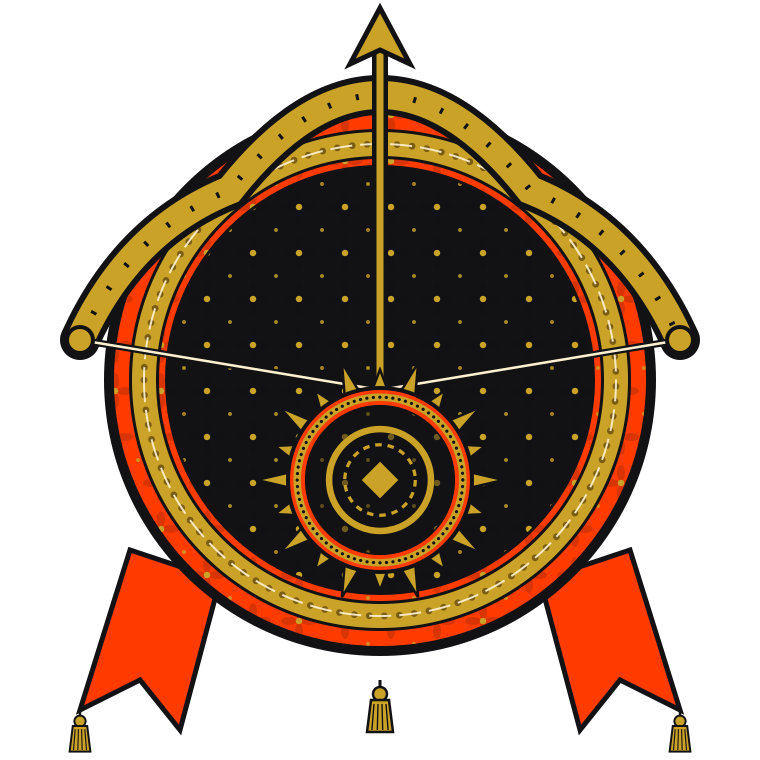
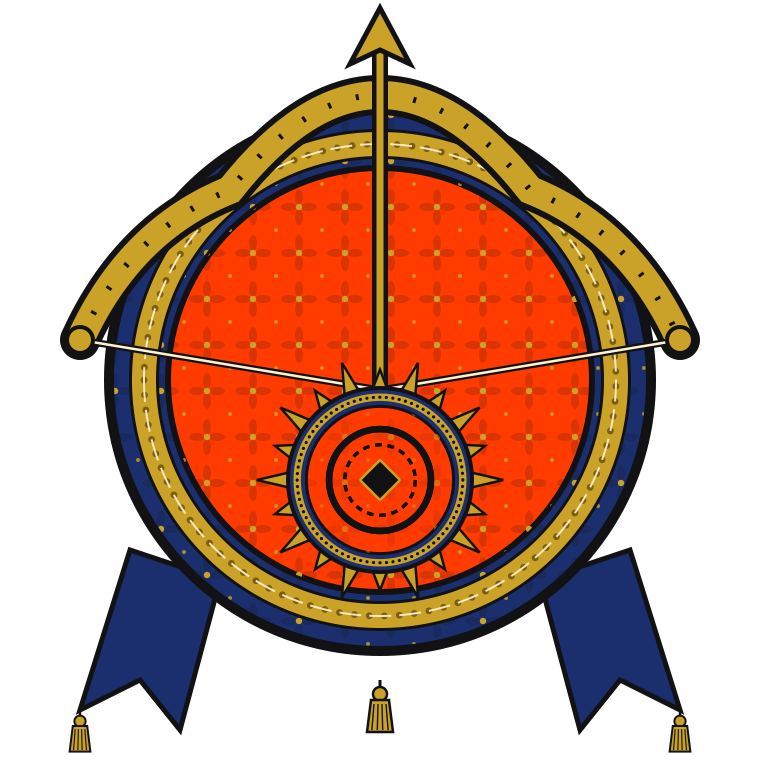
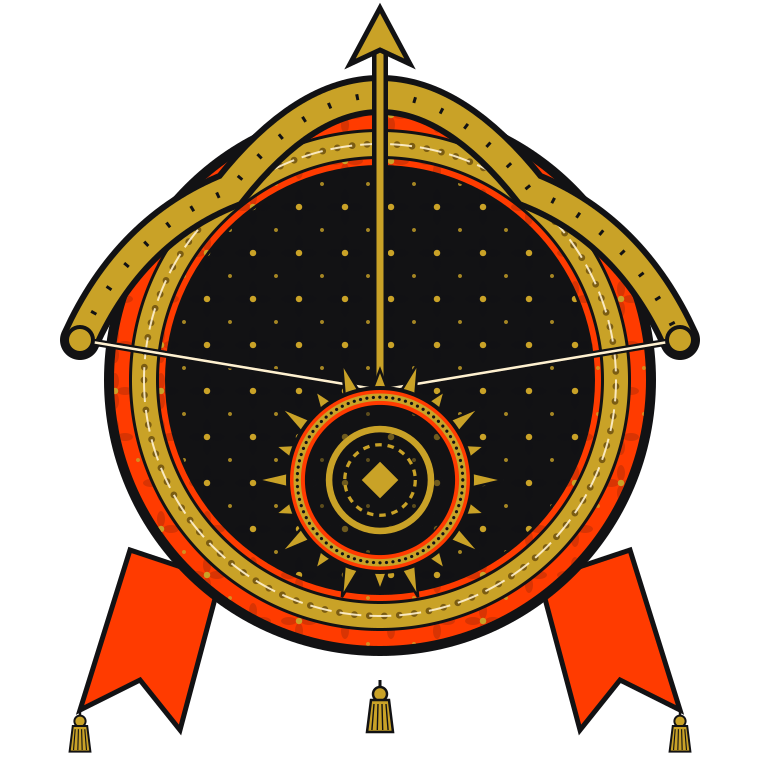
No seal, coin, banner or totem of the Korwa is in the extracts. The bow they are known by is documented in their weapons[1][4]. The emblem in the Atlas is a design for the project, a bow on a mountain for mountain archery.
| Part of the kit | This clan |
|---|---|
| Field | Charcoal Black #121214 |
| Accent | Deep Crimson Red #FF3B00 |
| Emblem colour | Metallic Gold #C9A227 |
| Zari metal | Gold |
| Main emblem | A bow on a mountain |
| Second image | — |
| Night and day | Every visual accessory has two versions: by night the emblem on the dark field, by day the clan's field colour on cloth woven from its metal. |
6. Flags
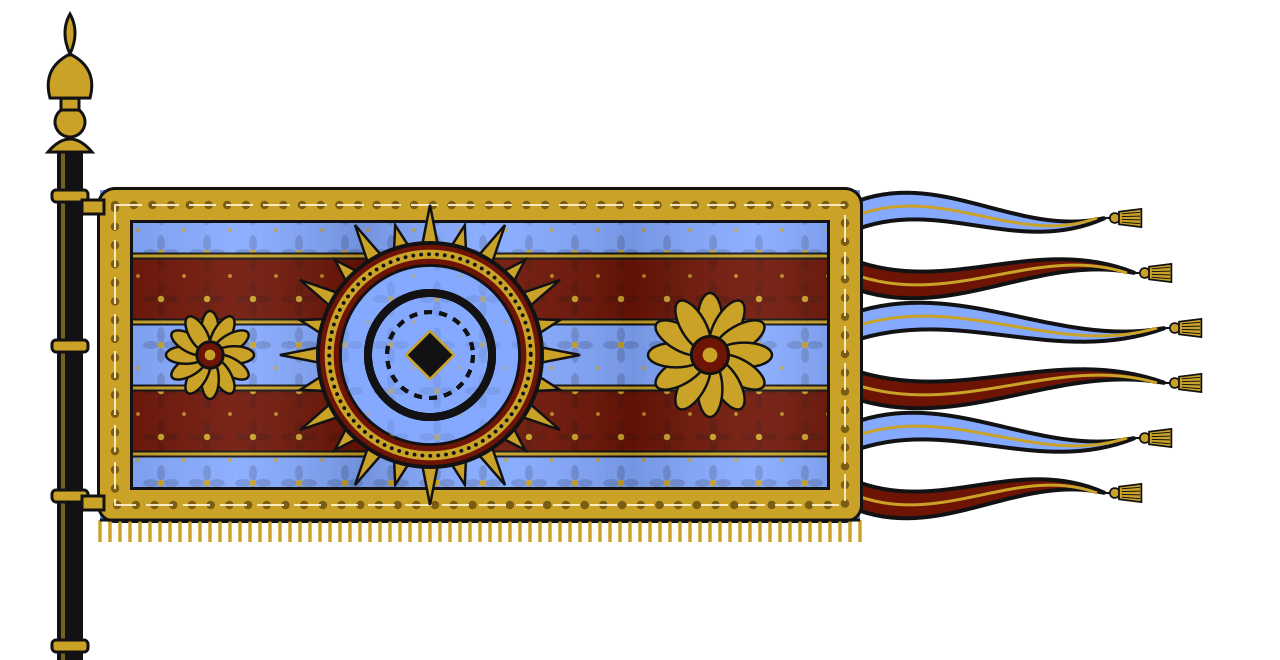
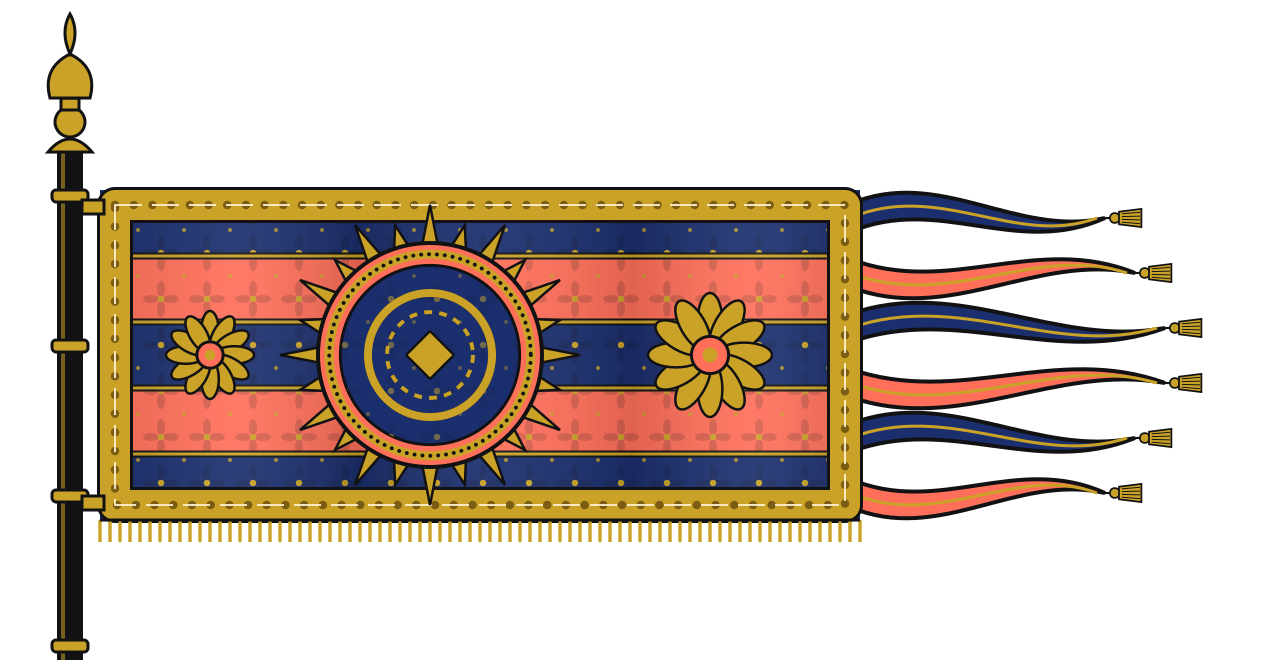
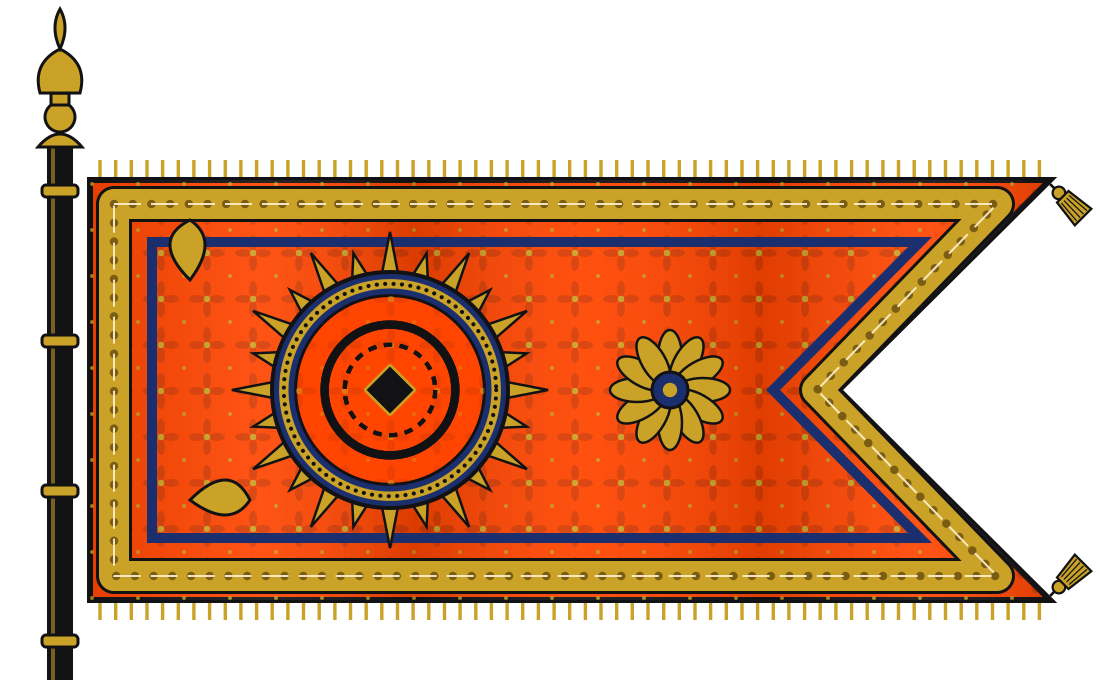
Every clan has every flag type; the type says the occasion and the colours say the clan. The outlined card is the flag the Atlas assigns.
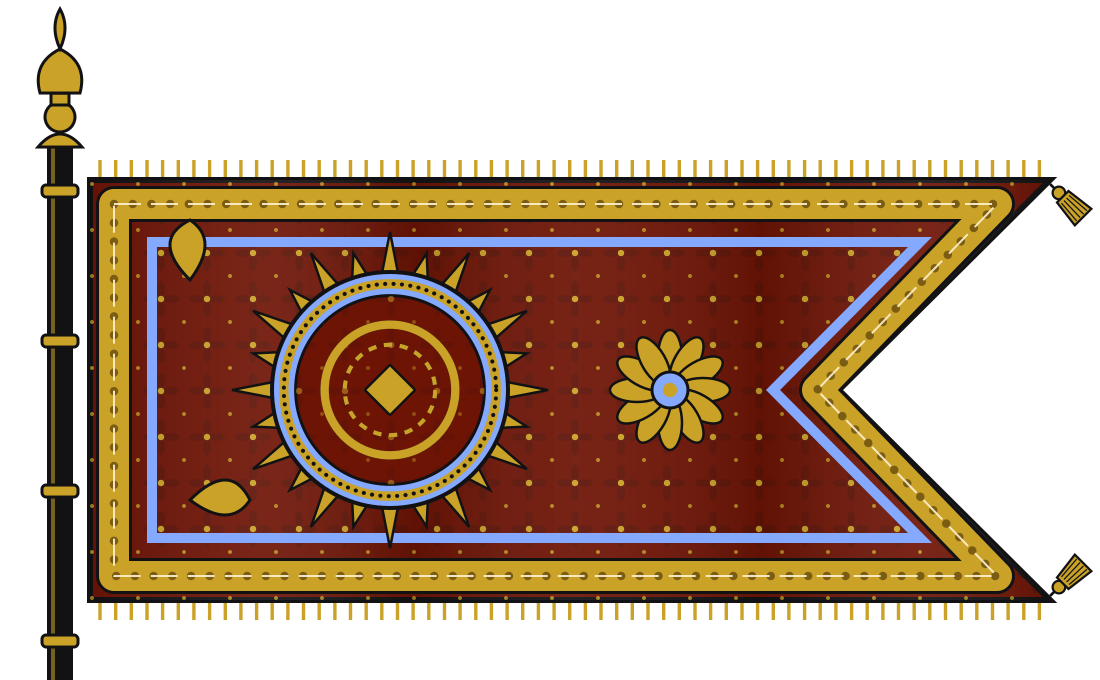
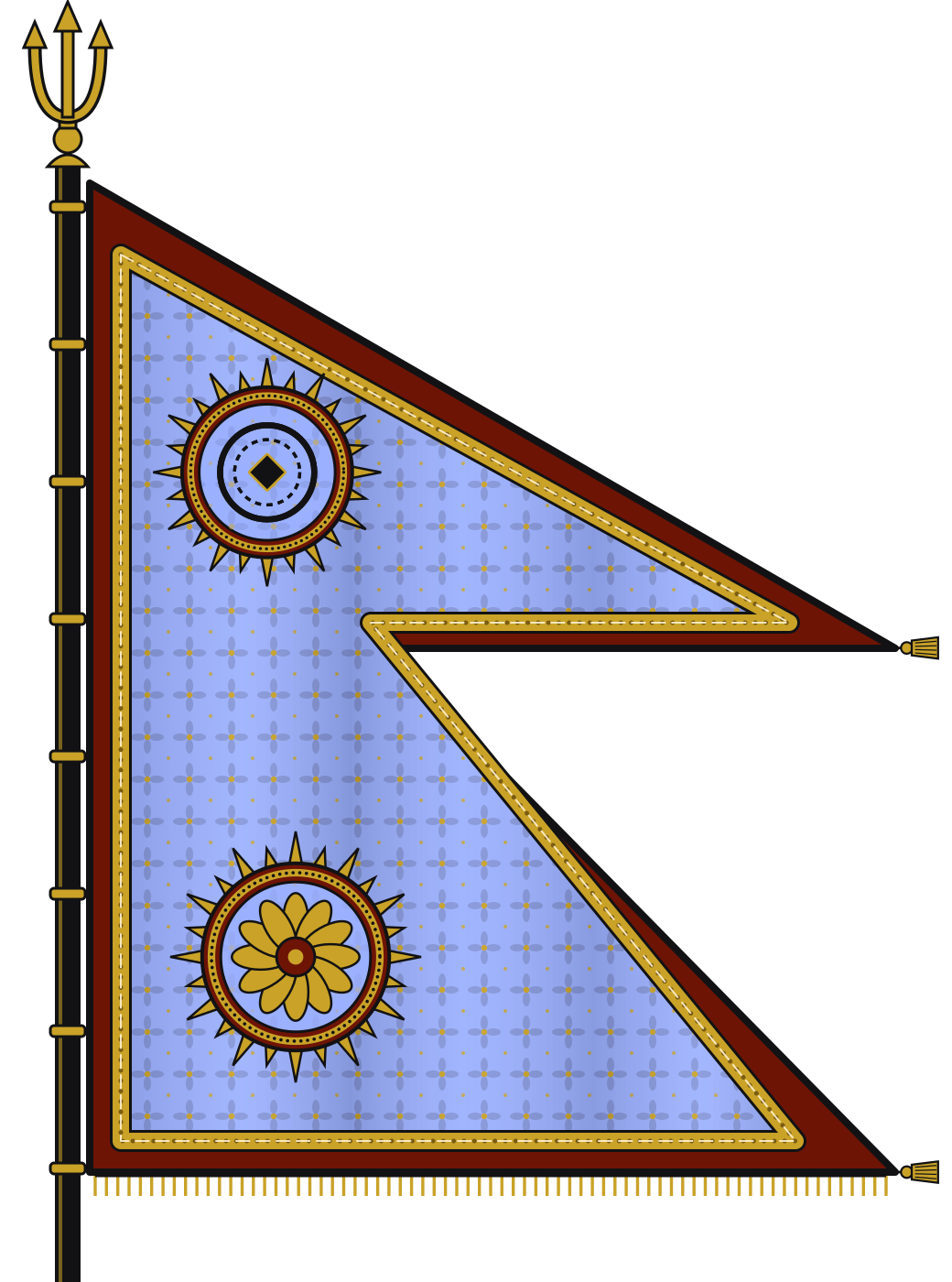
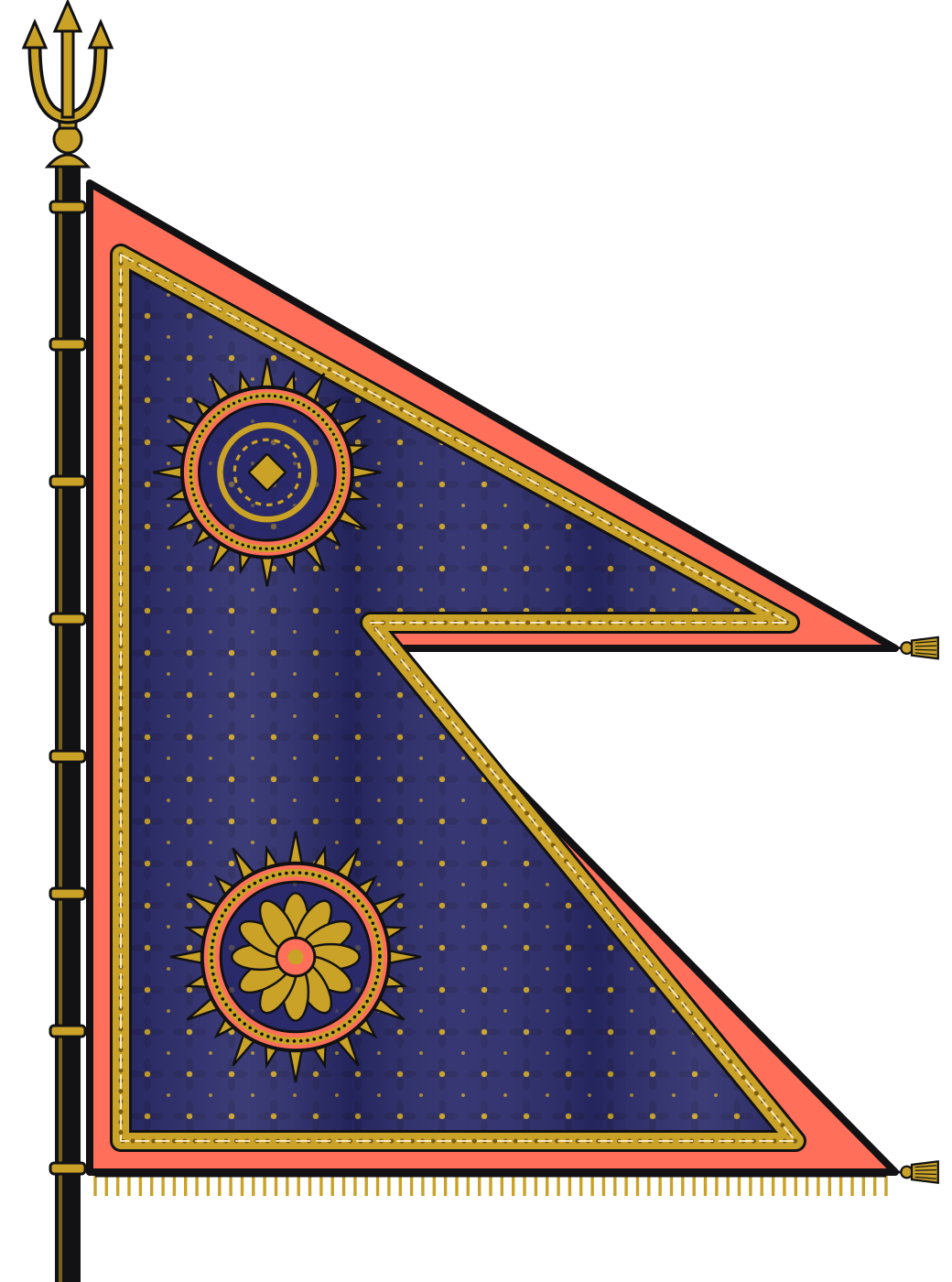
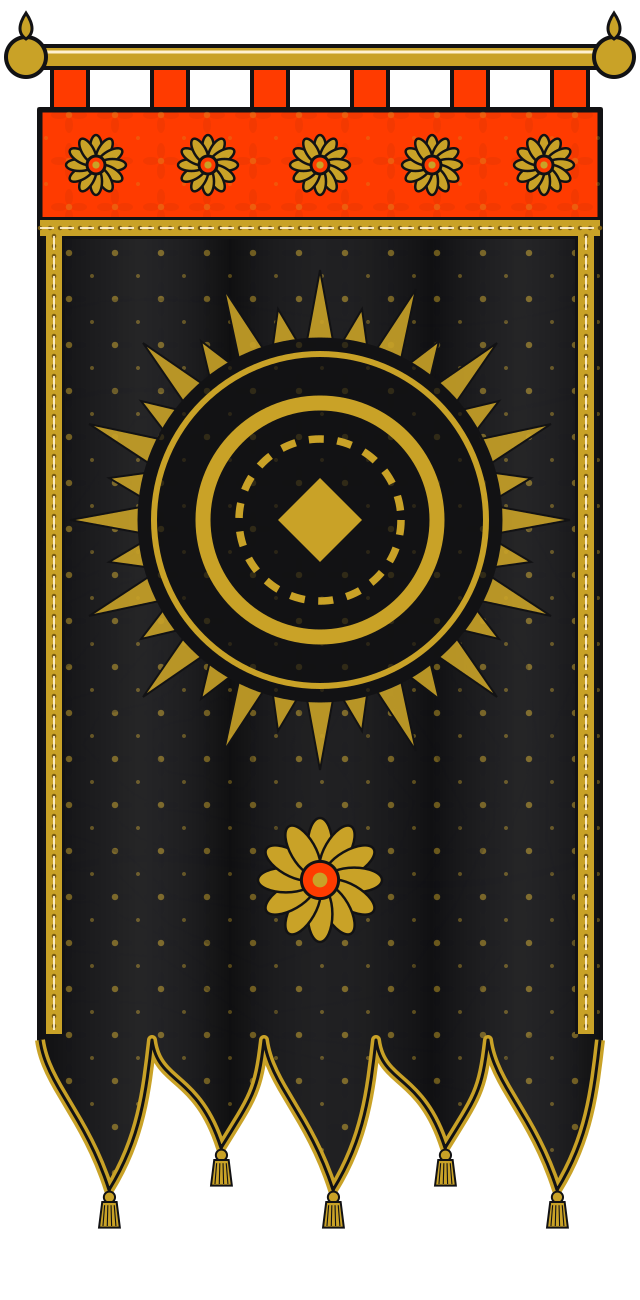
Historic banner
None known
New flag types
| Accessory | For this clan | Basis |
|---|---|---|
| A9 Pota-dhvaja · ship and trade flag For ships, caravans and markets | Not yet designed for this clan | Design |
| A10 Utsava-patāka · festival flag Light, bright flag for fairs and festivals | Not yet designed for this clan | Design |
| A11 Shoka-dhvaja · mourning flag White cloth with the emblem outline in the clan's metal | Not yet designed for this clan | Design |
7. Regalia
| Accessory | For this clan | Basis |
|---|---|---|
| E1 Chhatra · house parasol The ceremonial umbrella | Not yet designed for this clan | Design |
| E2 Chamara · fly-whisks The pair of whisks beside the head of the house | Not yet designed for this clan | Design |
| E3 Danda · staff of office Staff or scepter | Not yet designed for this clan | Design |
| E4 Simhasana · seat The seat of the house, covered in clan cloth | Not yet designed for this clan | Design |
| E5 Khetaka · shield A round shield; the Changi and Dhanush are its flag forms | Not yet designed for this clan | Regional tradition |
| E6 Kula-ayudha · clan weapon The weapon the clan honours | A long stiff bow with broad barbed arrows, and a battle-axe, carried at the dance; the Korwas of Barwah are bowmen | Documented |
8. Worn
| Accessory | For this clan | Basis |
|---|---|---|
| F1 Kula-vastra · clan cloth The clan's woven pattern in its kit colours | Not yet designed for this clan | Design |
| F2 Kirti-vastra · honour cloth A cloth earned for a deed, not inherited | Not yet designed for this clan | Design |
| F3 Kula-mala · garland flower The flower or leaf the clan wears as a garland | Red cotton tufts, or cockscomb flowers, in the women's hair | Documented |
| F4 Chinha · house pin A metal badge with the pin emblem | Not yet designed for this clan | Design |
9. Records
| Accessory | For this clan | Basis |
|---|---|---|
| H1 Clan words A traditional line in the native script | कोरवा · “Korwa” The people's name in Devanagari, as GKToday Hindi prints it, in पहाड़ी कोरवा (Pahari Korwa)[5]. No saying of the clan is in the extracts. | Documented |
| H2 Biruda · titles The house's title or titles | The honorific Manjhi, also used by the Santals; and the hereditary Diwan of Jashpur, held by a Korwa family | Documented |
| H3 Prashasti · praise genealogy The lineage as written at the head of a grant | Not yet found for this clan | Under research |
| H4 Vahi · clan register The book of the clan's births, marriages and deaths | Not yet found for this clan | Under research |
| H5 Rana-ghosha · war cry The clan's cry in battle or celebration | Not yet found for this clan | Under research |
10. VishwaVit · knower of the world
Game values are design choices for this project, not historical claims.
References
- R. V. Russell, The Tribes and Castes of the Central Provinces of India, vol. 3 (1916), Project Gutenberg #41424, read 2026-10-10, https://gutenberg.org/cache/epub/41424/pg41424-images.html
- Khuria Rani (cave entrance), Grottocenter / grottomap.org (read 11 Oct 2026).
- Wikipedia, Korwa language, read 2026-10-23, https://en.wikipedia.org/wiki/Korwa_language
- Wilbraham Egerton, An Illustrated Handbook of Indian Arms (London: W. H. Allen, 1880), Google Books scan, text in data/sources/texts/books/egerton-1880-indian-arms.txt, archive.org
- GKToday Hindi, पहाड़ी कोरवा जनजाति (13 Aug 2019), read 2026-10-23, GKToday
- IASGyan, Pahari Korwas, read 2026-10-23, https://iasgyan.in/daily-current-affairs/pahari-korwas
- Wikipedia, Korwa people, read 2026-10-23, https://en.wikipedia.org/wiki/Korwa_people
- Tribal Research Institute Jharkhand, Korwa people, read 2026-10-23, https://trijharkhand.in/en/korwa
- Matt Reeck, Dalton's Ethnology of Bengal, UCLA Center for India and South Asia, read 2026-10-20, https://southasia.ucla.edu/history-politics/colonial-epistemologies/daltons-ethnology-bengal
- Manish Chandra Tudu, The Pahari Korwa of Chhattisgarh: A Study of their Economic Development in Prevue of Tradition and Modernity, RJPSSs vol. LI no. 2 (2025), pp. 370-378, read 2026-10-23, https://anubooks.com/uploads/session_pdf/17671780651.pdf
- Wikipedia, List of Scheduled Tribes in Odisha, read 2026-10-20, https://en.wikipedia.org/wiki/List_of_Scheduled_Tribes_in_Odisha
- Wikipedia, List of Scheduled Castes in Uttar Pradesh, read 2026-10-22, https://en.wikipedia.org/wiki/List_of_Scheduled_Castes_in_Uttar_Pradesh
- Wikipedia, Tribes of Jharkhand, read 2026-10-20, https://en.wikipedia.org/wiki/Tribes_of_Jharkhand
- Wikipedia, List of Scheduled Tribes in West Bengal, read 2026-10-21, https://en.wikipedia.org/wiki/List_of_Scheduled_Tribes_in_West_Bengal
- Wikipedia, Tribals in Madhya Pradesh, read 2026-10-19, https://en.wikipedia.org/wiki/Tribals_in_Madhya_Pradesh