The Malhar Koli are a Scheduled Tribe of Maharashtra and Odisha; the Maharashtra list gives 2,82,868 people in the 2011 census[1]. Russell records the Malhar or Panbhari subtribe as named from its deity Malhari Deo, and Panbhari means water-carrier; Enthoven says Malhar Kolis worship Malhar as a form of Shiva[2][3]. Malhar Kolis worked as Yeskar and fort-keepers of Sinhagad, Torna and Rajgad under Shivaji, per the Wikipedia mirror, which credits Prasad (1996) and Ghurye (1957)[4]. The Satav clan of the Malhar Koli is entrusted with the Mahalakshmi temple at Dahanu, which the Koli king Jayaba Mukne of Jawhar built, in 1306 or 1343 by different sources[5][4].
01Faith and deities
The Wikipedia mirror names Waghoba as the male kuladevta of the Malhar Koli and says worship centres on him; the lion goddess Waghowa devi is also named[4]. The blog gives the same goddess name[7]. The project KulDevi from the Atlas is Ekvira, which no page read ties to this clan (see below).
Ekvira Aai of Karla, kuldevi of the Koli communities
A recorded tie between the clan and the goddess.
| Deity or tradition | Place in the clan's life | Evidence |
|---|---|---|
| Malhar (Malhari Deo) | Malhar Kolis worship Malhar, a manifestation of Shiva (Enthoven); the subtribe is named from Malhari Deo (Russell) | [2][3] |
| Waghowa devi | A lion goddess named as worshipped by the Malhar Koli, with Waghoba | [4] |
| Kansari | Goddess of grains, named by the blog alongside the god Malhar and a rain god (weak source) | [7] |
| Mahalakshmi of Dahanu | Kuladevi of the Satav sub-clan of the Malhar Koli, and a living deity of the Dahanu temple | [5] |
| Ekvira (KulDevi) | From the Atlas, not from a source: family Navadurga and basis Documented, both, note 'Ekvira Aai of Karla, kuldevi of the Koli communities'. No page read ties Ekvira to the Malhar Koli. | From the Atlas |
02Temples
The Mahalakshmi temple at Dahanu was built by the Koli king Jayaba Mukne of Jawhar State, not by the clan. Sources differ on the date: 1306 (Dahanu page) and 1343 (Wikipedia mirror, citing Tribhuwan 2003). The Malhar Koli are its hereditary priests.
Built by the clan
Not recorded.
Given patronage or grants by the clan
| Temple | Deity | What the clan gave | When | Where |
|---|---|---|---|---|
| Mahalakshmi temple, Dahanu | Mahalakshmi, kuladevi of the Satavs | Hereditary management and priesthood by the Satav clan of the Malhar Koli | Built 1306 or 1343; the page says the Satav clan manages it | Dahanu, Palghar district[5][4] |
03Languages and scripts
| Language or script | Kind | Under the clan | Evidence |
|---|---|---|---|
| Marathi living | Primary language (Joshua Project, 258,000 speakers, undated) | Maharashtra | [6] |
| Konkani, Gujarati, Kannada, Hindi, Telugu, Odia, Bhili living | Secondary languages (Joshua Project estimates) | Various states | [6] |
| Telugu and Odia | Languages named in the OSTM entry | Odisha | [8] |
04Books and literature
No work written by or for the Malhar Koli is in the extracts. The works cited are about them, not by them: Enthoven (vol. II), Russell and Hira Lal (1916), and the Wikipedia sources.
Written during the clan's history
Not recorded.
Given patronage by the clan
Not recorded.
05Thinkers and scholars
Not recorded.
No thinker or scholar of the Malhar Koli is named in the extracts. Enthoven, Russell and Ghurye are cited as writers about them.
06Art and architecture
No art, craft or architecture of the Malhar Koli is recorded in the extracts.
Painting and wall art
Not recorded.
Sculpture and temple art
Not recorded.
Temple and building architecture
Not recorded.
Weaving and textiles
Not recorded.
Clothing and jewellery
Not recorded.
Coins, pottery and crafts
Not recorded.
07History
Under British record
Russell and Hira Lal recorded the Malhar or Panbhari subtribe in 1916, named from its deity Malhari Deo. The Malhar were one of five Koli subdivisions in the Central Provinces[3].
Enthoven's groups
Enthoven names Malhar, Mahadev, Son and Dhor as the main Koli groups. He says Malhar Kolis are also called Kunum Kolis, because (according to Captain Mackintosh) they associate and eat with Kunbis, and that they clean village rest houses and offices and supply water[2].
In Shivaji's time
The Malhar Koli worked as Yeskar and were subedars or fort-keepers of Sinhagad, Torna and Rajgad. The source is the Wikipedia mirror, which credits Prasad (1996) and Ghurye (1957)[4].
Two communities in Odisha
The Odisha State Tribal Museum says the Koli and the Malhar are 'two separate communities' that the Census enumerates together. The Malhar are a semi-nomadic community of Dhenkanal and Anugul districts. The Koli are believed to have come to Ganjam from Andhra Pradesh[8].
08Journey and migrations
No movement of the Malhar Koli is dated in the extracts, apart from the Odisha account of a semi-nomadic life in Dhenkanal and Anugul.
Not recorded.
09Seats and lands
| Place | Role | Where today |
|---|---|---|
| Thane district tehsils | Concentrated area: Palghar, Dahanu, Wada, Jawhar, Vasai, Bhivandi (Hiramani 1997, credited in the Wikipedia mirror) | Maharashtra; Dahanu is in Palghar district[4][5] |
| Bombay City, Deccan villages, Thana seaside | Malhar Kolis found throughout Bombay City, in nearly every Deccan village and along Thana district's seaside (Enthoven) | Maharashtra[2] |
| Sinhagad, Torna, Rajgad | Forts where Malhar Kolis served under Shivaji | Maharashtra[4] |
| Dhenkanal and Anugul | Districts where the Malhar are a semi-nomadic community | Odisha[8] |
| Ganjam; Cuttack | The OSTM says the Koli, a separate community, are believed to have migrated to Ganjam from Andhra Pradesh; the KISS handbook prints Cuttack as a district for the Malhar | Odisha[8][9] |
| Other states | Gujarat, Karnataka, Goa listed (Wikipedia mirror); Joshua Project largest populations: Maharashtra, Karnataka, Madhya Pradesh, Gujarat, Telangana (undated estimates) | [4][6] |
10Notable figures
| Name | Role | Era | Known from |
|---|---|---|---|
| Kaluram Dhodade | Malhar Koli of Kondhan village, known as Kalu Kaka in the Palghar region | Born around 1943 | [4] (credited to Ambagudia and Xaxa 2020) |
11Allies, rivals and marriages
| People | Relationship | When |
|---|---|---|
| Satav clan | Hereditary priests of the Mahalakshmi temple at Dahanu | Not dated[5] |
| Mukne royal house of Jawhar | Built the Mahalakshmi temple at Dahanu; Raj Kolis of Jawhar believed part of the Mahadev Kolis | 1306 or 1343 for the temple[5][2] |
| Mahadev Kolis | Share dialect, attire, traditions and rituals with the Malhar Koli (Enthoven) | Not dated[2] |
| Kunbis | Malhar Kolis associate and eat with them (Enthoven) | Not dated[2] |
| Shivaji | Malhar Kolis served as Yeskar and fort-keepers under him | In Shivaji's time[4] |
12Society and livelihood
The Malhar Koli are a Scheduled Tribe. Their traditional caste council looks after their interests and settles disputes, and they marry within the group[6].
Government and social order
| Institution or group | What it was | Evidence |
|---|---|---|
| Traditional caste council | Looks after the community's interests and settles disputes | [6] |
| Marriage | Endogamous; monogamous, arranged by families; divorce and remarriage allowed | [6] |
| Inheritance | On the father's death property passes to the sons; the eldest becomes head of the household | [6] |
Livelihood over time
| Era | Livelihood | Evidence |
|---|---|---|
| Not dated | Forest produce: wild roots and fruits; daily-wage labour; some water carrying | [8] |
| Not dated | Fishing; some water carriers where rainfall is low | [6] |
| Not dated | Cleaning village rest houses and offices, and supplying water (Pan-bhari) | [2] |
13Sub-clans and related clans
Wikipedia gives about 70 clans for the Malhar Koli (Singh and Bhanu 2004). The names below are the ones the extracts print; the rest are not in them. Sub-clans not in the Atlas are candidates for review.
| Clan | Relation | Where | Size | In the Atlas | Evidence |
|---|---|---|---|---|---|
| Satav | Sub-clan | Dahanu, Palghar district; hereditary priests of the Mahalakshmi temple | new clan candidate | [5][4] | |
| Barad | Sub-clan | new clan candidate | [4] | ||
| Babar | Sub-clan | new clan candidate | [4] | ||
| Bhoir | Sub-clan | new clan candidate | [4][2] | ||
| Dalvi | Sub-clan | new clan candidate | [4] | ||
| Jadhav | Sub-clan | new clan candidate | [4][2] | ||
| Mali | Sub-clan | same name as ST-197: check | [4] | ||
| Mor | Sub-clan | new clan candidate | [4] | ||
| Tandel | Sub-clan | new clan candidate | [4][7] | ||
| Wangha | Sub-clan | new clan candidate | [4] | ||
| Bhoye | Sub-clan | new clan candidate | [7] | ||
| Balshi | Sub-clan | new clan candidate | [7] | ||
| Umbarkar | Sub-clan | new clan candidate | [7] | ||
| Wardha | Sub-clan | new clan candidate | [7] | ||
| Panbhare Koli | Sub-clan | new clan candidate | [4] | ||
| Koli Mahadev | Related people | Maharashtra; a separate endogamous division of the Koli (Enthoven) | ST-146 | [2] | |
| Raj Koli | Related people | Jawhar; believed part of the Mahadev Kolis (Wilson) | new clan candidate | [2] | |
| Mukne (Jawhar royal house) | Dynasty from this clan | Jawhar State; built the Dahanu temple (dates differ, see temples) | same name as ST-566: check | [5][4] | |
| Kunbi | Related people | Malhar Kolis associate and eat with Kunbis (Enthoven) | ST-165 | [2] | |
| Varli | Related people | Where not given; the blog compares the Kambad dance with the Warlis' | ST-326 | [7] | |
| Mahadeo Kolis | Related people | Berar, the principal Koli group there (Russell 1916) | new clan candidate | [3] | |
| Surajvansi | Related people | Central Provinces, one of five Koli subdivisions (Russell 1916) | new clan candidate | [3] | |
| Bhilaophod | Related people | Central Provinces, one of five Koli subdivisions (Russell 1916) | new clan candidate | [3] | |
| Singade | Related people | Central Provinces, one of five Koli subdivisions (Russell 1916) | new clan candidate | [3] | |
| Muhammadan Kolis | Related people | Central Provinces, one of five Koli subdivisions (Russell 1916) | new clan candidate | [3] |
Clans marked "new clan candidate" are not in the Atlas yet.
14Surnames
Enthoven gives these as Malhar Koli surnames (Jio exhibit, Enthoven vol. II). Satav is the sub-clan name of the Dahanu priests, and the Dahanu page writes a bearer's name as Satava.
| Surname | Clan or sub-clan | Where | People with this surname | Also used by other communities |
|---|---|---|---|---|
| Bhoir | Malhar Koli | Malhar Koli (Enthoven) | not yet counted | Not checked |
| Jadhav | Malhar Koli | Malhar Koli (Enthoven) | not yet counted | Not checked |
| Kerav | Malhar Koli | Malhar Koli (Enthoven) | not yet counted | Not checked |
| Langa | Malhar Koli | Malhar Koli (Enthoven) | not yet counted | Not checked |
| Povar | Malhar Koli | Malhar Koli (Enthoven) | not yet counted | Not checked |
| Sharanpad | Malhar Koli | Malhar Koli (Enthoven) | not yet counted | Not checked |
| Shelir | Malhar Koli | Malhar Koli (Enthoven) | not yet counted | Not checked |
| Sojval | Malhar Koli | Malhar Koli (Enthoven) | not yet counted | Not checked |
| Vekhande | Malhar Koli | Malhar Koli (Enthoven) | not yet counted | Not checked |
| Satav | Satav | Dahanu, Palghar district (Dahanu page) | not yet counted | Not checked |
Counts are of everyone with the surname, from the cited source and year, not only members of this clan. A surname shared with other communities says nothing about any one person's origin.
15Songs and music
The extracts give no song text for the Malhar Koli. The blog says women sing during the Kambad dance but gives no lyrics.
Kambad dance song living
16Poems, lullabies and children's rhymes
None recorded yet.
17Stories, legends and proverbs
Stories and legends
Not recorded.
Proverbs and sayings
Not recorded.
18Festivals and fairs
| Festival or fair | When | Where | What happens |
|---|---|---|---|
| Tarpa dance | During Diwali | Not given | A traditional dance of the Malhar Koli[7][4] (the Wikipedia mirror credits Firstpost, 2019) |
| Gauri dance | During the Ganesh festival, 'Gauri Ganapati' | Not given | Danced in the Ganesh festival (blog, weak source)[7] |
| Kambad dance | At the onset of the monsoon | Not given | Women sing; a leader called gholya sets the rhythm; some performers dress as women or act mad (blog, weak source)[7] |
| Tabala | From sowing through harvest into Diwali | Not given | Named by the blog; not described[7] |
| Mahalakshmi yatra | Fifteen days, beginning on Hanuman Jayanti | Dahanu, Palghar district | The yatra of the Dahanu temple, whose management is traditionally entrusted to the Satav clan[5] |
19Food, dress and games
Food
| Item | What it is | Evidence |
|---|---|---|
| Wild roots and fruits | Gathered from the forest (OSTM) | [8] |
Dress
| Item | What it is | Evidence |
|---|---|---|
| Shorts or loincloths for men; saris and blouses for women | Described in the blog with the Kambad dance; the occasion is not stated (weak source) | [7] |
Games and martial arts
Not recorded.
Tags: living still practised · revived brought back after a break · lost known only from records · research reported but not yet confirmed from a source. Songs and poems under copyright are listed by title only; restricted or sacred material is noted without its content.
20Status today
The Malhar Koli are a Scheduled Tribe in Maharashtra, where the 2011 census counts 2,82,868, and in Odisha, where it counts 6,423[1][8].
Recognised heritage
| What | Recognition | Evidence |
|---|---|---|
| Scheduled Tribe status | Maharashtra and Odisha ST lists (2011 census figures above) | [1][8] |
No community review of this page is recorded; it is a research draft.
21For children
The water carrier's cloth
Long ago, the Malhar Koli lived in villages in Thane district. They gathered wild roots and fruit from the forest and worked for others for a daily wage. Some of them carried water to the village rest houses and offices. They were also called Panbhari, which means water-carrier. To carry a heavy water pot on the head, they wore a cloth pad called a chumli. They worshipped Waghoba, and the Satav families looked after the great Mahalakshmi temple at Dahanu. Today the Malhar Koli are a Scheduled Tribe of Maharashtra and Odisha.
Riddle: What do the Malhar Koli wear on their heads to carry a water pot? (A soft cloth pad called a chumli.)
22Across the project
| Project | What carries this clan | Status |
|---|---|---|
| Atlas of the Janas | No pin is set; Dahanu and the Thane district tehsils are in the extracts | Under research |
| KulDevi and GrahDevi | From the Atlas: Ekvira, family Navadurga, basis Documented; no page read ties Ekvira to the Malhar Koli | From the Atlas |
| Planet naming | Not checked against the register | To check |
| Renaming and waters | Panbhari (water carrier) and the Dahanu temple are in the extracts; no place name drawn from them yet | — |
23Open questions
- The Dahanu temple's date: 1306 (Dahanu page) or 1343 (Wikipedia mirror, citing Tribhuwan 2003). Which is right?
- Ekvira is the KulDevi, described there as kuladevi of the Koli communities. No page read ties her to the Malhar Koli; Waghoba is named as their kuladevta. Which is the clan's own goddess?
- The Thane Gazetteer (Bombay Presidency vol. XIII-B) and Enthoven vol. II were not read. Both are leads for songs, sayings, surnames and the 'Malhar festival'.
- No songs, proverbs or Marathi-script sources were found. Lead: the Zenodo record https://zenodo.org/records/17663991 (not read).
- Are the Odisha Malhar and the Maharashtra Malhar Koli one people? OSTM calls the Koli and the Malhar 'two separate communities'.
- Mali and Kunbi: are the clans ST-197 Mali and ST-165 Kunbi, the same as the names the Malhar Koli list gives?
- Panbhare Koli (Wikipedia mirror) and the Panbhari alias: same group?
- Mahadeo Kolis (Berar, Russell) and Koli Mahadev (ST-146): same?
- Community review: none recorded.
24Astitva
अस्तित्व · being, existence: everything by which the clan is known
The extracts give a lion goddess, a cloth pad and a fort-keeping office. No coin, seal, plate, war cry or totem tree is recorded for the Malhar Koli[4][2].
Every clan has every accessory, royal objects included. Each one says how it is known: Documented This clan's own object is recorded. · Regional tradition Recorded for the region or for peoples like this one, not for this clan. · Design Made for this project, with no historical claim. · Under research To be found for this clan from sources. Legends and titles are written in the clan's own script.
1. Seals and coins
| Accessory | For this clan | Basis |
|---|---|---|
| B1 Rajamudra · house seal Round seal with the clan emblem and a short legend in the clan's script | Not yet designed for this clan | Design |
| B2 Anguliya-mudra · signet ring Personal seal ring of the head of the house | Not yet designed for this clan | Design |
| B3 Chhapa · house stamp Ink or block stamp for letters, goods and cloth | Not yet designed for this clan | Design |
| B4 Tamrapatra · charter plate Copper-plate grant on a ring, closed with the house seal | Not yet designed for this clan | Design |
| B5 Shreni-mudra · guild or trade seal Seal for the clan's trade, craft or caravan | Not yet designed for this clan | Design |
| C1 Clan coin Emblem or deity on one side, a legend in the clan's script | Not yet designed for this clan | Design |
| C2 Coin die The die that strikes the coin | Not yet designed for this clan | Design |
2. Living symbols
| Accessory | For this clan | Basis |
|---|---|---|
| I1 Totem trio The tree, bird and animal the clan protects | Animal: the lion goddess Waghowa devi, worshipped with Waghoba (the page does not call it a totem) | Documented |
| I2 Kaval-maram · guardian tree The tree that stands at the clan's seat | Not yet found for this clan | Under research |
3. Stone and gate
| Accessory | For this clan | Basis |
|---|---|---|
| G1 Torana · gateway The built gate of the seat; the cloth Toran hangs in it | Not yet designed for this clan | Regional tradition |
| G2 Viragallu · hero stone Carved panel stone for a member who died defending the clan | Not yet designed for this clan | Regional tradition |
| G3 Kula-shila · clan stones Standing and table stones that remember the ancestors | Not yet designed for this clan | Design |
| G4 Jayastambha · victory pillar A pillar raised for a victory | Not yet designed for this clan | Design |
| G5 Sima-shila · boundary stone Marks the clan's land, with a line in the native script | Not yet designed for this clan | Design |
4. Sounds
| Accessory | For this clan | Basis |
|---|---|---|
| D1 Pancha-mahashabda · five great sounds The right to five instruments | Not yet designed for this clan | Design |
| D2 Shankha · clan conch The clan's own named war conch | Not yet designed for this clan | Design |
| D3 Murasu · house drums Three drums: war, charity and justice | Not yet designed for this clan | Design |
5. Kit: colours, metals and emblems
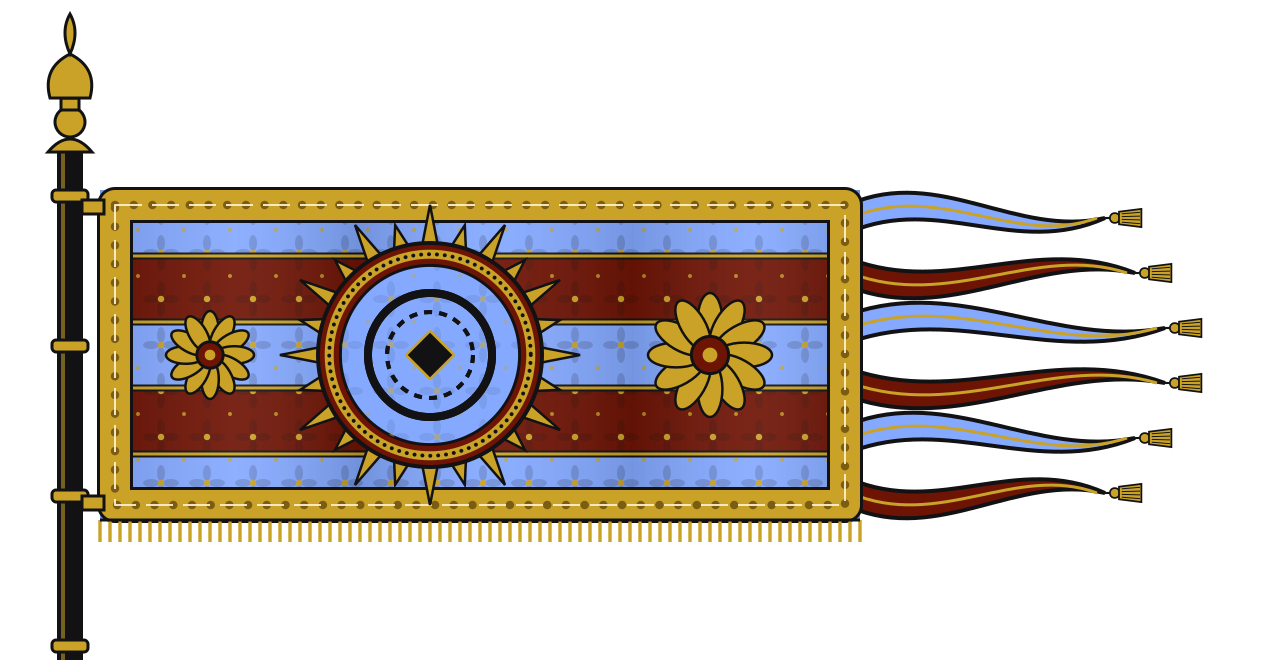
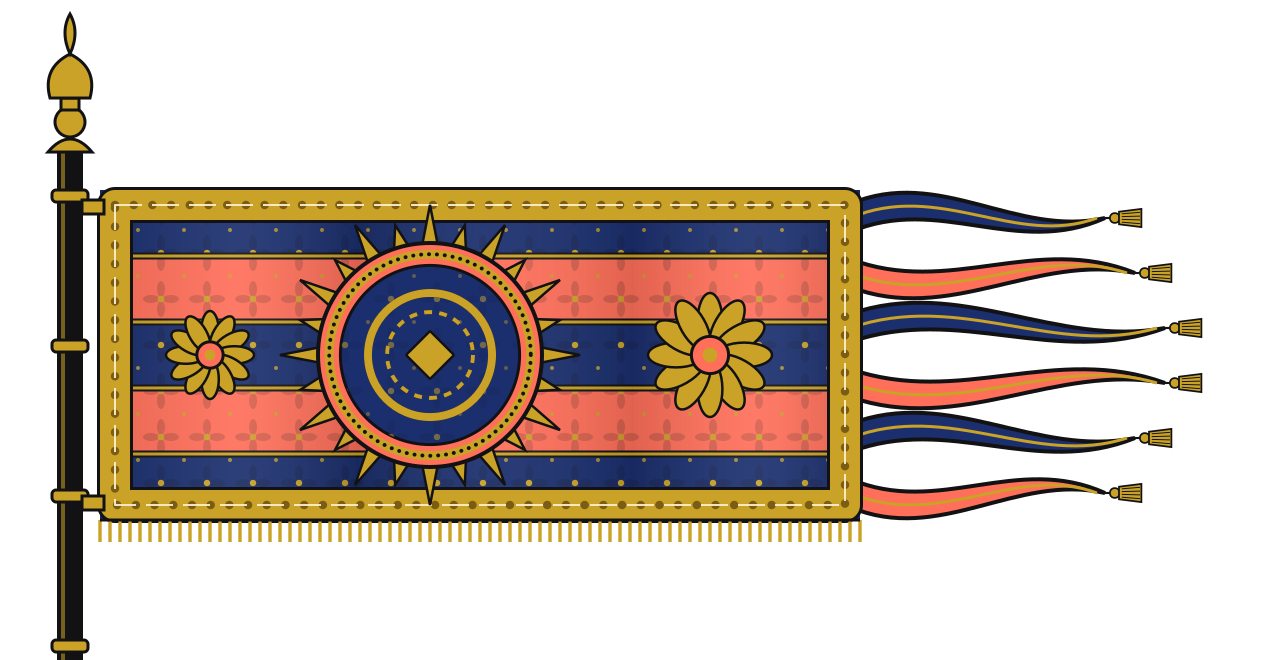
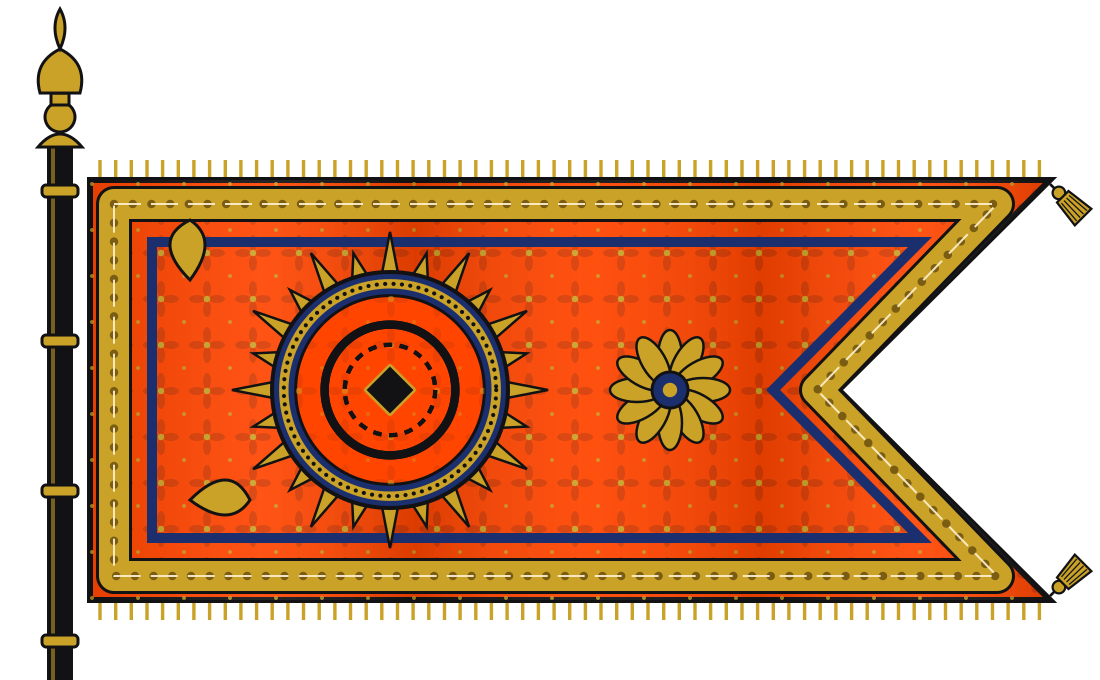
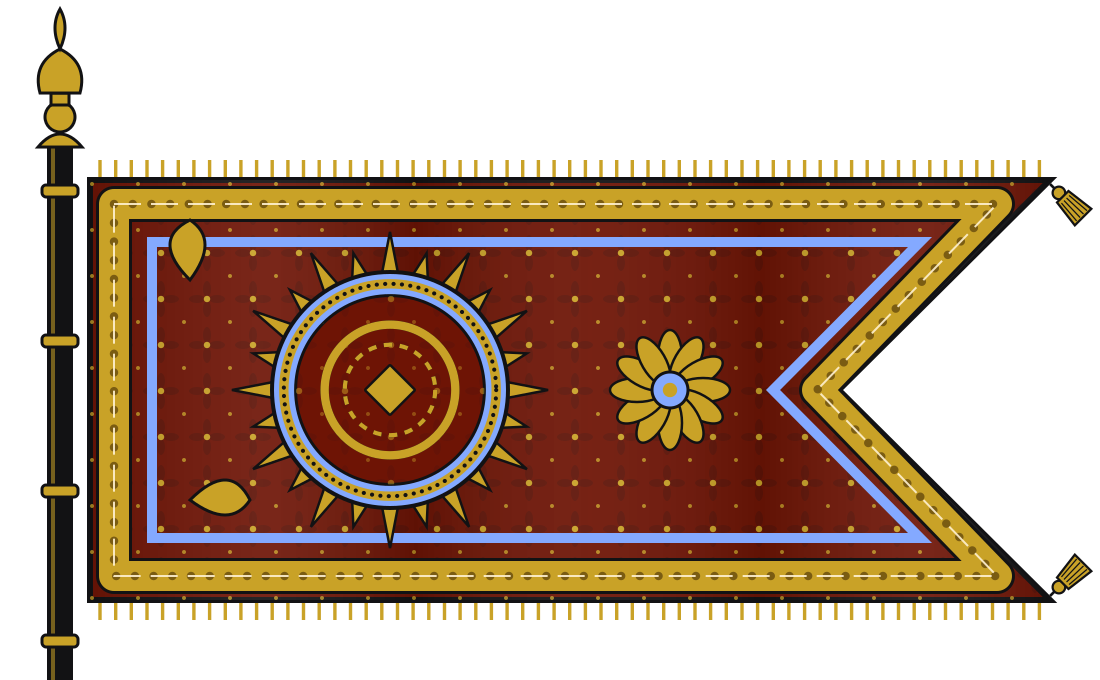
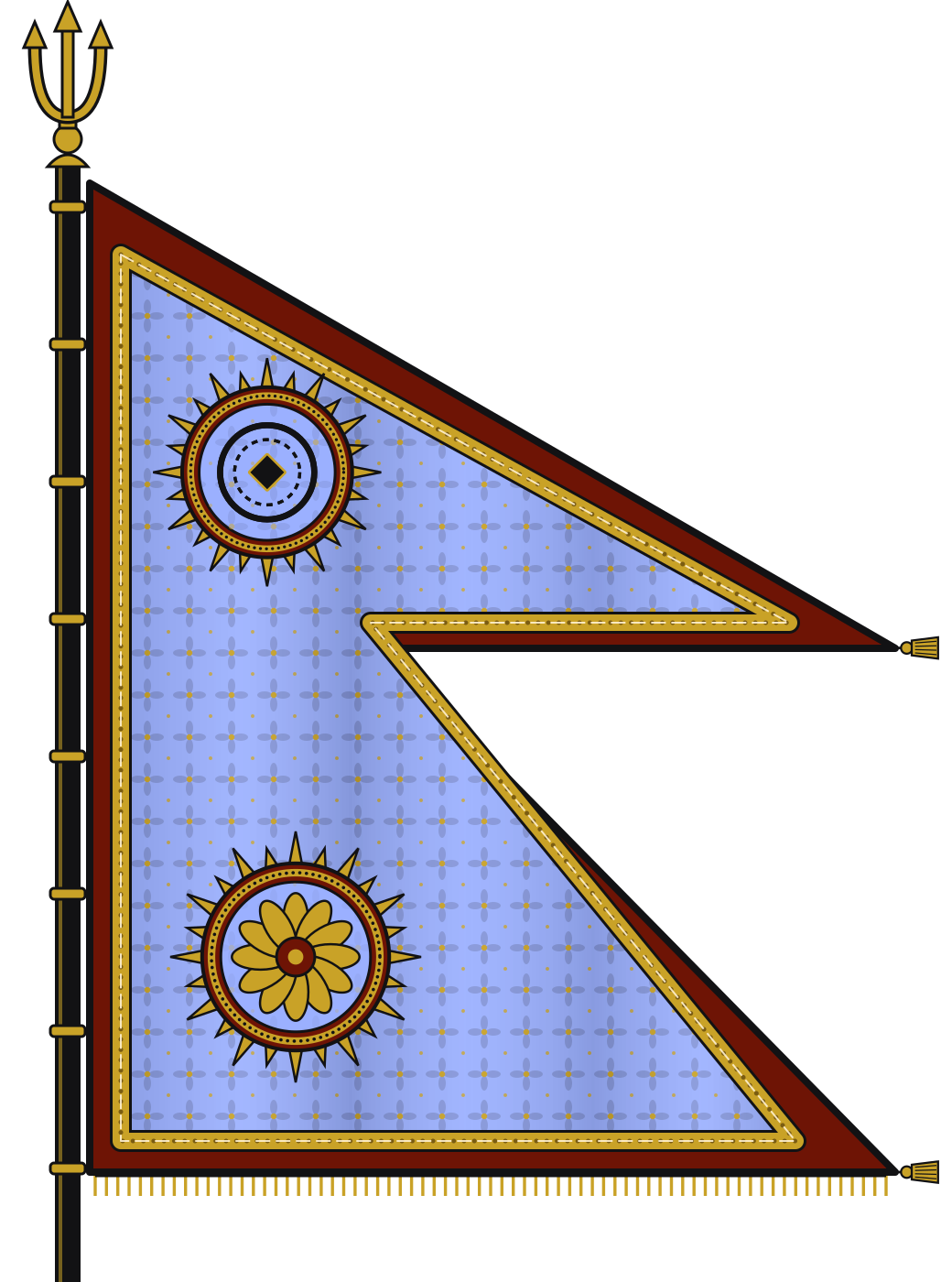
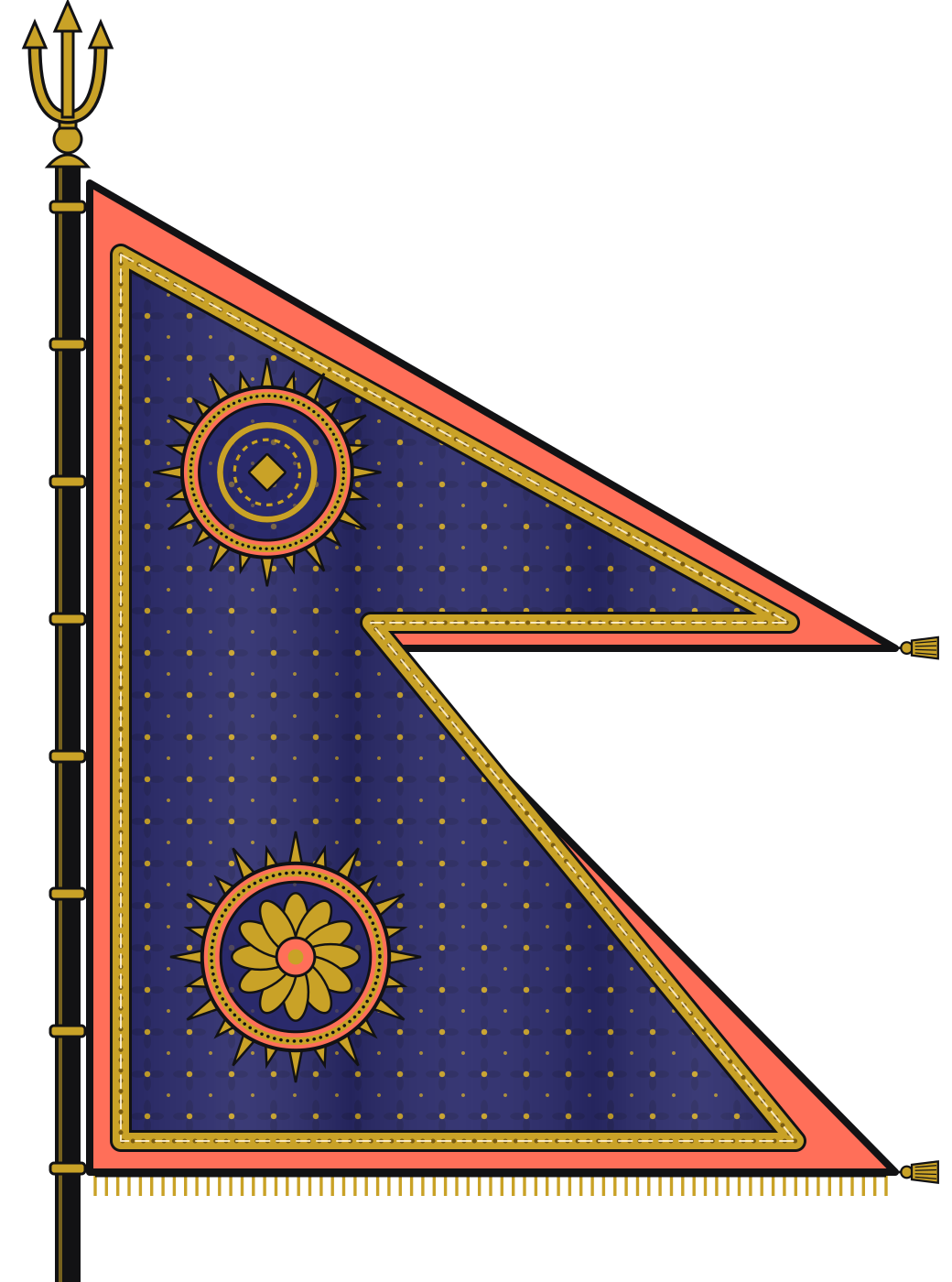
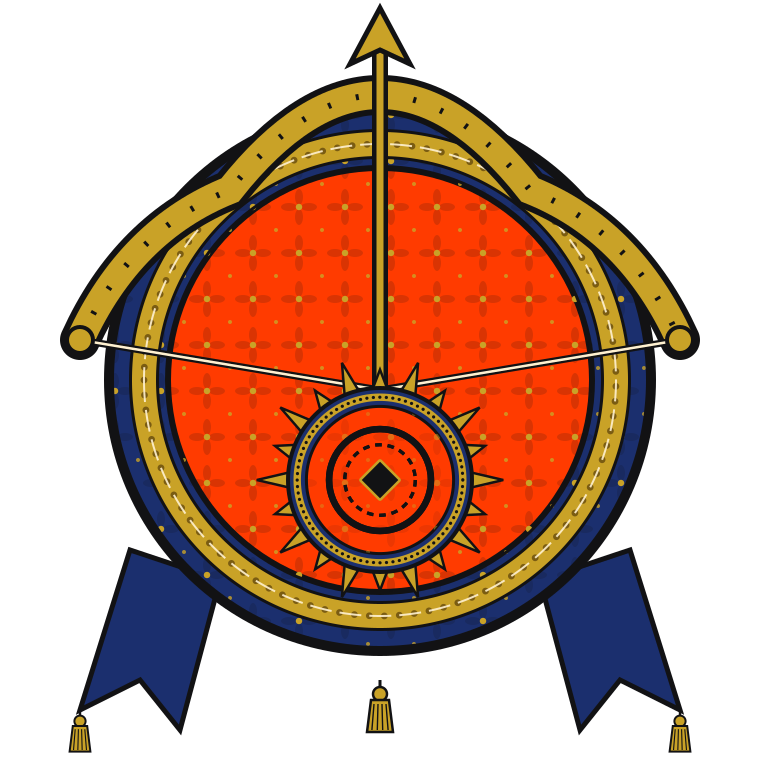
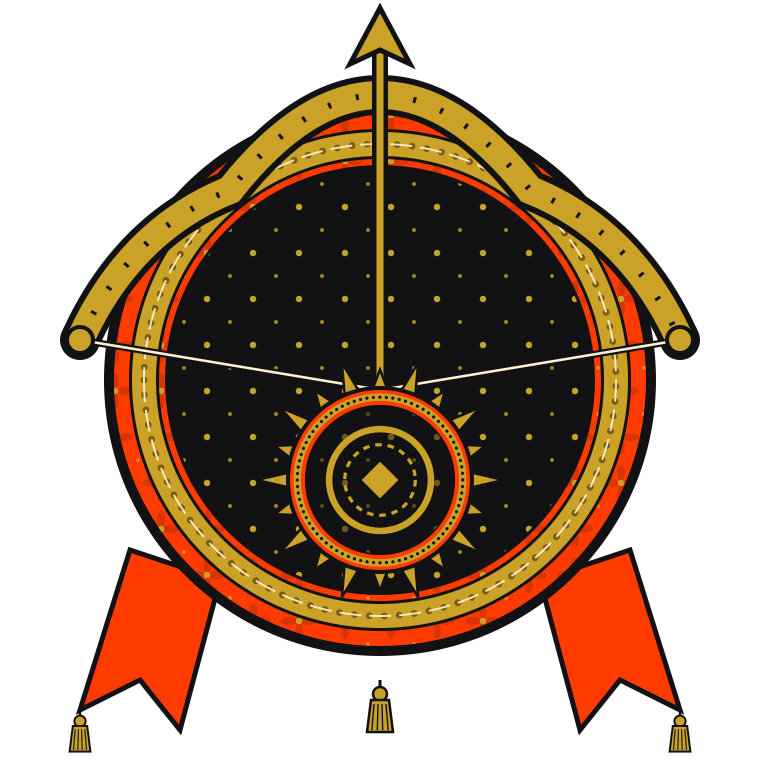
No historic seal, flag or emblem for the Malhar Koli is in the sources read. From the Atlas: 'None known'. The basket and hill, the Changi flag and the banner are design work.
| Part of the kit | This clan |
|---|---|
| Field | Deep Brick #7E2A1E |
| Accent | Deep Cosmic Blue #9BB0FF |
| Emblem colour | Metallic Gold #C9A227 |
| Zari metal | Gold |
| Main emblem | A basket and a hill |
| Second image | — |
| Night and day | Every visual accessory has two versions: by night the emblem on the dark field, by day the clan's field colour on cloth woven from its metal. |
6. Flags
Every clan has every flag type; the type says the occasion and the colours say the clan. The outlined card is the flag the Atlas assigns.
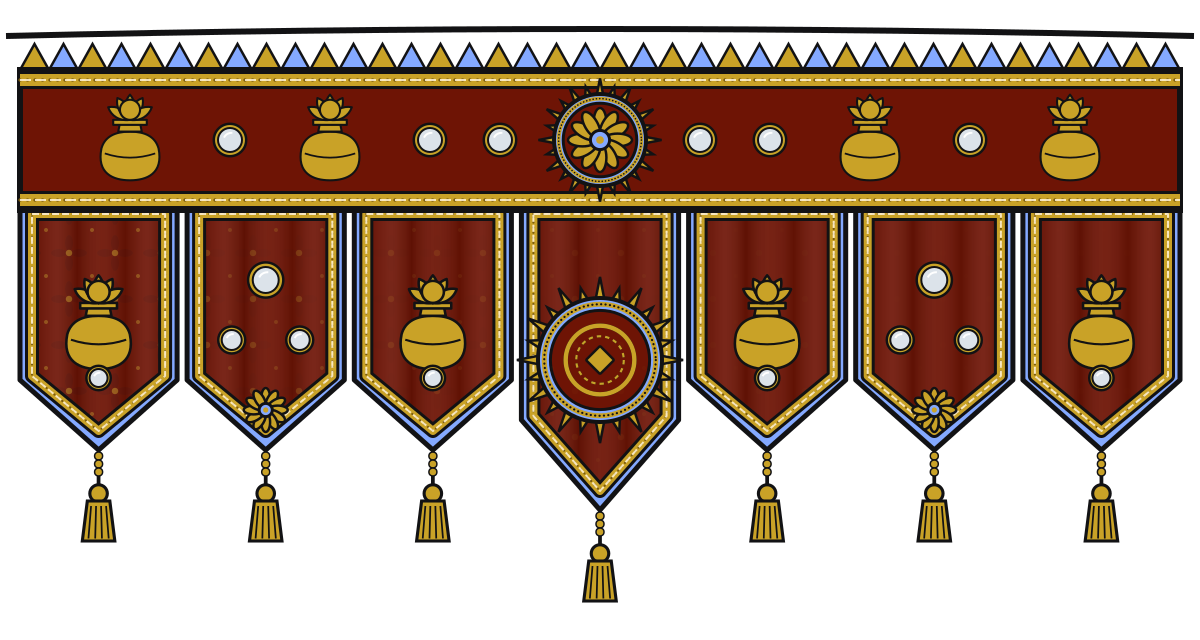
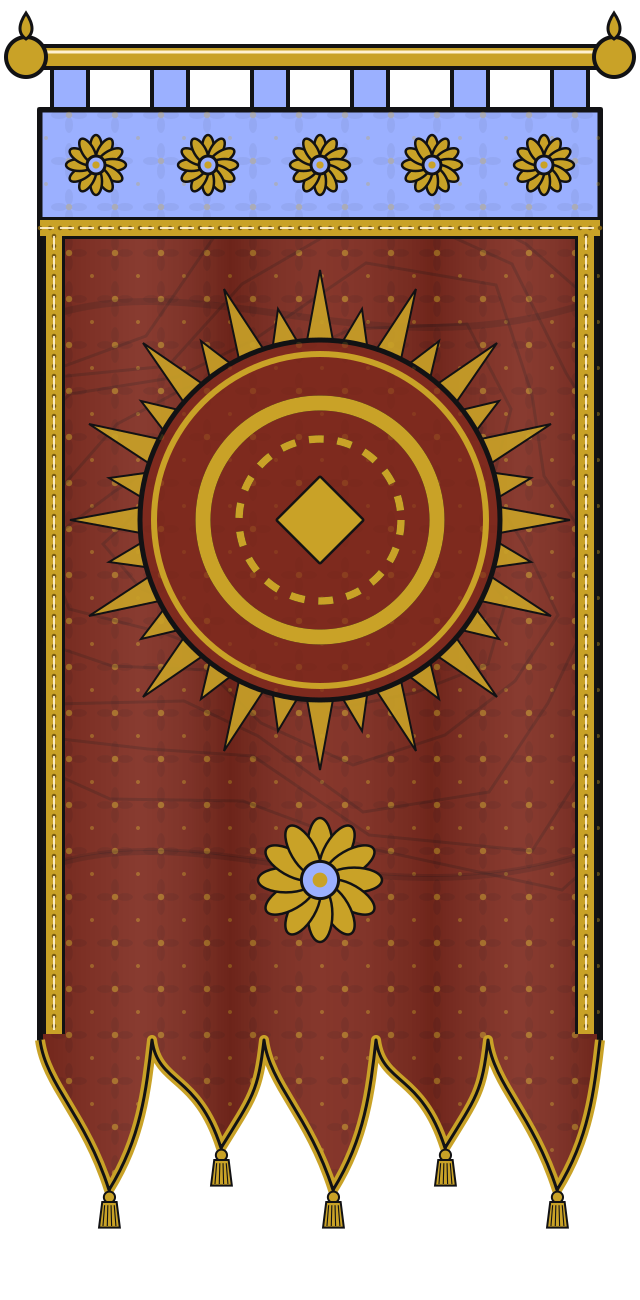
Historic banner
None known
New flag types
| Accessory | For this clan | Basis |
|---|---|---|
| A9 Pota-dhvaja · ship and trade flag For ships, caravans and markets | Not yet designed for this clan | Design |
| A10 Utsava-patāka · festival flag Light, bright flag for fairs and festivals | Not yet designed for this clan | Design |
| A11 Shoka-dhvaja · mourning flag White cloth with the emblem outline in the clan's metal | Not yet designed for this clan | Design |
7. Regalia
| Accessory | For this clan | Basis |
|---|---|---|
| E1 Chhatra · house parasol The ceremonial umbrella | Not yet designed for this clan | Design |
| E2 Chamara · fly-whisks The pair of whisks beside the head of the house | Not yet designed for this clan | Design |
| E3 Danda · staff of office Staff or scepter | Not yet designed for this clan | Design |
| E4 Simhasana · seat The seat of the house, covered in clan cloth | Not yet designed for this clan | Design |
| E5 Khetaka · shield A round shield; the Changi and Dhanush are its flag forms | Not yet designed for this clan | Regional tradition |
| E6 Kula-ayudha · clan weapon The weapon the clan honours | Not yet found for this clan | Under research |
8. Worn
| Accessory | For this clan | Basis |
|---|---|---|
| F1 Kula-vastra · clan cloth The clan's woven pattern in its kit colours | Chumli: a cloth pad worn on the head to carry water pots | Documented |
| F2 Kirti-vastra · honour cloth A cloth earned for a deed, not inherited | Not yet designed for this clan | Design |
| F3 Kula-mala · garland flower The flower or leaf the clan wears as a garland | Not yet found for this clan | Under research |
| F4 Chinha · house pin A metal badge with the pin emblem | Not yet designed for this clan | Design |
9. Records
| Accessory | For this clan | Basis |
|---|---|---|
| H1 Clan words A traditional line in the native script | कोली मल्हार · “Koli Malhar” The clan's own name in its script, from the Joshua Project profile (alternate name). No line of clan words is in the sources read; the name is shown as the Quote Illustrative until a line is found.[6] | Design |
| H2 Biruda · titles The house's title or titles | Subedar, a fort-keeper's office under Shivaji, held by Malhar Kolis of Sinhagad, Torna and Rajgad | Documented |
| H3 Prashasti · praise genealogy The lineage as written at the head of a grant | Not yet found for this clan | Under research |
| H4 Vahi · clan register The book of the clan's births, marriages and deaths | Not yet found for this clan | Under research |
| H5 Rana-ghosha · war cry The clan's cry in battle or celebration | Not yet found for this clan | Under research |
10. VishwaVit · knower of the world
Game values are design choices for this project, not historical claims.
References
- dhammabharat.com, List of Scheduled Tribes in Maharashtra and Population of each Tribe (2011 Census), read 2026-10-10, https://dhammabharat.com/?p=13656
- Jio Institute, The Kolis: An Introduction (exhibit, citing Enthoven vol. II and Wilson), read 2026-11-05, link
- R. V. Russell, The Tribes and Castes of the Central Provinces of India, vol. 3 (1916), Project Gutenberg #41424, read 2026-10-10, https://gutenberg.org/cache/epub/41424/pg41424-images.html
- Wikipedia, Malhar Koli (Kiwix mirror, Oct 2023 snapshot), read 2026-11-05, link
- Mahalakshmi Temple, Dahanu, Wikipedia (read 10 Oct 2026, KulDevi discovery sweep, Maharashtra and Goa).
- Joshua Project, Malhar Koli in India (people 17212; missions-data estimates), read 2026-11-05, link
- kolistani.blogspot.com, Malhar Koli (blog, Jan 2025; weak source), read 2026-11-05, link
- Odisha State Tribal Museum, Tribes of Odisha: Koli, Malhar, read 2026-11-05, link
- Sushree Mohanty, Indigenous Colours of Odisha: Handbook on 62 Tribes (KISS), read 2026-10-20, link