Kalinga was the eastern coastal land between the Ganga delta and the Godavari, whose core is today's Odisha and the north of Andhra Pradesh[1]. The Mahabharata counts the Kalingas as a major people, and Brahmana and Buddhist texts name early Kalinga kings[1]. The Nandas briefly held it, and in c. 261 BCE Ashoka conquered it in a war whose dead and deported he himself counted in his Rock Edict XIII[1][2]. Free again under the Mahameghavahanas, Kalinga's king Kharavela raided Magadha and the Tamil south in the 1st century BCE, and its ports sent traders and settlers to Sri Lanka, Burma and Southeast Asia, where Indians were long called "Keling"[3][1][4].
01History
Epic and early kings (before c. 400 BCE)
In the Mahabharata and Puranas a prince named Kalinga founds the kingdom, and the Kalingas appear as a major people; the Mahabharata's king Srutayudha of Kalinga fights for the Kauravas legend[1][5].
Brahmana texts name King Karandu of Kalinga as a contemporary of Nagnajit of Gandhara and Bhima of Vidarbha, and the Buddhist Mahagovinda Suttanta names King Sattabhu, a contemporary of Renu of Videha and Dhatarattha of Kasi[1]. Panini and Baudhayana both mention Kalinga[1].
Nandas and Mauryas (4th–3rd century BCE)
Mahapadma Nanda briefly annexed Kalinga c. 345–340 BCE; a Nanda king also carried off a Jina image, the "Kalinga Jina", that Kharavela later brought home, and a canal begun in Nanda times was later extended by Kharavela[1][3]. Kalinga broke away from Magadha in 322 BCE[1].
Megasthenes describes the Calingae near the sea, with a capital called Parthalis and an army of 60,000 foot, 1,000 horse and 700 elephants[1].
Ashoka invaded Kalinga and ended the war c. 261 BCE, in the eighth year of his reign. His Rock Edict XIII records 150,000 people deported and 100,000 killed, and many more who died afterwards, and says he felt deep remorse; he then turned to dharma and gave up wars of conquest[2]. The battle is presumed to have been fought at the Dhauli hills on the Daya river, and Tosali became the Mauryan provincial headquarters[2][1]. Kalinga broke away again under Dasharatha in 224 BCE[1].
Kharavela and the Mahameghavahanas (1st century BCE)
Kharavela of the Mahameghavahana family ruled from Kalinganagara and called himself supreme lord of Kalinga. His Hathigumpha inscription on Udayagiri hill is undated and partly illegible; most scholars place him in the 1st century BCE, though some argue for the 2nd[3][1].
The inscription records his reign year by year: storm damage repaired in the capital; an army sent west towards the land of Satakarni; festivals of music and dance; the Rathikas and Bhojakas made to pay homage; the Nanda canal extended; a raid on Gorathagiri and a threat to Rajagriha; the break-up of a 113-year league of Tramira (Tamil) countries, with pearls and jewels sent by the Pandya king; the king of Magadha, Bahasatimita, made to submit; and a council of ascetics[3]. Readings of many lines and names are disputed[3].
His son Kudepasiri also styled himself Aira Maharaja Kalingadhipati Mahameghavahana; the empire seems to have broken up soon after, and a Sada line followed[3].
Later Kalinga (4th century CE onwards) {LATER}
Kalinga came under Gupta suzerainty in the 4th century CE; the Matharas, Pitrbhaktas, Vasishthas and Nalas followed, then the Shailodbhavas (7th century), the Bhauma-Karas (8th–10th centuries, when the kingdom was called Tosala), the Somavamshis (9th–12th centuries) and the Eastern Gangas (11th–15th centuries)[1].
The Eastern Ganga Anantavarman Chodaganga moved the capital to Kataka (Cuttack) and built the Jagannath Temple at Puri; Narasimhadeva I built the Konark Sun Temple and first used the title Gajapati in 1246 CE. The Suryavamsi Gajapatis (from 1434–35) and the Bhoi dynasty (from 1540) followed[1].
02Journey and migrations
Kalinga stayed on its coast, but its people went out by sea. Several of these voyages are known only from later chronicles and legends, and are marked so.
| When | From | To | Why | Evidence |
|---|---|---|---|---|
| 3rd century BCE | Kalinga | Cambodia | Emigrants said to have fled Ashoka's conquest | [4] |
| 3rd century BCE legend | Kalinga | Sri Lanka | Eight Kalinga families said to have gone with Sanghamitra (Samantapasadika) | [4] |
| By the 2nd century CE | Kalinga coast | Kale, the Arakan valley and Pegu (Burma) | Kalinga migrants ruled round the Gulf of Martaban; a ship at Tante near Yangon is thought to be Kalingan | [1][4] |
| c. 4th century CE legend | Dantapura | Sri Lanka | The Buddha's tooth relic sent with Dantakumara (Dathavamsa) | [4] |
| Legend legend | Kalinga | Funan (Cambodia) | Kaundinya, a merchant of Kalinga origin, marries the Naga princess Soma | [1] |
| 8th century CE (proposed) | Kalinga | Java and Sumatra | R. C. Majumdar held that the Shailendra dynasty probably came from Kalinga | [1] |
| 1214–1235 CE later | Kalinga | Sri Lanka | Magha of Kalinga invaded with 24,000 soldiers and ruled | [4] |
03Seats and lands
| Place | Role | Where today |
|---|---|---|
| Tosali | Early capital; Mauryan provincial headquarters after the war; pin near Dhauli | Near Bhubaneswar, Khordha district, Odisha[1][2] |
| Kalinganagara (Kalinganagari) | Kharavela's capital, to which the Pandya tribute was sent; the name was later used by the Eastern Gangas for Mukhalingam | Odisha; Mukhalingam, Srikakulam district, Andhra Pradesh (later)[3][1] |
| Dantapura | Ancient capital and port of the tooth-relic legend; Dantavakhra fort on the Langulini | Near Srikakulam, Andhra Pradesh[1][4] |
| Sisupalgarh | Listed among ancient capitals | Bhubaneswar, Odisha[1] |
| Dhauli hills | Presumed battlefield of the Kalinga War, on the Daya river | Khordha district, Odisha[2] |
| Udayagiri hill | Hathigumpha inscription and Jain caves of Kharavela's line | Bhubaneswar, Odisha[3] |
| Mahendragiri | Hill tied to Kalinga in ancient literature | Ganjam district, Odisha[1] |
| The coast and its ports | Palur (2nd century CE), Manikapatna on Chilika, Kalingapatnam, Pithunda; Ptolemy's Nanigaina (Puri), Katikardama (Kataka) and Kannagara (Konark) | Odisha and north Andhra coast[4] |
| Extent | Between the Ganga and the Godavari, at times to the Krishna; west to Amarkantak at its widest. Sudama Misra puts the janapada in Puri and Ganjam districts | Odisha, north Andhra Pradesh, part of Chhattisgarh[1] |
04Notable figures
| Name | Role | Era | Known from |
|---|---|---|---|
| Kalinga legend | Prince who founded the kingdom | Epic | Mahabharata and Puranas[1] |
| Srutayudha legend | King of Kalinga on the Kaurava side | Epic | Mahabharata[1] |
| Karandu | Early king named in Brahmana texts | Late Vedic | [1] |
| Sattabhu | Early king named in the Mahagovinda Suttanta | [1] | |
| Kharavela | Mahameghavahana emperor; Hathigumpha inscription; patron of Jain monks | 1st century BCE (2nd per some) | [3] |
| Kudepasiri (Vakradeva) | Kharavela's successor; Mancapuri cave inscription | 1st century BCE | [3] |
| Guhasiva legend | King who sent the tooth relic towards Sri Lanka; friend of Mahasena | c. 3rd–4th century CE | Dathavamsa, via[4] |
| Anantavarman Chodaganga later | Eastern Ganga; moved the capital to Kataka; built the Jagannath Temple | 12th century CE | [1] |
| Narasimhadeva I later | Eastern Ganga; built Konark; first Gajapati | 13th century CE | [1] |
| Nissanka Malla later | King of Sri Lanka (1187–1196) of Kalinga descent | 12th century CE | [1][4] |
05Allies, rivals and marriages
| People | Relationship | When |
|---|---|---|
| Magadhas (ANC-075) | Annexed by the Nandas; conquered by Ashoka; Kharavela later threatened Rajagriha and made King Bahasatimita submit, bringing home the Kalinga Jina | c. 345 BCE – 1st century BCE[1][2][3] |
| Pandyas (ANC-095) | Sent pearls, jewels and precious stones to Kalinganagara when Kharavela broke the Tramira league | 1st century BCE[3] |
| Cholas, Satiyaputras and Keralaputras (ANC-029, ANC-114) | Named in the Tramira league of 113 years that Kharavela claims to have broken | 1st century BCE[3] |
| Satakarni's kingdom | Kharavela sent an army west towards it; scholars differ on whether he threatened or allied with Satakarni | 1st century BCE[3] |
| Rathikas and Bhojakas (ANC-024) | Made to pay homage to Kharavela | 1st century BCE[3] |
| Angas, Vangas, Pundras and Suhmas (ANC-009, ANC-143, ANC-106, ANC-128) | Neighbours, named with the Kalingas in the Mahabharata's account of brother peoples | Epic legend[1] |
| Sri Lanka | Long ties: tooth relic, royal marriages (Vijayabahu I married a Kalinga princess), Kalinga-descended kings | 3rd century BCE – 13th century CE[4] |
06Society and livelihood
Kalinga was a monarchy on the sea, strong in elephants and in trade across the Bay of Bengal.
Government and social order
| Institution or group | What it was | Evidence |
|---|---|---|
| The king | Kharavela calls himself Kalinga-chakravartin and Aira (read as Arya, or as the Aila lineage), and claims descent from the royal sage Vasu | [3] |
| Army | Infantry, cavalry and elephants; Megasthenes gives 60,000 foot, 1,000 horse and 700 elephants | [1][2] |
| Ascetics and priests | Kharavela gave to Jain monks and to Brahmins and called a council of ascetics | [3] |
| Masons | A hundred masons settled by Kharavela with tax exemption | [3] |
| Sadhabas living | Sea merchants remembered in the Bali Jatra festival | [6] |
Livelihood over time
| Era | Livelihood | Evidence |
|---|---|---|
| Ancient | Farming watered by tanks and canals; Kharavela repaired reservoirs and extended the Nanda canal | [3] |
| Ancient to medieval | Sea trade: elephants, precious stones, ivory, pepper, betel, fine textiles and rice out; pearls and silver from Sri Lanka, silk from China in | [4] |
| Ancient | Boat-building, for example at Golabai on Chilika Lake (adzes found) | [4] |
| Mauryan period | Kalinga controlled Bay of Bengal trade and lay across routes from Pataliputra to the south | [2] |
07Sub-clans and related clans
Kalinga was ruled by a long run of dynasties, and its name travelled with its people overseas.
| Clan | Relation | Where | Size | In the Atlas | Evidence |
|---|---|---|---|---|---|
| Mahameghavahanas महामेघवाहन | Dynasty from this clan | Kalinganagara | same name as ANC-258: check | Kharavela's line, 1st century BCE; a Chedi link is argued by Banerji and Sircar and rejected by Sahu[3] | |
| Sadas | Dynasty from this clan | Kalinga and coastal Andhra | same name as ANC-262: check | Followed Kharavela; Siri Sada in a Guntupalli inscription[3] | |
| Matharas माठर | Dynasty from this clan | Mahanadi to Godavari | same name as ANC-259: check | Styled Kalingadhipati later[1] | |
| Pitrbhaktas | Dynasty from this clan | Kalinga | same name as ANC-261: check | Post-Gupta successors later[1] | |
| Vasishthas | Dynasty from this clan | Kalinga | same name as ANC-267: check | Post-Gupta successors later[1] | |
| Shailodbhavas शैलोद्भव | Dynasty from this clan | Kongoda-mandala (Ganjam, Khordha, Puri) | same name as ANC-264: check | 7th century; Sakala-Kalingadhipati later[1] | |
| Bhauma-Karas भौमकर | Dynasty from this clan | Tosala | same name as ANC-268: check | 8th–10th centuries later[1] | |
| Somavamshis सोमवंशी | Dynasty from this clan | Jajpur | same name as ANC-266: check | 9th–12th centuries; Trikalingadhipati later[1] | |
| Eastern Gangas | Dynasty from this clan | Kalinganagara (Mukhalingam), then Cuttack | same name as ANC-254: check | 11th–15th centuries later[1] | |
| Suryavamsi Gajapatis गजपति | Dynasty from this clan | Odisha | same name as SUB-215: check | From 1434–35 later[1] | |
| Bhoi dynasty | Dynasty from this clan | Odisha | same name as ANC-250: check | From 1540 later[1] | |
| Odras ओड्र | Related people | Northern Odisha | ANC-091 | Kingdom founded by King Odra in tradition; later part of the same land[1] | |
| Utkalas उत्कल | Related people | North-east Odisha | new clan candidate | Later absorbed into Kalinga[1] | |
| Trikalinga त्रिकलिङ्ग | Related people | Hills west of Kalinga | new clan candidate | Named in Eastern Chalukya records[1] | |
| Shailendras | Related people | Java and Sumatra | same name as ANC-263: check | Kalinga origin proposed by R. C. Majumdar (1933)[1] | |
| Keling | Related people | Malay world | new clan candidate | Malay name for Indians, from Kalinga; now pejorative in Malaysia[1] |
Clans marked "new clan candidate" are not in the Atlas yet.
08Surnames
Not recorded.
09Faith and deities
Biraja of Jajpur, Shakti Peetha of Kalinga[7]
The presiding goddess of the clan's homeland or capital: a link of place, not a recorded clan tie.
| Deity or tradition | Place in the clan's life | Evidence |
|---|---|---|
| Biraja (KulDevi) living | Two-armed Mahishasuramardini who spears the buffalo demon and pulls his tail, one foot on a lion; called Girija by Adi Shankara | [7] |
| The Jinas | Kharavela's inscription opens with a salute to the Arhats and Siddhas; he brought home the Kalinga Jina; Jain tradition says Parshvanatha visited Kalinga | [3][1] |
| All the gods | Kharavela claims to worship all gods and to repair the temples of all deities | [3] |
| The Buddha's tooth legend | Kept at Dantapura before it went to Sri Lanka, in the Dathavamsa | [4] |
| Jagannath later living | Temple at Puri built by Anantavarman Chodaganga | [1] |
10Temples
Kharavela's own works are rock-cut caves and inscriptions; the great standing temples are later.
Built by the clan
| Temple | Deity | Built by | When | Where |
|---|---|---|---|---|
| Hathigumpha and the Udayagiri caves | Arhats and shramanas | Kharavela and his line made caves and shelters for Jain monks | 1st century BCE | Udayagiri, Bhubaneswar[3] |
Given patronage or grants by the clan
Not recorded.
Later temples in the clan's lands
| Temple | Deity | Built | Where | |
|---|---|---|---|---|
| Biraja Temple living | Biraja (Shakti Peetha) | Present temple; builders not named in the source | 11th century CE | Jajpur[7] |
| Jagannath Temple living | Jagannath | Anantavarman Chodaganga (Eastern Ganga) | 12th century CE | Puri[1] |
| Konark Sun Temple | Surya | Narasimhadeva I (Eastern Ganga) | 13th century CE | Konark[1] |
| Kapilash Temple | Shiva | Site of the 1246 CE inscription with the title Gajapati | Dhenkanal district[1] |
11Languages and scripts
| Language or script | Kind | Under the clan | Evidence |
|---|---|---|---|
| Prakrit lost | Middle Indo-Aryan | Language of the Hathigumpha inscription (Aira read as Prakrit for Arya) | [3] |
| Brahmi | Script | Hathigumpha inscription | [3] |
| Kalinga script lost | Brahmi-derived script | Used in Kalinga; some Angkor inscriptions are in it | [1][4] |
| Odia living | Eastern Indo-Aryan | Spoken across the old land today | [1] |
| Telugu living | Dravidian | Spoken in the north Andhra part of old Kalinga | [1] |
12Books and literature
Kalinga's own voice survives mainly in Kharavela's inscription; the rest comes from epic, Buddhist, Jain, Greek and Sri Lankan texts.
Written in the clan's lands during its era
| Work | Author | Kind | When | Link to the clan |
|---|---|---|---|---|
| Hathigumpha inscription | Kharavela | Year-by-year record of his reign | 1st century BCE | [3] |
| Rock Edict XIII | Ashoka | The conquest of Kalinga and his remorse | c. 260 BCE | [2] |
| Mahabharata | Epic tradition | The Kalingas, their king Srutayudha and the Baitarani | [5][1] | |
| Indica | Megasthenes | The Calingae, their capital Parthalis and their army | c. 300 BCE | [1] |
| Mahagovinda Suttanta; Chullakalinga and Kalingabodhi Jatakas | Buddhist tradition | Kings of Kalinga | [1] | |
| Dathavamsa later | Sri Lankan Buddhist tradition | The tooth relic and the kings of Kalinga | [1][4] |
Given patronage by the clan
| Work | Author | What the clan gave | When | Evidence |
|---|---|---|---|---|
| Council of ascetics | Kharavela | A gathering of ascetics and sages and the compiling of texts (reading disputed) | 1st century BCE | [3] |
13Thinkers and scholars
Not recorded.
No thinker of ancient Kalinga is named in the sources read. Leads: the Jain council of Kharavela's 13th year; Subhakarasimha, a former king of Odra who took Tantric Buddhism to China in 716 CE[4].
14Art and architecture
Painting and wall art
Not recorded.
Sculpture and temple art
| Art form | What it is | Era | Evidence |
|---|---|---|---|
| Ship friezes later | Brahmeswara Temple, Bhubaneswar: two ships, one with elephants at the prow; a Konark relief of a boat carrying a giraffe | [4] |
Temple and building architecture
| Art form | What it is | Era | Evidence |
|---|---|---|---|
| Udayagiri caves | Rock-cut shelters for Jain monks with Kharavela's inscription | [3] | |
| Kharavela's waterworks | Reservoirs, tanks, gardens and the extended Nanda canal at Kalinganagara | [3] |
Weaving and textiles
| Art form | What it is | Era | Evidence |
|---|---|---|---|
| Fine textiles | Exported overseas; Kharavela gave silk and white cloth to Jain monks | [4][3] |
Clothing and jewellery
Not recorded.
Coins, pottery and crafts
| Art form | What it is | Era | Evidence |
|---|---|---|---|
| Boat-building | Seagoing boitas; rules in the Sanskrit Yukti Kalpa Taru | [4][6] |
15Songs and music
None recorded yet.
Instruments and styles
| Instrument or style | What it is | Evidence |
|---|---|---|
| Gandharva music | Kharavela was skilled in it and held festivals of singing, dancing and instruments in his third year | [3] |
16Poems, lullabies and children's rhymes
None recorded yet.
17Stories, legends and proverbs
Stories and legends
| Story | What happens | Told by | Evidence |
|---|---|---|---|
| Taapoi living | A young girl waits for her sailor brothers to come home from the sea | Odia folk narrative | [6] |
| Kaundinya and Soma legend | A merchant of Kalinga origin marries the Naga princess Soma and founds Funan | Southeast Asian tradition | [1] |
| The tooth relic legend | The king of Kalinga gives the Buddha's tooth as dowry to Dantakumara, who carries it to Sri Lanka | Dathavamsa | [4] |
| Vijaya of Simhapura legend | Some scholars hold that Vijaya, first king of Sri Lanka, came from Simhapura in Kalinga | Sri Lankan chronicles | [4] |
| The prince in the Maldives legend | An exiled son of a Kalinga king founds a kingdom in the Maldives | Maldivian tradition | [1] |
Proverbs and sayings
Not recorded.
18Festivals and fairs
| Festival or fair | When | Where | What happens |
|---|---|---|---|
| Bali Jatra living | Kartika Purnima, about a week | Gadagadia Ghat, Cuttack; also Paradip (since 1992) and Chelitola, Tirtol | Remembers the Sadhabas who sailed for Bali, Java, Sumatra and Sri Lanka; one of Asia's largest open fairs[6] |
| Boita Bandana living | Dawn of Kartika Purnima | Rivers, ponds and the sea across Odisha | Toy boats of paper, banana bark and cork, with paan and lamps, are floated[6][4] |
| Sharadiya Durga Puja living | 16 days ending on Ashwin Shukla Navami | Biraja Temple, Jajpur | Worship of the KulDevi[7] |
| Simhadhwaja living | Navaratri | Biraja Temple, Jajpur | The goddess's chariot festival, its flag bearing a lion[7] |
| Raja Parva, Pana Sankranti, Navanna living | Biraja Temple, Jajpur | Also kept at the temple[7] |
19Food, dress and games
Food
| Item | What it is | Evidence |
|---|---|---|
| Bali Jatra fair food living | Cuttack dahibara aludum, thunka puri, gupchup and kulfi | [6] |
Dress
Not recorded.
Games and martial arts
Not recorded.
Tags: living still practised · revived brought back after a break · lost known only from records · research reported but not yet confirmed from a source. Songs and poems under copyright are listed by title only; restricted or sacred material is noted without its content.
20Status today
The kingdom of Kalinga is long gone; its land is Odisha and the north of Andhra Pradesh, where Odia and Telugu are spoken[1]. Its sea-going past lives on in the Bali Jatra fair at Cuttack and the Boita Bandana boat-floating, and its KulDevi Biraja is still worshipped at Jajpur[6][7]. In the Malay world, "Keling" from Kalinga was long a name for Indians and is now a slur[1]. No community has a documented descent from the ancient Kalinga kings.
Who carries the name today
| Community | Link | Basis | Evidence |
|---|---|---|---|
| Odia people (not in the Atlas) | People of the old Kalinga land | Under research | A regional link through the land and its festivals, not a documented descent[1][6] |
Not yet reviewed by the community.
21For children
The little paper boat
Long ago, sailors from Kalinga built big wooden boats called boitas. When the winds turned at the full moon of Kartika, they sailed far across the sea to islands like Bali and Java, carrying cloth, pepper and precious stones. Their families waited on the shore for them to come home. Today, children in Odisha still remember those sailors. Early in the morning of that full moon, they float tiny boats of paper and banana bark, each with a little lamp, on the river. Then the big fair of Bali Jatra begins.
Written for this project
Riddle: I am a king's long message cut into a cave on a hill, telling what he did year by year. Who wrote me, and where? (Kharavela, in the Hathigumpha inscription on Udayagiri hill)
22Across the project
| Project | What carries this clan | Status |
|---|---|---|
| Atlas of the Janas | Pin at Tosali near Dhauli (ANC-045), era c. 600 BCE – 500 CE; area drawn from the Codex | Live |
| KulDevi and GrahDevi | Biraja of Jajpur, Shakti Peetha (homeland shrine) | From the Atlas[7] |
| Planet naming | Not yet checked against the Tier registers | To check |
| Renaming and waters | Mahanadi, Daya, Baitarani, Chilika and the Bay of Bengal ("Kalingodra" in the Manjusrimulakalpa) are candidates; not yet checked against the renaming register | To check |
23Open questions
- Kharavela's date: 1st century BCE (Sircar, Spink) or 2nd century BCE? Weigh the Hathigumpha readings with an edition (Jayaswal and Banerji; Sircar, Select Inscriptions).
- Cite the Hathigumpha inscription and Rock Edict XIII from editions, not via an encyclopedia; check the exact opening line used as the clan words.
- Ashoka's Separate (Kalinga) Edicts at Dhauli and Jaugada, and Tosali and Samapa as Mauryan seats, need a source.
- Is Kalinganagara Sisupalgarh? The sources read list both among capitals without settling it.
- Is the Bali Jatra song of the four sailing months traditional, and where is a citable text?
- Surnames: does any count with year link a surname to the Eastern Gangas, the Gajapatis or Kalinga?
- The Atlas's link to the Pandyas and Magadhas is sourced here; the Mahameghavahanas among later rulers of Magadha (Magadha infobox note) needs checking.
24Visual identity
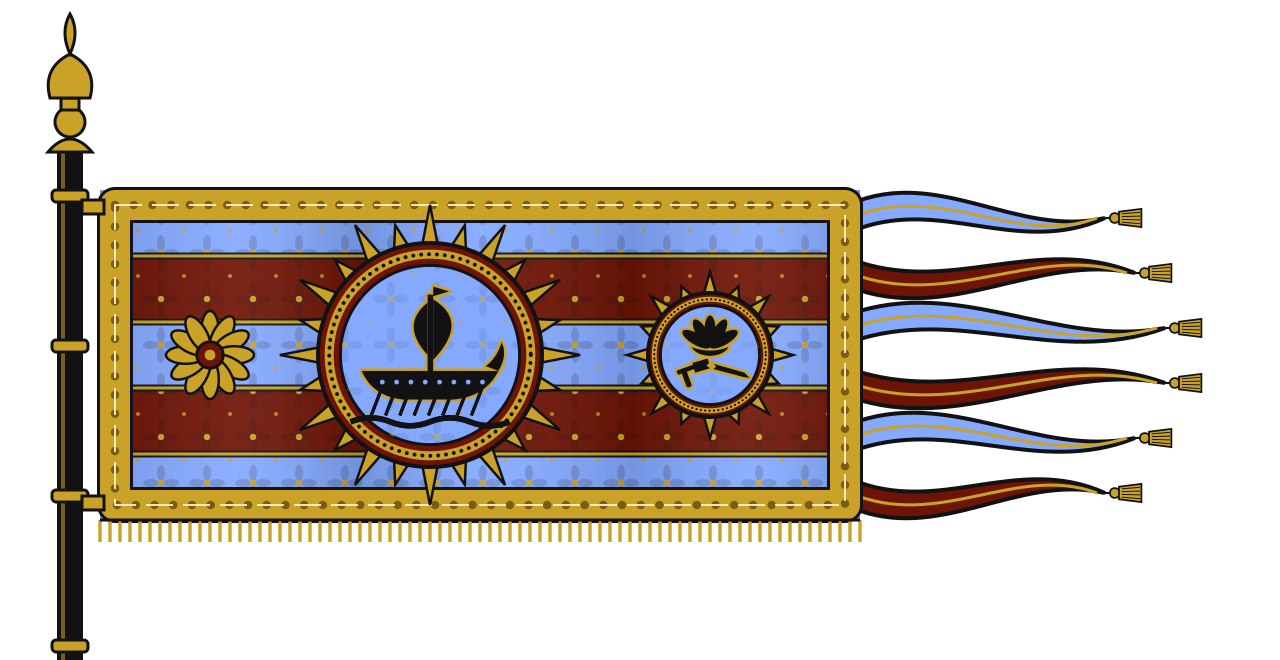
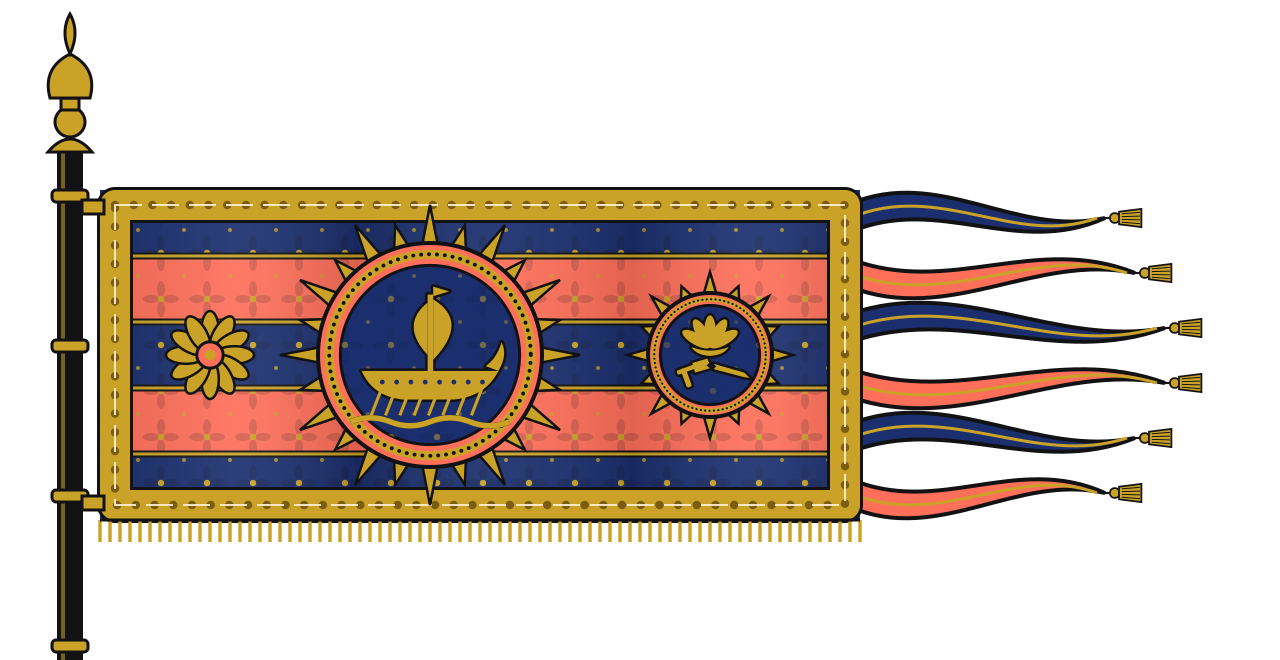
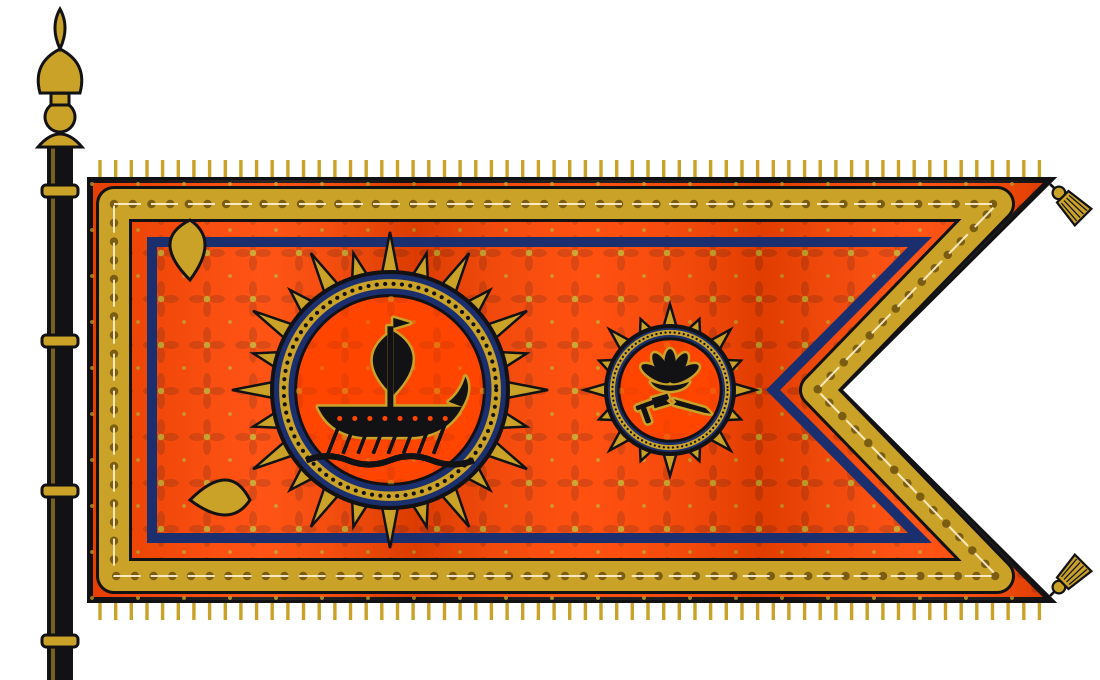
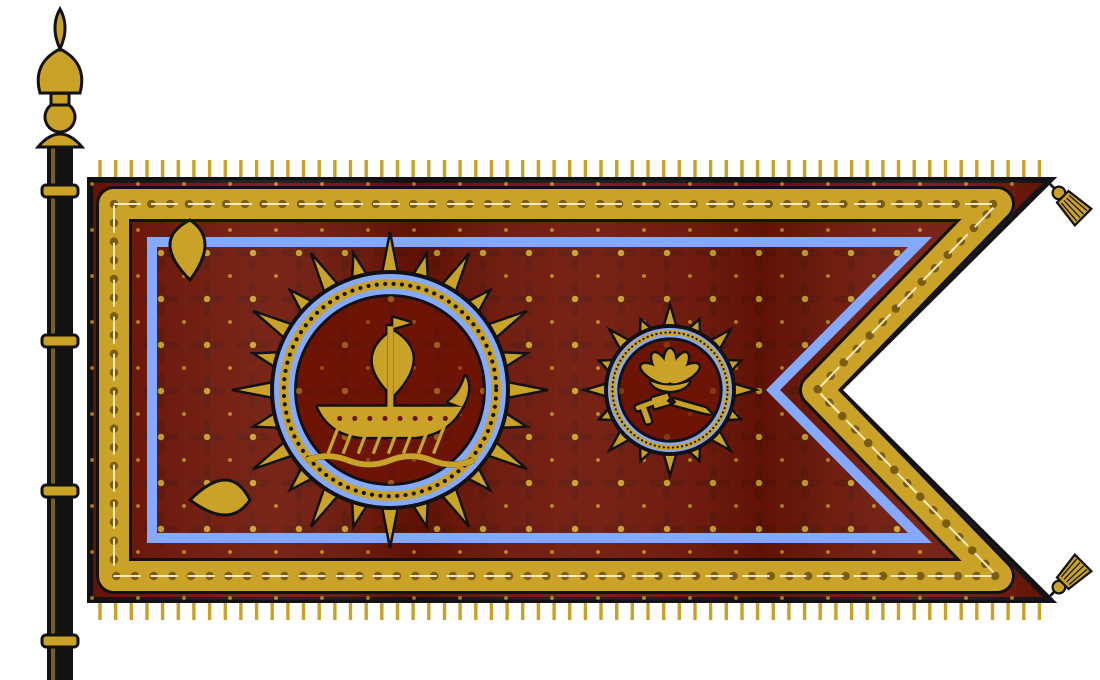
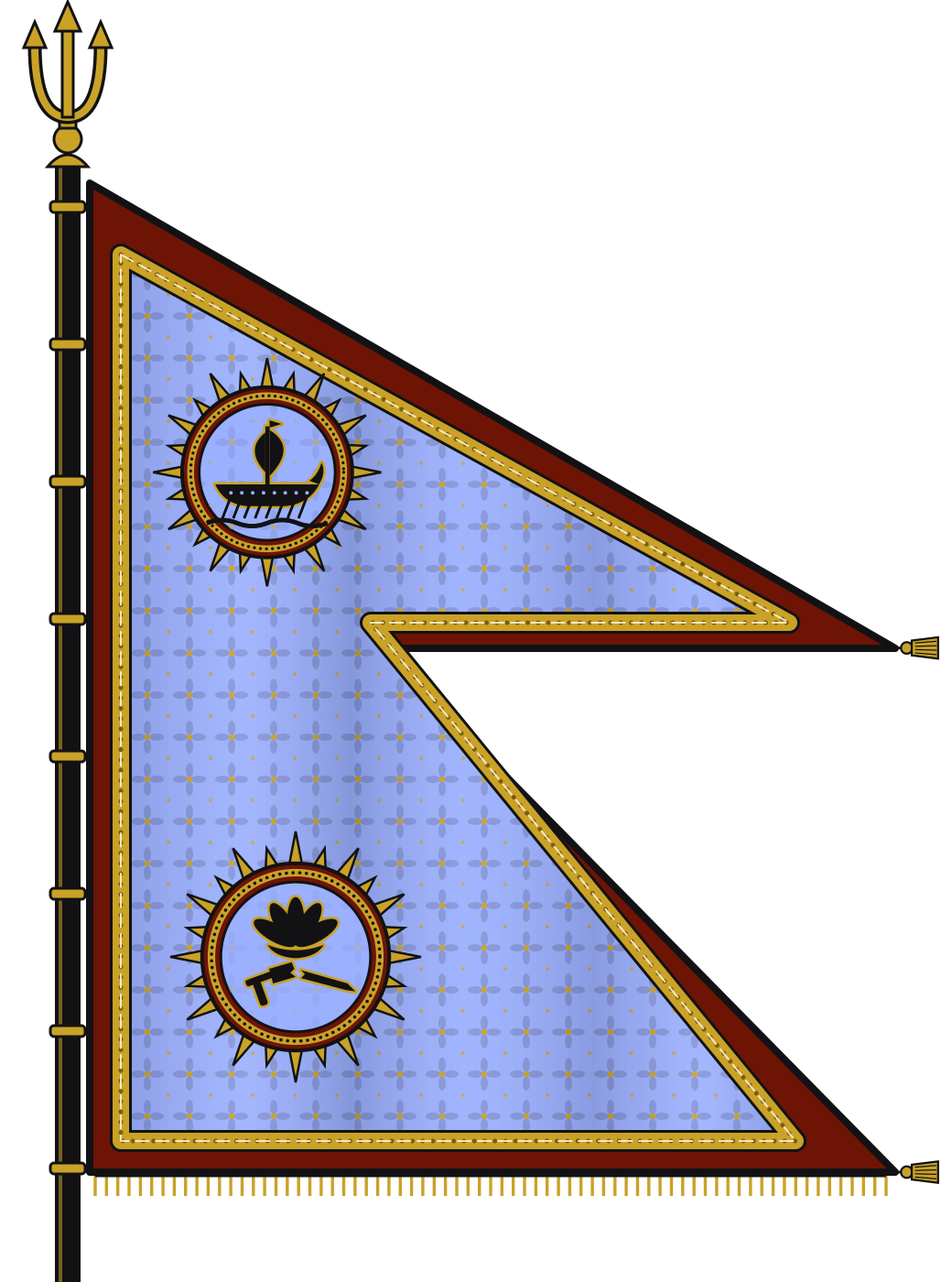
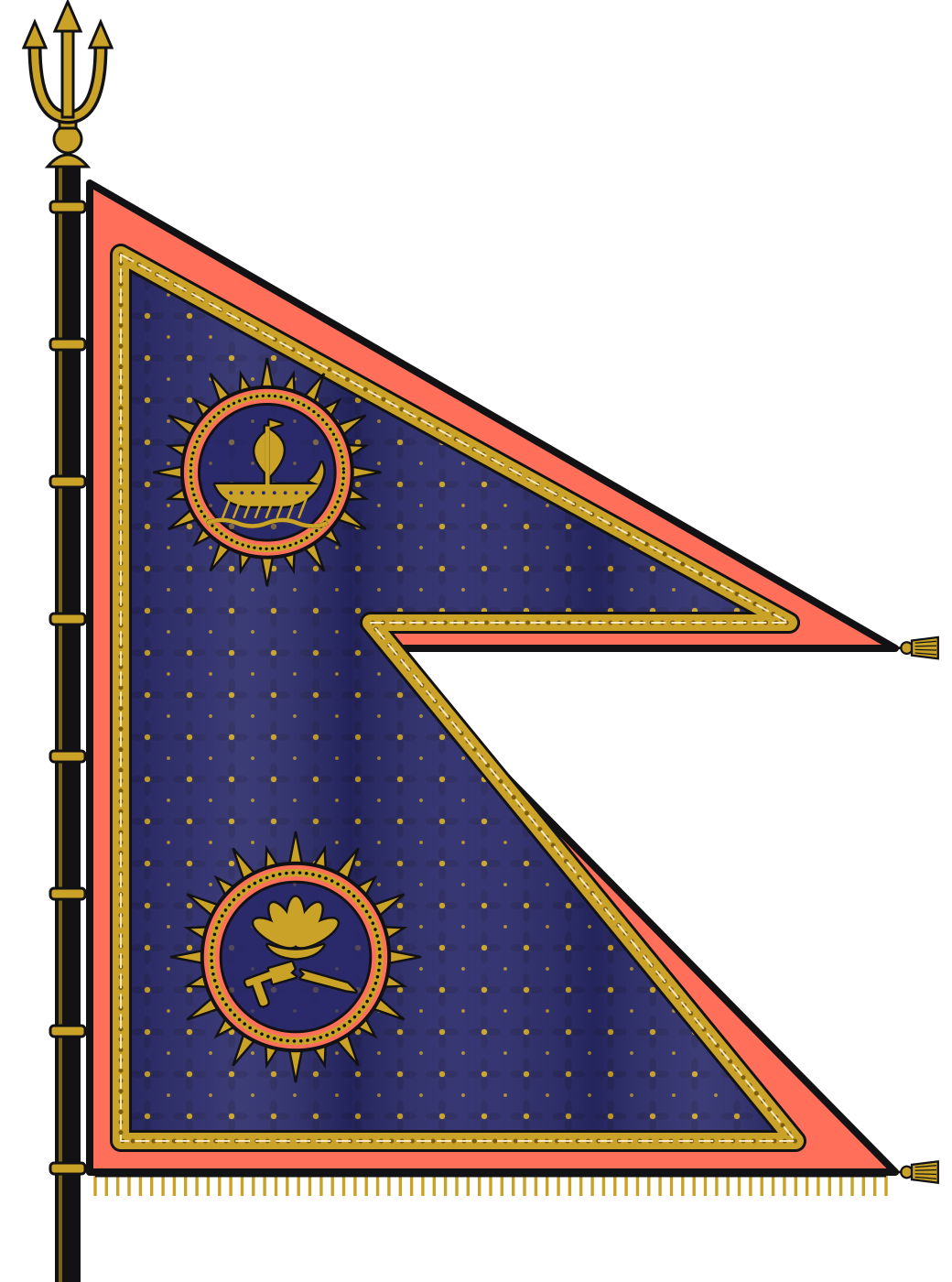
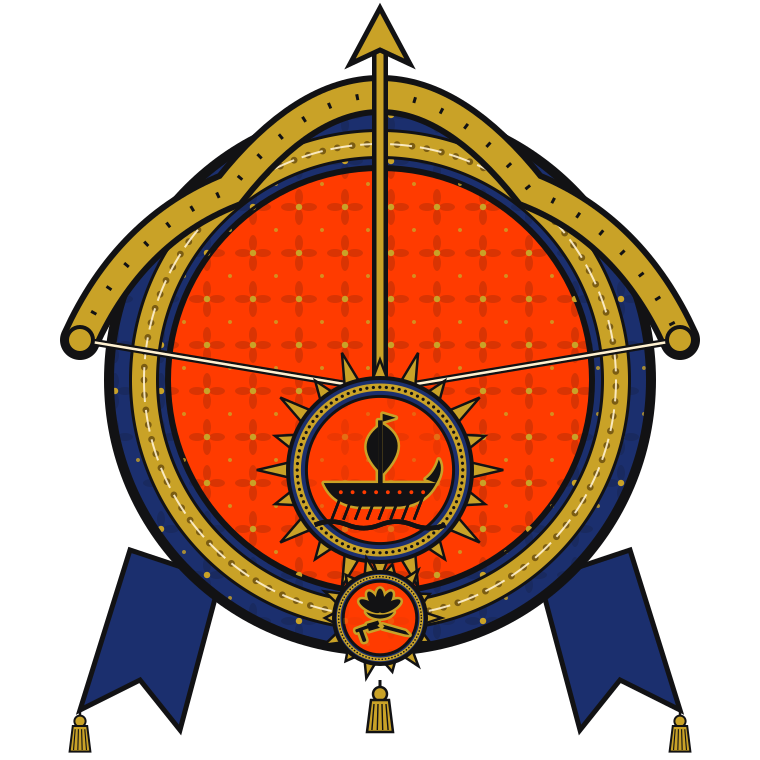
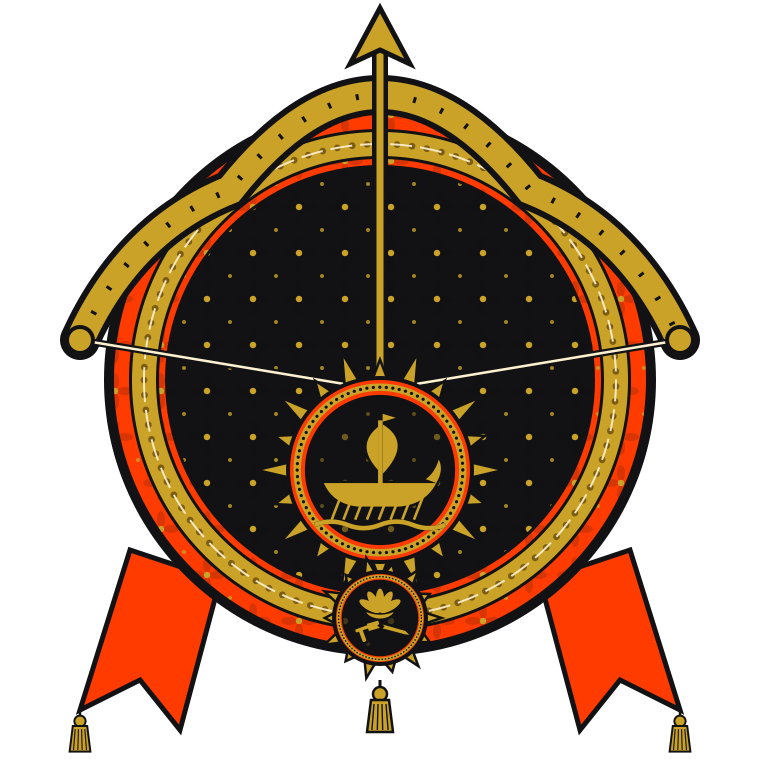
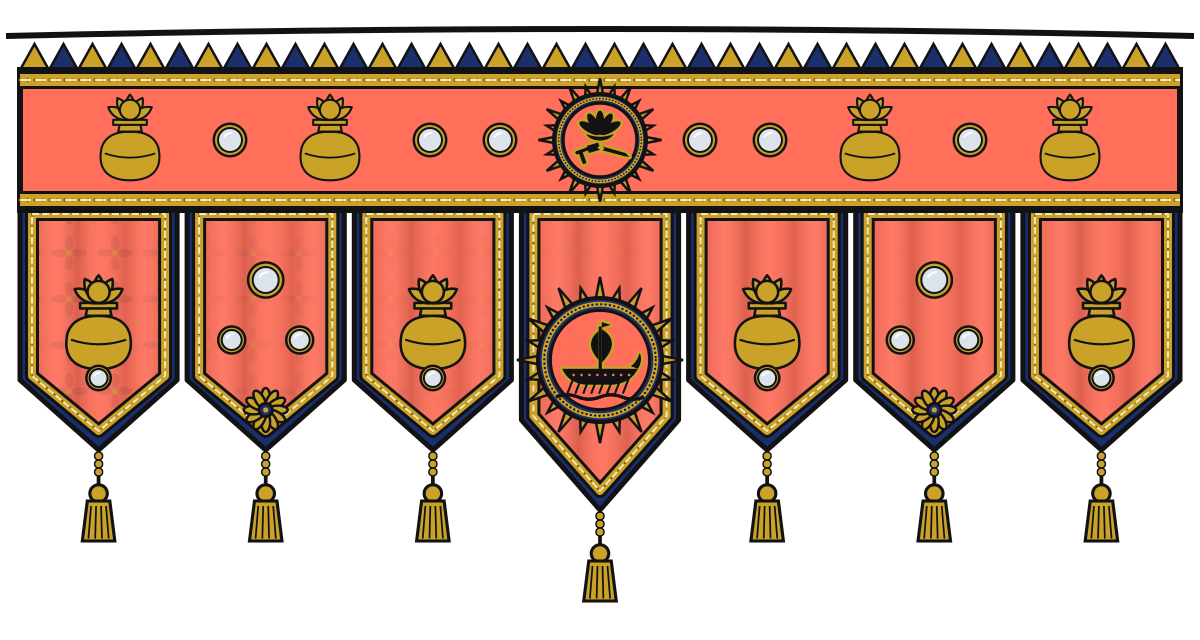
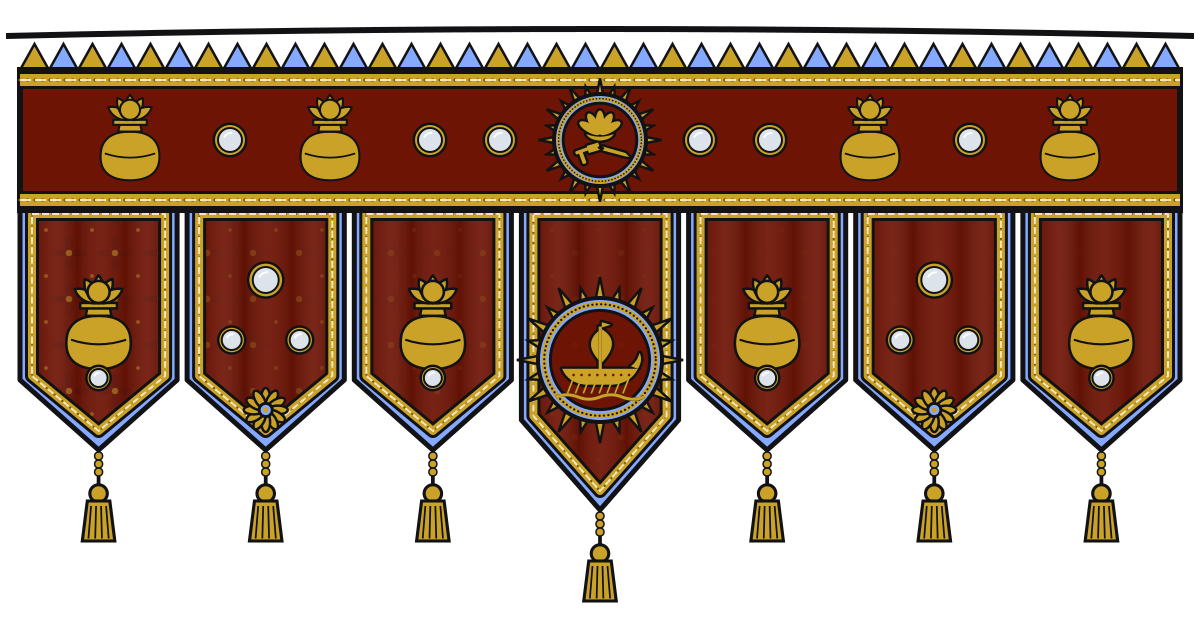
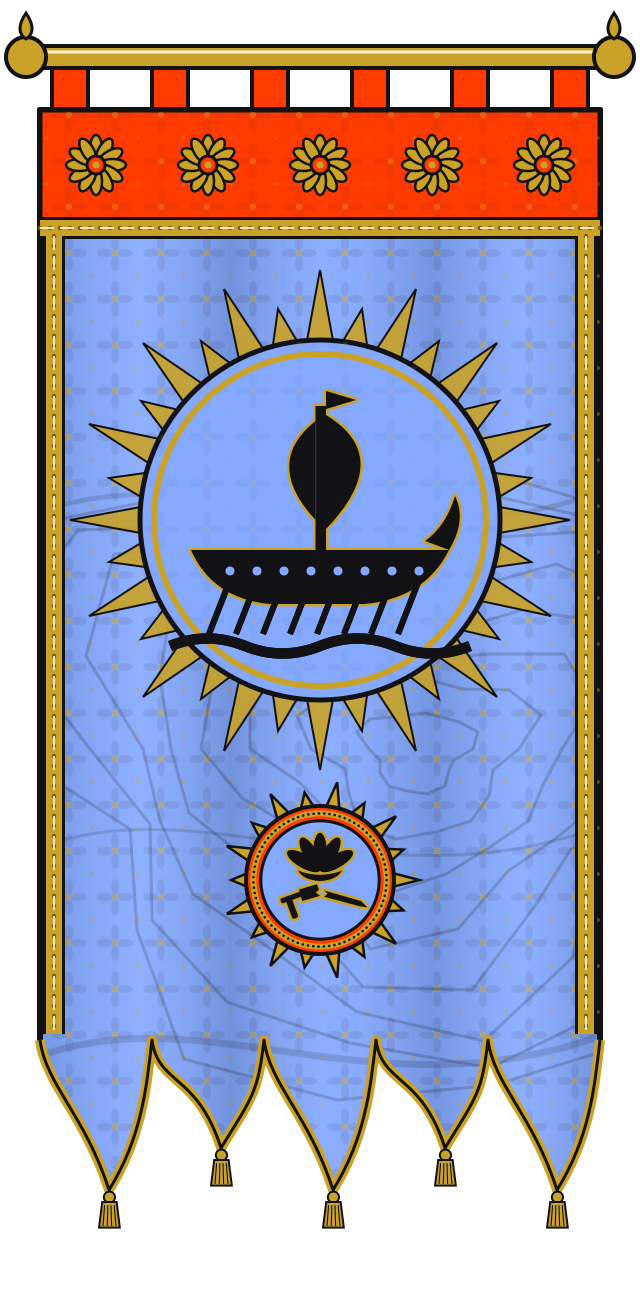
The Atlas gives the Kalingas a war galley on waves, for the sea-going kingdom whose sailors reached Sri Lanka and Southeast Asia, and a broken sword under a lotus, for the war that turned Ashoka from conquest to dharma. The flag is a Vaijayanti, the banner of victory.
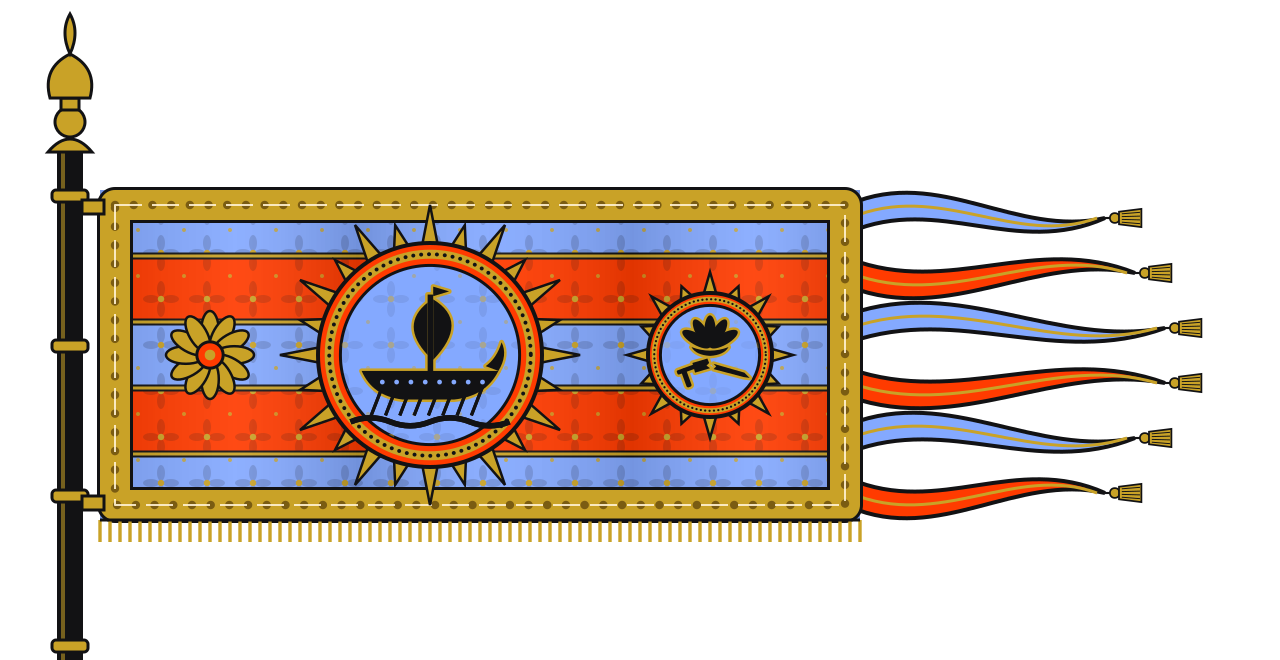
Every flag type for this clan
The same two emblems on every flag type (the Toran included) in bright and deep colours, plus the hanging banner. The outlined card is the clan's own flag.


25VishwaVit
Knower of the world
Game values are design choices for this project, not historical claims.
References
- Kalinga (region) (Wikipedia, read 2026-10-08), citing R. C. Majumdar, Outline of the History of Kalinga (1996), S. Misra, Janapada State in Ancient India (1973), H. C. Raychaudhuri (1953), D. C. Sircar (1971) and B. Patra (2005).
- Kalinga War (Wikipedia, read 2026-10-08), citing Ashoka's Rock Edict XIII, R. P. Mohapatra, Military History of Orissa (1986) and D. K. Chakrabarti (2010).
- Kharavela (Wikipedia, read 2026-10-08) — the Hathigumpha inscription year by year, citing K. P. Jayaswal, R. D. Banerji, D. C. Sircar, N. K. Sahu and S. Chattopadhyaya.
- Maritime history of Odisha (Wikipedia, read 2026-10-08), citing S. Tripati, B. Patra, H. P. Ray and the Dathavamsa, Chulavamsa and Samantapasadika.
- Mahabharata (Vyasa, by tradition; composed mostly c. 400 BCE–400 CE) — the Kuru dynasty, the war at Kurukshetra, the banners of the Kuru princes and the line “yato dharmas tato jayah”.
- Bali Jatra (Wikipedia, read 2026-10-08), citing N. R. Patnaik, Economic History of Orissa (1997), R. K. Nanda, Odisha Review (2019) and S. S. Sahoo, "Tapoi Katha" (2017).
- Biraja Temple (Wikipedia, read 2026-10-08) — the goddess, the Shakti Peetha legend (Tantra Chudamani), the 11th-century temple and its festivals.