The Didayi, also written Didayee, Didai or Didai Paroja, call themselves Gatah-re and their language Gatah-sa. They are a Scheduled Tribe of Odisha (list dated 09-07-2024, Atlas) and a particularly vulnerable tribal group, living in the hills of Malkangiri district around the Kondakamberu hills[1][2]. Their language, Gta', is a South Munda language rated Severely Endangered by UNESCO in 2010[3]. They regard the Bonda as their elder brothers and the Gadaba and Paroja as brethren[2]. Their village deities are Birhu, the earth goddess, and Hundi[4], and their village priest Dubek Pujari is the chief priest of the goddess Mauli[1]. The 2011 Scheduled Tribe list gives 8,890 people, while the state museum gives 7,250 with no clear year[5][2].
01Faith and deities
The clan's own deity is sourced: Birhu, the earth goddess of the Didayi, named by the KISS handbook with Hundi, the village deity[4]. The sheet's KulDevi, Majhighariani, is therefore not used as the main deity; it is listed below.
Majhighariani of Rayagada, goddess of the Koraput hills
The presiding goddess of the clan's homeland or capital: a link of place, not a recorded clan tie.
| Deity or tradition | Place in the clan's life | Evidence |
|---|---|---|
| Birhu, earth goddess | Main deity; named with Hundi in the KISS handbook | [4] |
| Hundi, village deity | Village deity, named with Birhu | [4] |
| Mauli, goddess | Chief priest Dubek Pujari; rituals held at a mandap platform | [1] |
| Mother earth and the ant-hill | The community worships nature, mother earth and the ant-hill | [6] |
| Majhighariani (KulDevi; with Saptamatrika) | Homeland shrine in the Atlas, goddess of the Koraput hills; project data, not from a web source | Atlas |
02Temples
No temple is named in the extracts. Patra 2021 describes rituals at a mandap platform and mentions no temple.
Built by the clan
Not recorded.
Given patronage or grants by the clan
Not recorded.
03Languages and scripts
| Language or script | Kind | Under the clan | Evidence |
|---|---|---|---|
| Gta' (Gatah-sa, the Didayi name for the language) living | South Munda, Austroasiatic; Gutob-Remo-Gataq group. Varieties: Plains and Hill Gta'. Severely Endangered (UNESCO Atlas, 2010) | The clan's own speech | [3][6][1] |
| Hill Gta' and Plains Gta' | Two varieties of the language | Hill and plains Didayi | [6][3] |
| Odia (Desia) | The language the Didayi are shifting to, and the school medium | Most younger speakers do not know Didayi[6] | [6] |
| Odia script | Patra says the Didayi language is written in Odia script; no printed Odia-script form was found | Under the clan | [1] |
| Numbers | 1 muiŋ, 2 mbar, 3 ɲji, 4 õ, 5 malʷe, 10 ɡʷa, 20 ɡosolɡa (Ghosh, n.d., as Wikipedia prints them) | Gta' | [3] |
| Nam mini mene? | "What is your name?", the one phrase Patra prints | Under the clan | [1] |
04Books and literature
The extracts name no Didayi book. Patra cites an Academy of Aborigine Language and Culture book that teaches the language. The works below are academic studies of Gta', as Wikipedia lists them.
Written during the clan's history
| Work | Author | Kind | When | Link to the clan |
|---|---|---|---|---|
| Studies of Gta' (Stampe 1965; DeArmond 1976; Zide 1976; Mahapatra 1976; Odden 1987; Parkin 1988) | Stampe; DeArmond; Zide; Mahapatra; Odden; Parkin | Linguistic studies; titles not given in the extract | 1965-1988 | [3] |
| Anderson 2008 (classification; switch-reference markers in folk narratives) | Anderson | Linguistic study | 2008 | [3] |
Given patronage by the clan
Not recorded.
05Thinkers and scholars
| Name | Field | Era | Contribution |
|---|---|---|---|
| Sushree Mohanty | Tribal handbook (KISS) | 2026 | Indigenous Colours of Odisha: Handbook on 62 Tribes; gives the Didayi village deities and the 2011 population[4] |
| Debashis Patra | Writer, Odisha Review article | 2021 | Article on the Didayee in Odisha Review: self-name, language, clans, rites[1] |
| Edgar Thurston and K. Rangachari | Survey of castes and tribes (Madras, 1909) | 1909 | Lists the Dur or Didayi Poroja as one of seven Poroja sections[7] |
| Anthropological Survey of India | Survey | 1970 | Totems of the Didayi, as Sanchika prints them[6] |
The extracts name no Didayi scholar beyond these. Leads: Anderson 2008 and the Gta' studies listed above.
06Art and architecture
Under research. The extracts give no painting, sculpture, architecture or textile for the Didayi. Patra and the state museum describe rites and objects (see Astitva), not art. Leads: the KISS PVTG Calendar 2026 (not fetched); the Malkangiri district culture page (search result only).
Painting and wall art
Not recorded.
Sculpture and temple art
Not recorded.
Temple and building architecture
Not recorded.
Weaving and textiles
Not recorded.
Clothing and jewellery
Not recorded.
Coins, pottery and crafts
Not recorded.
07History
Recorded in 1909
Thurston and Rangachari, writing in 1909, list the Dur or Didayi Poroja as one of seven endogamous Poroja sections, and say they speak Oriya[7]. The extracts do not explain how this Oriya-speaking section relates to the Gta'-speaking Didayi of today.
Kambudri and Nandapur (1443)
Patra gives Kondakamberu as once the main area of the state of Kambudri. In 1443, Vinayak Dev of the Surya dynasty, king of Nandapur, killed the Kambudri king and founded two villages, later named Neelakamberu (now Balimela) and Kondakamberu (now a Didayee village). Patra says the Matsya dynasty ruled before the Surya dynasty[1]. These are the only dated events in the extracts for this area, and they concern its rulers rather than the Didayi themselves.
Cyclone shelters (2014)
On 12 October 2014, about 1,300 Bonda and Didai were moved to cyclone shelters at Mudulipada and Andrahal gram panchayats, according to Wikipedia citing the New Indian Express[8].
Development (2021)
In 2021 Patra reports an active Didayee Development Project. He urged the village priest to put education, health and welfare first, and the priest replied, "We need only some more time"[1].
08Journey and migrations
The extracts give no route of migration for the Didayi. Their origin tale places the Gadaba brothers, of whom the Didayi are one, on the bank of the Godavari, and names no later move (see Stories).
Not recorded.
09Seats and lands
| Place | Role | Where today |
|---|---|---|
| Kondakamberu hills | Homeland in the Atlas. Kondakamberu was once the main area of Kambudri and is now a Didayee village[1] | Malkangiri district, Odisha |
| Kudumulugumma Block | 37 villages in the Rasabeda and Antrapalli gram panchayats[1] | Malkangiri district, Odisha |
| Other Didayee villages | About 33 more villages under five gram panchayats, including Bayapada, Naringijhola, Tikiripada, Khadiguda, Gangapada, Damodar Beda and Nindapari[1] | Malkangiri district, Odisha |
| Kudumulgumma and Chitrakonda blocks | Settlements south of the Bonda hills, with some in Khairput block[6][3] | Koraput and Malkangiri districts, Odisha |
| Machhkund, Saptadhara and Sileru rivers | Settlements along these rivers[1] | Odisha |
| Neelakamberu (now Balimela) | A village founded in 1443, later renamed[1] | Odisha |
| East Godavari district | Wikipedia, citing the state museum, places some Didayi here; the Atlas lists Odisha only[9] | Andhra Pradesh |
10Notable figures
| Name | Role | Era | Known from |
|---|---|---|---|
| Dubek Pujari | Village priest; chief priest of the goddess Mauli | Patra 2021 (present) | [1] |
| Balabhadra Angra | Sang a marriage song; the lyrics are not reproduced | Patra 2021 (present) | [1] |
| Aita Kirsani | Cited by Patra for the self-name Gatah-re and the language name Gatah-sa | Patra 2021 (present) | [1] |
| Sania | Named by Patra; role not stated | Patra 2021 (present) | [1] |
| Vinayak Dev | Surya-dynasty king of Nandapur; killed the Kambudri king and founded two villages | 1443 | [1] |
11Allies, rivals and marriages
| People | Relationship | When |
|---|---|---|
| Bonda (ST-042) | Elder brothers (state museum). Closely linked, and in folktales once one community. Didayee men and women may accept food from Bonda families, but only Bonda men may accept food from Didayee; Bonda women may not eat in Didayee houses[2][1] | Undated; moved together in 2014 |
| Gadaba (ST-076) | Brethren (state museum); the Gadaba brothers of the origin tale[2][1] | Undated |
| Porja (ST-261) | Brethren (state museum). Thurston lists the Dur or Didayi Poroja as a Poroja section[2][7] | Undated; 1909 (Thurston) |
| Kambudri state | Kondakamberu was its main area; its king was killed by Vinayak Dev of Nandapur[1] | 1443 |
| Dom, Kamar, Gauda, Rona | Scheduled Caste groups in a symbiotic relation with the Didayi[6] | Present |
| Desia Odia speakers | The language the Didayi are shifting to; the school medium[6] | Present |
12Society and livelihood
The Didayi live in villages under a village chief, the Nayak, with a village priest and a dishari, a ritual specialist (Patra). Marriage involves bride-money of goats, a hen, rice, vegetables and salapa drink[1].
Government and social order
| Institution or group | What it was | Evidence |
|---|---|---|
| Nayak | Village chief[1] | [1] |
| Village priest (sisa) | Chief priest of the goddess Mauli, Dubek Pujari in Patra's account. The Encyclopedia of World Cultures gives the same village-priest office among the Didayi, Gadaba, Gour and Kond[1][10] | [1][10] |
| Dishari (ritual specialist; shaman, dissari) | Performs naming ceremonies and healing rites, with peacock feathers in the rites. The Encyclopedia of World Cultures gives the same shaman office, dissari, among the Didayi[1][10] | [1][10] |
| Naming and death rites | A child is named on the 21st day after birth. The dead are usually cremated, or buried if the family wishes. On the ninth day an arrow is planted with food and eggs; on the tenth day the departed is invoked[1] | [1] |
| Didayee Development Project | Active in 2021[1] | [1] |
Livelihood over time
| Era | Livelihood | Evidence |
|---|---|---|
| Hills and plains | Shifting cultivation in the hills; settled agriculture and wetland paddy on the plains[6][2] | [6][2] |
| Forest produce | Gathering fruits, roots and mushrooms; forest produce gathered for markets[2][9] | [2][9] |
| Crafts | Basket and bamboo container making; broom making[1] | [1] |
| Recent gardening | Kitchen gardening and horticulture, with seasonal vegetables, banana, papaya, tobacco, mango, jackfruit and tamarind[2] | [2] |
| Hunting | Some hunt birds with bows and arrows[9] | [9] |
13Sub-clans and related clans
Patra (2021) says the Didayees are divided into two clans, Bear and Monkey. The 1970 Anthropological Survey of India study, as Sanchika prints it, names five totems and three more. The two lists overlap on the bear and the monkey, and they may not be the same units. Both are given, attributed.
| Clan | Relation | Where | Size | In the Atlas | Evidence |
|---|---|---|---|---|---|
| Bear totem Gbe | Sub-clan | Didayi; one of the two clans (Patra); totem in the ASI study | new clan candidate | [1][6] | |
| Monkey totem Gisia | Sub-clan | Didayi; one of the two clans (Patra); totem in the ASI study | new clan candidate | [1][6] | |
| Tiger totem Nkoo | Sub-clan | Didayi (ASI 1970 totem) | new clan candidate | [6] | |
| Cobra totem Mala | Sub-clan | Didayi (ASI 1970 totem) | new clan candidate | [6] | |
| Crocodile totem Mosali | Sub-clan | Didayi (ASI 1970 totem) | new clan candidate | [6] | |
| Tortoise totem Goi | Sub-clan | Didayi (ASI 1970 totem) | new clan candidate | [6] | |
| Snake totem Buba | Sub-clan | Didayi (ASI 1970 totem) | new clan candidate | [6] | |
| Eagle totem Cendia | Sub-clan | Didayi (ASI 1970 totem) | new clan candidate | [6] | |
| Dur Poroja (Didayi Poroja) | Related people | A Poroja section that speaks Oriya (Thurston 1909) | new clan candidate | [7] | |
| Porja Paroja | Related people | Poroja, the wider people; Dur or Didayi Poroja a section (Thurston 1909) | ST-261 | [7] | |
| Bonda Remo | Related people | Elder brothers of the Didayi; Malkangiri hills | ST-042 | [2][8] | |
| Gadaba | Related people | Brethren of the Didayi (state museum) | ST-076 | [2][11] | |
| Didayee Bonda | Related people | Bonda outside the twelve main Didayee villages, sometimes called Didayee Bonda (Patra) | new clan candidate | [1] |
Clans marked "new clan candidate" are not in the Atlas yet.
14Surnames
Not recorded.
15Songs and music
Patra 2021 names a marriage song sung by Balabhadra Angra but does not give its words. He also says the dhangdas rehearse dance and music for the Pousa festival.
Marriage song living
Instruments and styles
16Poems, lullabies and children's rhymes
No poem, lullaby or children's rhyme is in the extracts.
None recorded yet.
17Stories, legends and proverbs
Stories and legends
| Story | What happens | Told by | Evidence |
|---|---|---|---|
| Twelve Gadaba brothers | Twelve Gadaba brothers were born on the bank of the Godavari. The Didayi are the brother immediately after the Bonda[1] | Bonda and Didayee folktales, as Patra gives them | [1] |
| One community | Folktales say the Bonda and the Didayi once shared one community[1] | Bonda and Didayee folktales, as Patra gives them | [1] |
Proverbs and sayings
Not recorded.
18Festivals and fairs
| Festival or fair | When | Where | What happens |
|---|---|---|---|
| Pousa | Month not stated | Not stated | Dance and music; cows painted with turmeric and vermilion and fed kechdi[1] |
| Chaiti hunt | Month not stated | Not stated | Community hunt with bows and arrows and the beating of the Singha drum; men who return empty-handed are mocked with cowdung water[1] |
| Asha | Not stated | Not stated | A corn sheaf hung on the thatched roof[1] |
| Mango festival | Not stated | Not stated | Named by Patra; no detail given[1] |
| Simba (bean) festival | Not stated | Not stated | Named by Patra; no detail given[1] |
| Maize-eating festival | Not stated | Not stated | Named by Patra; no detail given[1] |
19Food, dress and games
Food
| Item | What it is | Evidence |
|---|---|---|
| Salapa drink | Offered as part of bride-money; the salapa tree bears hung earthen pots (Patra) | [1] |
Dress
Not recorded.
Games and martial arts
Not recorded.
Tags: living still practised · revived brought back after a break · lost known only from records · research reported but not yet confirmed from a source. Songs and poems under copyright are listed by title only; restricted or sacred material is noted without its content.
20Status today
The Didayi are a Scheduled Tribe of Odisha (list dated 09-07-2024, Atlas) and a particularly vulnerable tribal group. Their language is severely endangered, and most younger speakers do not know it[5][3][6].
Who carries the name today
| Community | Link | Basis | Evidence |
|---|---|---|---|
| Didayi community today (ST-070) | Documented | [5] |
Recognised heritage
| What | Recognition | Evidence |
|---|---|---|
| Scheduled Tribe and PVTG status | Scheduled Tribe in Odisha (list dated 09-07-2024, Atlas) | [5] |
| Didayee Development Project | Active in 2021 | [1] |
| Tribes of Odisha (state museum) | Entry on the Didayi | [2] |
No community review of this page is recorded. The sources are published accounts (Patra 2021, the state museum, the KISS handbook, Wikipedia and Sanchika) and the Atlas.
21For children
The brothers at the river
Long ago, twelve Gadaba brothers were born on the bank of the Godavari river. The Bonda were one of the brothers, and the Didayi came right after the Bonda. The Didayi say the Bonda are their elder brothers. Today the two peoples are closely linked and both live in the Malkangiri hills. In an old folk tale, the two once shared one community. This is the story as Patra writes it in 2021.
22Across the project
| Project | What carries this clan | Status |
|---|---|---|
| Atlas of the Janas | Malkangiri and Koraput, Odisha (Patra; Wikipedia). East Godavari, Andhra Pradesh, is named by Wikipedia citing the state museum and is not in the Atlas. No pin is set by this page. | To check |
| KulDevi and GrahDevi | KulDevi Majhighariani, goddess of the Koraput hills, a homeland shrine. GrahDevi forms: Brahmani, Maheshvari, Kaumari, Vaishnavi, Varahi, Indrani, Chamunda, Narasimhi. | Project data |
| Planet naming | Nothing is sourced for this people in the extracts. | Under research |
| Renaming and waters | Kondakamberu and Neelakamberu were renamed, and Neelakamberu is now Balimela[1]. Patra names the rivers Machhkund, Saptadhara and Sileru[1] | Sourced |
23Open questions
- Main deity: Birhu (KISS handbook) or Mauli (Patra, the goddess of the chief priest)? The page takes Birhu as main; both are sourced.
- Clans: Patra names two clans, Bear and Monkey. The ASI study (1970, as Sanchika prints it) names five totems and three more. Are the totems clans, and do the two lists describe the same units?
- Population: 8,890 (2011 Odisha list and KISS handbook), 7,250 (state museum, year unclear) and 1,993 (Sanchika, Census 2011, as printed, against 7,371 in 2001). Check the Census tables.
- Thurston (1909) calls the Dur or Didayi Poroja an Oriya-speaking Poroja section, while Patra and Sanchika say the Didayi speak Gta'. Both are set out; the extracts do not explain the Poroja link.
- Andhra Pradesh: Wikipedia (citing the state museum) places some Didayi in East Godavari. The Atlas lists Odisha only.
- Khairput block: Sanchika says some settlements are in Khairput block (no state given); the Wikipedia Gta' page lists some speakers in Khairput block, East Godavari, Andhra Pradesh. Check which state the block is in.
- The clan's own line (words): none found. Gatah-re is given as the self-name, not as a line.
- Odia-script form of Gatah-re and Gatah-sa: Patra says the language is written in Odia script, but no printed form was found.
- Dated history is absent from the extracts between 1443 and 2014.
- Unfetched leads: KISS PVTG Calendar 2026; inpr.odisha.gov.in newsjyotirmati PDF; Malkangiri district tourism, art and culture page; SOAS Fürer-Haimendorf notes (catalogue records only); the full Sanchika Gta' item record.
24Astitva
अस्तित्व · being, existence: everything by which the clan is known
What is known of the Didayi's sacred objects: the totems recorded by the ASI study[6][1]. Also recorded, with no catalogue ID: a bow and arrow, with an arrow planted for the dead on the ninth day; peacock feathers in the dishari's rites; and the Singha drum at the hunt.
Every clan has every accessory, royal objects included. Each one says how it is known: Documented This clan's own object is recorded. · Regional tradition Recorded for the region or for peoples like this one, not for this clan. · Design Made for this project, with no historical claim. · Under research To be found for this clan from sources. Legends and titles are written in the clan's own script.
1. Seals and coins
| Accessory | For this clan | Basis |
|---|---|---|
| B1 Rajamudra · house seal Round seal with the clan emblem and a short legend in the clan's script | Not yet designed for this clan | Design |
| B2 Anguliya-mudra · signet ring Personal seal ring of the head of the house | Not yet designed for this clan | Design |
| B3 Chhapa · house stamp Ink or block stamp for letters, goods and cloth | Not yet designed for this clan | Design |
| B4 Tamrapatra · charter plate Copper-plate grant on a ring, closed with the house seal | Not yet designed for this clan | Design |
| B5 Shreni-mudra · guild or trade seal Seal for the clan's trade, craft or caravan | Not yet designed for this clan | Design |
| C1 Clan coin Emblem or deity on one side, a legend in the clan's script | Not yet designed for this clan | Design |
| C2 Coin die The die that strikes the coin | Not yet designed for this clan | Design |
2. Living symbols
| Accessory | For this clan | Basis |
|---|---|---|
| I1 Totem trio The tree, bird and animal the clan protects | Totems recorded by the ASI study: tiger (Nkoo), cobra (Mala), bear (Gbe), crocodile (Mosali), tortoise (Goi), monkey (Gisia), snake (Buba), eagle (Cendia). No tree is named | Documented |
| I2 Kaval-maram · guardian tree The tree that stands at the clan's seat | Not yet found for this clan | Under research |
3. Stone and gate
| Accessory | For this clan | Basis |
|---|---|---|
| G1 Torana · gateway The built gate of the seat; the cloth Toran hangs in it | Not yet designed for this clan | Regional tradition |
| G2 Viragallu · hero stone Carved panel stone for a member who died defending the clan | Not yet designed for this clan | Regional tradition |
| G3 Kula-shila · clan stones Standing and table stones that remember the ancestors | Not yet designed for this clan | Design |
| G4 Jayastambha · victory pillar A pillar raised for a victory | Not yet designed for this clan | Design |
| G5 Sima-shila · boundary stone Marks the clan's land, with a line in the native script | Not yet designed for this clan | Design |
4. Sounds
| Accessory | For this clan | Basis |
|---|---|---|
| D1 Pancha-mahashabda · five great sounds The right to five instruments | Not yet designed for this clan | Design |
| D2 Shankha · clan conch The clan's own named war conch | Not yet designed for this clan | Design |
| D3 Murasu · house drums Three drums: war, charity and justice | Not yet designed for this clan | Design |
5. Kit: colours, metals and emblems
The sheet gives the Didayi a main emblem and kit colours, but the extracts record no coin, seal or banner. The totems listed in Astitva are among the symbols the extracts name for the clan[6][1].
| Part of the kit | This clan |
|---|---|
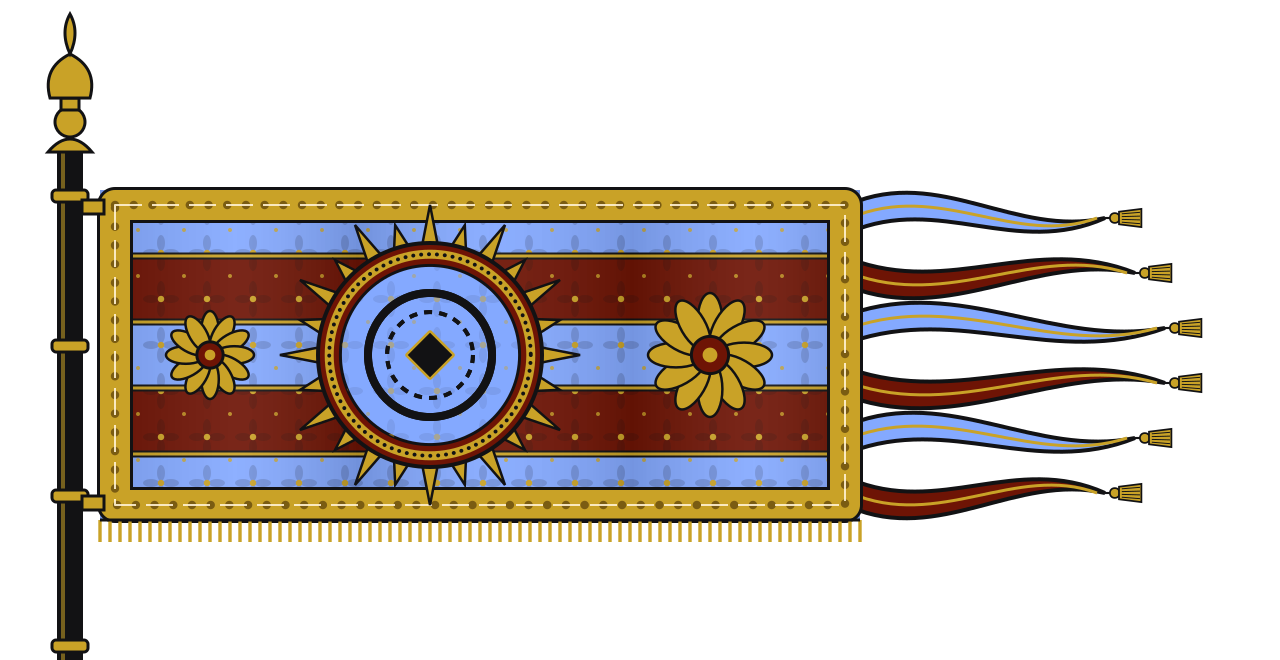
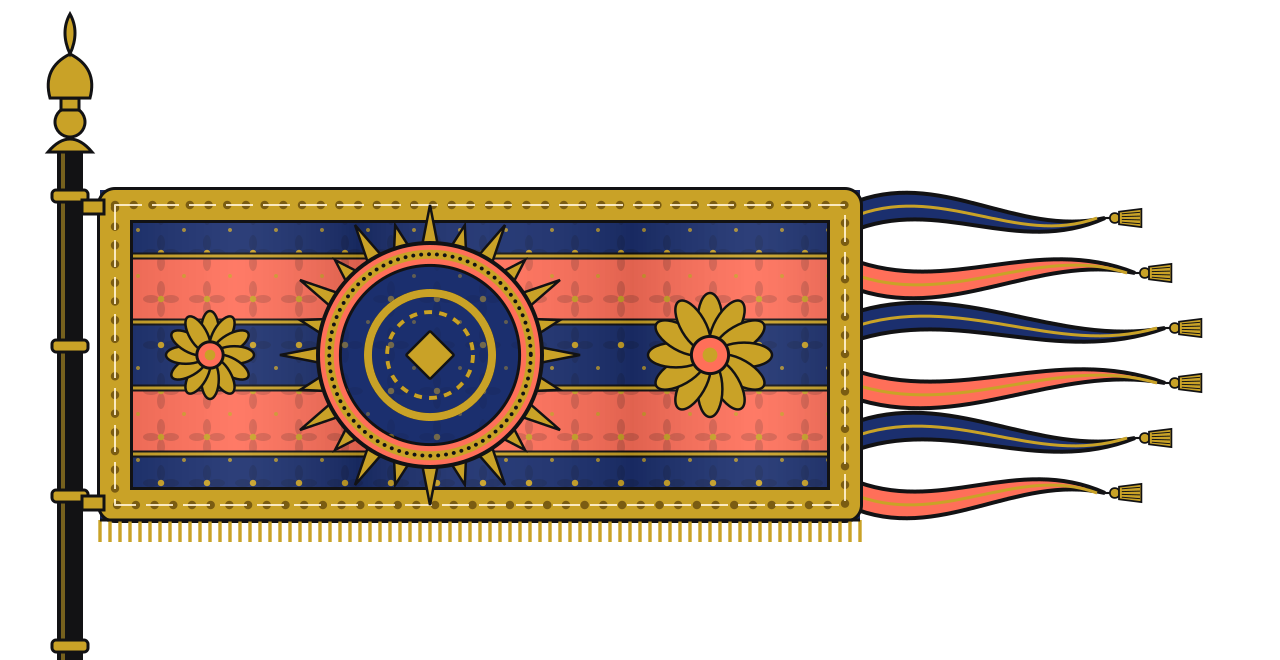
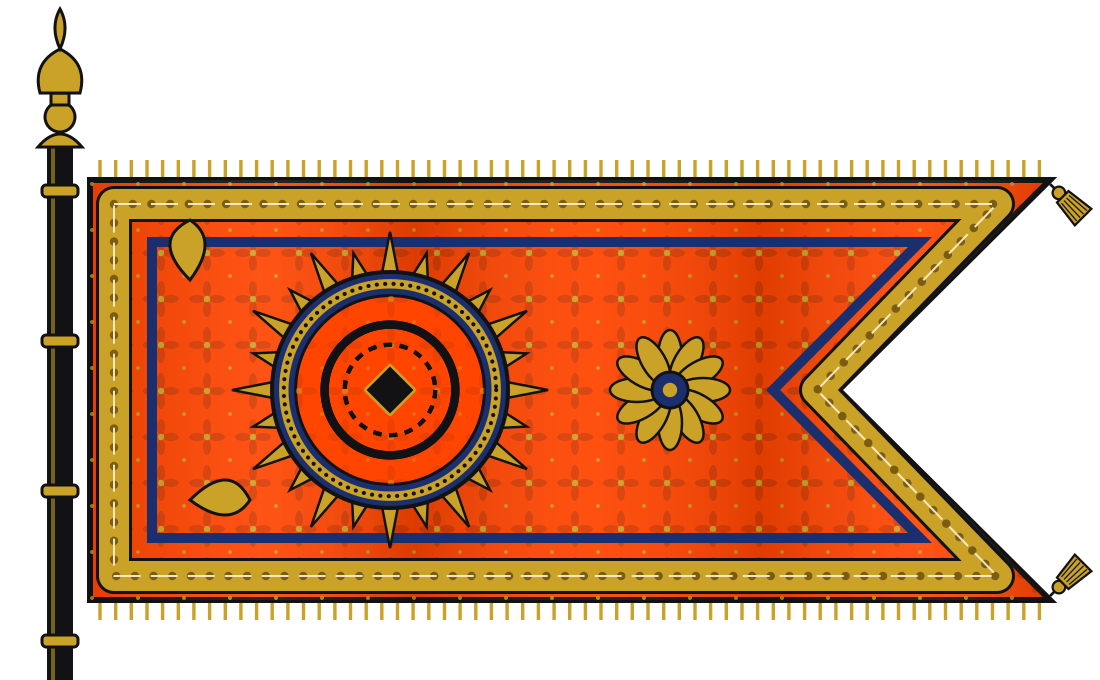
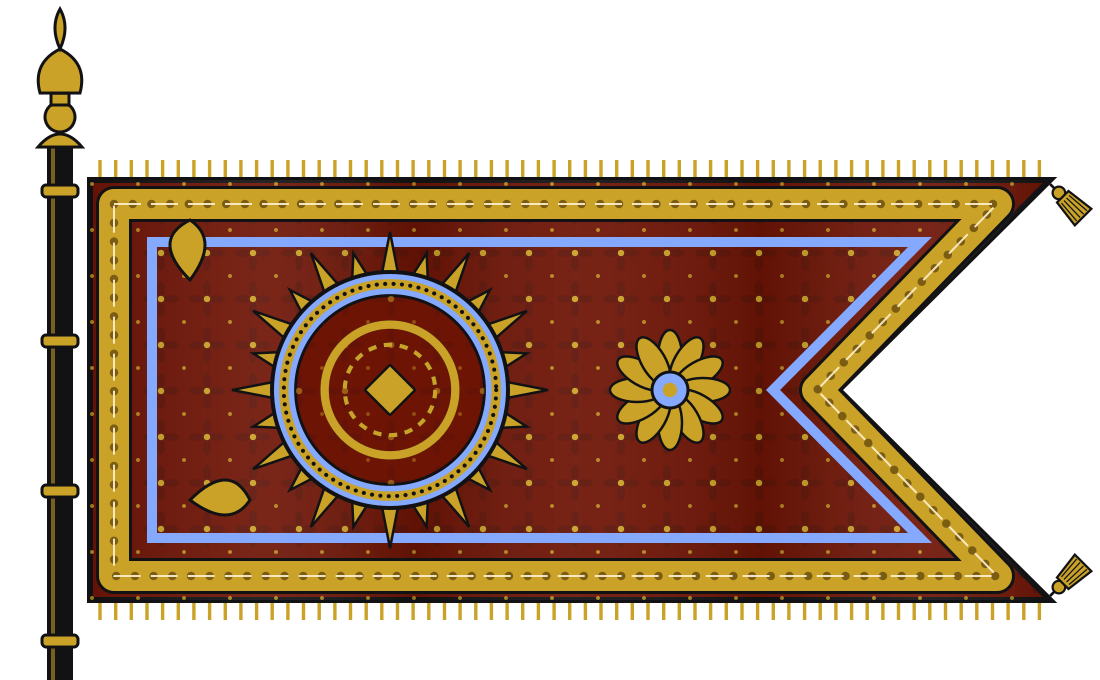
| Field | Warm Red-Orange #FF6F59 |
| Accent | Royal Navy #1B2F6E |
| Emblem colour | Charcoal Black #121214 |
| Zari metal | Gold |
| Main emblem | A steep hill with a waterfall |
| Second image | — |
| Night and day | Every visual accessory has two versions: by night the emblem on the dark field, by day the clan's field colour on cloth woven from its metal. |
6. Flags
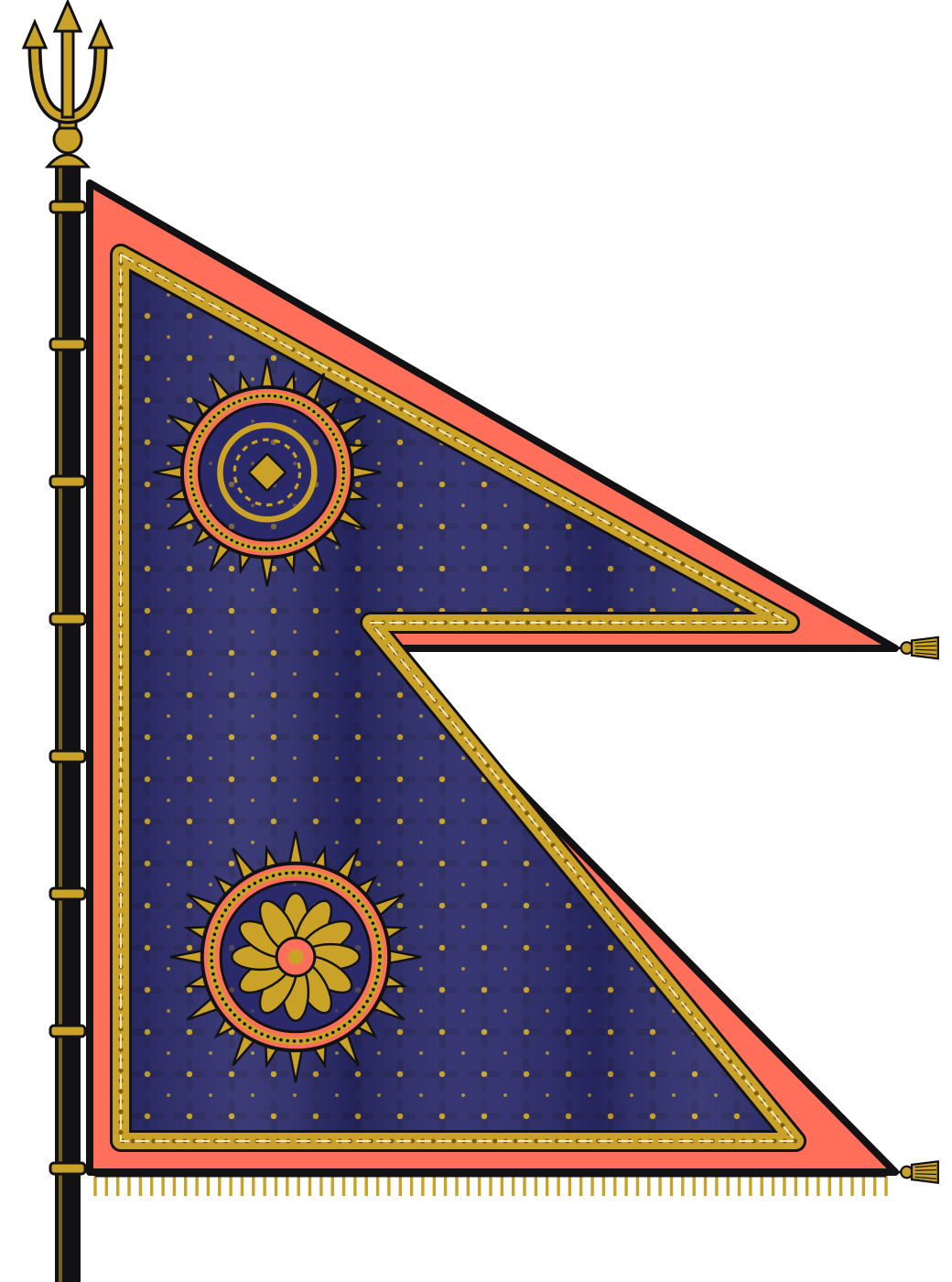
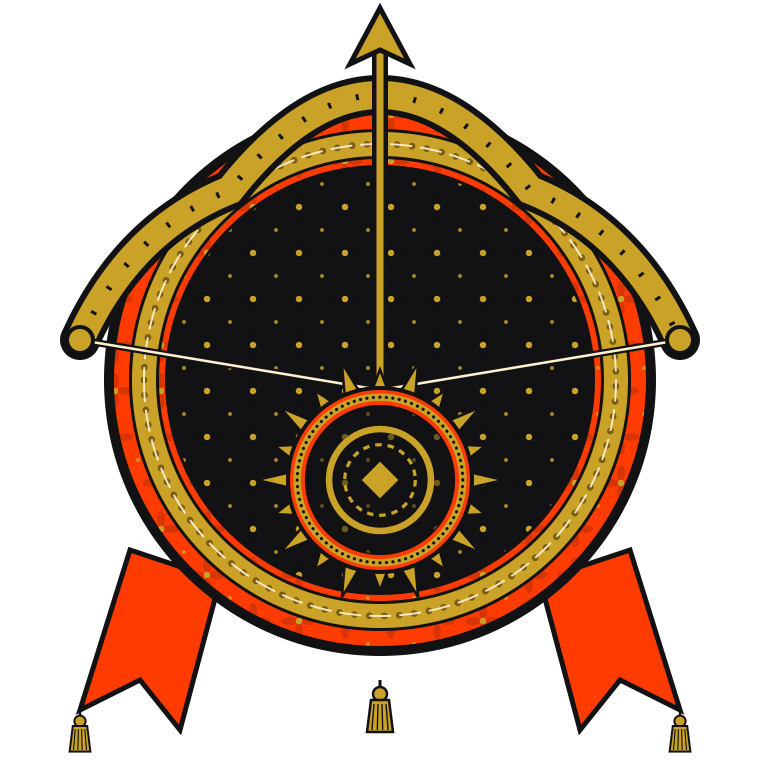
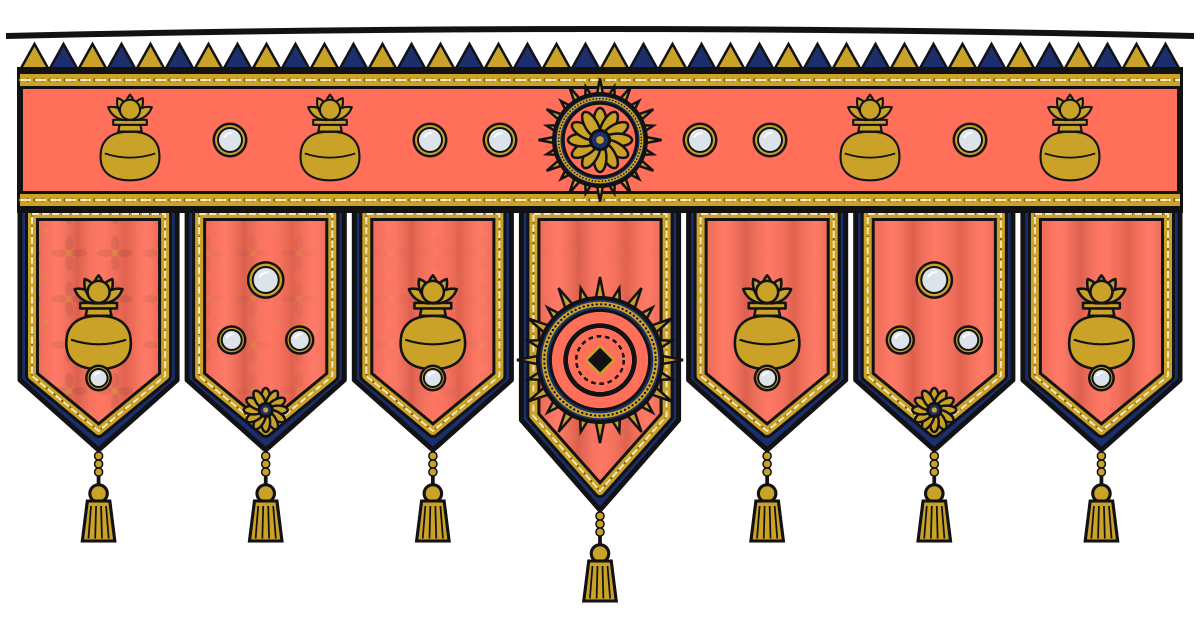
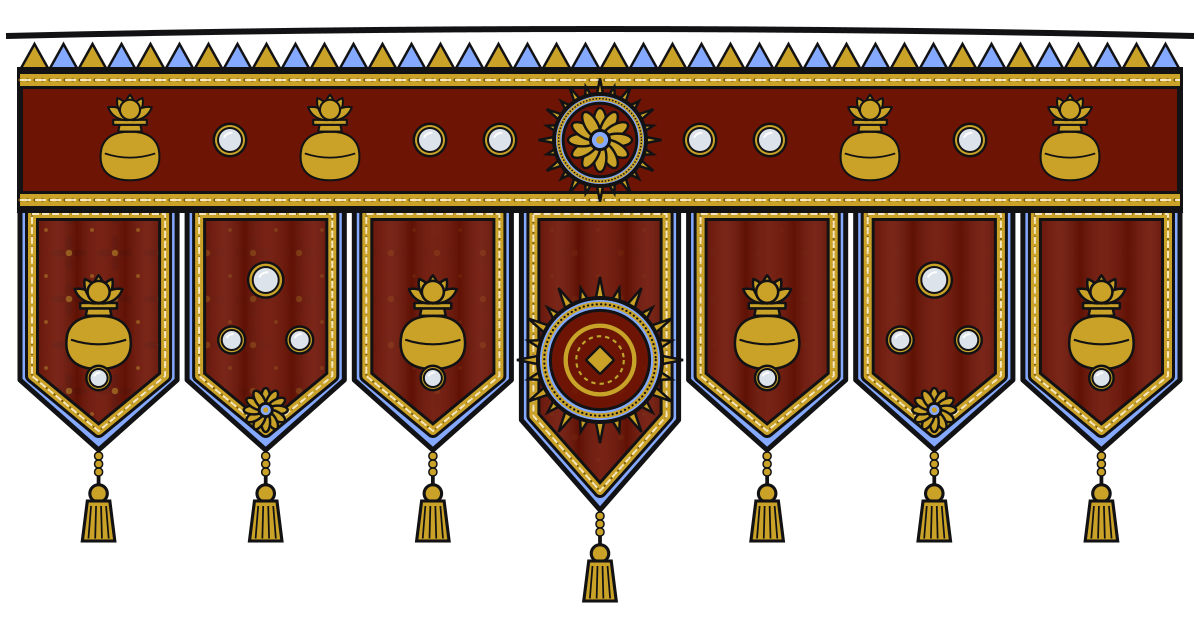
Every clan has every flag type; the type says the occasion and the colours say the clan. The outlined card is the flag the Atlas assigns.



Historic banner
None known
New flag types
| Accessory | For this clan | Basis |
|---|---|---|
| A9 Pota-dhvaja · ship and trade flag For ships, caravans and markets | Not yet designed for this clan | Design |
| A10 Utsava-patāka · festival flag Light, bright flag for fairs and festivals | Not yet designed for this clan | Design |
| A11 Shoka-dhvaja · mourning flag White cloth with the emblem outline in the clan's metal | Not yet designed for this clan | Design |
7. Regalia
| Accessory | For this clan | Basis |
|---|---|---|
| E1 Chhatra · house parasol The ceremonial umbrella | Not yet designed for this clan | Design |
| E2 Chamara · fly-whisks The pair of whisks beside the head of the house | Not yet designed for this clan | Design |
| E3 Danda · staff of office Staff or scepter | Not yet designed for this clan | Design |
| E4 Simhasana · seat The seat of the house, covered in clan cloth | Not yet designed for this clan | Design |
| E5 Khetaka · shield A round shield; the Changi and Dhanush are its flag forms | Not yet designed for this clan | Regional tradition |
| E6 Kula-ayudha · clan weapon The weapon the clan honours | Not yet found for this clan | Under research |
8. Worn
| Accessory | For this clan | Basis |
|---|---|---|
| F1 Kula-vastra · clan cloth The clan's woven pattern in its kit colours | Not yet designed for this clan | Design |
| F2 Kirti-vastra · honour cloth A cloth earned for a deed, not inherited | Not yet designed for this clan | Design |
| F3 Kula-mala · garland flower The flower or leaf the clan wears as a garland | Not yet found for this clan | Under research |
| F4 Chinha · house pin A metal badge with the pin emblem | Not yet designed for this clan | Design |
9. Records
| Accessory | For this clan | Basis |
|---|---|---|
| H1 Clan words A traditional line in the native script | Gatah-re · “The Didayi self-name, as Patra gives it. No line in the clan's own words has been found.” Debashis Patra, Odisha Review, Feb-Mar 2021[1] | Documented |
| H2 Biruda · titles The house's title or titles | Not yet found for this clan | Under research |
| H3 Prashasti · praise genealogy The lineage as written at the head of a grant | Not yet found for this clan | Under research |
| H4 Vahi · clan register The book of the clan's births, marriages and deaths | Not yet found for this clan | Under research |
| H5 Rana-ghosha · war cry The clan's cry in battle or celebration | Not yet found for this clan | Under research |
10. VishwaVit · knower of the world
Game values are design choices for this project, not historical claims.
References
- Debashis Patra, article on the Didayee, Odisha Review, Feb-Mar 2021, read 2026-10-27, https://magazines.odisha.gov.in/Orissareview/2021/Feb-Mar/engpdf/14-17.pdf
- Odisha State Tribal Museum, Tribes of Odisha: Didayi, read 2026-10-27, https://ostm.in/?p=5443
- Wikipedia, Gtaʼ language, read 2026-10-27, https://en.wikipedia.org/wiki/Gta%CA%BC_language
- Sushree Mohanty, Indigenous Colours of Odisha: Handbook on 62 Tribes (KISS), read 2026-10-20, https://kissnew.kiss.ac.in/wp-content/uploads/2026/05/Indigenous-Colours-of-Odisha-Handbook-on-62-Tribes-Sushree-Mohanty.pdf
- Wikipedia, List of Scheduled Tribes in Odisha, read 2026-10-20, https://en.wikipedia.org/wiki/List_of_Scheduled_Tribes_in_Odisha
- CIIL Bhasha Sanchika, Didayi/ Gata, read 2026-10-27, https://sanchika.ciil.org/handle/1/12428
- Edgar Thurston and K. Rangachari, Castes and Tribes of Southern India, vol. 6 (Madras, 1909), Project Gutenberg eBook #42996, https://www.gutenberg.org/ebooks/42996
- Wikipedia, Bonda people, read 2026-10-25, https://en.wikipedia.org/wiki/Bonda_people
- Wikipedia, Didayi people, read 2026-10-27, https://en.wikipedia.org/wiki/Didayi_people
- Encyclopedia of World Cultures (Gale, 2008) via everyculture.com, Bondo: Religion and Expressive Culture, read 2026-10-25, https://www.everyculture.com/South-Asia/Bondo-Religion-and-Expressive-Culture.html
- Edgar Thurston and K. Rangachari, Castes and Tribes of Southern India, vol. 2 (Madras, 1909), Project Gutenberg eBook #42992, https://www.gutenberg.org/ebooks/42992