The Dhurwa (धुरवा), also called Duruwa or Dharua, are a tribal group found in Chhattisgarh and Odisha[1][2]. The Odisha State Tribal Museum describes the Dharua as one of Odisha's oldest tribes and gives 18,151 as the Census 2011 Scheduled Tribe population of the Dharua[3]. A page on the tribes of Bastar says Danteswari Mata is their principal deity[4]. Gunda Dhur led the 1910 rebellion of the Dhurwas in the Kanger forest of Bastar[5].
01Faith and deities
Bastar royal goddess, centre of Bastar Dussehra
The presiding goddess of the clan's homeland or capital: a link of place, not a recorded clan tie.
| Deity or tradition | Place in the clan's life | Evidence |
|---|---|---|
| माटी देव (Mati Dev) | Most worshipped, with धरती माता (Dharti Mata), according to the Hindi site | [2] |
| डूमा देव (Duma Dev) | Ancestor deity, named as पितृ देव | [2] |
| दंतेश्वरी माता (Danteswari Mata) | Principal deity; see main deity | [4][2] |
| ठाकुर देव (Thakur Dev) | Village guardian (गाँव रक्षक), according to the Hindi site | [2] |
02Temples
No Dhurwa temple is named in the extracts. The Bastar Dussehra article concerns the Danteswari temple at Jagdalpur and does not link it to the Dhurwa[6].
Built by the clan
Not recorded.
Given patronage or grants by the clan
Not recorded.
03Languages and scripts
| Language or script | Kind | Under the clan | Evidence |
|---|---|---|---|
| Parji (परजी) living | Mother tongue (Hindi site); language of the Dharua (museum) | Dhurwa speakers; classed Dravidian, per the Hindi site | [3][2] |
| Halbi (हल्बी) and Bhatri (भतरी) living | Used for contact with outsiders, according to the Hindi site | Dhurwa speakers | [2] |
04Books and literature
No book by or about the Dhurwa is recorded in the extracts. The Gunda Dhur article cites Hira Lal Shukla, History of the People of Bastar (1992), which has not been opened[5].
Written during the clan's history
Not recorded.
Given patronage by the clan
Not recorded.
05Thinkers and scholars
| Name | Field | Era | Contribution |
|---|---|---|---|
| R. V. Russell and Hira Lal | Tribes and castes survey | 1916 | The Tribes and Castes of the Central Provinces of India, vol. 4. Its Parja entry is an old account of the Parja, not of the Dhurwa[7] |
The Hindi site names Grierson and Russell on the Dhurwa's origin. No work by Grierson is in the extracts.
06Art and architecture
The extracts record a portrait of Gunda Dhur, a statue, and bamboo and cane crafts. No other Dhurwa painting, architecture or textile is in the extracts.
Painting and wall art
| Art form | What it is | Era | Evidence |
|---|---|---|---|
| Portrait of Gunda Dhur | Made by Banshilal Vishwakarma, a Bastar artist, from the input of several tribes and villagers; widely used as a reference (uncited on the article) | Not dated | [5] |
Sculpture and temple art
| Art form | What it is | Era | Evidence |
|---|---|---|---|
| Statue of Gunda Dhur at Kanker | Made by the tribal community and unveiled by CM Bhupesh Baghel | 2020 or 2022 (see Status today) | [5] |
Temple and building architecture
Not recorded.
Weaving and textiles
Not recorded.
Clothing and jewellery
Not recorded.
Coins, pottery and crafts
| Art form | What it is | Era | Evidence |
|---|---|---|---|
| Bamboo and cane work | Baskets, सूपा, mats and fish nets | Not dated | [2] |
| गिलट jewellery | Jewellery, including हंसली and करधन, as the Hindi site names them | Not dated | [2] |
07History
Names, and a title under the Kakatiyas
The Dhurwa are also called Duruwa and Dharua[1]. The Atlas adds Dhuruba, Dhurva and Durua as names.
The Hindi-language Chhattisgarh site says that in the Kakatiya kings' army and palace guard the Dhurwas received the post or title धुरवा. That is the site's own account; the site mostly gives no sources for its claims[2].
The Odisha State Tribal Museum calls the Dharua one of Odisha's oldest tribes, "believed to be one of the several sects of the Gonds", who are believed to have served in the military of native Rajas[3].
The 1910 Bhumkal rising
Gunda Dhur led the 1910 rebellion of the Dhurwas in the Kanger forest of Bastar[5].
The Wikipedia article says the rising arose over reservation policies that took tribal land and displaced villagers, and that the British never captured him. The article gives no citation for either point[5].
The Hindi site describes the rising as a revolt against British seizure of forest land and new taxes, led by गुंडाधूर of नेतानार. It gives its symbol as डारा-मिरी, a red chilli and a mango twig[2].
08Journey and migrations
No Dhurwa migration is recorded in the extracts.
Not recorded.
09Seats and lands
| Place | Role | Where today |
|---|---|---|
| Bastar division | Main area, per the Hindi site: around the Kanger Valley National Park and Sukma district | Chhattisgarh |
| नेतानार (Nethanar) and दरभा (Darbha) | Villages the Hindi site names in the Kanger Valley area | Chhattisgarh |
| Koraput, Malkangiri and Nabrangpur | Odisha districts where the Odisha State Tribal Museum places the Dharua (its spelling of Nabrangpur) | Odisha |
10Notable figures
| Name | Role | Era | Known from |
|---|---|---|---|
| Gunda Dhur (गुंडाधूर) | Leader of the 1910 Bhumkal rising. From Nethanar village, Jagdalpur tehsil, Bastar district; many Bastar tribals regard him as a hero | 1910 | [5][2] |
11Allies, rivals and marriages
| People | Relationship | When |
|---|---|---|
| Porja (Parja) | Related. The Hindi site calls the Dhurwa "originally a branch" of the Parja, naming Grierson and Russell. Separately, Russell (1916) writes of the Parja that in Bastar they are also known as Dhurwa; this is about the Parja, not the Dhurwa | Russell 1916; site undated |
| Gond | The Odisha State Tribal Museum says the Dharua are "believed to be one of the several sects of the Gonds". The Atlas lists Dhurwa among the Gond sub-groups | Not dated |
| Kakatiya kings and native Rajas | Military service: the Hindi site names the Kakatiya kings, the museum names native Rajas | Not dated (claims) |
12Society and livelihood
The Hindi site describes the Dhurwa house as thick mud walls and wood, with a tiled roof.
Government and social order
| Institution or group | What it was | Evidence |
|---|---|---|
| Caste panchayat | Enforces the group's rules, according to the Hindi site | [2] |
Livelihood over time
| Era | Livelihood | Evidence |
|---|---|---|
| Today (Odisha, museum) | Originally agriculture; now also wage labour, basketry and forest collection | [3] |
| Today (Bastar, site) | Improved farming (paddy, maize, urad, kodo, kutki), bamboo and cane craft, and forest produce: महुआ, साल बीज, तेंदूपत्ता, चिरौंजी | [2] |
13Sub-clans and related clans
The extracts name four totem gotras of the Dhurwa, and two related peoples. The gotras are the Hindi site's account.
| Clan | Relation | Where | Size | In the Atlas | Evidence |
|---|---|---|---|---|---|
| Tiger gotra | Sub-clan | Chhattisgarh | new clan candidate | [2] | |
| Snake gotra नाग | Sub-clan | Chhattisgarh | new clan candidate | [2] | |
| Tortoise gotra कछुआ | Sub-clan | Chhattisgarh | new clan candidate | [2] | |
| Goat gotra बकरा | Sub-clan | Chhattisgarh | new clan candidate | [2] | |
| Porja परजा | Related people | Bastar (Russell 1916); Koraput | ST-261 | [7][2] | |
| Gond | Parent people | Odisha, Chhattisgarh and other states | ST-088 | [3] |
Clans marked "new clan candidate" are not in the Atlas yet.
14Surnames
Not recorded.
15Songs and music
No Dhurwa song or instrument is in the extracts. Parja wedding songs are a Parja account and are in the spillover notes.
None recorded yet.
16Poems, lullabies and children's rhymes
None recorded yet.
17Stories, legends and proverbs
Stories and legends
Not recorded.
Proverbs and sayings
Not recorded.
18Festivals and fairs
| Festival or fair | When | Where | What happens |
|---|---|---|---|
| बाली परब (Bali Parab) | Sowing to harvest, about two to three months | — | The most famous agricultural festival of the Dhurwa, according to the Hindi site[2] |
| परब नृत्य (Parab dance) | — | — | Counted by the Hindi site as cultural art[2] |
19Food, dress and games
Food
| Item | What it is | Evidence |
|---|---|---|
| Staples | Rice and millet gruel (मड़िया की पेज), with game meat | [2] |
| Drinks | सल्फी, ताड़ी, लांदा and महुआ liquor at festivals | [2] |
Dress
| Item | What it is | Evidence |
|---|---|---|
| Men | पंछा (cloth), as the Hindi site names it | [2] |
| Women | लुगरा (cloth), as the Hindi site names it | [2] |
| Tattooing | Women are tattooed (गोदना) on the face, chest and arms | [2] |
Games and martial arts
Not recorded.
Tags: living still practised · revived brought back after a break · lost known only from records · research reported but not yet confirmed from a source. Songs and poems under copyright are listed by title only; restricted or sacred material is noted without its content.
20Status today
The Dhurwa are a living community in Chhattisgarh and Odisha, listed as a Scheduled Tribe in Odisha (Ministry of Tribal Affairs list dated 09-07-2024)[1][3].
Who carries the name today
| Community | Link | Basis | Evidence |
|---|---|---|---|
| Dhurwa of Bastar, Chhattisgarh (ST-069) | Documented | [2] | |
| Dharua of Odisha (ST-069) | Documented | [3] |
Recognised heritage
| What | Recognition | Evidence |
|---|---|---|
| Gunda Dhur statue at Kanker, unveiled by CM Bhupesh Baghel | Date conflict: the Wikipedia article gives 10 Feb 2020; the ABP Live article it cites is dated 10 Feb 2022. Not settled here | [5] |
| Gundadhur Sammam | Directorate of Culture and Archaeology, Chhattisgarh (as the article lists it) | [5] |
| Shahid Gundadhur | Ministry of Culture, Amrit Mahotsav unsung heroes (as the article lists it) | [5] |
| Self-description as the first original inhabitants of Bastar | The Hindi site's own claim; not checked against another source | [2] |
No community review is recorded yet.
21For children
The Dhurwa of Bastar
The Dhurwa are a tribal people. They live in Bastar in Chhattisgarh, and also in Odisha. They honour the goddess Danteswari Mata and the Earth Mother, Dharti Mata. In 1910 their hero Gunda Dhur led a rising, and many people in Bastar regard him as a hero. The Dhurwa grow rice and maize, make baskets from bamboo, and gather mahua and other forest produce. Their gotras take their names from animals such as the tiger, the snake, the tortoise and the goat. Their own language is Parji.
22Across the project
| Project | What carries this clan | Status |
|---|---|---|
| Atlas of the Janas | Chhattisgarh (Bastar) is beyond the sheet's Odisha. Not written by this run | To check |
| KulDevi and GrahDevi | Danteswari (KulDevi, homeland-shrine basis); GrahDevi forms | From the Atlas |
| Planet naming | Not checked in these extracts | To check |
| Renaming and waters | No place or water name from the Dhurwa in the extracts | — |
23Open questions
- A handbook on Odisha's 62 tribes (KISS, Mohanty) is said to name Ladridokri Deo and Bhandar Dokri Deo as the Dharua's village deities, and Nowrangapur and Bolangir as districts. These passages are not in the cached extracts and must be checked before use.
- Contradiction, origin: the Hindi site makes the Dhurwa a branch of the Parja[2]; Russell 1916 says that in Bastar the Parjas are also called Dhurwa[7]; the Odisha State Tribal Museum calls the Dharua one of the several sects of the Gonds[3]. Set them out with the community's own view.
- Contradiction, Gunda Dhur statue date: the Wikipedia article gives 10 Feb 2020 and cites an ABP Live article dated 10 Feb 2022[5]. Unresolved.
- Contradiction, to check: the Wikipedia article calls the 1910 rising one of the Dhurwas[5]; one unchecked lead says some sources describe Gunda Dhur as a Halba, not a Dhurwa, leader. Check the Bastar rising sources.
- Dhurwa songs, lullabies, proverbs and tales: none in the extracts.
- Not yet opened: the Omniglot Dhurwa language page, the Wikipedia Duruwa language article, PrayWay, Wikidata, a ResearchGate paper on Madia and Dhurwa costumes, and the iasgyan and livehistoryindia articles on the Bhumkal rising.
- Population in Chhattisgarh and the Odisha figure in the Wikipedia list are not checked against the Census tables.
- Parji script is not in the extracts. No traditional line of the Dhurwa is in the extracts; the clan words shown are the clan's name and title, not a line.
- Contradiction, Parji: the Hindi site calls Parji Dravidian[2]; Russell 1916, on the Parjas' language, says Parji is a corrupt variation of Gondi and was classed as an Uriya dialect[7]. The page gives the Hindi site's classification; check before use.
24Astitva
अस्तित्व · being, existence: everything by which the clan is known
What is known of the Dhurwa's symbols and titles: their totem gotras, a title from the Kakatiya age (site's claim), and the Bhumkal token dara-miri.
Every clan has every accessory, royal objects included. Each one says how it is known: Documented This clan's own object is recorded. · Regional tradition Recorded for the region or for peoples like this one, not for this clan. · Design Made for this project, with no historical claim. · Under research To be found for this clan from sources. Legends and titles are written in the clan's own script.
1. Seals and coins
| Accessory | For this clan | Basis |
|---|---|---|
| B1 Rajamudra · house seal Round seal with the clan emblem and a short legend in the clan's script | Not yet designed for this clan | Design |
| B2 Anguliya-mudra · signet ring Personal seal ring of the head of the house | Not yet designed for this clan | Design |
| B3 Chhapa · house stamp Ink or block stamp for letters, goods and cloth | Not yet designed for this clan | Design |
| B4 Tamrapatra · charter plate Copper-plate grant on a ring, closed with the house seal | Not yet designed for this clan | Design |
| B5 Shreni-mudra · guild or trade seal Seal for the clan's trade, craft or caravan | Not yet designed for this clan | Design |
| C1 Clan coin Emblem or deity on one side, a legend in the clan's script | Not yet designed for this clan | Design |
| C2 Coin die The die that strikes the coin | Not yet designed for this clan | Design |
2. Living symbols
| Accessory | For this clan | Basis |
|---|---|---|
| I1 Totem trio The tree, bird and animal the clan protects | Tiger, snake, tortoise and goat, as the gotra totems. The Hindi site adds other fauna and flora | Documented |
| I2 Kaval-maram · guardian tree The tree that stands at the clan's seat | Not yet found for this clan | Under research |
3. Stone and gate
| Accessory | For this clan | Basis |
|---|---|---|
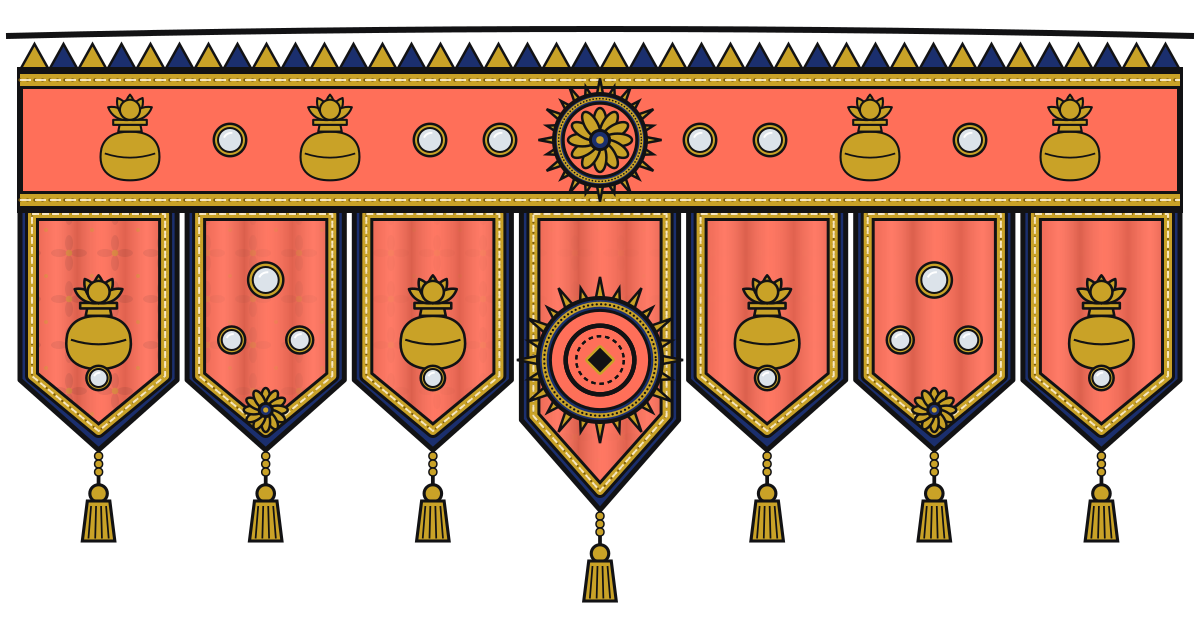
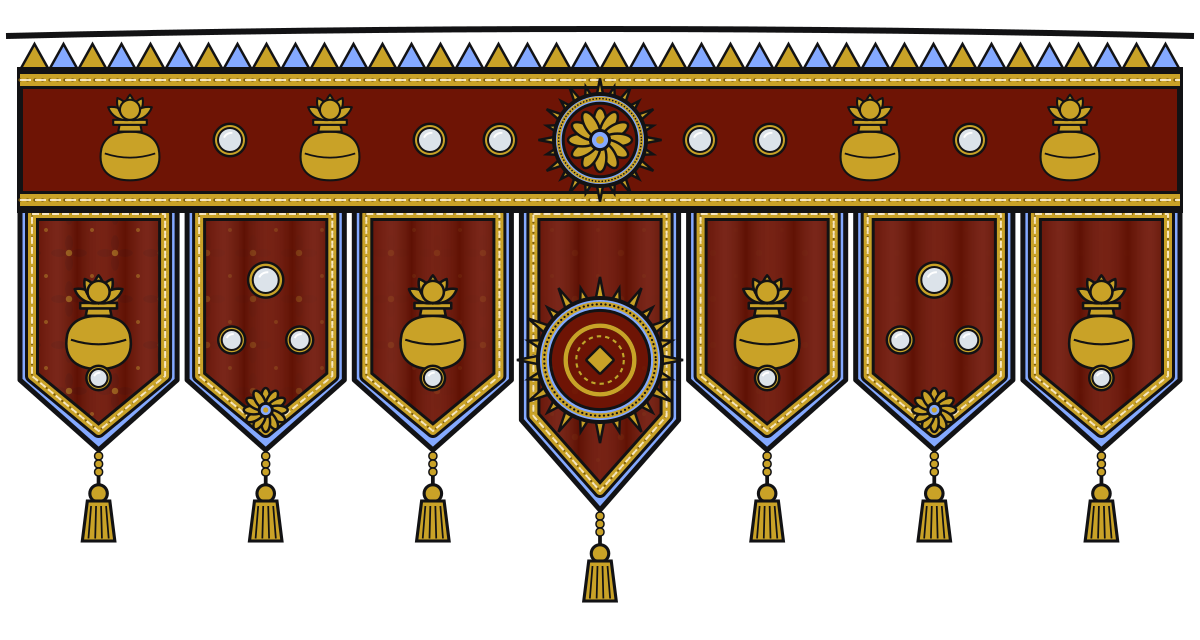
| G1 Torana · gateway The built gate of the seat; the cloth Toran hangs in it | Not yet designed for this clan | Regional tradition |
| G2 Viragallu · hero stone Carved panel stone for a member who died defending the clan | Not yet designed for this clan | Regional tradition |
| G3 Kula-shila · clan stones Standing and table stones that remember the ancestors | Not yet designed for this clan | Design |
| G4 Jayastambha · victory pillar A pillar raised for a victory | Not yet designed for this clan | Design |
| G5 Sima-shila · boundary stone Marks the clan's land, with a line in the native script | Not yet designed for this clan | Design |
4. Sounds
| Accessory | For this clan | Basis |
|---|---|---|
| D1 Pancha-mahashabda · five great sounds The right to five instruments | Not yet designed for this clan | Design |
| D2 Shankha · clan conch The clan's own named war conch | Not yet designed for this clan | Design |
| D3 Murasu · house drums Three drums: war, charity and justice | Not yet designed for this clan | Design |
5. Kit: colours, metals and emblems
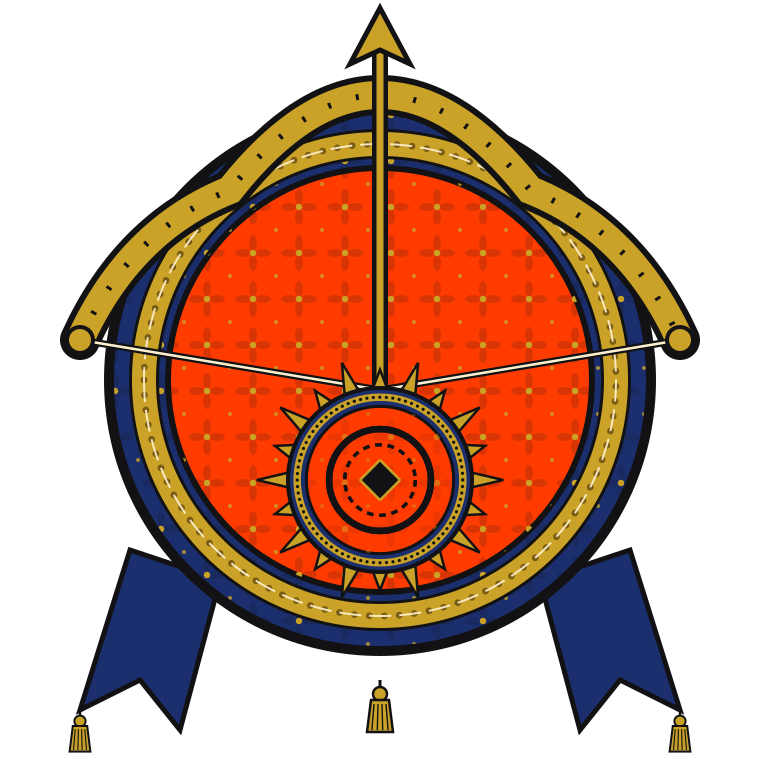
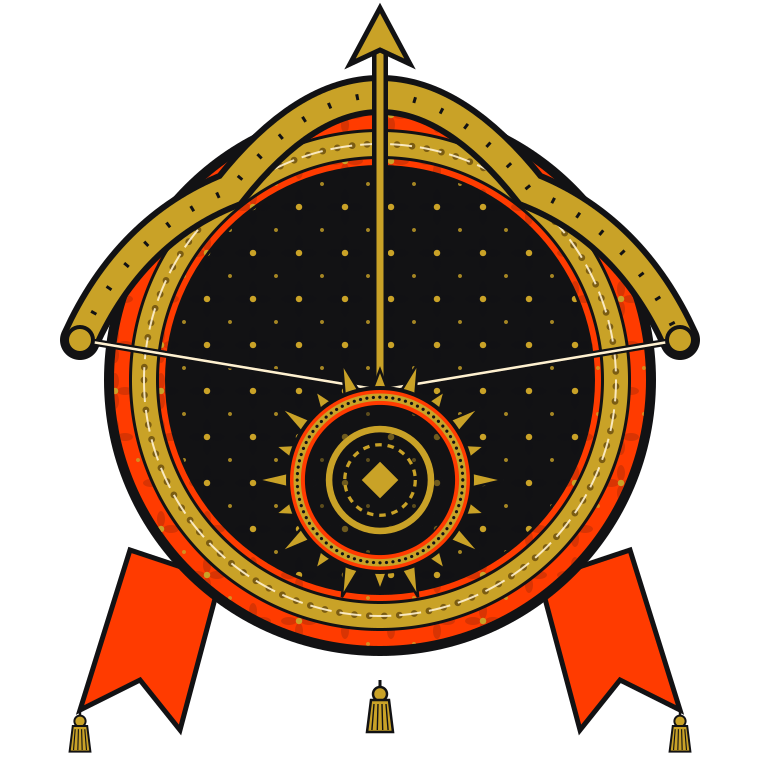
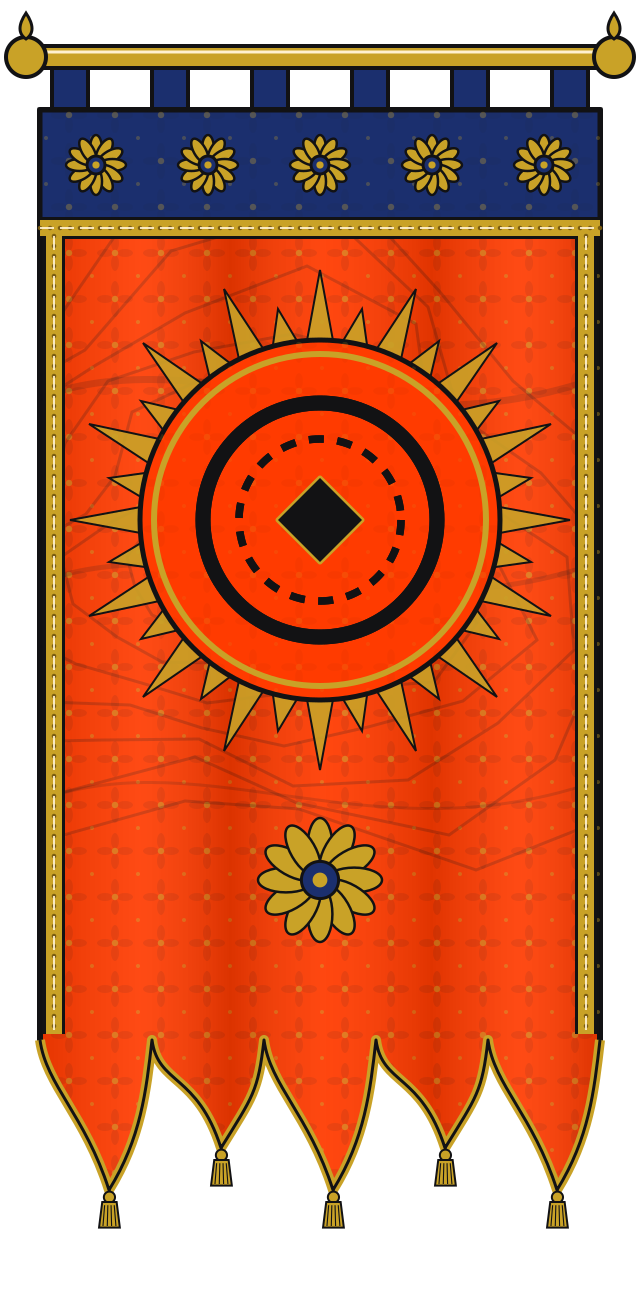
The extracts give no seal, coin or emblem of the Dhurwa. Their documented symbols are the totem gotras and the Bhumkal token, the dara-miri. The flag emblem comes.
| Part of the kit | This clan |
|---|---|
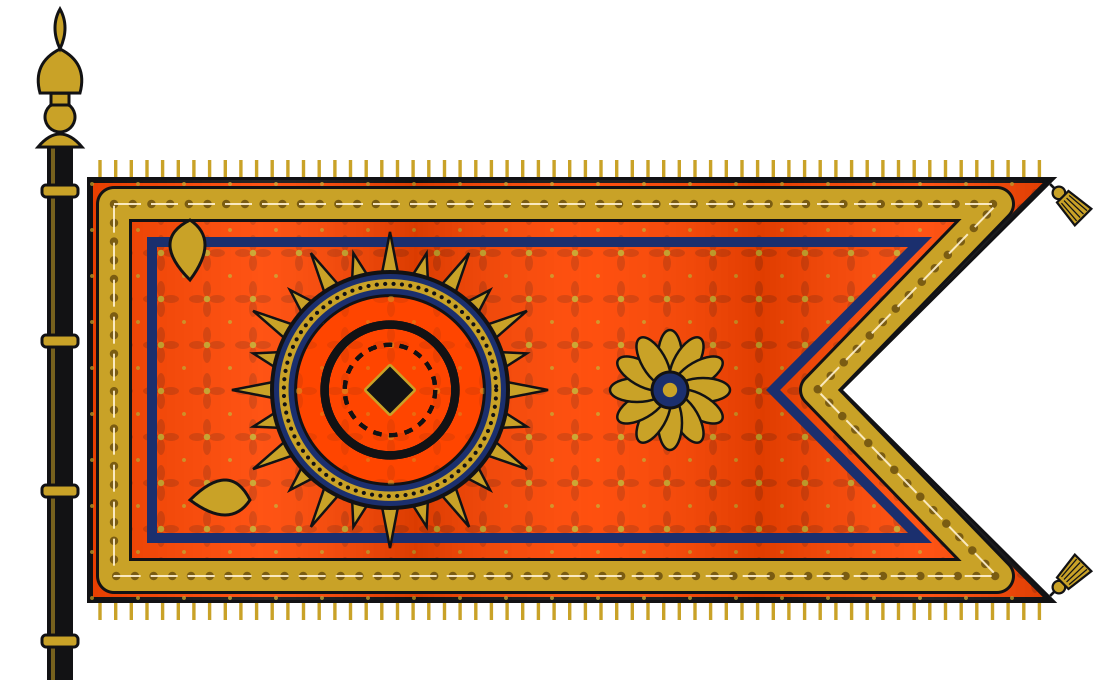
| Field | Deep Crimson Red #FF3B00 |
| Accent | Royal Navy #1B2F6E |
| Emblem colour | Charcoal Black #121214 |
| Zari metal | Gold |
| Main emblem | A raised mango branch |
| Second image | A bow |
| Night and day | Every visual accessory has two versions: by night the emblem on the dark field, by day the clan's field colour on cloth woven from its metal. |
6. Flags
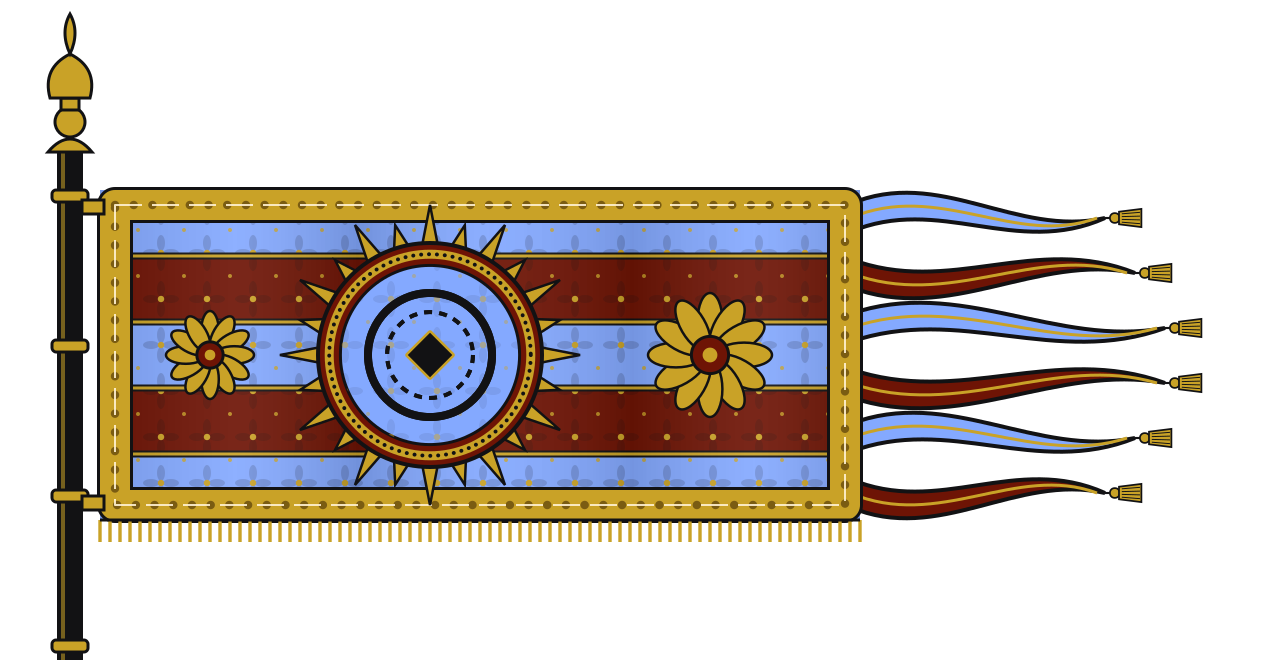
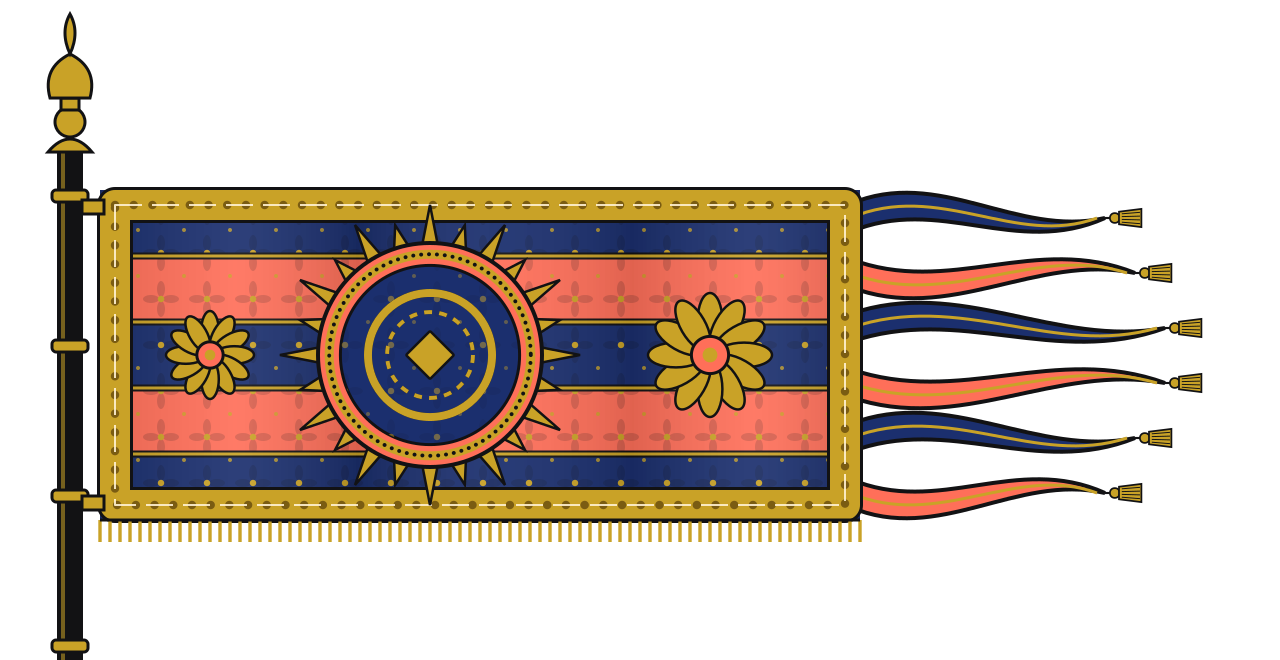
Every clan has every flag type; the type says the occasion and the colours say the clan. The outlined card is the flag the Atlas assigns.
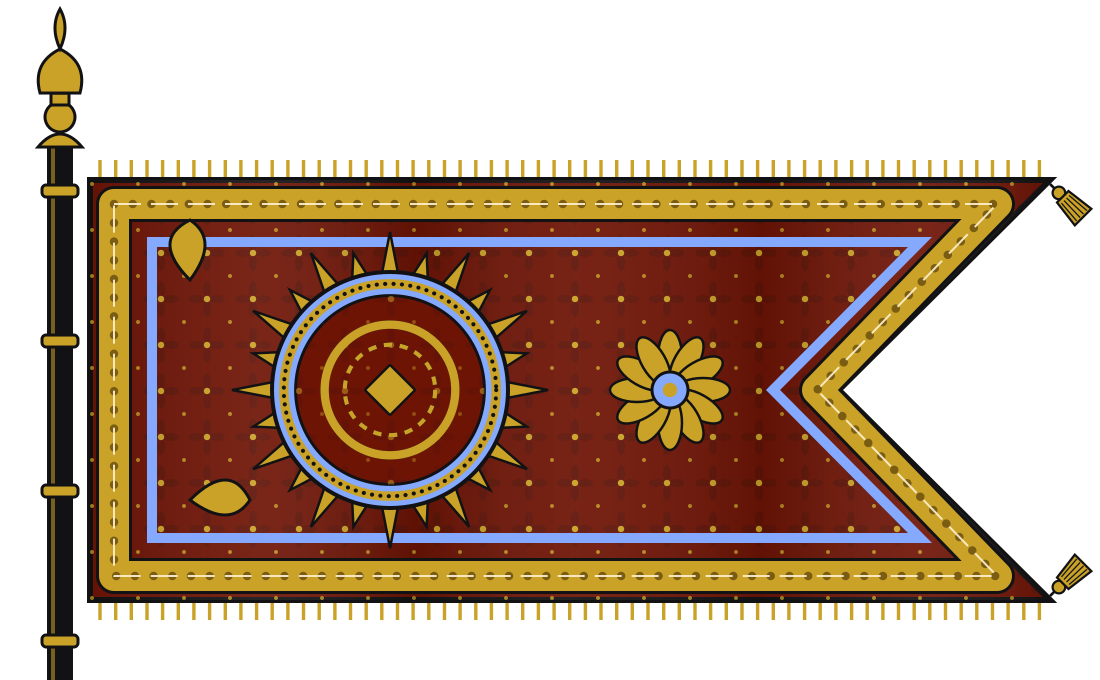
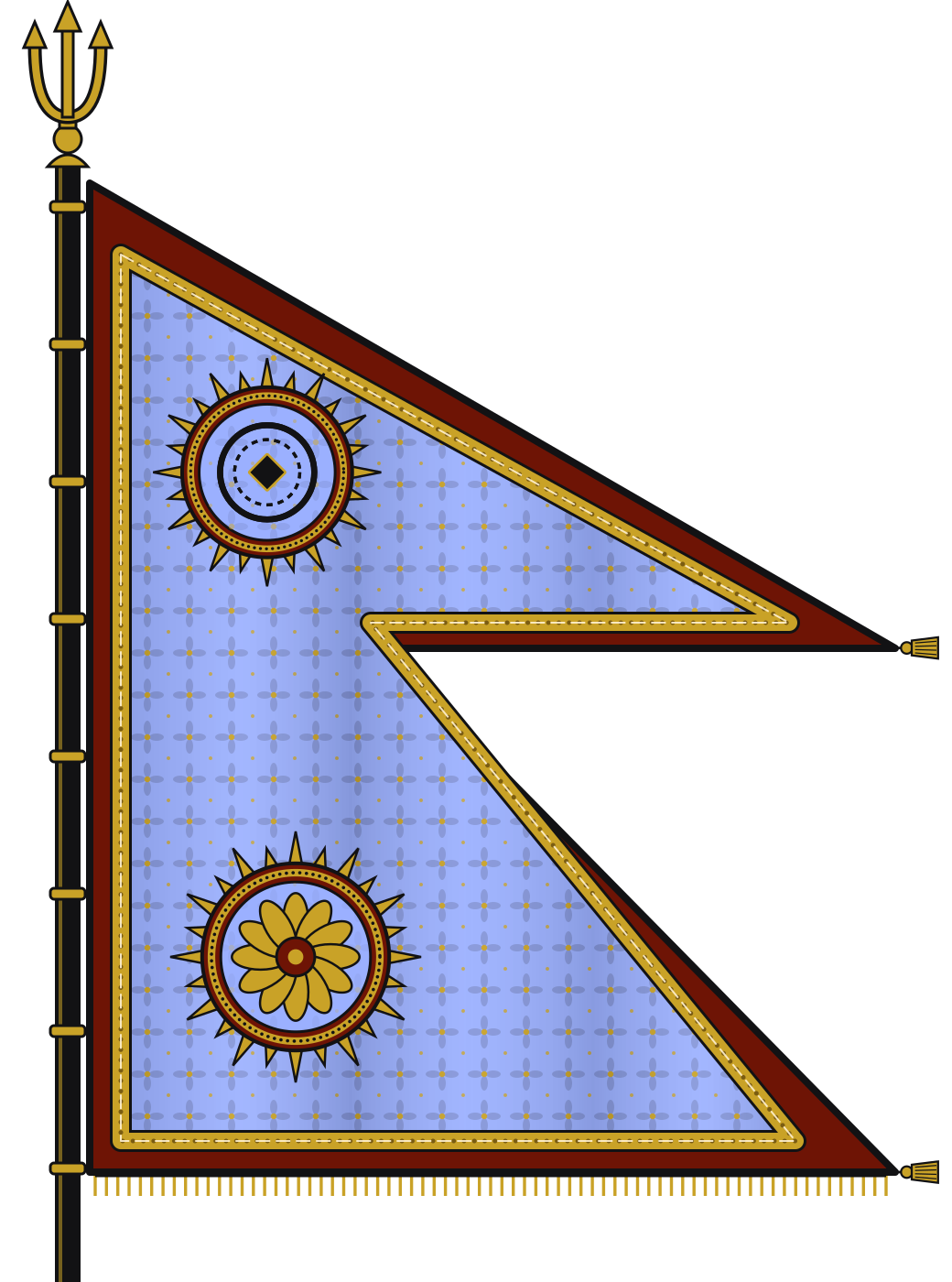
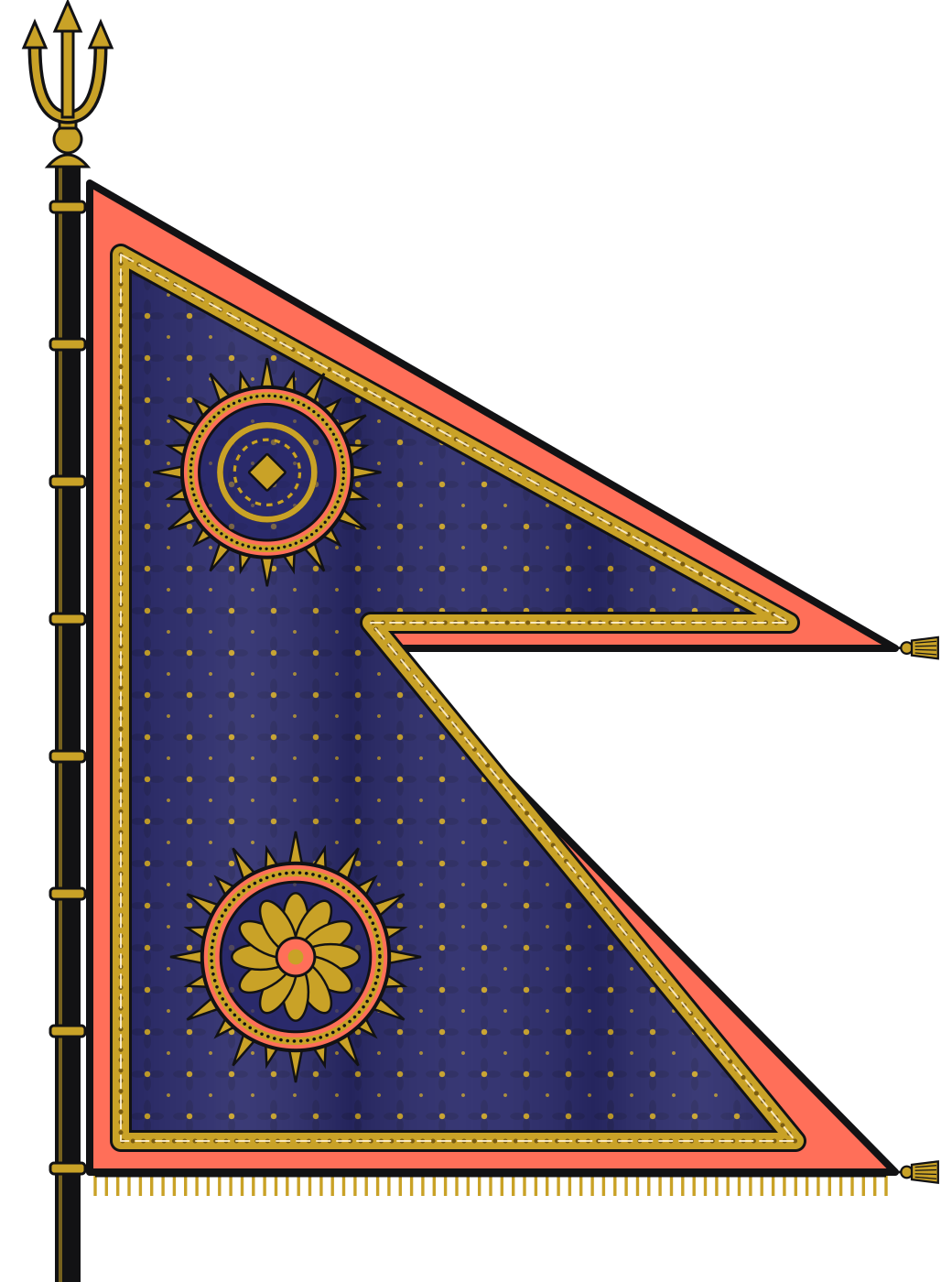
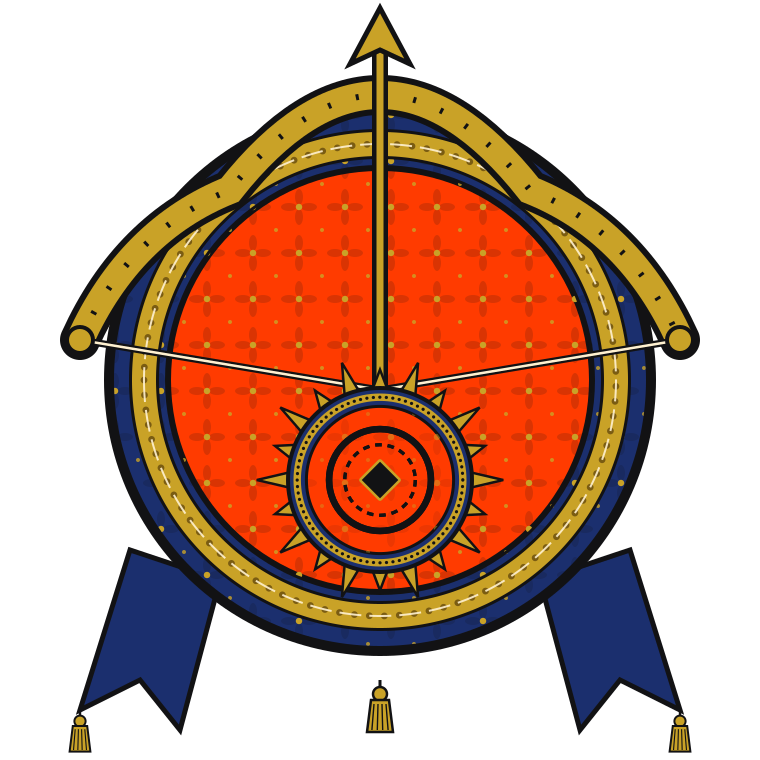
Historic banner
None known
New flag types
| Accessory | For this clan | Basis |
|---|---|---|
| A9 Pota-dhvaja · ship and trade flag For ships, caravans and markets | Not yet designed for this clan | Design |
| A10 Utsava-patāka · festival flag Light, bright flag for fairs and festivals | Not yet designed for this clan | Design |
| A11 Shoka-dhvaja · mourning flag White cloth with the emblem outline in the clan's metal | Not yet designed for this clan | Design |
7. Regalia
| Accessory | For this clan | Basis |
|---|---|---|
| E1 Chhatra · house parasol The ceremonial umbrella | Not yet designed for this clan | Design |
| E2 Chamara · fly-whisks The pair of whisks beside the head of the house | Not yet designed for this clan | Design |
| E3 Danda · staff of office Staff or scepter | Not yet designed for this clan | Design |
| E4 Simhasana · seat The seat of the house, covered in clan cloth | Not yet designed for this clan | Design |
| E5 Khetaka · shield A round shield; the Changi and Dhanush are its flag forms | Not yet designed for this clan | Regional tradition |
| E6 Kula-ayudha · clan weapon The weapon the clan honours | Not yet found for this clan | Under research |
8. Worn
| Accessory | For this clan | Basis |
|---|---|---|
| F1 Kula-vastra · clan cloth The clan's woven pattern in its kit colours | Not yet designed for this clan | Design |
| F2 Kirti-vastra · honour cloth A cloth earned for a deed, not inherited | Not yet designed for this clan | Design |
| F3 Kula-mala · garland flower The flower or leaf the clan wears as a garland | Not yet found for this clan | Under research |
| F4 Chinha · house pin A metal badge with the pin emblem | Not yet designed for this clan | Design |
9. Records
| Accessory | For this clan | Basis |
|---|---|---|
| H1 Clan words A traditional line in the native script | धुरवा · “the clan's name and title, not a line” The Hindi site gives धुरवा as a title from the Kakatiya age, its own claim, uncited. The extracts give no traditional line of the Dhurwa[2]. | Design |
| H2 Biruda · titles The house's title or titles | The title धुरवा (Dhurwa), given to those in the Kakatiya army and palace guard, per the Hindi site (uncited) धुरवा Dhurwa | Documented |
| H3 Prashasti · praise genealogy The lineage as written at the head of a grant | Not yet found for this clan | Under research |
| H4 Vahi · clan register The book of the clan's births, marriages and deaths | Not yet found for this clan | Under research |
| H5 Rana-ghosha · war cry The clan's cry in battle or celebration | Dara-miri: a red chilli and a mango twig, the symbol of the 1910 rising, per the Hindi site. The Atlas calls the mango twig the rising's call to arms डारा-मिरी | Documented |
10. VishwaVit · knower of the world
Game values are design choices for this project, not historical claims.
References
- Wikipedia, Duruwa, read 2026-10-10, https://en.wikipedia.org/wiki/Duruwa
- Chhattisgarh Janjati, धुरवा जनजाति: इतिहास, संस्कृति और रहन-सहन, read 2026-10-27, https://www.chhattisgarhjanjati.com/2026/05/dhurwa-tribe-in-hindi.html
- Odisha State Tribal Museum, Tribes of Odisha: Dharua, read 2026-10-27, https://ostm.in/tribes_of_odisha/dharua/
- Tribes of Bastar, eTribal Tribune vol. 2 (read 20 Oct 2026, KulDevi clan check).
- Wikipedia, Gunda Dhur, read 2026-10-27, https://en.wikipedia.org/wiki/Gunda_Dhur
- "Bastar Dussehra", Wikipedia (English), read 10 October 2026.
- R. V. Russell and Hira Lal, The Tribes and Castes of the Central Provinces of India, vol. 4 (London, 1916), Project Gutenberg eBook #20668, https://www.gutenberg.org/ebooks/20668