The Dhanka are a Scheduled Tribe of Gujarat, Maharashtra and Rajasthan (Atlas, ST-065; list dated 09-07-2024), with the sub-groups Tadvi, Tetaria and Valvi[1][2]. Moodie, the Joshua Project and Hockings describe them as a sub-group of the Bhil[3][4][5]. Their name may come from dhanush, the bow, or from a word for forest dweller[3]. TRTI Gujarat counted 2,52,637 Tadvi, Valvi and Tetariya in Gujarat in 2001[1]. The extracts give little dated history, but they describe the people's gods, marriage and death rites in some detail[1].
01Faith and deities
From the Atlas: the KulDevi, basis 'homeland shrine', noted as the mother-goddess of the Bhils and the south Gujarat tribes. No source names a Dhanka deity as the main one. The Wikipedia Dev Mogra page names the Bhil and related Satpura communities, not the Dhanka or Tadvi[6]. The tie is unconfirmed.
Mother-goddess of the Bhils and the south Gujarat tribes
The presiding goddess of the clan's homeland or capital: a link of place, not a recorded clan tie.
| Deity or tradition | Place in the clan's life | Evidence |
|---|---|---|
| Zampadi, Verai, Meldi, Amba and Kalika Mata | Goddesses the Tadvi, Valvi and Tetariya traditionally believe in | [1] |
| Family goddess | Called at the sixth-day Chhatthi rite; not named in the source | [1] |
| Ram, Krishna, Shankar, Hanumanji, Ramdev Pir and Bhathiji Maharaj | Also named in the TRTI brief | [1] |
| Ganpati | Painted in marriage rites; the bride and groom bow before him | [1] |
| Dev Mogra | Ancestral and protective deity of the Bhil and related Satpura communities; the Dhanka are not named (tie unconfirmed) | [6] |
| Hindu tradition (historical) | The Wikipedia page says the people were historically Hindu; no deity is named there | [3] |
02Temples
No temple built or patronised by the clan is in the extracts. Verai Mata's temple is used in the rites: the dead body rests there on the way to cremation, and couples worship there after marriage[1].
Built by the clan
Not recorded.
Given patronage or grants by the clan
Not recorded.
03Languages and scripts
| Language or script | Kind | Under the clan | Evidence |
|---|---|---|---|
| Gujarati living | Primary language; the people's own dialects are not named | [4][1] | |
| Tadvi Boli and Bhilori | Named by the Tadvi Bhil article for Tadvi Bhil speakers; the Dhanka's own speech is not described | [2] | |
| Hindi, Bhili, Wagdi, Marathi and Marwari | Secondary languages (Joshua Project, year not stated) | [4] | |
| Script | No native-script name or text for the Dhanka is in the extracts | [4] |
04Books and literature
No book of the Dhanka is named in the extracts.
Written during the clan's history
Not recorded.
Given patronage by the clan
Not recorded.
05Thinkers and scholars
Not recorded.
No thinker of the Dhanka is named. Shereen Ratnagar (Being Tribal, 2010) and Megan Moodie (We Were Adivasis, 2015) wrote on the people; they are cited as sources here, not as clan thinkers[3].
06Art and architecture
The extracts record one living art, made in Dhanka homes.
Painting and wall art
| Art form | What it is | Era | Evidence |
|---|---|---|---|
| Pithora wall paintings living | The Rathwa paint ritual pictures on the interior walls of Dhanka homes, in vivid colours of gods, people, plants, birds and animals[3] | [3] |
Sculpture and temple art
Not recorded.
Temple and building architecture
Not recorded.
Weaving and textiles
Not recorded.
Clothing and jewellery
Not recorded.
Coins, pottery and crafts
Not recorded.
07History
Name
The name may derive from Dhanak, a forest dweller, or from dhanush, the bow, possibly reflecting a historic bow association[3].
Historically tribal people, agriculturists and hunters, carried bows everywhere, according to Ratnagar (2010), as cited on the Wikipedia page[3].
Legends of the sub-groups
legend TRTI Gujarat records legends of a famine: the people who ate horse meat were called Tadvi, 'one who rides over horse'. The eaters of the bird Tetar became the Tetariya[1].
legend Another legend links the Tadvi to the Rajput Chauhans of Pawagadh[1]. The TRTI page concludes that they are a Bhil sub-tribe[1].
Tadvi territory
The Tadvi Bhil article places the core of the medieval Faruqi kingdom in Tadvi territory, citing Brower and Johnston (2007)[2].
08Journey and migrations
The extracts give no dated route for the Dhanka as a whole. The movements below are the only ones they record.
| When | From | To | Why | Evidence |
|---|---|---|---|---|
| Undated | Western India | Gujarat, Rajasthan, Maharashtra, Madhya Pradesh | Spread over much of western India (Moodie, as cited on Wikipedia) | [3] |
| By 1960 (as stated) | Forest hunting and farming | Cities | About 70% migrated to cities by 1960, as the Joshua Project states | [4] |
09Seats and lands
| Place | Role | Where today |
|---|---|---|
| Bharuch district | Nanded, Dediyapada and Sagbara talukas, TRTI list[1] | Gujarat |
| Vadodara district | Sankheda, Dabhoi, Jalugam, Naswadi, Chhota Udepur and Tilakwada talukas[1] | Gujarat |
| Panchmahal district | Limkheda, Halol, Jambughoda and Devgadh Bariya talukas[1] | Gujarat |
| Dhule, Nandurbar and Jalgaon districts | Tadvi Bhil live here, on the Aurangabad-Jalgaon border (Tadvi Bhil article, a separate ST entry); no Dhanka district list is sourced[2] | Maharashtra |
| Rajasthan | Listed among the states where the Dhanka live[3]; about 97,000 (Joshua Project)[4] | Rajasthan |
| Madhya Pradesh | Listed on the Wikipedia page[3]; about 6,800 (Joshua Project)[4] | Madhya Pradesh |
| Odisha | About 200 (Joshua Project)[4] | Odisha |
| Haryana, Uttar Pradesh and Pakistan | Joshua Project lists these together as 3,400, and says the group is Sindhi-speaking in Pakistan (year not stated)[4] | Pakistan |
10Notable figures
Not recorded.
11Allies, rivals and marriages
| People | Relationship | When |
|---|---|---|
| Bhil (ST-027) | Parent: a sub-group of the Bhil, per Moodie (as cited), the Joshua Project and Hockings[3][4][5] | Undated |
| Rathwa | Shares many cultural similarities; the Wikipedia page calls the two largely indistinguishable[3] | Living |
| Naikda (ST-232) | Shares many cultural similarities; the Wikipedia page calls the two largely indistinguishable[3] | Living |
| Chauhans of Pawagadh legend | A TRTI legend links the Tadvi to them[1] | Legendary |
| Faruqi kingdom | Core of the medieval kingdom in Tadvi territory[2] | Medieval |
| Dhanuk and Kurmi | The Wikipedia page says the Dhanka have no relation with them[3]; the Joshua Project lists Dhanuk as an alternate name (see open questions) | - |
| Gamit (ST-080) | The Atlas lists Valvi among the Gamit sub-groups; the extracts do not discuss the link | Undated |
12Society and livelihood
Community institutions and rites as TRTI Gujarat records them for the Tadvi, Valvi and Tetariya.
Government and social order
| Institution or group | What it was | Evidence |
|---|---|---|
| Caste panch | A caste council with a written constitution, which settles marriage, divorce, remarriage and education disputes[1] | [1] |
| Marriage | No marriage within the gotra; engagement by eating jaggery; oil and turmeric rite; Ganpati painted; holy pillar; Hast Milap and Saptapadi; bow before Ganpati[1]. The Joshua Project says the people marry only within the community[4] | [1][4] |
| Gotra and endogamy | The Tadvi Bhil article gives gotra exogamy within an endogamous group, citing Siddiqui[2] | [2] |
| Polygamy and divorce | Polygamy is permitted; divorce is with compensation; widow remarriage is usually with the husband's younger brother[1] | [1] |
| Chhatthi (sixth day after birth) | The dai lights a lamp; the child lies on a clay and cow-dung floor; a black string is tied on mother and child; naming at two to three weeks, with the father's sister invited[1] | [1] |
| Death | Women wear red cloth and men white; an earthen pot with fire is carried; hair is shaved after ten days; Barma lunch on the twelfth day; shraddh in the second half of Bhadrapad[1] | [1] |
Livelihood over time
| Era | Livelihood | Evidence |
|---|---|---|
| Historically | Forest hunters and farmers, and soldier-guards for landowners[4] | [4] |
| Today | Farmers; some labourers, jobs, factories or diamond polishing[1] | [1] |
| Today | Most engage in agricultural work (Pinto, as cited on the Wikipedia page)[3] | [3] |
13Sub-clans and related clans
Sub-groups named by the TRTI Gujarat brief, the Wikipedia page and the Tadvi Bhil article. Each is a candidate for its own entry.
| Clan | Relation | Where | Size | In the Atlas | Evidence |
|---|---|---|---|---|---|
| Tadvi | Sub-clan | Gujarat (TRTI); Tadvi Bhil live in Dhule, Nandurbar and Jalgaon (Tadvi Bhil article, a separate entry) | new clan candidate | [1][2] | |
| Tetaria | Sub-clan | Named with the Dhanka; Tetariya in Gujarat (TRTI) | new clan candidate | [1][3] | |
| Valvi | Sub-clan | Gujarat (TRTI) | new clan candidate | [1][3] | |
| Dhankia | Related people | Named as a possible synonym | new clan candidate | [3] | |
| Bhil | Parent people | Vindhya and Satpura hills (Hockings) | ST-027 | Atlas;[5] | |
| Rathwa | Related people | new clan candidate | [3] | ||
| Naikda | Related people | ST-232 | [3] |
Clans marked "new clan candidate" are not in the Atlas yet.
14Surnames
Surnames the extracts give for the Dhanka, from the Tadvi Bhil article and TRTI Gujarat. No bearer counts are sourced.
| Surname | Clan or sub-clan | Where | People with this surname | Also used by other communities |
|---|---|---|---|---|
| Tadvi | Tadvi | Gujarat and Maharashtra | not yet counted | Yes |
| Tetariya | Tetaria | Gujarat and Maharashtra | not yet counted | Not checked |
Counts are of everyone with the surname, from the cited source and year, not only members of this clan. A surname shared with other communities says nothing about any one person's origin.
15Songs and music
None recorded yet.
16Poems, lullabies and children's rhymes
None recorded yet.
17Stories, legends and proverbs
Stories and legends
| Story | What happens | Told by | Evidence |
|---|---|---|---|
| The famine and the horse legend | In a famine, the people who ate horse meat were called Tadvi, 'one who rides over horse' | TRTI Gujarat legend[1] | |
| The Tetar bird legend | The eaters of the bird Tetar became the Tetariya | TRTI Gujarat legend[1] | |
| The Chauhans of Pawagadh legend | A legend links the Tadvi to the Rajput Chauhans of Pawagadh | TRTI Gujarat legend[1] |
Proverbs and sayings
Not recorded.
18Festivals and fairs
| Festival or fair | When | Where | What happens |
|---|---|---|---|
| Diwali | Listed by TRTI Gujarat; no detail given[1] | ||
| Makarsankranti | Listed by TRTI Gujarat; no detail given[1] | ||
| Diwaso | Listed by TRTI Gujarat; no detail given[1] | ||
| Navratri | Listed by TRTI Gujarat; no detail given[1] |
19Food, dress and games
Food
Dress
| Item | What it is | Evidence |
|---|---|---|
| Men | Dhoti or langoti, long head cloth, shirt, shoulder towel, some turbans[1] | [1] |
| Women | Petticoat, blouse, backless kanchali, head cloth[1] | [1] |
| Silver ornaments | Leriya, vinton, hansadi, anklets and panhonchi[1] | [1] |
Games and martial arts
Not recorded.
Tags: living still practised · revived brought back after a break · lost known only from records · research reported but not yet confirmed from a source. Songs and poems under copyright are listed by title only; restricted or sacred material is noted without its content.
20Status today
The Dhanka are a Scheduled Tribe in Gujarat, Maharashtra and Rajasthan, according to the Atlas (list dated 09-07-2024). TRTI Gujarat names the Tadvi, Valvi and Tetariya as its sub-groups; it lists farmers, with some labourers and people in jobs, factories or diamond polishing[1]. Wikipedia says most engage in agricultural work[3].
Not yet reviewed by the community.
21For children
The bowmen and the bird
Long ago, the Dhanka lived in the hills and forests of western India, where they hunted and farmed. Their name may come from the word for bow. A story says that some of them ate horse meat in a hard time, and so they were called Tadvi, which means one who rides over a horse. Others ate the bird called Tetar, and so they became the Tetariya. Today many Dhanka families grow maize and jowar on their farms. When a baby is six days old, the dai (midwife) lights a lamp in the Chhatthi rite.
Written for this project
Riddle: A bird's name gave a people their name. Which bird is it? (The Tetar bird)
22Across the project
| Project | What carries this clan | Status |
|---|---|---|
| Atlas of the Janas | Pin not yet sourced; see open questions | To check |
| KulDevi and GrahDevi | Devmogra Mata; the tie to the Dhanka is unconfirmed (section 01) | From the Atlas |
| Planet naming | Not sourced | To check |
| Renaming and waters | No place or water name drawn from the Dhanka yet | - |
23Open questions
- Find a source that ties the Dhanka to Devmogra Mata. The Dev Mogra page names the Bhil and related Satpura communities only; TRTI names other goddesses and an unnamed family goddess.
- Name the Dhanka family goddess called at the Chhatthi rite (TRTI names none).
- Reconcile the 2001 figures: TRTI gives 2,52,637 for Gujarat; Moodie (as cited on Wikipedia) gives 77,047 for the four names together.
- Get an official Scheduled Tribe list with a year for the Dhanka, Tadvi, Tetaria and Valvi entries in Rajasthan and Maharashtra, before any state count is used.
- Haryana and Punjab are listed on the Wikipedia page, but the same page says the Delu weavers of Haryana are a Scheduled Caste community; check which community is meant.
- Dhanuk: the Joshua Project lists it as an alternate name, while the Wikipedia page says the Dhanka have no relation with Dhanuks. The Atlas also lists Dhanuk separately (SUB-025).
- Valvi is listed under Gamit (ST-080) in the Atlas as well as under the Dhanka; settle which people it belongs to.
- Check Dhankia and Valvi as synonyms, which Moodie discusses (as cited on Wikipedia).
- Uncited claims on the Tadvi Bhil article: the separation from the Bhil about 900 years ago, and the move of many Tadvi to Marathwada 100-150 years ago.
- A list of gotras and exogamous clans, from the People of India volume or a community source.
- Songs, proverbs, rhymes and a clan line, in Gujarati or any script, from a Dhanka source or the community.
- Community review of this page.
- Contradiction: the lands section places the Tadvi Bhil area (Dhule, Nandurbar, Jalgaon) under the Dhanka, while the spillover and the Tadvi Bhil article treat Tadvi Bhil as a separate ST entry[2]. Settle which entry the Maharashtra districts belong to.
- Contradiction: the Tetaria spelling differs: 'Tetariya' in the TRTI Gujarat brief[1] and in the Tetariya surname, 'Tetaria' in the sub-group list and the Tadvi Bhil article[2]. Confirm the spelling used for the sub-group.
24Astitva
अस्तित्व · being, existence: everything by which the clan is known
The extracts record no coin, seal, title or totem for the Dhanka. The one accessory they document is the dress and silver ornament of the Tadvi, Valvi and Tetariya[1].
Every clan has every accessory, royal objects included. Each one says how it is known: Documented This clan's own object is recorded. · Regional tradition Recorded for the region or for peoples like this one, not for this clan. · Design Made for this project, with no historical claim. · Under research To be found for this clan from sources. Legends and titles are written in the clan's own script.
1. Seals and coins
| Accessory | For this clan | Basis |
|---|---|---|
| B1 Rajamudra · house seal Round seal with the clan emblem and a short legend in the clan's script | Not yet designed for this clan | Design |
| B2 Anguliya-mudra · signet ring Personal seal ring of the head of the house | Not yet designed for this clan | Design |
| B3 Chhapa · house stamp Ink or block stamp for letters, goods and cloth | Not yet designed for this clan | Design |
| B4 Tamrapatra · charter plate Copper-plate grant on a ring, closed with the house seal | Not yet designed for this clan | Design |
| B5 Shreni-mudra · guild or trade seal Seal for the clan's trade, craft or caravan | Not yet designed for this clan | Design |
| C1 Clan coin Emblem or deity on one side, a legend in the clan's script | Not yet designed for this clan | Design |
| C2 Coin die The die that strikes the coin | Not yet designed for this clan | Design |
2. Living symbols
| Accessory | For this clan | Basis |
|---|---|---|
| I1 Totem trio The tree, bird and animal the clan protects | Not yet found for this clan | Under research |
| I2 Kaval-maram · guardian tree The tree that stands at the clan's seat | Not yet found for this clan | Under research |
3. Stone and gate
| Accessory | For this clan | Basis |
|---|---|---|
| G1 Torana · gateway The built gate of the seat; the cloth Toran hangs in it | Not yet designed for this clan | Regional tradition |
| G2 Viragallu · hero stone Carved panel stone for a member who died defending the clan | Not yet designed for this clan | Regional tradition |
| G3 Kula-shila · clan stones Standing and table stones that remember the ancestors | Not yet designed for this clan | Design |
| G4 Jayastambha · victory pillar A pillar raised for a victory | Not yet designed for this clan | Design |
| G5 Sima-shila · boundary stone Marks the clan's land, with a line in the native script | Not yet designed for this clan | Design |
4. Sounds
| Accessory | For this clan | Basis |
|---|---|---|
| D1 Pancha-mahashabda · five great sounds The right to five instruments | Not yet designed for this clan | Design |
| D2 Shankha · clan conch The clan's own named war conch | Not yet designed for this clan | Design |
| D3 Murasu · house drums Three drums: war, charity and justice | Not yet designed for this clan | Design |
5. Kit: colours, metals and emblems
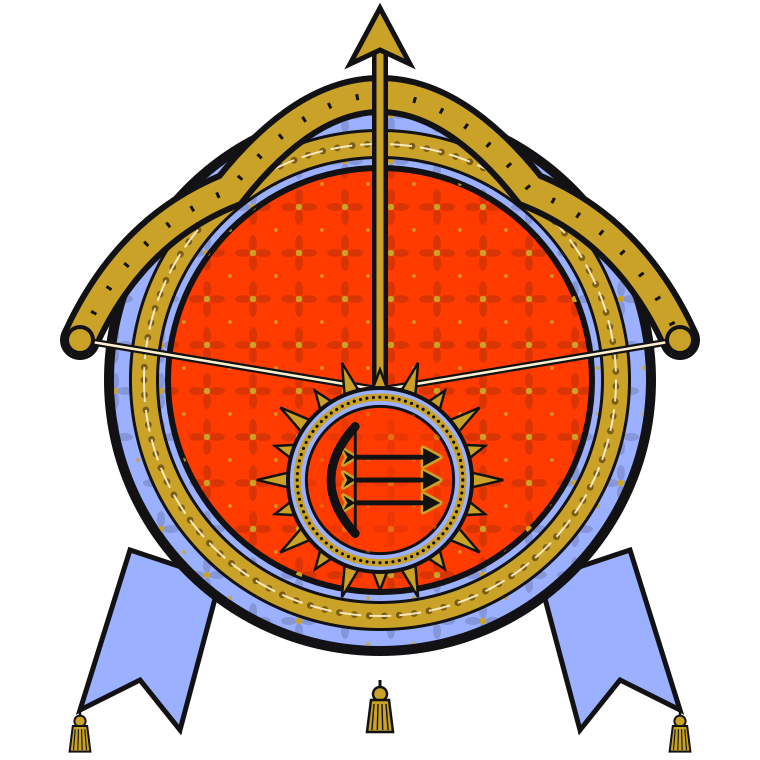
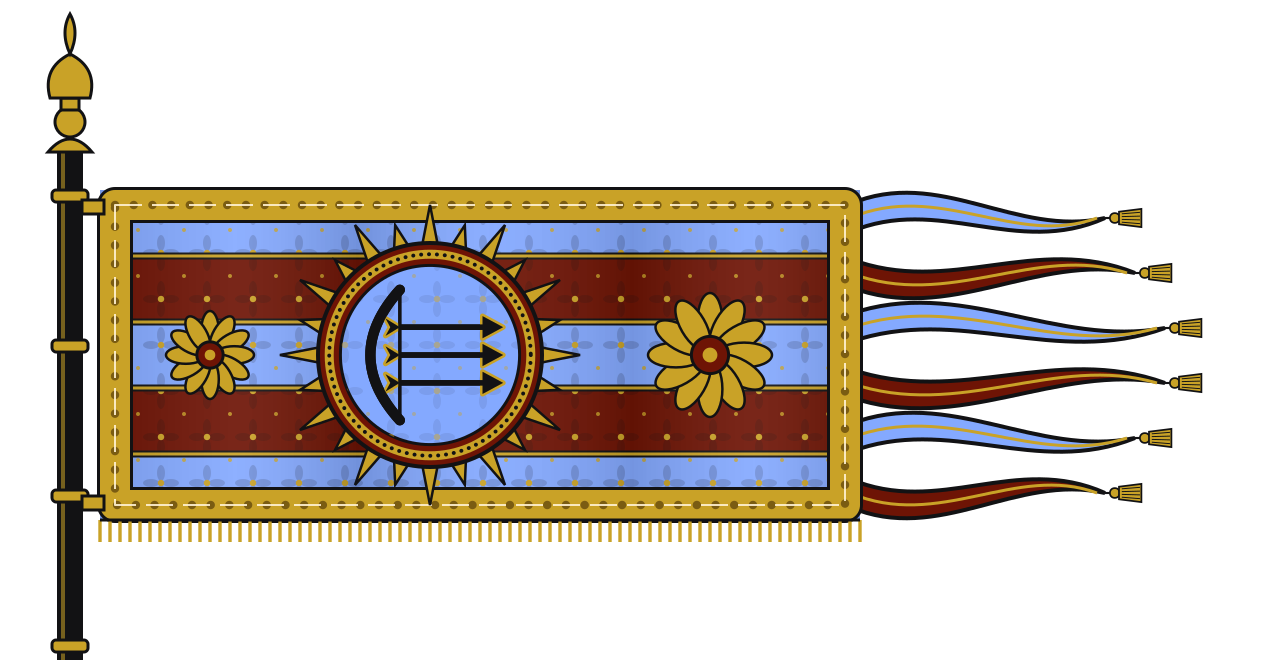
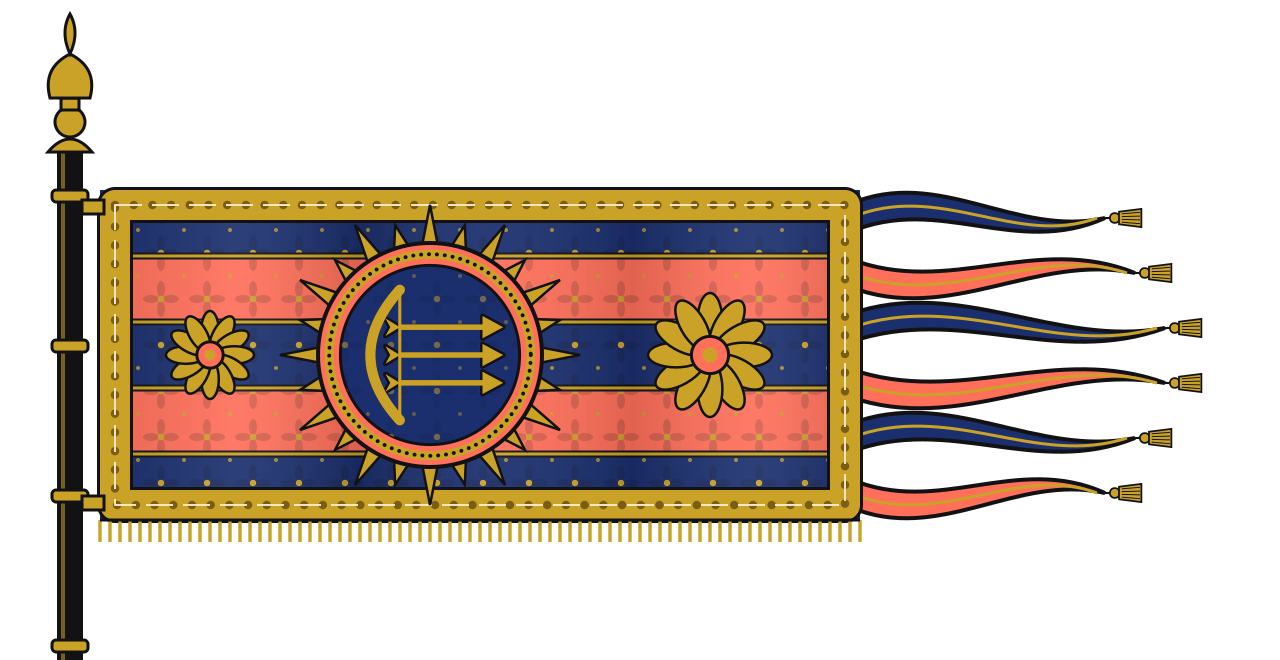
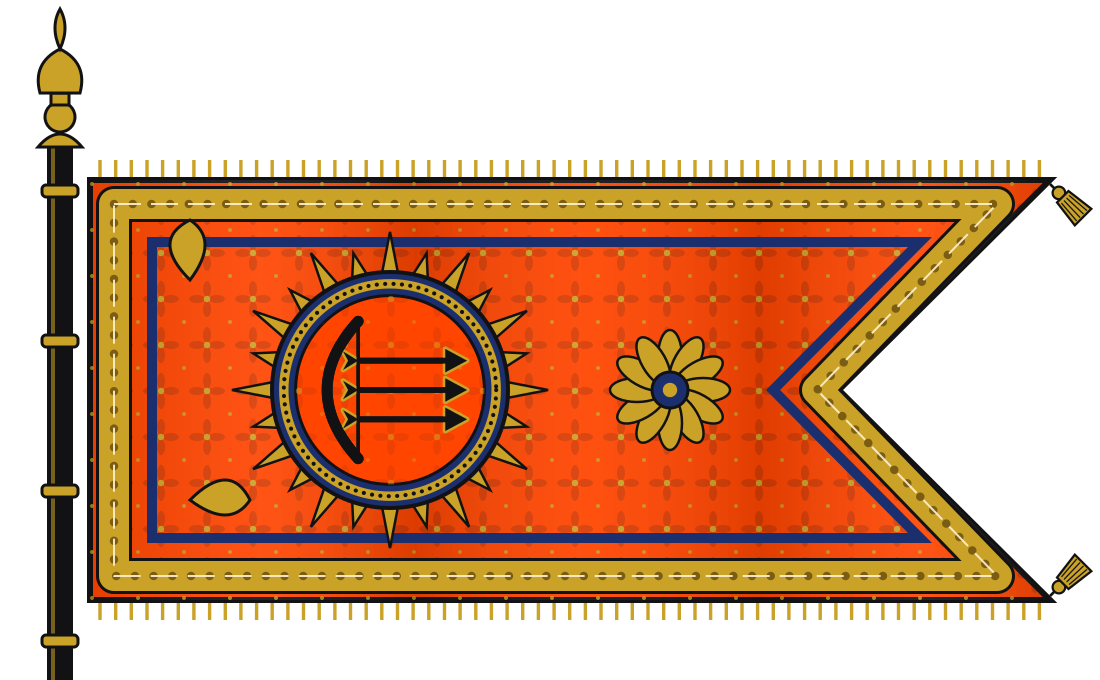
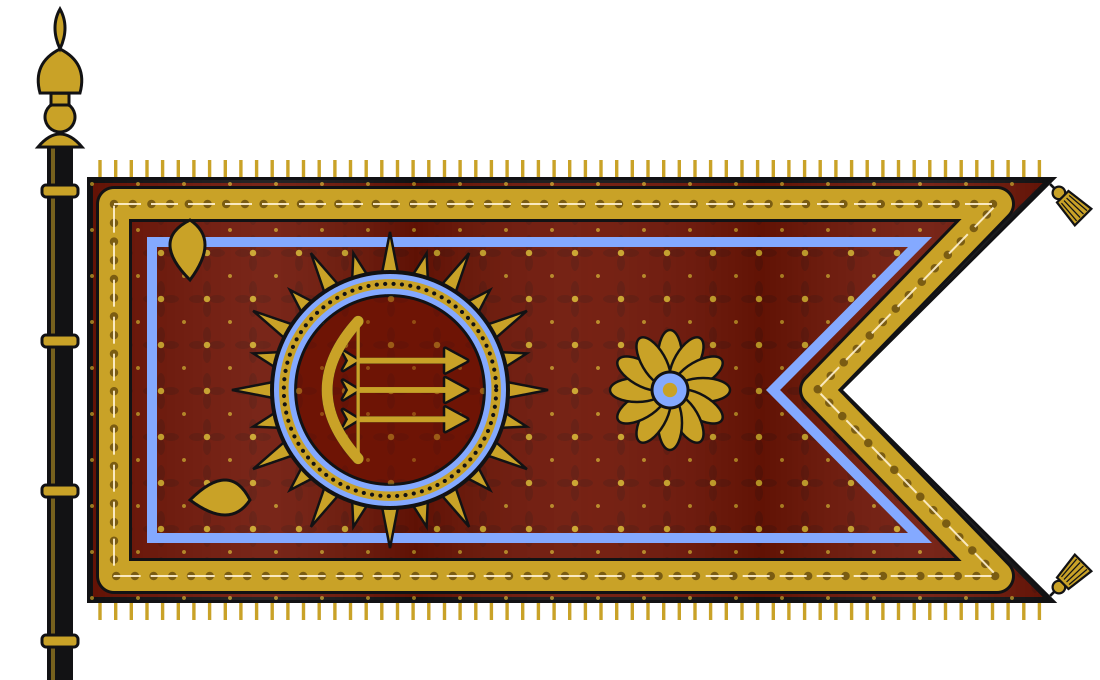
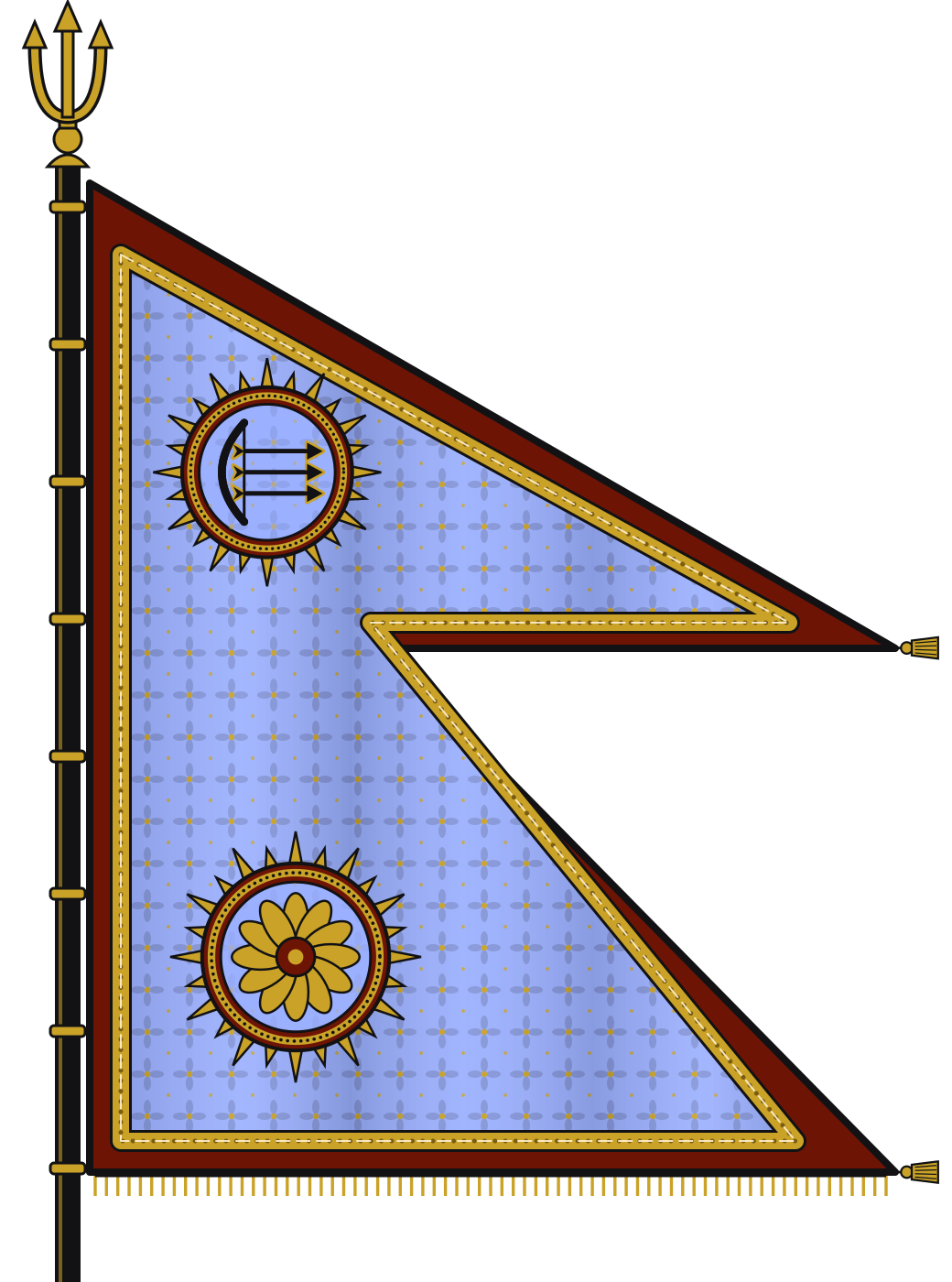
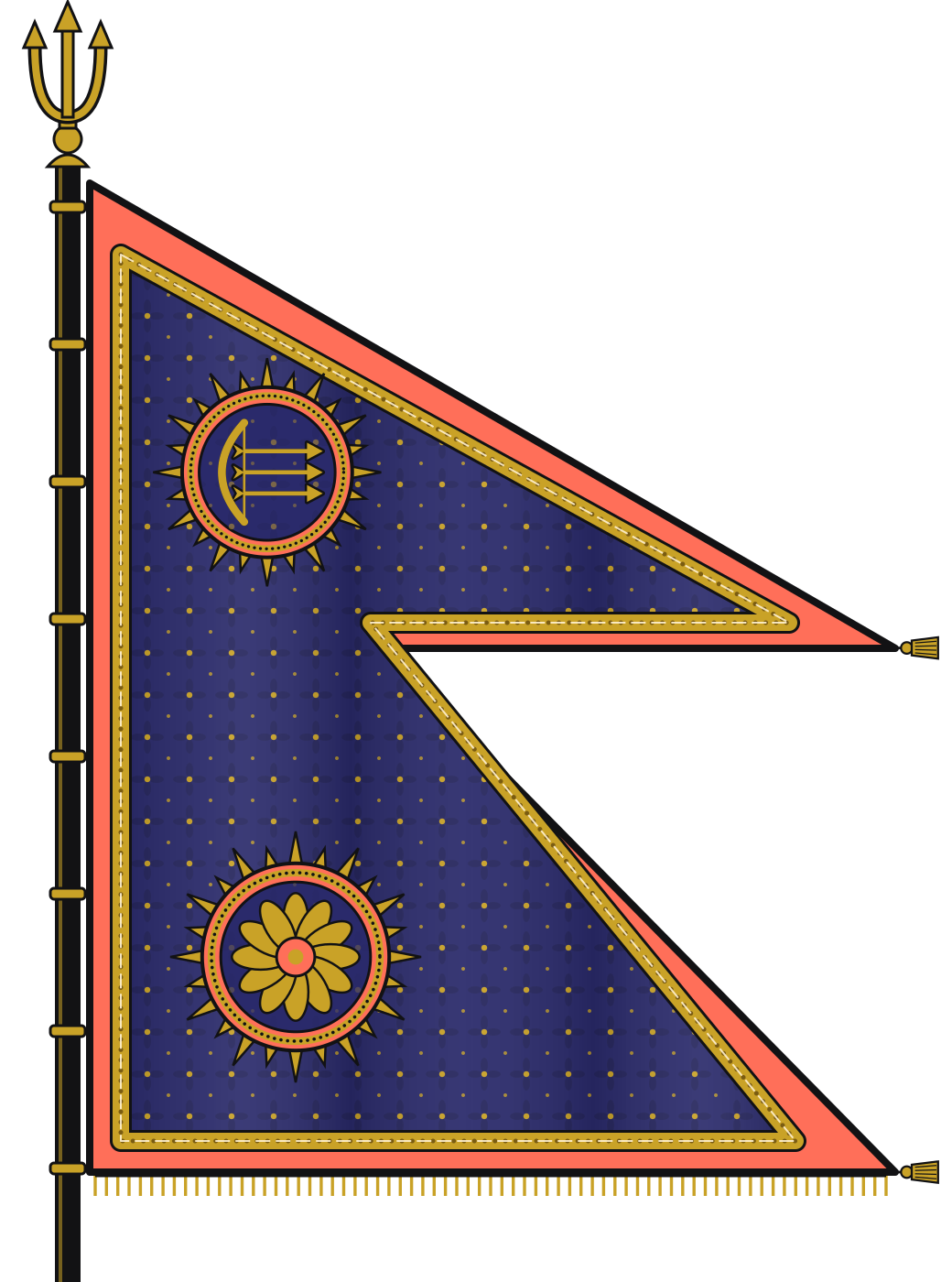
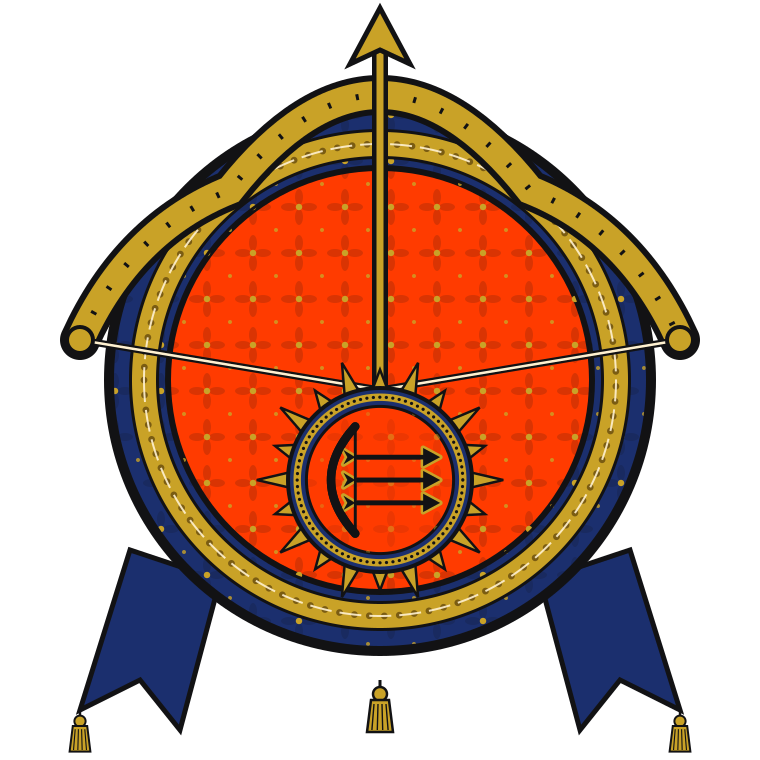
No seal, coin, banner or totem is recorded for the Dhanka. The Atlas's flag is a bow, and the Wikipedia page says the name may come from dhanush, the bow[3]. The bow is the sheet's design, not a recorded emblem.
| Part of the kit | This clan |
|---|---|
| Field | Deep Crimson Red #FF3B00 |
| Accent | Deep Cosmic Blue #9BB0FF |
| Emblem colour | Charcoal Black #121214 |
| Zari metal | Gold |
| Main emblem | A bow and arrows |
| Second image | A Satpura hill ridge |
| Night and day | Every visual accessory has two versions: by night the emblem on the dark field, by day the clan's field colour on cloth woven from its metal. |
6. Flags
Every clan has every flag type; the type says the occasion and the colours say the clan. The outlined card is the flag the Atlas assigns.


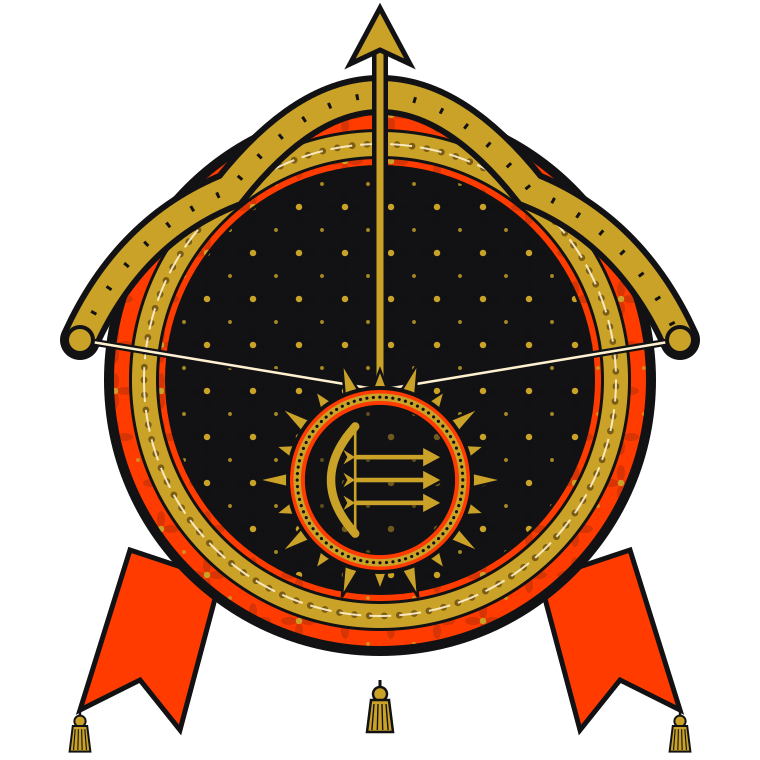
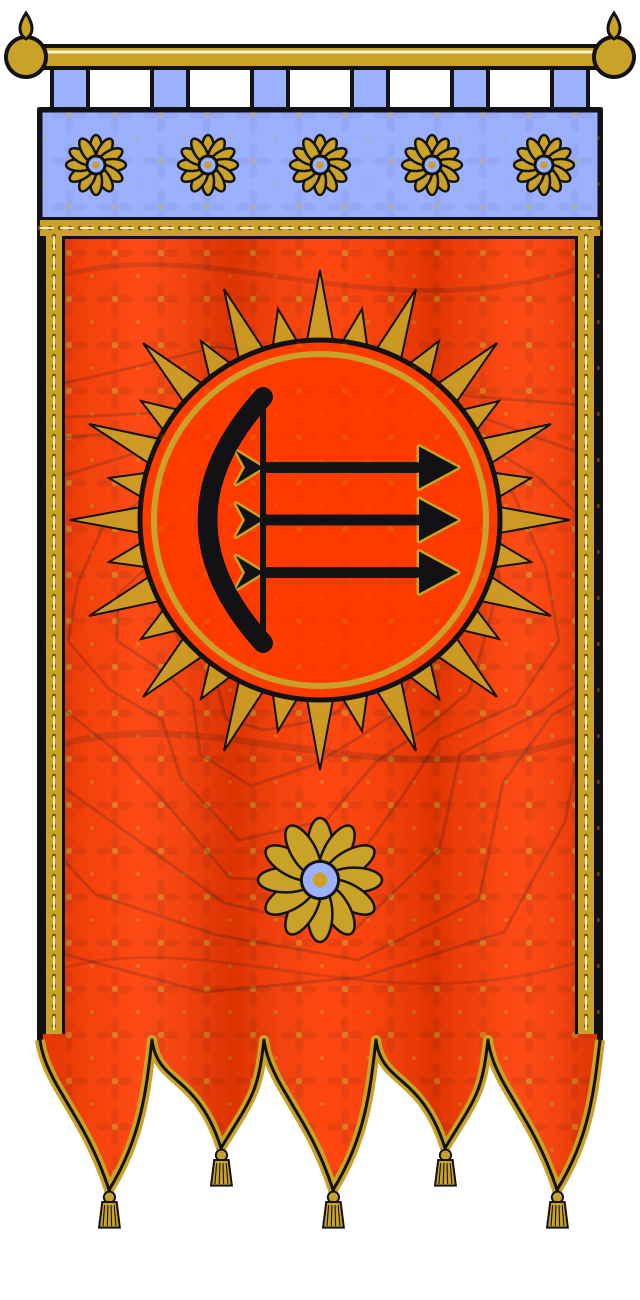
Historic banner
None known
New flag types
| Accessory | For this clan | Basis |
|---|---|---|
| A9 Pota-dhvaja · ship and trade flag For ships, caravans and markets | Not yet designed for this clan | Design |
| A10 Utsava-patāka · festival flag Light, bright flag for fairs and festivals | Not yet designed for this clan | Design |
| A11 Shoka-dhvaja · mourning flag White cloth with the emblem outline in the clan's metal | Not yet designed for this clan | Design |
7. Regalia
| Accessory | For this clan | Basis |
|---|---|---|
| E1 Chhatra · house parasol The ceremonial umbrella | Not yet designed for this clan | Design |
| E2 Chamara · fly-whisks The pair of whisks beside the head of the house | Not yet designed for this clan | Design |
| E3 Danda · staff of office Staff or scepter | Not yet designed for this clan | Design |
| E4 Simhasana · seat The seat of the house, covered in clan cloth | Not yet designed for this clan | Design |
| E5 Khetaka · shield A round shield; the Changi and Dhanush are its flag forms | Not yet designed for this clan | Regional tradition |
| E6 Kula-ayudha · clan weapon The weapon the clan honours | Not yet found for this clan | Under research |
8. Worn
| Accessory | For this clan | Basis |
|---|---|---|
| F1 Kula-vastra · clan cloth The clan's woven pattern in its kit colours | No woven clan pattern is recorded. The TRTI dress: men's dhoti or langoti, long head cloth, shirt, shoulder towel, some turbans; women's petticoat, blouse, backless kanchali and head cloth; silver ornaments leriya, vinton, hansadi, anklets and panhonchi. | Documented |
| F2 Kirti-vastra · honour cloth A cloth earned for a deed, not inherited | Not yet designed for this clan | Design |
| F3 Kula-mala · garland flower The flower or leaf the clan wears as a garland | Not yet found for this clan | Under research |
| F4 Chinha · house pin A metal badge with the pin emblem | Not yet designed for this clan | Design |
9. Records
| Accessory | For this clan | Basis |
|---|---|---|
| H1 Clan words A traditional line in the native script | · “Under research” No clan line is in the extracts. Leads: the TRTI Gujarat brief on the Tadvi, Valvi and Tetariya[1] | Documented |
| H2 Biruda · titles The house's title or titles | Not yet found for this clan | Under research |
| H3 Prashasti · praise genealogy The lineage as written at the head of a grant | Not yet found for this clan | Under research |
| H4 Vahi · clan register The book of the clan's births, marriages and deaths | Not yet found for this clan | Under research |
| H5 Rana-ghosha · war cry The clan's cry in battle or celebration | Not yet found for this clan | Under research |
10. VishwaVit · knower of the world
Game values are design choices for this project, not historical claims.
References
- "Tadvi, Valvi, Tetariya", Tribal Research and Training Institute, Gujarat (trti.gujarat.gov.in), read 28 October 2026.
- Tadvi Bhil, Wikipedia, read 2026-10-10
- Wikipedia, Dhanka, read 2026-11-10, https://en.wikipedia.org/wiki/Dhanka
- Joshua Project, Dhanka in India (people 16706; missions-data estimates, not census), read 2026-11-10, https://www.joshuaproject.net/index.php/people_groups/16706/IN
- Facts and Details, Tribes of Central India (citing Hockings, Encyclopedia of World Cultures: South Asia, 1992), read 2026-11-10, https://factsanddetails.com/india/Minorities_Castes_and_Regions_in_India/sub7_4h/entry-4219.html
- Dev Mogra, Wikipedia (read 2026-10-09), citing the Bombay Gazetteer vol. 6 (1880) and R. D. Tribhuwan, Fairs and Festivals of Indian Tribes (2003).