The Chero are a Scheduled Tribe in Jharkhand, Bihar and West Bengal, and in parts of Uttar Pradesh, recorded at 95,575 in Jharkhand in 2011[1][2]. A Chero principality is recorded in the Mughal Bihar Subah from 1572, with its base in Palamu, and Medini Rai, whose reign dates differ by source, enlarged the Old Fort and began the New Fort of Palamu[3][4][5]. The British ended the principality between 1813 and 1818, the dates differing by source[3][5]. Persian and Sanskrit inscriptions by Medini Rai's pandit Barnmali Mishra survive on the gate of the New Fort[4]. Alongside Hindu worship the Chero honour the tribal deities Sairi-ma, Ganwar Bhabhani and Dulha Deo; the project's KulDevi, is Chhinnamasta of Rajrappa.
01Faith and deities
No clan goddess is named in the sources. The KulDevi from the Atlas is Chhinnamasta of Rajrappa, Jharkhand (basis: homeland shrine). The Wikipedia Chero page names tribal deities but not as a clan goddess[1].
Chhinnamasta of Rajrappa, Jharkhand
The presiding goddess of the clan's homeland or capital: a link of place, not a recorded clan tie.
| Deity or tradition | Place in the clan's life | Evidence |
|---|---|---|
| Sairi-ma | Indigenous tribal deity honoured alongside Hindu worship | [1] |
| Ganwar Bhabhani | Indigenous tribal deity honoured alongside Hindu worship | [1] |
| Dulha Deo | Indigenous tribal deity honoured alongside Hindu worship | [1] |
| Chhinnamasta of Rajrappa | KulDevi, homeland shrine in Jharkhand | From the Atlas |
02Temples
No temple built by the Chero is sourced. The Palamu forts hold a ruined brick mosque with triple domes in the Old Fort, and the 1660 Mughal invasion destroyed temples with idols[5][4].
Built by the clan
Not recorded.
Given patronage or grants by the clan
Not recorded.
03Languages and scripts
| Language or script | Kind | Under the clan | Evidence |
|---|---|---|---|
| Theth Nagpuri research | Language listed in the infobox of the Wikipedia Chero page | Chero | [1] |
| Persian and Sanskrit inscriptions | Gate inscriptions on the New Fort by Barnmali Mishra | Medini Rai's court | [4] |
| Devanagari inscription | On the New Fort gate; bears the names of Chero kings | Chero rulers | [5] |
04Books and literature
No work by the Chero is sourced. The works below are about them.
Written during the clan's history
| Work | Author | Kind | When | Link to the clan |
|---|---|---|---|---|
| Pugmarks in Palamau | Lahiry | Book on Palamau | 2014 | [1] |
| The Nagbanshis and the Cheros | Virottam | Book | 1972 | [4] |
| Mughal Administration and the Zamindars of Bihar | Ansari | Book | 2019 | [4] |
| Jharkhand Samagra | Mishr | Book | 2020 | [4] |
| The Tribes and Castes of the Central Provinces of India | R. V. Russell and Hira Lal | Ethnography | 1916 | [6] |
| People of India (Uttar Pradesh vol. XLII pt 1; Bihar vol. XVI pt 1) | Author not named in the extract | Survey of peoples | Not dated in the extract | [1] |
Given patronage by the clan
Not recorded.
05Thinkers and scholars
| Name | Field | Era | Contribution |
|---|---|---|---|
| Barnmali Mishra | Court pandit | Medini Rai's reign | Persian and Sanskrit gate inscriptions[4] |
No Chero thinker or scholar is sourced beyond the court pandit.
06Art and architecture
The Palamu forts are the main art the sources describe. Medini Rai began the New Fort and enlarged the Old Fort. The sources date Daud Khan's mosque to 1660 or 1662 and describe a ruined brick mosque in the Old Fort, but do not say it is his.
Painting and wall art
Not recorded.
Sculpture and temple art
Not recorded.
Temple and building architecture
| Art form | What it is | Era | Evidence |
|---|---|---|---|
| New Fort gate, Palamu | Nagpuri-style gate, about 80 ft, with arabesque in Jahangiri style; Persian, Sanskrit and Devanagari inscriptions | Begun 1673 under Medini Rai | [4][5] |
| Old Fort gateway, Palamu | Gateway with Meenakari; its upper storey may have been the Naubat Khana | Enlarged by Medini Rai | [5] |
| Ruined brick mosque, Old Fort | Brick mosque with triple domes; not dated to a Chero builder | Daud Khan's mosque dated 1660 or 1662 (sources differ); not confirmed as this ruin | [5][4] |
Weaving and textiles
Not recorded.
Clothing and jewellery
Not recorded.
Coins, pottery and crafts
Not recorded.
07History
Origins and the Palamu line (before 1572)
The community claims to have originally been tribal people[1]. Dalton, as Russell reports him, says the Cheros were once dominant in Gorakhpur and Shahabad, were expelled by the Gorkhas and others, and came into Palamau[6].
After the fall of the Pala in the 12th century, Chero principalities held parts of western and southern Bihar. Conflict with the Ujjainiyas expelled them from several areas until they based themselves in Palamu[3].
The Latehar district history says the Cheros ruled Palamu for nearly 200 years, after the Rakshel Rajputs held it[7]. The same page says Kharwars, Oraons and Cheros were said to have ruled the tract, but credits no source for that[7].
1572 to 1607: Bhagwant Rai, Anant Rai and the Mughals
The Chero principality is recorded from 1572 in Mughal Bihar Subah and disestablished in 1813 (infobox)[3]. In 1572 Bhagwant Rai, who had served Man Singh of the Raksel dynasty, drove the Raksels into Surguja and killed Man Singh with Rajput allies[3].
Sher Shah Suri sent Khawas Khan against the Chero chief Maharata, who had a white elephant. Khawas Khan besieged him and took the elephant[3].
In 1590 Man Singh subdued Anant Chero, who had 54 elephants, and Palamu came under Mughal administration[3]. The Latehar district page instead dates the Mughal invasion of Palamu to 1574 and its expulsion to 1605[7].
After Akbar's death Anant declared independence. In 1607 Jahangir ordered an expedition, and the Cheros moved their capital into the jungle[3]. Live History India says Anant Rai drove out the Mughal troops, declared independence, and died in 1619[5].
In 1607 Kumkum Chand Jharap, of another Chero branch, tried to win back lands lost to the Ujjainiyas. The Ujjainiyas won in 1611[3]. The Archaeological Survey of India, as cited by Live History India, dates Chero rule in Palamu from about 1613[5].
Medini Rai and the forts (1620s to 1670s)
Medini Rai's dates differ by source. Wikipedia's Medini Ray page gives his reign as 1658 to 1674[4]. The Chero chieftaincy page, citing Ansari (2019), says he came to power in 1620, defeated Durjan Shah of Khokhra, sacked Navratangarh, died in 1634 and was succeeded by his son Pratap Rai[3]. Live History India says Anant Rai died in 1619 and was succeeded by Medini Rai[5].
Live History India says the Old Fort was said to be built by Anant Rai and enlarged by Medini Rai with spoils from Navratangarh at Doisa, and calls him the most powerful king to rule Jharkhand[5]. Local folklore calls him a benevolent ruler who gave land to the poor[3].
Medini Rai set up posts at Kothi and Kunda (Chatra) and at Deogaon (Palamu). He invaded Navratangarh and took Belunja Siris, Jupla, Kutumba and Sherghati in Gaya, and Kunda Karnapura and Ramgarh in Hazaribagh[4].
In 1660 Daud Khan led a Mughal expedition and occupied both forts. Wikipedia, citing Mishr (2020), says temples with idols were destroyed in the invasion, and that Aurangzeb ordered the Chero ruler to embrace Islam[4]. Daud Khan's mosque is dated 1660 by Live History India, citing the Tarikh-i-Dandia, and 1662 by Wikipedia[5][4]. The Latehar page gives the 1660 capture after a three-day engagement[7].
After the 1660 defeat Medini Rai escaped to the forest and later fled to Surguja. He then defeated Daud Khan and recovered his kingdom, according to Wikipedia, which cites a British Library print of December 1813[4].
Medini Rai rebuilt the old fort with turrets. From 1673 he began a new fort on a hillock to the west, with a Nagpuri-style gate. Persian and Sanskrit inscriptions by Barnmali Mishra, his pandit, are on both outer sides of the gate, and construction began in Magh Samvat 1680[4]. Some historians credit Pratap Rai with the New Fort[5]. Wikipedia says Medini Rai promoted agriculture, restored Palamu and died in 1674[4].
Pratap Rai, the Jai Kishan line and the British (1640s to 1810s)
Pratap Rai raided cattle from Mughal districts. Shah Jahan sent Shaista Khan, who surrounded the Palamu forts for six months until Pratap Rai surrendered (Richards 1995, p. 169, as cited by Wikipedia)[3].
Live History India says the 1722 rebellion murdered Ranjit Rai, and his successor Jai Kishan Rai was also murdered[5]. The chieftaincy page's list of rulers dates Jai Kishan Rai 1722 to 1770[3].
In February 1771 the British occupied the Palamu fort and installed Gopal Rai, with tribute of Rs 12,000. They removed him in 1776[7]. Live History India says the East India Company invaded after Plassey (1757)[5].
Under Churaman Rai, heavy British revenue demands left the Palamu line bankrupt by 1814, and its zamindari was confiscated (Ansari 2019, as cited by Wikipedia)[3]. Live History India says the kingdom ruled until 1818 and the British abolished it in 1817 to 1818[5].
Rebellions of the 19th century
In 1800 a Chero insurrection was led by Bhukhan Singh[7].
In the 1832 Kol rebellion, Cheros and Kharwars rose against the administration and were defeated near Latehar[7]. Wikipedia lists the Chero among the groups that took part in or were affected by the Kol uprising[8].
In 1857 Palamu was the district most severely affected on the Chotanagpur plateau, and many Chero jagirdars joined the movement of Nilambar and Pitambar[7]. Live History India says the rebels made the twin forts their headquarters, the British retook them in January 1858, and buildings were pulled down on the orders of the Commissioner of Patna[5].
08Journey and migrations
The moves below are the ones the sources date or describe. The earliest is undated and comes from Dalton, as Russell reports him.
| When | From | To | Why | Evidence |
|---|---|---|---|---|
| Undated (Dalton) | Gorakhpur and Shahabad | Palamu | Expelled by the Gorkhas and others | [6] |
| After the fall of the Pala (12th century) | Western and southern Bihar | Palamu | Conflict with the Ujjainiyas | [3] |
| 1607 | Palamu forts | The jungle (the capital moved) | Jahangir's expedition | [3] |
| 1660 | Palamu forts | The forest, then Surguja | Defeat by Daud Khan's Mughal forces | [4] |
| From 1673 | Old Fort, Palamu | New Fort on the hillock to the west | Construction of the New Fort begun | [4] |
| Undated | Rohtasgarh (earlier base) | Settled across Shahabad, Saran, Champaran, Muzaffarpur and Palamu | Later wider settlement | [5] |
09Seats and lands
| Place | Role | Where today |
|---|---|---|
| Palamu forts | Old and New forts, seat of the kingdom | Palamu tiger reserve, about 20 miles SE of Daltonganj (Medininagar), Jharkhand[5] |
| Rohtasgarh | Earlier base | Rohtasgarh[5] |
| Chainpur, Kaimur | Claimed origin of the Palamu line (Raja Salabahim) | Kaimur, Bihar[3] |
| Navratangarh (at Doisa) | Taken by Medini Rai | Doisa[5] |
| Kothi and Kunda | Posts of Medini Rai | Chatra, Jharkhand[4] |
| Deogaon | Post of Medini Rai | Palamu[4] |
| Sherghati | Taken by Medini Rai | Gaya, Bihar[4] |
| Kunda Karnapura and Ramgarh | Taken by Medini Rai | Hazaribagh, Jharkhand[4] |
| Bhojpur, Saran, Champaran, Muzaffarpur | Earlier Chero holdings | Bihar[3] |
| Surguja | Part paid tribute to Medini Rai; where he fled after 1660 | Surguja[4] |
| Ranchi, Gumla, Simdega, Khunti, West Singhbhum | Main Jharkhand Chero population today | Jharkhand[1] |
| Sonbhadra and Varanasi | Scheduled Tribe districts in Uttar Pradesh | Uttar Pradesh[9] |
10Notable figures
| Name | Role | Era | Known from |
|---|---|---|---|
| Bhagwant Rai | Served Man Singh of the Raksels; drove them into Surguja | 1572 | [3] |
| Maharata | Chero chief who had a white elephant, taken by Khawas Khan | Sher Shah Suri's time | [3] |
| Anant Rai (Anant Chero) | Chief with 54 elephants; declared independence after Akbar | 1590 to 1619 (sources differ) | [3][5] |
| Kumkum Chand Jharap | Led another Chero branch that tried to reclaim lost lands | 1607 to 1611 | [3] |
| Medini Rai | Called the most powerful king to rule Jharkhand (Live History India); enlarged the Old Fort and began the New Fort | 1620 to 1634 or 1658 to 1674 (sources differ) | [4][3][5] |
| Barnmali Mishra | Pandit of Medini Rai; named in the gate inscriptions | Medini Rai's reign | [4] |
| Pratap Rai | Son of Medini Rai; surrendered to Shaista Khan; some credit him with the New Fort | After Medini Rai | [3][5] |
| Ranjit Rai | Murdered in the 1722 rebellion | 1722 | [5] |
| Jai Kishan Rai | Ruler murdered after the 1722 rebellion | 1722 to 1770 (ruler list) | [3][5] |
| Gopal Rai | Installed by the British at Palamu | 1771 to 1776 | [7] |
| Churaman Rai | Last ruler on the list; zamindari confiscated | 1783 to 1813 (ruler list) | [3] |
| Bhukhan Singh | Led the 1800 Chero insurrection | 1800 | [7] |
| Raja Salabahim legend | Claimed ancestor of the Palamu Cheros, of Chainpur, Kaimur (a claim) | Undated | [3] |
11Allies, rivals and marriages
| People | Relationship | When |
|---|---|---|
| Rakshel (Raksel) Rajputs | Held Palamu before the Cheros; Bhagwant Rai drove the Raksels into Surguja | Before 1572 |
| Ujjainiyas | Rivals who expelled the Cheros from several areas; won the 1611 dispute | Before 1611 |
| Mughals | Opponents: Man Singh (1590), Daud Khan (1660), Shaista Khan under Shah Jahan | 1590 to 1660s |
| Rajput chiefs | Allies, including the Thakurais of Ranka | 1572 |
| Nagvanshi kings of Chota Nagpur | Fought at Navratangarh and Doisa | Undated |
| Kharwars | Intermarried in Palamu; rose together in 1832 | 1832 |
| British East India Company | Invaded Palamu after Plassey (1757); ended the principality in 1817 to 1818 | 1771 to 1818 |
12Society and livelihood
The Chero keep a traditional caste council with strong social control. Their clans have unequal status, and marriage rules set exogamy and hypergamy[1][10].
Government and social order
| Institution or group | What it was | Evidence |
|---|---|---|
| Caste council | A traditional council with strong social control | [1] |
| Barahazari and Terahazari | Two endogamous sub-divisions that do not intermarry | [1] |
| Palamu zamindari | Held by the Palamu line; confiscated after British revenue demands, by 1814 | [3] |
Livelihood over time
| Era | Livelihood | Evidence |
|---|---|---|
| Palamu, Mughal period | Chero of note received military service land grants (Dalton, as Russell reports) | [6] |
| Today, Jharkhand | Mainly farmers, many of them substantial landowners | [1][10] |
13Sub-clans and related clans
Every sub-clan, branch and related people the sources name. Mahto and Chaudhary are the two sub-divisions (People of India, Uttar Pradesh, as cited by Wikipedia). Pachchasi is a Palamu name for the Chero. Chaudhary is not linked to the Atlas entry ST-360, which may be a different people.
| Clan | Relation | Where | Size | In the Atlas | Evidence |
|---|---|---|---|---|---|
| Mahto | Sub-clan | Uttar Pradesh (People of India) | same name as SUB-121: check | [1] | |
| Chaudhary | Sub-clan | Uttar Pradesh (People of India) | same name as ST-360: check | [1] | |
| Barahazari | Sub-clan | Palamu, Jharkhand; endogamous, does not intermarry with Terahazari | new clan candidate | [1] | |
| Terahazari | Sub-clan | Palamu, Jharkhand; endogamous, does not intermarry with Barahazari | new clan candidate | [1] | |
| Mawar | Sub-clan | Jharkhand; unequal status, exogamy and hypergamy | new clan candidate | [1][10] | |
| Kuanr | Sub-clan | Jharkhand | new clan candidate | [1][10] | |
| Mahato | Sub-clan | Jharkhand; may or may not be the same as Mahto | new clan candidate | [1][10] | |
| Rajkumar | Sub-clan | Jharkhand | new clan candidate | [1][10] | |
| Manjhia | Sub-clan | Jharkhand | new clan candidate | [1][10] | |
| Wamwat | Sub-clan | Jharkhand | new clan candidate | [1][10] | |
| Hantiyas | Sub-clan | Jharkhand | new clan candidate | [1][10] | |
| Bhar | Related people | South-east Uttar Pradesh | new clan candidate | [1] | |
| Pasi | Related people | South-east Uttar Pradesh | SUB-183 | [1] | |
| Kol | Related people | Chota Nagpur; Kol exogamous clans include Chero | ST-141 | [11][8] | |
| Kharwar | Related people | Palamu and Chota Nagpur | ST-131 | [7][6] | |
| Khairwar | Related people | Chota Nagpur; an occupational offshoot of Cheros and Santals (Russell) | ST-127 | [6] | |
| Kawar | Related people | ST-126 | [6] | ||
| Cherwa (Kawar division) | Related people | Chota Nagpur; probably a Kawar and Chero cross (Russell) | ST-461 | [6] | |
| Raksel Rajputs | Dynasty from this clan | Palamu, before the Cheros | new clan candidate | [7][3] |
Clans marked "new clan candidate" are not in the Atlas yet.
14Surnames
The extracts give clan names but do not say that any of them is used as a surname, so no surname is listed.
Not recorded.
15Songs and music
No Chero song is sourced yet. The extracts give no lyrics, so none is quoted.
None recorded yet.
Instruments and styles
| Instrument or style | What it is | Evidence |
|---|---|---|
| Naubat drums | Drums sounded when Chero rulers passed (Live History India) | [5] |
16Poems, lullabies and children's rhymes
None recorded yet.
17Stories, legends and proverbs
Stories and legends
| Story | What happens | Told by | Evidence |
|---|---|---|---|
| Medini Rai the benevolent | A benevolent ruler who gave land to the poor (local folklore) | Local folklore, as Wikipedia reports it | [3] |
| The secret tunnel | A tunnel by the Old Fort wall, possibly an emergency escape | Not named in the source | [5] |
Proverbs and sayings
Not recorded.
18Festivals and fairs
Not recorded.
19Food, dress and games
Food
Not recorded.
Dress
Not recorded.
Games and martial arts
Not recorded.
Tags: living still practised · revived brought back after a break · lost known only from records · research reported but not yet confirmed from a source. Songs and poems under copyright are listed by title only; restricted or sacred material is noted without its content.
20Status today
The Chero are a living community. The Palamu kingdom ended under the British in the 1810s, and the name survives in Scheduled Tribe lists in Jharkhand, Bihar, West Bengal and parts of Uttar Pradesh[1][5].
Recognised heritage
| What | Recognition | Evidence |
|---|---|---|
| Palamu forts | Rs 56 lakh restoration plan reported by Telegraph India (as cited on Wikipedia) | [3] |
Not yet reviewed by the community.
21For children
The Forts of Palamu
Long ago, the Chero were a people of Palamu, in what is now Jharkhand. Their kings built strong forts there, and one gate of the New Fort is tall, about 80 feet. The most famous king, Medini Rai, made the old fort bigger and began the new one on a hill. Folk memory says he shared his land with poor people. Today the Chero are a Scheduled Tribe, and their forts still stand in a tiger reserve.
22Across the project
| Project | What carries this clan | Status |
|---|---|---|
| Atlas of the Janas | Pin at the Palamu forts, about 20 miles SE of Daltonganj (Live History India) | To check |
| KulDevi and GrahDevi | KulDevi Chhinnamasta of Rajrappa; GrahDevi forms: Kali, Tara, Shodashi, Bhuvaneshvari, Bhairavi, Chhinnamasta, Dhumavati, Bagalamukhi, Matangi, Kamala | From the Atlas |
| Planet naming | Not yet checked | To check |
| Renaming and waters | No place or water name from the Chero sourced yet | — |
23Open questions
- Medini Rai's reign: 1658 to 1674 (Wikipedia, Medini Ray page) against 1620 to 1634 (Wikipedia, Chero chieftaincy page, citing Ansari 2019). Which is right is not settled.
- Anant Rai's reign: 1605 to 1612 (chieftaincy ruler list) against death in 1619 (Live History India).
- The Mughal invasion of Palamu: 1590 under Man Singh (chieftaincy page) against 1574 (Latehar district page). Expulsion in 1605 (Latehar) against 1607 (chieftaincy).
- Daud Khan's mosque: 1660 (Live History India, citing Tarikh-i-Dandia) against 1662 (Wikipedia, citing Mishr 2020).
- Whether Medini Rai or Pratap Rai built the New Fort (Wikipedia credits Medini Rai, and Pratap Rai completed it; Live History India says some historians credit Pratap Rai).
- End of the principality: 1813 (infobox), 1814 (bankruptcy under Churaman Rai), 1817 to 1818 (British abolition, Live History India), 1818 (the kingdom ruled until then, Live History India).
- Jai Kishan Rai: 1722 to 1770 on the ruler list, against murder after the 1722 rebellion (Live History India).
- Descent: the community's claim to tribal origin (Wikipedia) and the Palamu line's claim to descent from Raja Salabahim of Chainpur (Ansari 2019, as cited by Wikipedia) are both claims. A low-reliability blog's Chandravanshi and Rajput claim and its name etymology are unverified.
- Mahto (Chero sub-division) and Mahato (Jharkhand clan): the same or different people? The sheet has a Mahto entry (SUB-121) that may not be this one. Chaudhary is not linked to ST-360.
- Native script: the clan's name in its own script is not in any extract, so none is printed. A source with the Devanagari or Nagpuri name is needed.
- Clan words: no line in the clan's own words or native script is sourced. The line shown is Wikipedia's English summary of the community's claim, labelled as illustrative.
- Songs, lullabies, rhymes, proverbs, festivals and food: nothing sourced. Leads are in the research notes.
- Accessories: no coin, seal, totem, guardian tree, war cry or clan weapon is sourced. A white elephant of the chief Maharata is recorded (Sher Shah's time), with no catalogue entry that fits.
- Dalton's Descriptive Ethnology of Bengal, p. 341 (Wikisource mirror), and the Ansari chapter 'Cheros of Palamau' are unfetched leads.
- The Bihar population figure and the People of India clan list are not found.
- The 1800 insurrection (Bhukhan Singh) and the 1832 Kol-rebellion entry rest on the Latehar district page alone. That page credits no source for its opening claim that Kharwars, Oraons and Cheros ruled the tract.
- Length of Chero rule in Palamu: nearly 200 years, after the Rakshel Rajputs (Latehar district history, in the history section) against 1572 to 1813, about 240 years (Wikipedia, Chero chieftaincy infobox, in the lead and the era row).
24Astitva
अस्तित्व · being, existence: everything by which the clan is known
The documented accessories are the inscriptions and gate of the Palamu New Fort, and the drums sounded for the rulers[4][5]. No coin, seal, totem or war cry is sourced.
Every clan has every accessory, royal objects included. Each one says how it is known: Documented This clan's own object is recorded. · Regional tradition Recorded for the region or for peoples like this one, not for this clan. · Design Made for this project, with no historical claim. · Under research To be found for this clan from sources. Legends and titles are written in the clan's own script.
1. Seals and coins
| Accessory | For this clan | Basis |
|---|---|---|
| B1 Rajamudra · house seal Round seal with the clan emblem and a short legend in the clan's script | Not yet designed for this clan | Design |
| B2 Anguliya-mudra · signet ring Personal seal ring of the head of the house | Not yet designed for this clan | Design |
| B3 Chhapa · house stamp Ink or block stamp for letters, goods and cloth | Not yet designed for this clan | Design |
| B4 Tamrapatra · charter plate Copper-plate grant on a ring, closed with the house seal | Not yet designed for this clan | Design |
| B5 Shreni-mudra · guild or trade seal Seal for the clan's trade, craft or caravan | Not yet designed for this clan | Design |
| C1 Clan coin Emblem or deity on one side, a legend in the clan's script | Not yet designed for this clan | Design |
| C2 Coin die The die that strikes the coin | Not yet designed for this clan | Design |
2. Living symbols
| Accessory | For this clan | Basis |
|---|---|---|
| I1 Totem trio The tree, bird and animal the clan protects | Not yet found for this clan | Under research |
| I2 Kaval-maram · guardian tree The tree that stands at the clan's seat | Not yet found for this clan | Under research |
3. Stone and gate
| Accessory | For this clan | Basis |
|---|---|---|
| G1 Torana · gateway The built gate of the seat; the cloth Toran hangs in it | New Fort gate of Palamu: a Nagpuri-style gate with Persian and Sanskrit inscriptions by Barnmali Mishra, and a Devanagari inscription that bears names of Chero kings | Documented |
| G2 Viragallu · hero stone Carved panel stone for a member who died defending the clan | Not yet designed for this clan | Regional tradition |
| G3 Kula-shila · clan stones Standing and table stones that remember the ancestors | Not yet designed for this clan | Design |
| G4 Jayastambha · victory pillar A pillar raised for a victory | Not yet designed for this clan | Design |
| G5 Sima-shila · boundary stone Marks the clan's land, with a line in the native script | Not yet designed for this clan | Design |
4. Sounds
| Accessory | For this clan | Basis |
|---|---|---|
| D1 Pancha-mahashabda · five great sounds The right to five instruments | Naubat drums sounded when Chero rulers passed; the upper storey of the Old Fort gate may have been the Naubat Khana | Documented |
| D2 Shankha · clan conch The clan's own named war conch | Not yet designed for this clan | Design |
| D3 Murasu · house drums Three drums: war, charity and justice | Not yet designed for this clan | Design |
5. Kit: colours, metals and emblems
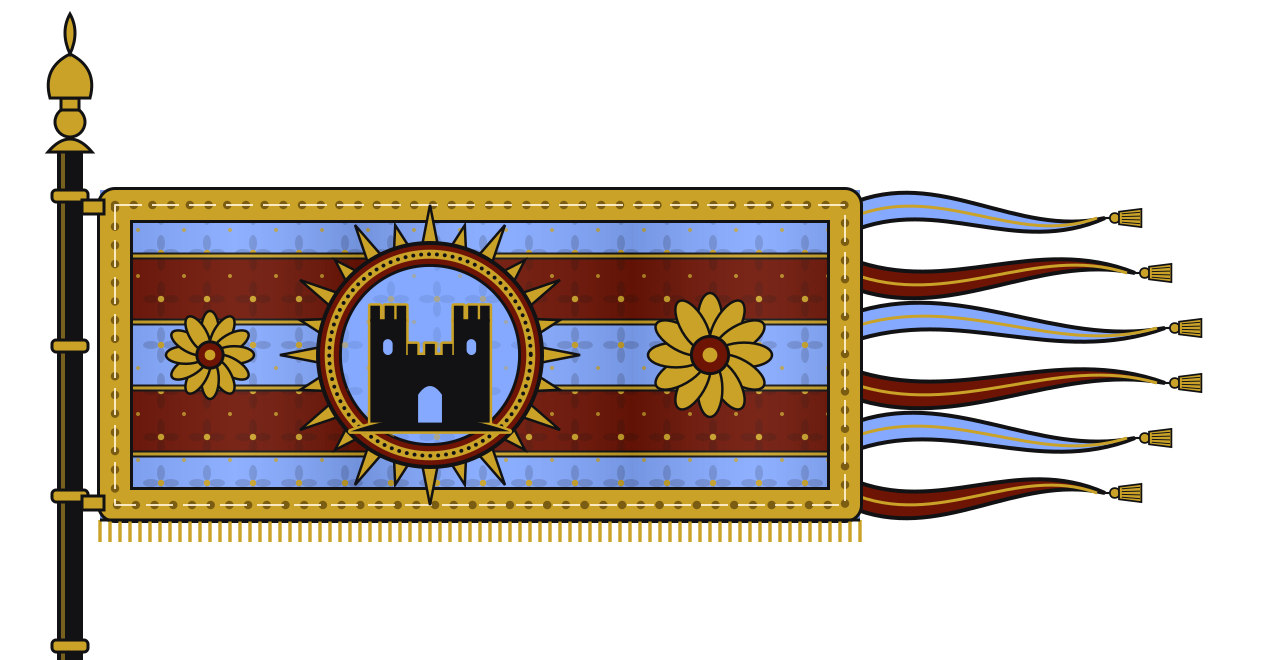
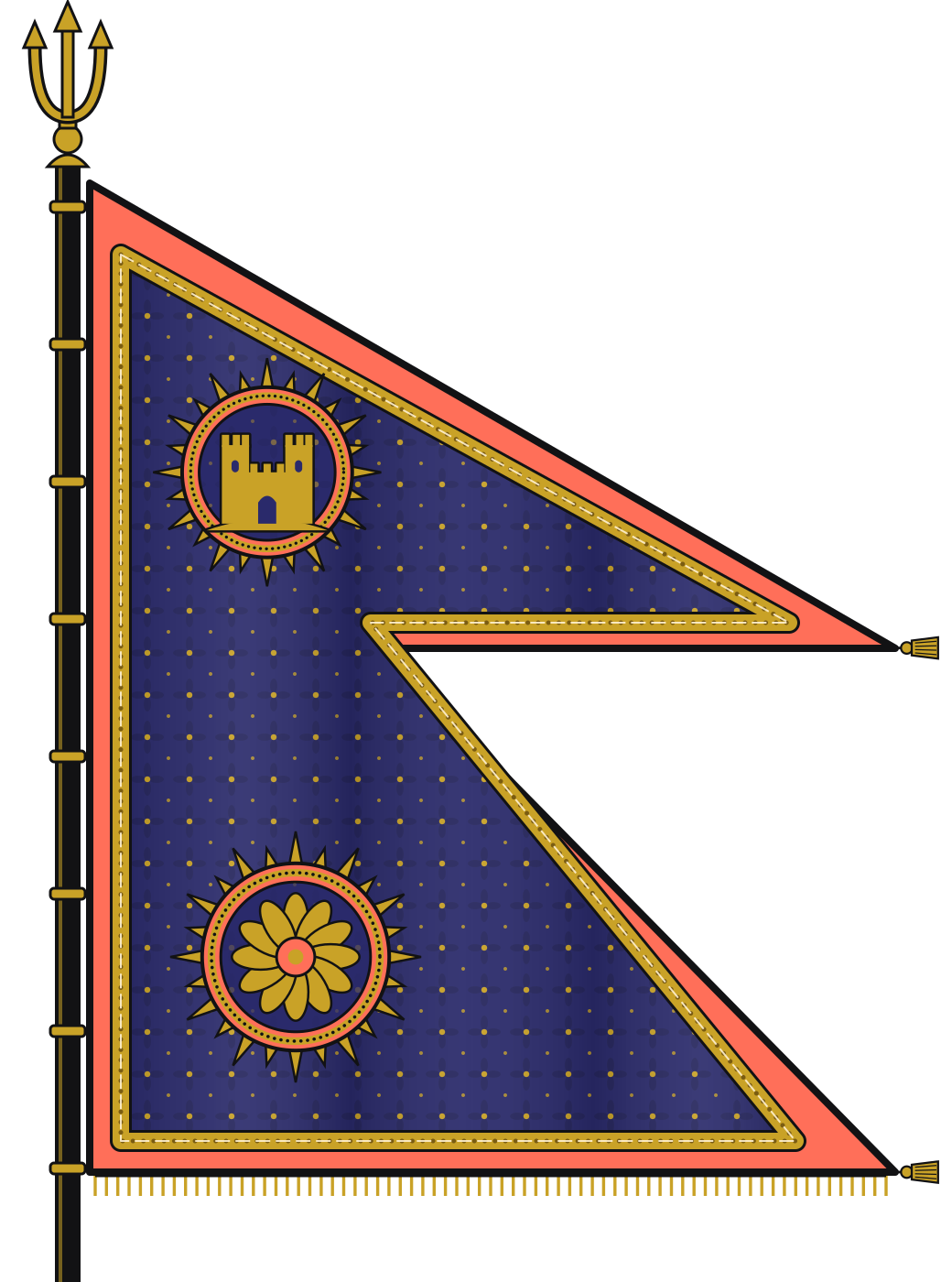
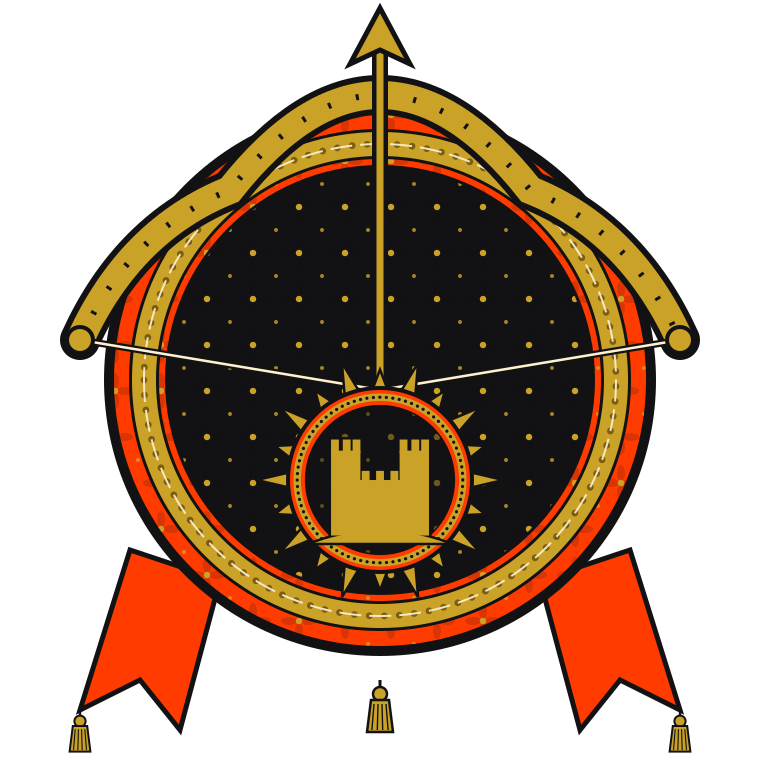
The project's emblem for the Chero is a hill fort with two towers, standing for the Palamu forts, as the Atlas sets it.
| Part of the kit | This clan |
|---|---|
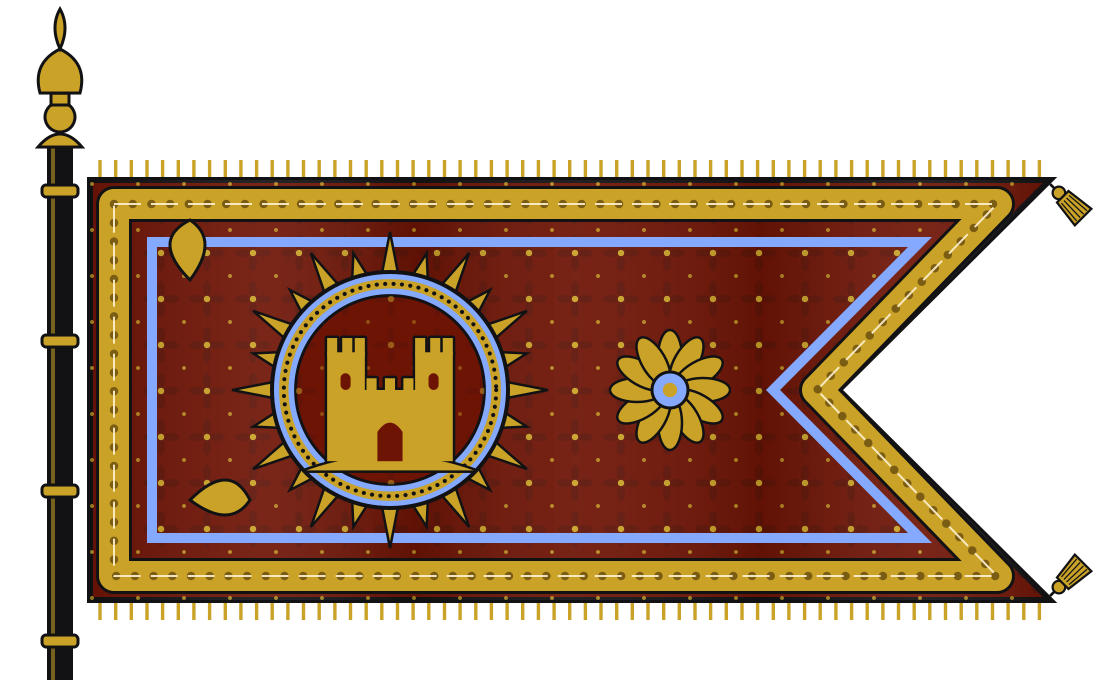
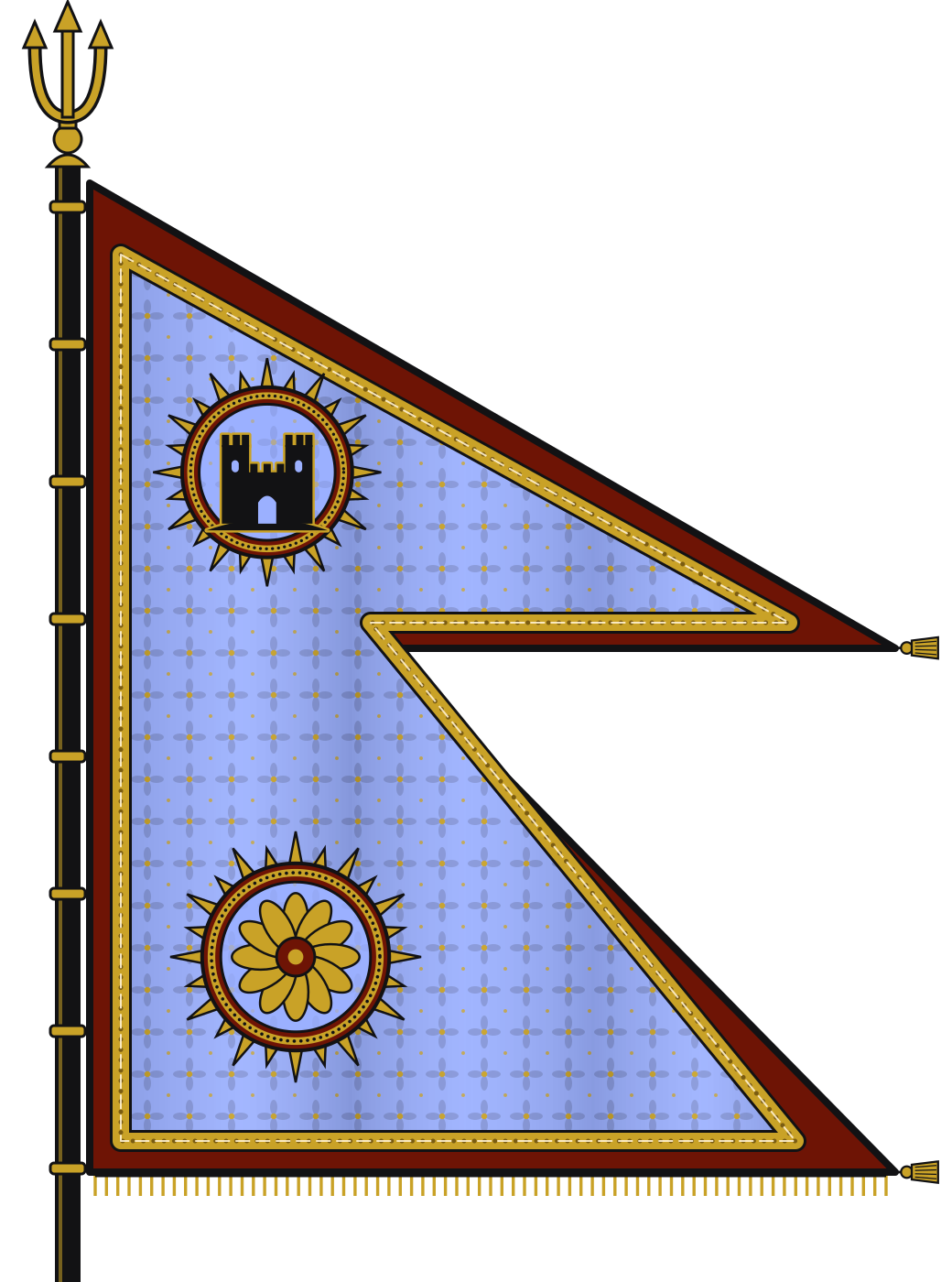
| Field | Maroon #6E1405 |
| Accent | Intense Electric Blue #84A9FF |
| Emblem colour | Metallic Gold #C9A227 |
| Zari metal | Gold |
| Main emblem | A hill fort with two towers |
| Second image | — |
| Night and day | Every visual accessory has two versions: by night the emblem on the dark field, by day the clan's field colour on cloth woven from its metal. |
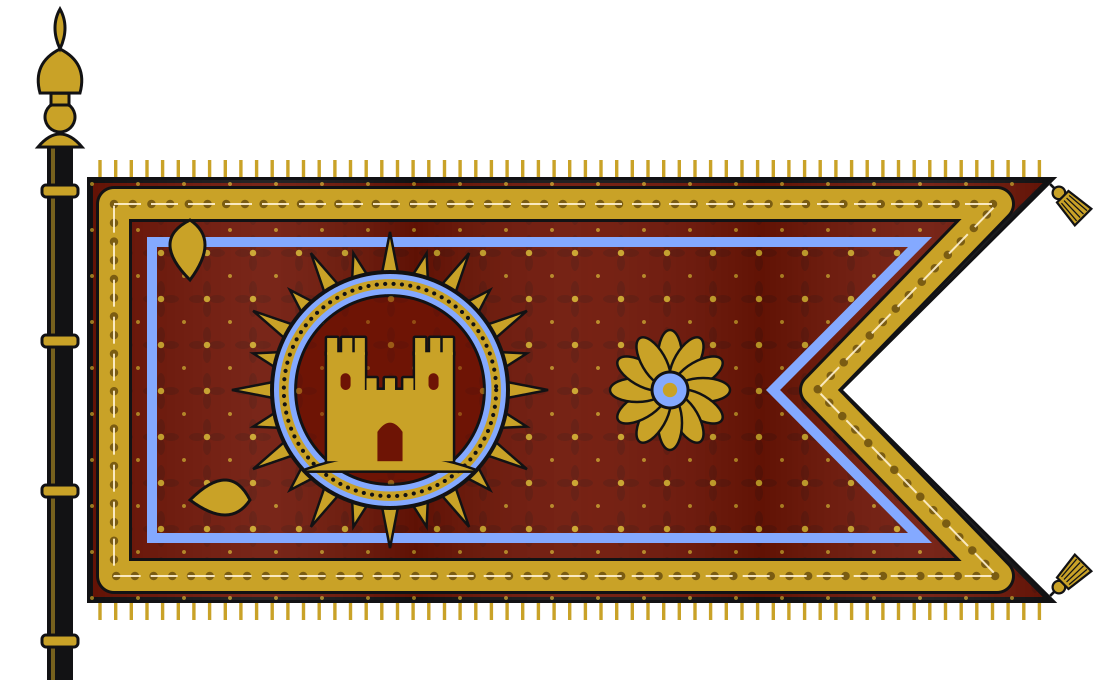
6. Flags
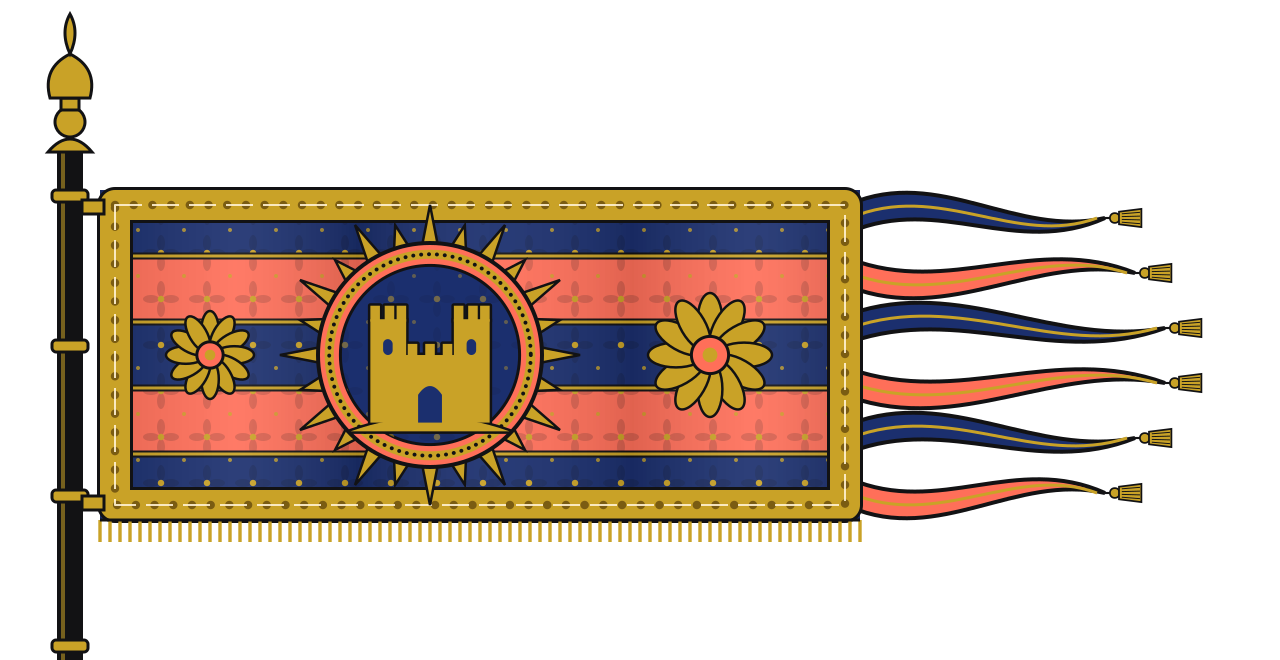
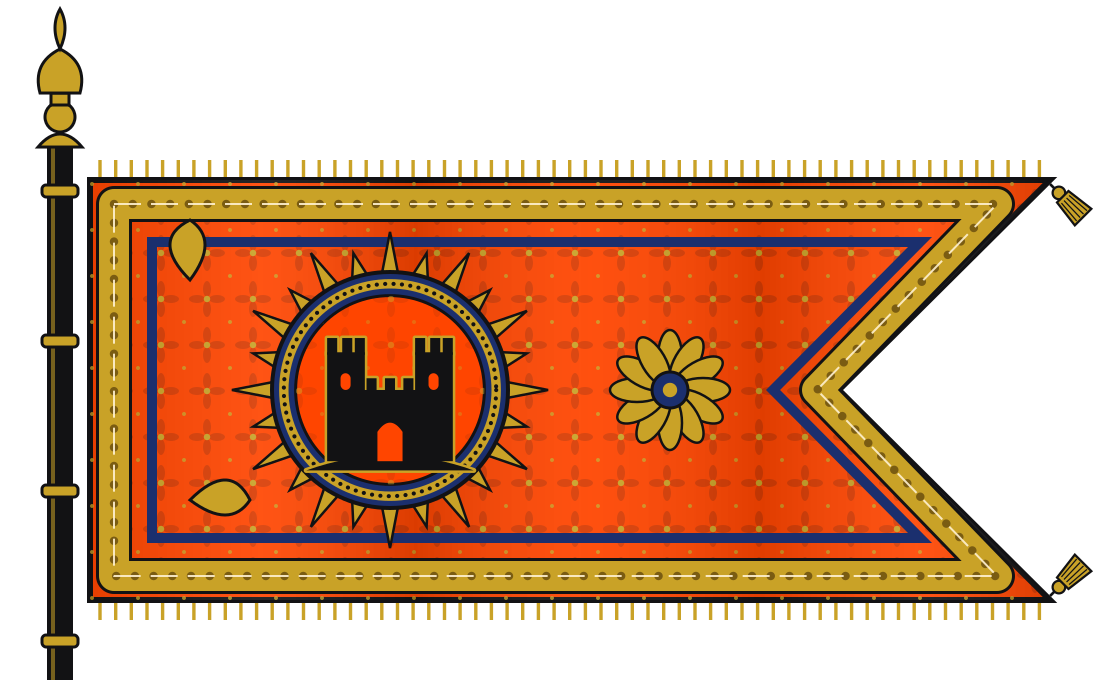
Every clan has every flag type; the type says the occasion and the colours say the clan. The outlined card is the flag the Atlas assigns.



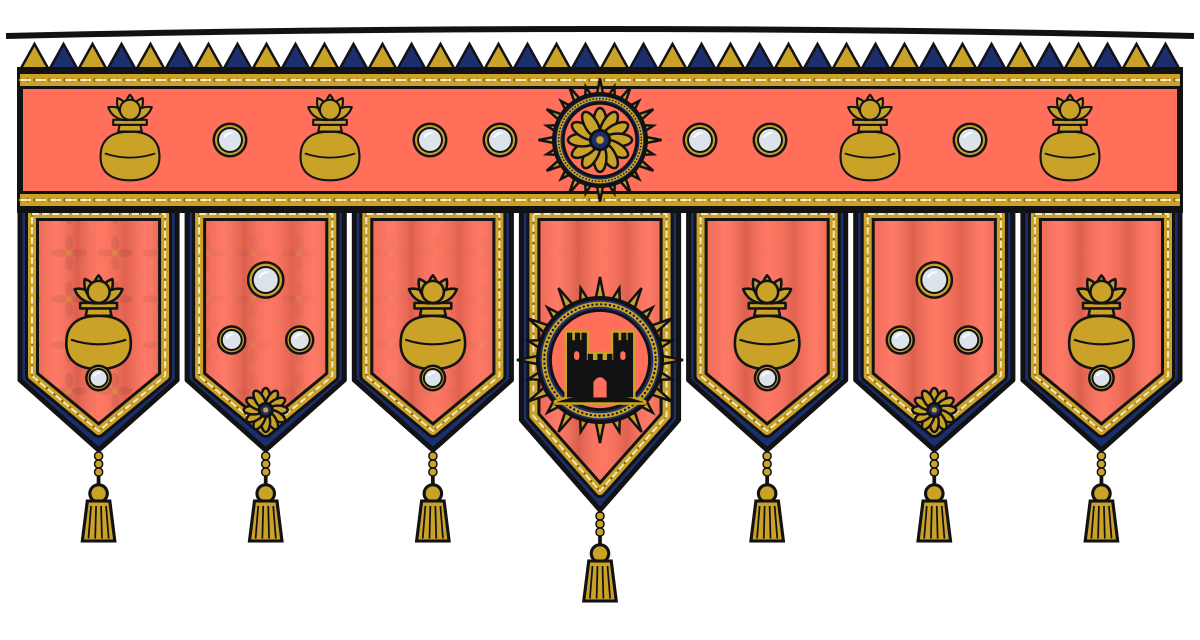
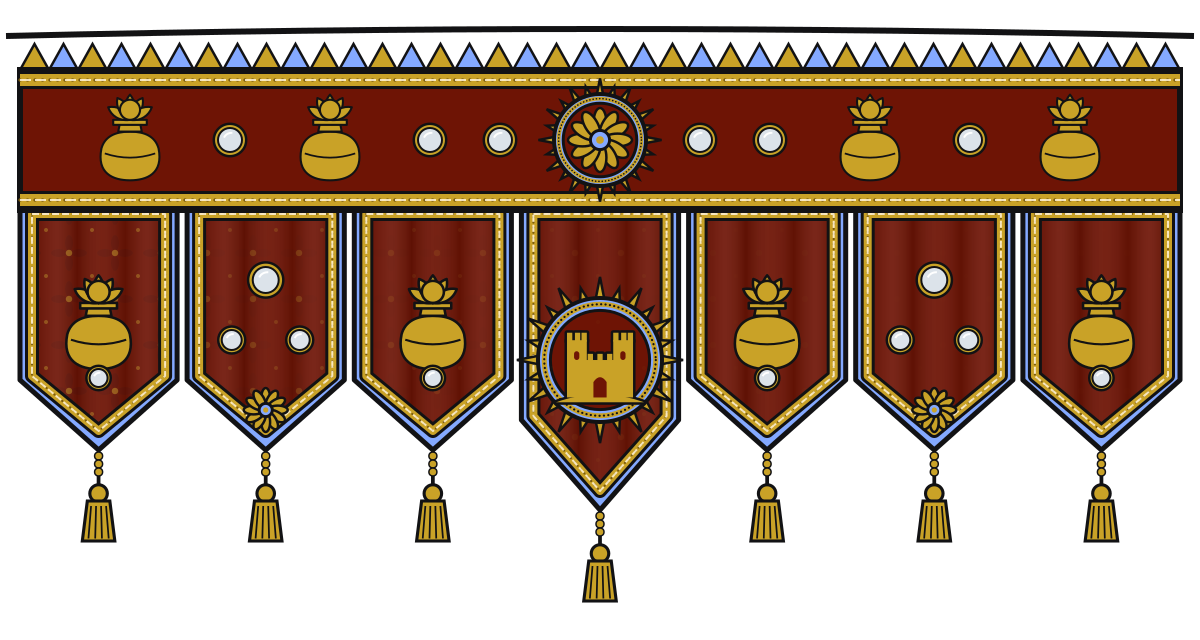
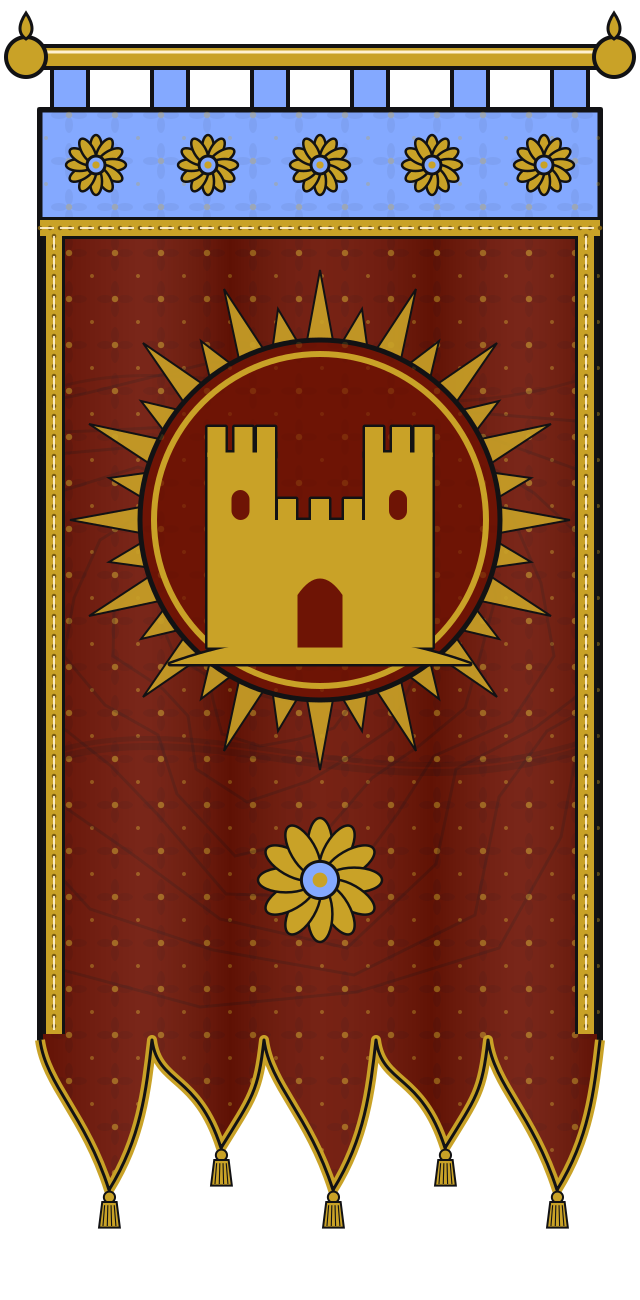
Historic banner
None known
New flag types
| Accessory | For this clan | Basis |
|---|---|---|
| A9 Pota-dhvaja · ship and trade flag For ships, caravans and markets | Not yet designed for this clan | Design |
| A10 Utsava-patāka · festival flag Light, bright flag for fairs and festivals | Not yet designed for this clan | Design |
| A11 Shoka-dhvaja · mourning flag White cloth with the emblem outline in the clan's metal | Not yet designed for this clan | Design |
7. Regalia
| Accessory | For this clan | Basis |
|---|---|---|
| E1 Chhatra · house parasol The ceremonial umbrella | Not yet designed for this clan | Design |
| E2 Chamara · fly-whisks The pair of whisks beside the head of the house | Not yet designed for this clan | Design |
| E3 Danda · staff of office Staff or scepter | Not yet designed for this clan | Design |
| E4 Simhasana · seat The seat of the house, covered in clan cloth | Not yet designed for this clan | Design |
| E5 Khetaka · shield A round shield; the Changi and Dhanush are its flag forms | Not yet designed for this clan | Regional tradition |
| E6 Kula-ayudha · clan weapon The weapon the clan honours | Not yet found for this clan | Under research |
8. Worn
| Accessory | For this clan | Basis |
|---|---|---|
| F1 Kula-vastra · clan cloth The clan's woven pattern in its kit colours | Not yet designed for this clan | Design |
| F2 Kirti-vastra · honour cloth A cloth earned for a deed, not inherited | Not yet designed for this clan | Design |
| F3 Kula-mala · garland flower The flower or leaf the clan wears as a garland | Not yet found for this clan | Under research |
| F4 Chinha · house pin A metal badge with the pin emblem | Not yet designed for this clan | Design |
9. Records
| Accessory | For this clan | Basis |
|---|---|---|
| H1 Clan words A traditional line in the native script | The community claims to have originally been tribal people. · “Wikipedia's summary of the community's own claim, in English. No line in the clan's own words or native script is sourced yet.” Wikipedia, Chero, as cited[1] | Design |
| H2 Biruda · titles The house's title or titles | Not yet found for this clan | Under research |
| H3 Prashasti · praise genealogy The lineage as written at the head of a grant | Not yet found for this clan | Under research |
| H4 Vahi · clan register The book of the clan's births, marriages and deaths | Not yet found for this clan | Under research |
| H5 Rana-ghosha · war cry The clan's cry in battle or celebration | Not yet found for this clan | Under research |
10. VishwaVit · knower of the world
Game values are design choices for this project, not historical claims.
References
- Wikipedia, Chero, read 2026-10-22, https://en.wikipedia.org/wiki/Chero
- Wikipedia, Tribes of Jharkhand, read 2026-10-20, https://en.wikipedia.org/wiki/Tribes_of_Jharkhand
- Wikipedia, Chero chieftaincy, read 2026-11-04, https://en.wikipedia.org/wiki/Chero_chieftaincy
- Wikipedia, Medini Ray, read 2026-11-04, https://en.wikipedia.org/wiki/Medini_Ray
- Amitabha Gupta, The Twin Forts of Palamu, Live History India, 30 June 2018, read 2026-11-04, https://livehistoryindia.com/story/monuments/the-twin-forts-of-palamau
- R. V. Russell, The Tribes and Castes of the Central Provinces of India, vol. 3 (1916), Project Gutenberg #41424, read 2026-10-10, https://gutenberg.org/cache/epub/41424/pg41424-images.html
- Latehar district administration, History, read 2026-10-24, https://latehar.nic.in/history/
- Wikipedia, Kol uprising, read 2026-10-22, https://en.wikipedia.org/wiki/Kol_uprising
- Wikipedia, List of Scheduled Tribes in Uttar Pradesh, read 2026-10-22, https://en.wikipedia.org/wiki/List_of_Scheduled_Tribes_in_Uttar_Pradesh
- Dr. Ramdayal Munda Tribal Welfare Research Institute, Jharkhand, Chero, read 2026-11-04, https://trijharkhand.in/en/chero
- Wikipedia, Kol people, read 2026-10-22, https://en.wikipedia.org/wiki/Kol_people
- Ministry of Tribal Affairs, State/UT-wise list of Scheduled Tribes (Constitution (ST) Order 1950 as amended; list dated 9 July 2024), as recorded on the project Atlas, ST-160
- Wikipedia, List of Scheduled Tribes in West Bengal, read 2026-10-21, https://en.wikipedia.org/wiki/List_of_Scheduled_Tribes_in_West_Bengal