The Birjia are a small people of Jharkhand, Bihar and West Bengal, whose language is commonly assumed to be Munda[1]. The Tribal Research Institute of Jharkhand counts them as one of three sub-tribal divisions of the Asur, with the Bir (Kol) Asur and the Agaria Asur[2]. Their language is endangered: SPPEL gives fewer than 10,000 speakers, and the Wikipedia article about 13,000 in 2001[1][3]. The Atlas records them as a Scheduled Tribe, citing the Ministry of Tribal Affairs list dated 9 July 2024, and as a particularly vulnerable tribal group[4].
01Faith and deities
No chief deity of the Birjia is named in the sources read. The GKToday list names several deities and no chief one[5]. The main deity is therefore the project KulDevi, on the homeland-shrine basis (Chhinnamasta of Rajrappa, Jharkhand).
Chhinnamasta of Rajrappa, Jharkhand
The presiding goddess of the clan's homeland or capital: a link of place, not a recorded clan tie.
| Deity or tradition | Place in the clan's life | Evidence |
|---|---|---|
| सिगी देवता (Sigi Devta) | Listed among the Birjia deities | [5] |
| महादेव-पार्वती (Mahadev-Parvati) | Listed among the Birjia deities | [5] |
| दारा (Dara) | Listed among the Birjia deities | [5] |
| मरई ज्वाला (Marai Jwala) | Listed among the Birjia deities | [5] |
| इंद्र (Indra) | Listed among the Birjia deities | [5] |
| बाघौत (Baghaut) | Listed among the Birjia deities | [5] |
| अग्नि (Agni) | Listed among the Birjia deities | [5] |
| नाग (Nag) | Listed among the Birjia deities | [5] |
| Earth, sun, moon and forest | Original nature worship, before ancestors came to be remembered | [1] |
| Ancestors | Remembered and worshipped on occasions for family well-being | [1][5] |
| Shiva, Lakshmi, Durga, Vajrangvali (Hanuman) | SPPEL says many Birjia worship these | [1] |
| Ravana and Mahishasur | Birajia Asurs worship them on Dussehra, per Forward Press (citing a 2016 Eenadu report) | [6] |
02Temples
No temple built or patronised by the Birjia is named in the sources read. The KulDevi shrine in the Atlas is Chhinnamasta of Rajrappa, Jharkhand; no Birjia builder of it is recorded.
Built by the clan
Not recorded.
Given patronage or grants by the clan
Not recorded.
03Languages and scripts
| Language or script | Kind | Under the clan | Evidence |
|---|---|---|---|
| Birjia living | Commonly assumed to be Munda (Austroasiatic, North Munda), close to Asuri; Anderson (2008) suggests it may be Indo-Aryan; no script of its own; also called Binjhia or Bijori | The clan's own language | [3][1] |
| Hindi, Sadri, Panchparganiya, Bengali, Bangla, Mundari, Santhali, Bodo | Regional scripts the language is written in | Jharkhand, Bihar and West Bengal | [1] |
| Numbers above three | Indo-Aryan borrowings within the language | The Birjia language | [3] |
04Books and literature
No early Birjia work is in the sources read. Modern language work: a grammatical sketch by Bhattacharya (2022, CIIL), and an in-progress grammar sketch, sociolinguistic profile and trilingual Birjia-Hindi-English dictionary by SPPEL[3][1]. Asur Siring (2016), a poetry collection edited by Sushma Asur and Vandana Tete, is cited by Forward Press in its Birajia article; title only, no text read, and not shown to be a Birjia work[6]. Colonial ethnographies (Risley, Dalton) are leads, not yet read.
Written during the clan's history
Not recorded.
Given patronage by the clan
Not recorded.
05Thinkers and scholars
| Name | Field | Era | Contribution |
|---|---|---|---|
| Bhattacharya | Linguistics (Munda) | 2022 | Grammatical sketch of the Birjia variety for the CIIL[3] |
Only the language scholar above is in the sources read.
06Art and architecture
No Birjia painting, sculpture, textile or craft is in the sources read. Leads: the Cologne Birjia Adivasi language project and the Vikaspedia Hindi PVTG page.
Painting and wall art
Not recorded.
Sculpture and temple art
Not recorded.
Temple and building architecture
Not recorded.
Weaving and textiles
Not recorded.
Clothing and jewellery
Not recorded.
Coins, pottery and crafts
Not recorded.
07History
Undated: the Asur grouping
The Birjia are described as a tribe of the Asuri nation, with the Asur and the Agariya[3], and as the Birjia Asur, one of three sub-tribal divisions of the Asur[2].
The Asurs' own claim is descent from the ancient Asuras, who were linked to metalcraft; the page gives it as their claim and no dates[2]. No dated history of the Birjia is in the sources read.
Colonial records and later accounts, 1916 to 2019
R. V. Russell's Korwa article (1916) lists Birjias among the minor groups of the Korwas, as "probably the descendants of mixed marriages between Korwas and the tribe of that name, themselves an offshoot of the Baigas". It is Russell's suggestion of the group's origin, given as probable, not a dated record of the Birjia[7]. That Birjia is a Central Provinces group, not shown to be the Jharkhand Birjia Asur.
Russell and Hira Lal's glossary (1916) gives "Birjhia, Birjia. (One who practises bewar or shifting cultivation in a forest.) Subcaste of Binjhwar, Baiga and Korwa." Russell has no full entry for the Birjia, and cites Risley (1891) for Birjia, Binjhia and Binjhwar as synonymous terms. This is a different Central Provinces group. No source read links it to the Jharkhand Birjia Asur, and this page does not merge the two[8].
The Agaria tradition, as Down To Earth gives it in 1997, has the Agarias descended from the twelve brothers of the mythical Lohasur. His kin are said to have split into Asuras or Agarias, Lohars and Birjias, the Lohars buying iron and forging it without smelting. This is the Agaria tradition, not a dated record[9].
An Asur tradition credits Asur, Agariya and Birjia together with discovering iron smelting. Sahapedia (interviews of 2019) calls them one community with different names[10].
Down To Earth also says that after 1857 and formal colonisation iron smelting was banned and Agarias lost their occupation. The article gives no date or statute for the ban, and it is about Agarias, not the Birjia[9].
Iron smelting and the 1957 Act
Forward Press (Rajan Kumar, article undated in the fetch) says the Birajia Asurs were iron smelters, and that the Mines and Minerals (Development and Regulation) Act 1957 removed their right to produce iron[6].
The Forward Press article says this of the Birajia group; the Asur page gives the smelting tradition for the Asur as a whole, with the loss of iron smelting and bauxite mining named as a threat to livelihoods[11].
Jharkhand Info (2007), writing about the Asur in general, says Asurs supplied iron to the Lohara, that forest regulations ended the smelting, and that "now only a few families know this technology"[12].
08Journey and migrations
No migration of the Birjia is recorded in the sources read. One claim is given, unattributed: Forward Press says the Birajia Asurs came from Madhya Pradesh.
| When | From | To | Why | Evidence |
|---|---|---|---|---|
| Not dated | Madhya Pradesh (claimed) | Jharkhand | Not given; the article gives no source for it | [6] |
09Seats and lands
| Place | Role | Where today |
|---|---|---|
| Netarhat and Gumla | Homeland | Jharkhand |
| Lohardaga, Gumla, Ranchi, Palamau | Districts named by SPPEL | Jharkhand[1] |
| Bihar | Live across Bihar state, per GKToday (2019); SPPEL says parts of Bihar; forest resources central[5][1] | Bihar |
| Darjeeling, Jalpaiguri, 24 Parganas, Malda, Nadia | Districts named by SPPEL | West Bengal[1] |
| Jharkhand (mainly) | Birajia mainly in Jharkhand, per Forward Press | Jharkhand[6] |
10Notable figures
Not recorded.
11Allies, rivals and marriages
| People | Relationship | When |
|---|---|---|
| Asur | Parent people; the Birjia are one of its three divisions[2] | Not dated |
| Bir (Kol) Asur and Agaria Asur | Sister divisions of the Asur[2] | Not dated |
| Asur sub-tribes, as two Asur-wide sources give them | Jharkhand Info (2007) and a Lucknow University course note (undated, uncited) also name Bir (Kol), Birjia and Agaria as the three sub-tribes of the Asur, and say the Birjia are a separate Scheduled Tribe. Both describe the Asur in general[12][13] | 2007; undated |
| Birjhia / Birjia of the Central Provinces | A subcaste of the Binjhwar, Baiga and Korwa in Russell (1916), citing Risley (1891). A different group from the Jharkhand Birjia Asur: not shown to be the same people, and not merged[8] | Recorded 1916 |
12Society and livelihood
Homes are built of bamboo, wood, shrubs, mud, leaves, grass or tiles, triangular or rectangular, with a small gate[5].
Government and social order
| Institution or group | What it was | Evidence |
|---|---|---|
| Family and marriage | Widow remarriage is practised; ancestors are worshipped on occasions for family well-being | [5] |
| Marriage: polygamy | Polygamy is common among Birajia Asurs, citing Dr Manish Ranjan (Forward Press) | [6] |
Livelihood over time
| Era | Livelihood | Evidence |
|---|---|---|
| Around 2019 | Mainly agriculture; forest gathering, hunting, fishing, basket-weaving and daily-wage labour; some migrate for work[5] | |
| Current (undated) | Settled plough cultivation on small holdings, shifting cultivation given up; some hill sections hunter-gatherers; pigs, goats and hens[1] | |
| Not dated | Birajia Asurs make plates and bowls from forest leaves, per Forward Press[6] |
13Sub-clans and related clans
The sources read name two sub-divisions of the Birajia Asur, Telia and Sinduria[6]. They also name the three Asur divisions below.
| Clan | Relation | Where | Size | In the Atlas | Evidence |
|---|---|---|---|---|---|
| Asur | Parent people | Asur as a whole: Gumla, Lohardaga, Palamu, Latehar | about 33,000, Census 2011 (A-11), as Wikipedia gives it[11] | same name as ST-012: check | [2][11] |
| Bir (Kol) Asur | Related people | Jharkhand, 7,783 of 10,712 Bir Asurs nationally in 1991[6] | 10,712, 1991, nationally[6] | same name as ST-378: check | [2][6] |
| Agaria Asur | Related people | Not given in the sources read | same name as ST-364: check | [2] | |
| Telia | Sub-clan | Not given in the sources read | same name as ST-504: check | [6], citing Dr Manish Ranjan | |
| Sinduria | Sub-clan | Not given in the sources read | same name as ST-493: check | [6], citing Dr Manish Ranjan |
Clans marked "new clan candidate" are not in the Atlas yet.
14Surnames
No Birjia surname is in the sources read.
Not recorded.
15Songs and music
No Birjia song title or text is in the sources read.
None recorded yet.
16Poems, lullabies and children's rhymes
None recorded yet.
17Stories, legends and proverbs
Stories and legends
| Story | What happens | Told by | Evidence |
|---|---|---|---|
| Descent from Ravana and Mahishasur legend | Birajia Asurs consider themselves descendants of Ravana and Mahishasur, and do not burn Ravana's effigy. Claimed (community tradition, as given by Dr Manish Ranjan) | Birajia Asurs, per Forward Press | [6] |
Proverbs and sayings
Not recorded.
18Festivals and fairs
| Festival or fair | When | Where | What happens |
|---|---|---|---|
| Sirwa (सीरवा) | Not dated | Not given | A religious festival, celebrated lively[5] |
| Karam | Not dated | Not given | Gathers members of all communities[1] |
| Sarhul | Not dated | Not given | Gathers members of all communities[1] |
| Dussehra | Not dated | Not given | Birajia Asurs worship Ravana and Mahishasur on Dussehra, per Forward Press (citing a 2016 Eenadu report)[6] |
19Food, dress and games
Food
Not recorded.
Dress
Not recorded.
Games and martial arts
Not recorded.
Tags: living still practised · revived brought back after a break · lost known only from records · research reported but not yet confirmed from a source. Songs and poems under copyright are listed by title only; restricted or sacred material is noted without its content.
20Status today
The Birjia are a living Scheduled Tribe (list dated 9 July 2024, as the Atlas gives it), and the Atlas lists them as a particularly vulnerable tribal group. They farm and gather forest produce[5][1]; their places are Jharkhand, Bihar and West Bengal[1].
No community review of this page is recorded.
21For children
The house with a small gate
In the green hills of Netarhat, the Birjia people live close to the forest. Their houses are small, with a small gate, and are made of bamboo, wood and mud. Long ago they honoured the earth, the sun, the moon and the forest. They count in their own words: mian for one, barija for two, peja for three. Their fields are small, and they grow food with the plough. When Karam and Sarhul come, people of many communities gather to celebrate together. Their language has fewer than ten thousand speakers, so every word they keep is precious.
22Across the project
| Project | What carries this clan | Status |
|---|---|---|
| Atlas of the Janas | Homeland Netarhat and Gumla; no pin confirmed in the sources | To check |
| KulDevi and GrahDevi | Chhinnamasta, homeland shrine at Rajrappa; GrahDevi forms Kali to Kamala | From the Atlas |
| Planet naming | Star and planet names not checked against the registers | To check |
| Renaming and waters | No Birjia place or water name drawn yet; Netarhat and Gumla are the place names in the sources | — |
23Open questions
- Birjia sub-clans: Telia and Sinduria are named by Forward Press, citing Dr Manish Ranjan, as sub-divisions of the Birajia Asur; their sizes and places are not given. Surnames: none sourced for the Birjia. The Asur's 12 clan names (Wikipedia, citing a 1963 survey) are for the Asur generally and are not used as Birjia clans.
- Population: four figures are reported and none is settled: 5,356 (Forward Press, citing a PIB document, 2001), 12,784 (SPPEL, citing the 2001 Census), 15,000 with no year (Joshua Project), and the Jharkhand state split in Joshua Project. The 5,356 is labelled Birajia Asurs, so it may count a different group. The Census 2001 appendix (ST-14a-20, Jharkhand) has a Birjia row whose figures are in a spreadsheet not yet read; check that first. Ethnologue's about 13,000 speakers in 2001, SPPEL's fewer than 10,000 and Joshua Project's about 4,000 Munda speakers are language counts, not population. Wikipedia's list of Jharkhand tribes gives 6,276 Birjia with a 2011 population[16], against Joshua Project's 6,600 for Jharkhand with no year; no all-India 2011 figure is in the sources read.
- Forward Press's group is called Birajia. The name Birjia in Russell (1916) is a Central Provinces subcaste and does not support the link. Down To Earth (1997) uses the name Birjia only in its Lohasur tradition. The Tribal Research Institute and Jharkhand Info (2007) give "Birjia Asur" as the Asur division name, which fits the Forward Press group. No primary source yet confirms that the Birajia Asurs are the Birjia, so this page takes them to be the same group. Forward Press's claim that the group came from Madhya Pradesh is unattributed, and the Down To Earth figures for Madhya Pradesh are for Agaria furnaces only.
- Sources differ on the Asur grouping. The Tribal Research Institute of Jharkhand gives the Birjia as one of three Asur divisions with the Bir (Kol) and Agaria Asur; Sahapedia (2019) calls Asur, Agariya and Birjia one community under different names; Wikipedia's Birjia article calls them a tribe of the Asuri nation. None is preferred here.
- The Birjia numerals (mian, barija, peja) are given only in IPA; their native-script forms are not in the sources read, so the words line is shown as Quote Illustrative.
- The clan's own line, a motto or song line, is not found; the Netarhat hill forge emblem is the Atlas's design, not a sourced Birjia object.
- Whether the Birjia community has reviewed this page.
- Bihar: GKToday (2019) says the Birjia live all over Bihar state; SPPEL says parts of Bihar. The page gives both, in the lands table.
- Dalton (1872) and Risley (1891): neither full text has been read, so no Birjia entry is confirmed by either. Russell (1916) quotes Risley for Birjia, Binjhia and Binjhwar as synonyms; Risley's own text is not read. The Heidelberg risley1915 OCR is blocked (access denied). The Gutenberg ebook 74620 is Crooke's North-Western Provinces, not Risley, and no free Risley text has been found. Dalton: only the Wikisource title page was reached. The UCLA essay on Dalton does not mention the Birjia or Asur.
- The kids section has no riddle: no Birjia riddle is in the sources read, and the poems section says so.
- Smelting ended by two different claims: Down To Earth (1997)[9] says that after 1857 iron smelting was banned for Agarias, with no date or statute; Forward Press[6] gives the Mines and Minerals (Development and Regulation) Act 1957 for the Birajia Asurs. Neither is checked against the text of the Act or a colonial order.
- Jharkhand Info (2007) and the Lucknow University course note are Asur-wide. They are cited here only for the Asur in general, and they do not separate the Birjia from the Bir (Kol) and Agaria Asur.
- Russell's Birjia (Central Provinces subcaste of the Binjhwar, Baiga and Korwa) is recorded separately above. Whether it has any link to the Jharkhand Birjia Asur is not shown by any source read.
24Astitva
अस्तित्व · being, existence: everything by which the clan is known
No seal, coin, title, war cry or totem of the Birjia is recorded in the sources read. The Asur iron-smelting tradition is the nearest analogue[2][6].
Every clan has every accessory, royal objects included. Each one says how it is known: Documented This clan's own object is recorded. · Regional tradition Recorded for the region or for peoples like this one, not for this clan. · Design Made for this project, with no historical claim. · Under research To be found for this clan from sources. Legends and titles are written in the clan's own script.
1. Seals and coins
| Accessory | For this clan | Basis |
|---|---|---|
| B1 Rajamudra · house seal Round seal with the clan emblem and a short legend in the clan's script | Not yet designed for this clan | Design |
| B2 Anguliya-mudra · signet ring Personal seal ring of the head of the house | Not yet designed for this clan | Design |
| B3 Chhapa · house stamp Ink or block stamp for letters, goods and cloth | Not yet designed for this clan | Design |
| B4 Tamrapatra · charter plate Copper-plate grant on a ring, closed with the house seal | Not yet designed for this clan | Design |
| B5 Shreni-mudra · guild or trade seal Seal for the clan's trade, craft or caravan | Not yet designed for this clan | Design |
| C1 Clan coin Emblem or deity on one side, a legend in the clan's script | Not yet designed for this clan | Design |
| C2 Coin die The die that strikes the coin | Not yet designed for this clan | Design |
2. Living symbols
| Accessory | For this clan | Basis |
|---|---|---|
| I1 Totem trio The tree, bird and animal the clan protects | Not yet found for this clan | Under research |
| I2 Kaval-maram · guardian tree The tree that stands at the clan's seat | Not yet found for this clan | Under research |
3. Stone and gate
| Accessory | For this clan | Basis |
|---|---|---|
| G1 Torana · gateway The built gate of the seat; the cloth Toran hangs in it | Not yet designed for this clan | Regional tradition |
| G2 Viragallu · hero stone Carved panel stone for a member who died defending the clan | Not yet designed for this clan | Regional tradition |
| G3 Kula-shila · clan stones Standing and table stones that remember the ancestors | Not yet designed for this clan | Design |
| G4 Jayastambha · victory pillar A pillar raised for a victory | Not yet designed for this clan | Design |
| G5 Sima-shila · boundary stone Marks the clan's land, with a line in the native script | Not yet designed for this clan | Design |
4. Sounds
| Accessory | For this clan | Basis |
|---|---|---|
| D1 Pancha-mahashabda · five great sounds The right to five instruments | Not yet designed for this clan | Design |
| D2 Shankha · clan conch The clan's own named war conch | Not yet designed for this clan | Design |
| D3 Murasu · house drums Three drums: war, charity and justice | Not yet designed for this clan | Design |
5. Kit: colours, metals and emblems
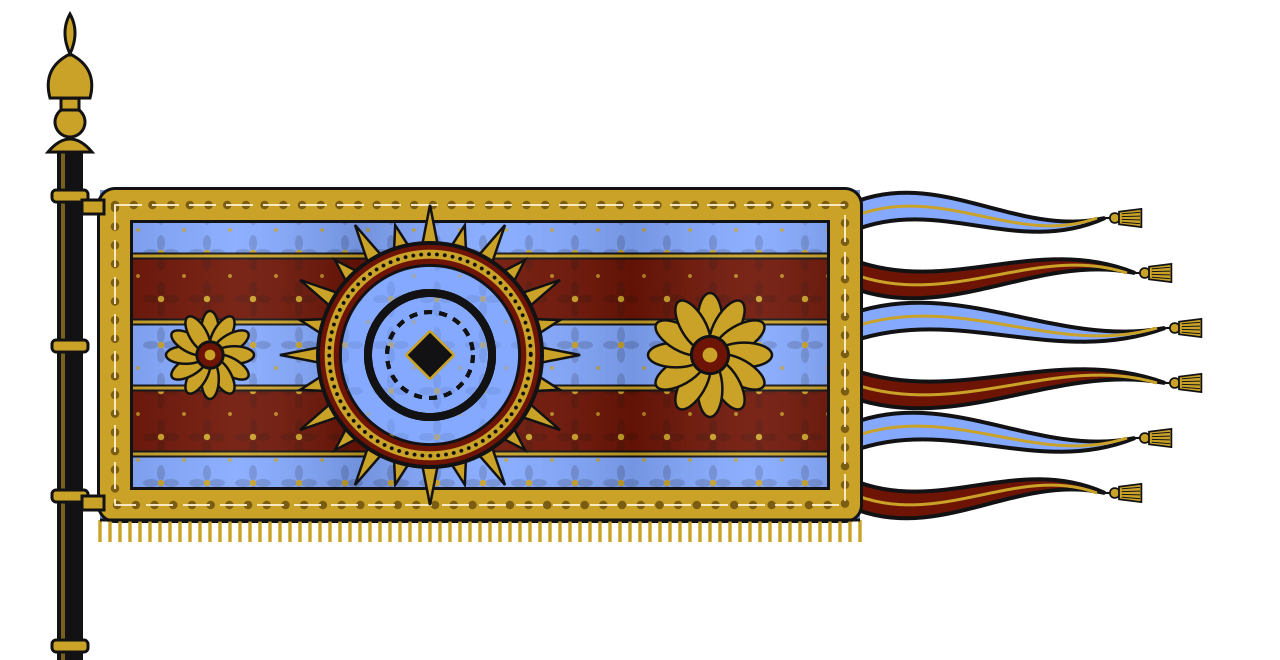
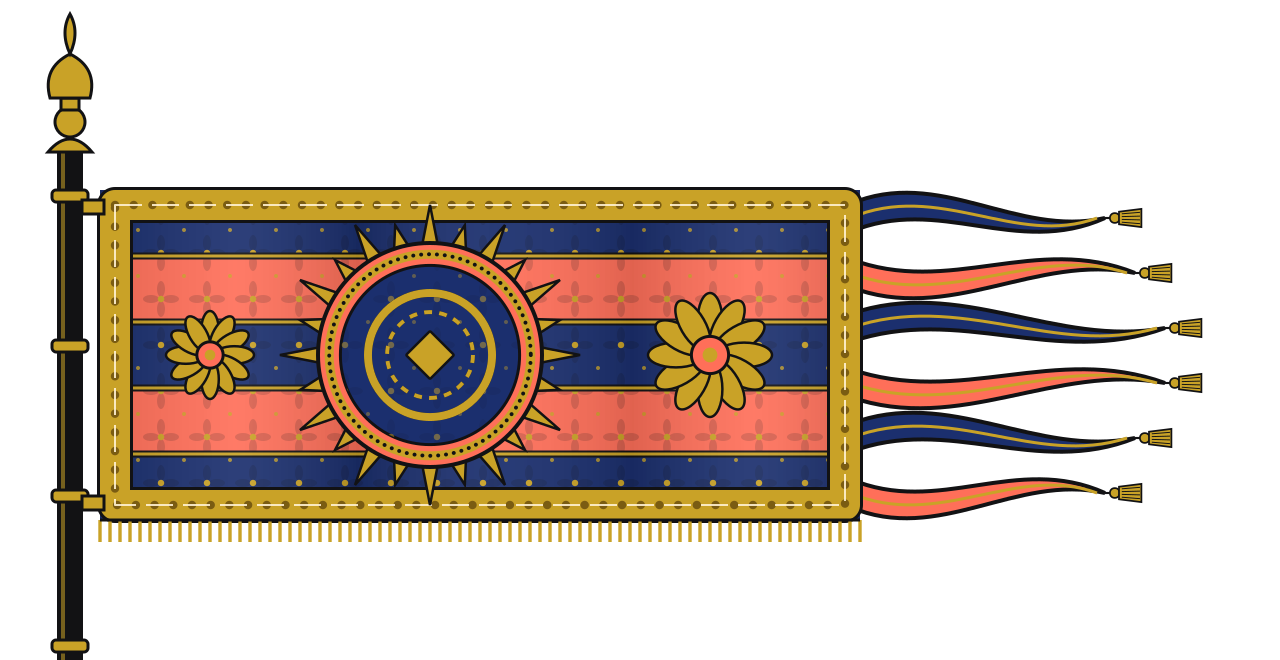
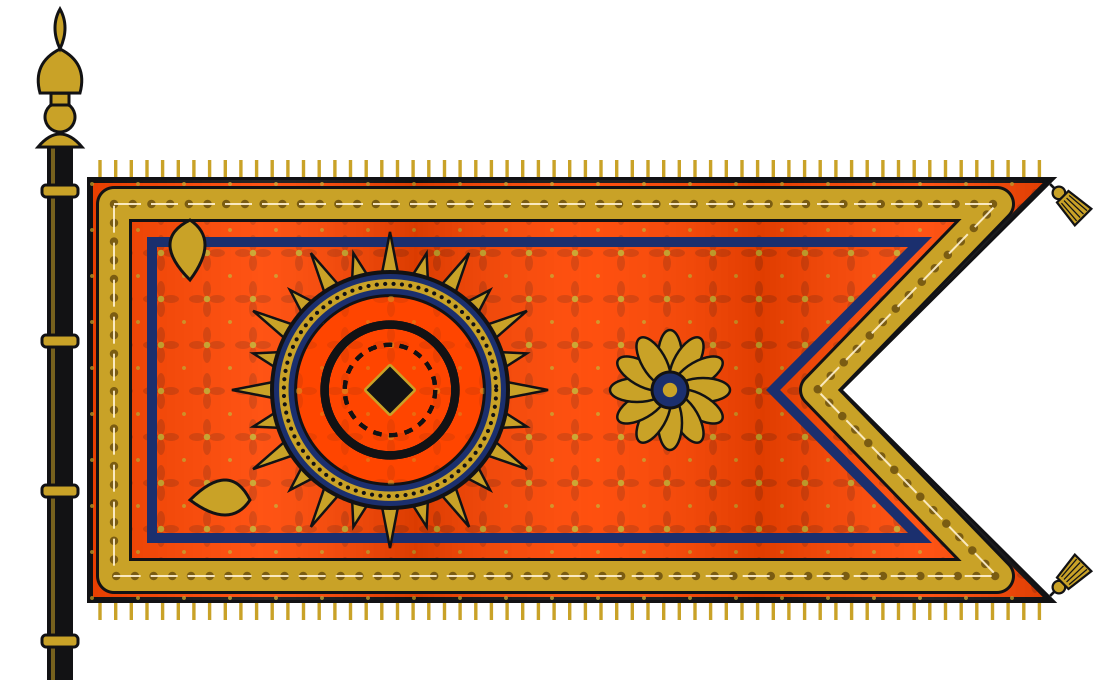
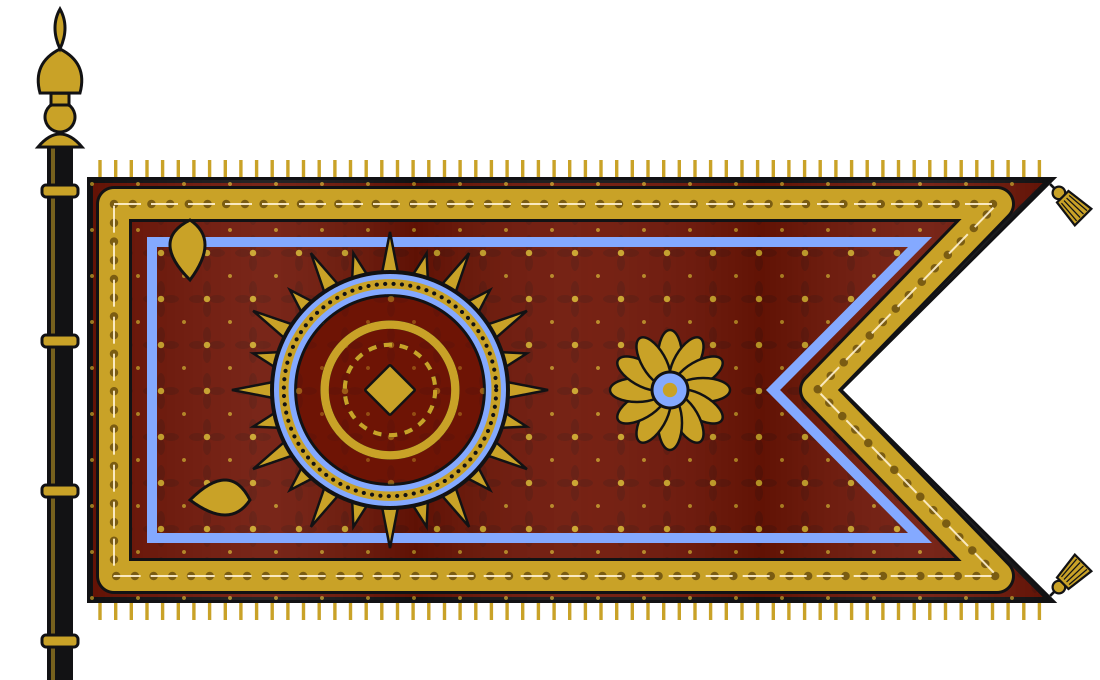
The Atlas gives the Birjia a small hill forge with hammer as emblem, for their iron craft in the Netarhat hills, and a Changi flag in red-orange and electric blue. Forward Press says the Birajia Asurs were iron smelters, and that the Mines and Minerals (Development and Regulation) Act 1957 removed their right to produce iron[6]; the Asur page ties iron smelting to the Asur as a whole[11][2].
| Part of the kit | This clan |
|---|---|
| Field | Warm Red-Orange #FF6F59 |
| Accent | Intense Electric Blue #84A9FF |
| Emblem colour | Charcoal Black #121214 |
| Zari metal | Gold |
| Main emblem | A small hill forge with hammer |
| Second image | — |
| Night and day | Every visual accessory has two versions: by night the emblem on the dark field, by day the clan's field colour on cloth woven from its metal. |
6. Flags
Every clan has every flag type; the type says the occasion and the colours say the clan. The outlined card is the flag the Atlas assigns.

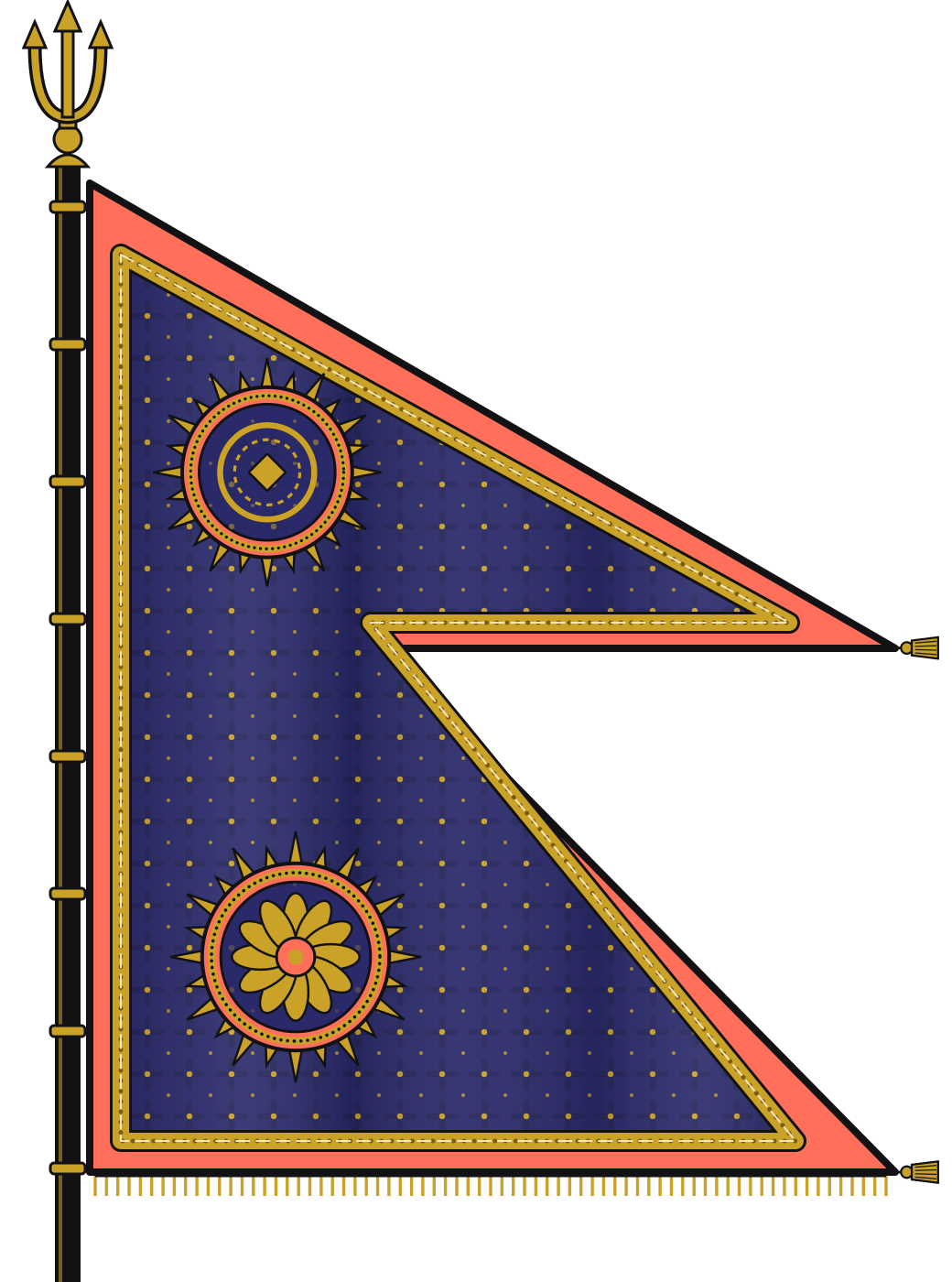

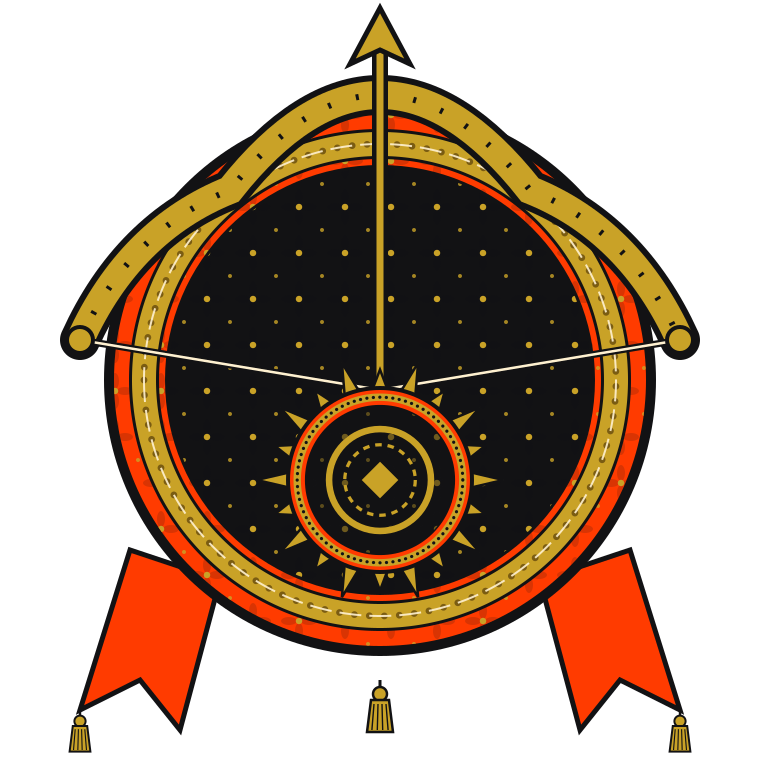
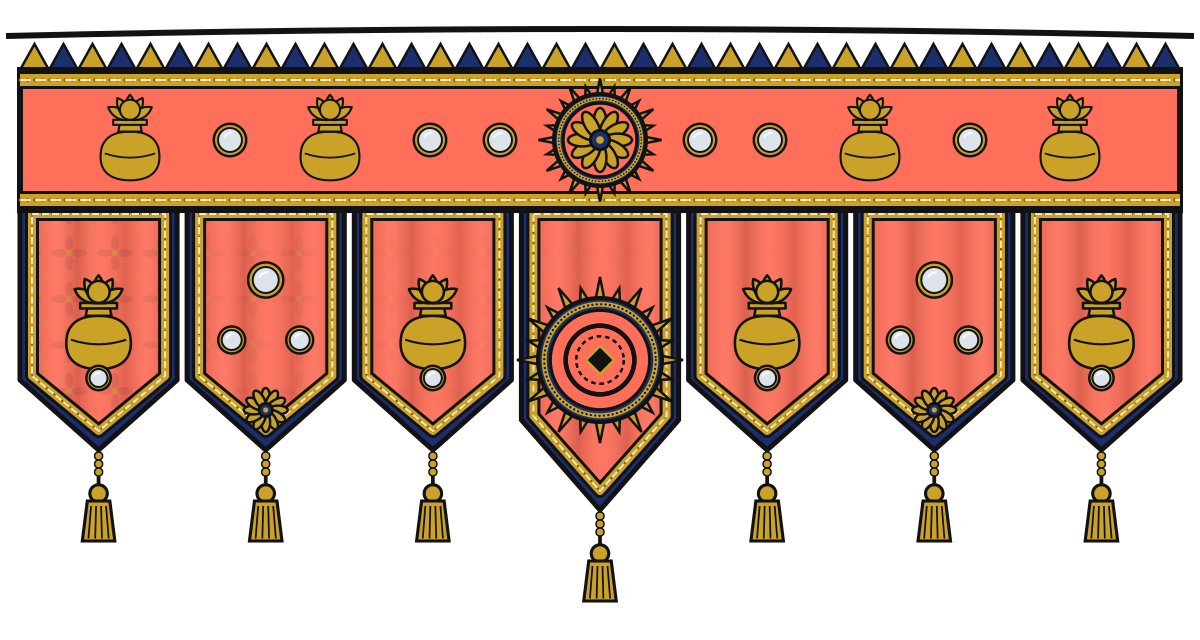

Historic banner
None known
New flag types
| Accessory | For this clan | Basis |
|---|---|---|
| A9 Pota-dhvaja · ship and trade flag For ships, caravans and markets | Not yet designed for this clan | Design |
| A10 Utsava-patāka · festival flag Light, bright flag for fairs and festivals | Not yet designed for this clan | Design |
| A11 Shoka-dhvaja · mourning flag White cloth with the emblem outline in the clan's metal | Not yet designed for this clan | Design |
7. Regalia
| Accessory | For this clan | Basis |
|---|---|---|
| E1 Chhatra · house parasol The ceremonial umbrella | Not yet designed for this clan | Design |
| E2 Chamara · fly-whisks The pair of whisks beside the head of the house | Not yet designed for this clan | Design |
| E3 Danda · staff of office Staff or scepter | Not yet designed for this clan | Design |
| E4 Simhasana · seat The seat of the house, covered in clan cloth | Not yet designed for this clan | Design |
| E5 Khetaka · shield A round shield; the Changi and Dhanush are its flag forms | Not yet designed for this clan | Regional tradition |
| E6 Kula-ayudha · clan weapon The weapon the clan honours | Not yet found for this clan | Under research |
8. Worn
| Accessory | For this clan | Basis |
|---|---|---|
| F1 Kula-vastra · clan cloth The clan's woven pattern in its kit colours | Not yet designed for this clan | Design |
| F2 Kirti-vastra · honour cloth A cloth earned for a deed, not inherited | Not yet designed for this clan | Design |
| F3 Kula-mala · garland flower The flower or leaf the clan wears as a garland | Not yet found for this clan | Under research |
| F4 Chinha · house pin A metal badge with the pin emblem | Not yet designed for this clan | Design |
9. Records
| Accessory | For this clan | Basis |
|---|---|---|
| H1 Clan words A traditional line in the native script | mian, barija, peja · “one, two, three” The Birjia numerals, given in IPA by the Wikipedia language article[3] | Design |
| H2 Biruda · titles The house's title or titles | Not yet found for this clan | Under research |
| H3 Prashasti · praise genealogy The lineage as written at the head of a grant | Not yet found for this clan | Under research |
| H4 Vahi · clan register The book of the clan's births, marriages and deaths | Not yet found for this clan | Under research |
| H5 Rana-ghosha · war cry The clan's cry in battle or celebration | Not yet found for this clan | Under research |
10. VishwaVit · knower of the world
Game values are design choices for this project, not historical claims.
References
- SPPEL, Birjia documentation page, read 2026-10-10, https://www.sppel.org/birjiadoc.aspx
- Dr. Ramdayal Munda Tribal Welfare Research Institute, Asur, read 2026-10-10, https://trijharkhand.in/en/asur
- Wikipedia, Birjia language, read 2026-10-10, https://en.wikipedia.org/wiki/Birjia_language
- Ministry of Tribal Affairs, State/UT-wise list of Scheduled Tribes (Constitution (ST) Order 1950 as amended; list dated 09-07-2024), via the Atlas entries ST-015 and ST-093.
- GKToday Hindi, बिरजिया जनजाति, 2019, read 2026-10-10, https://www.gktoday.in/hindi/%e0%a4%ac%e0%a4%bf%e0%a4%b0%e0%a4%9c%e0%a4%bf%e0%a4%af%e0%a4%be-%e0%a4%9c%e0%a4%a8%e0%a4%9c%e0%a4%be%e0%a4%a4%e0%a4%bf/
- Rajan Kumar, Forward Press, article on Birajia Asurs and Agarias (p=26095; date not given), read 2026-10-20, https://www.forwardpress.in/?p=26095
- R. V. Russell and Hira Lal, The Tribes and Castes of the Central Provinces of India, vol. 3 (1916), Project Gutenberg #41424, https://gutenberg.org/cache/epub/41424/pg41424-images.html
- R. V. Russell and Hira Lal, The Tribes and Castes of the Central Provinces of India (1916), vols 1-3, local text (tools/texts.py ref russell_1916_v2), read 2026-11-01, Birjia codex team run
- DTE Staff, A dying craft, Down To Earth, 30 June 1997, read 2026-10-26, https://www.downtoearth.org.in/environment/a-dying-craft-23952
- Vandna Tete, असुरों की 'चमत्कारी' धातु लोहा, Sahapedia (Sahapedia-UNESCO Fellowship, interviews 2019), read 2026-10-20, https://www.sahapedia.org/asauraon-kai-camatakaarai-dhaatau-laohaa
- Wikipedia, Asur people, read 2026-10-20, https://en.wikipedia.org/wiki/Asur_people
- Jharkhand Info (Jharkhand Online Network volunteers), The Asur - one of the primitive tribal groups of Jharkhand, Google Groups post 6 Sep 2007, read 2026-11-01, https://groups.google.com/g/jharkhand/c/pHjoN5Hzmbo
- Alka Kumari, Ethnic Tribes of India (course note, Lucknow University), read 2026-11-01, PDF
- Joshua Project, Birjia in India (data credited to Omid; no year), read 2026-10-26, https://joshuaproject.net/people_groups/16463/IN
- Census of India 2001, table PC01_ST14a-20 (ST-14 appendix, Jharkhand), catalogue page, read 2026-10-26, https://censusindia.gov.in/nada/index.php/catalog/25569
- Wikipedia, Tribes of Jharkhand, read 2026-10-20, https://en.wikipedia.org/wiki/Tribes_of_Jharkhand