The Bhumij are a Munda-speaking people, a Scheduled Tribe in Odisha, Jharkhand and West Bengal, with smaller communities in Bangladesh, Assam and Tripura[1][2]. Their name is said to mean 'born of the soil' or 'children of the land'[3][4]. Under the Barabhum and Manbhum zamindaris, Ganga Narayan Singh led the revolt of 1832–33 against British revenue, salt, land-sale and forest laws, and the British withdrew several of those laws during it[5][6]. Their language is Bhumij, a Munda language with 27,506 mother-tongue speakers at the 2011 census[7].
01Faith and deities
Chhinnamasta of Rajrappa, Jharkhand
The presiding goddess of the clan's homeland or capital: a link of place, not a recorded clan tie.
| Deity or tradition | Place in the clan's life | Evidence |
|---|---|---|
| Dharam | Supreme with Sing Bonga (trijharkhand) | [3] |
| Marang Buru ᱢᱟᱨᱟᱝ ᱵᱩᱨᱩ | Also supreme for the Bhumij; their priests are the Laya or Deuri; 'the Great Mountain' | [10] |
| Jaher Ayo and the jaherthan | The sacred grove on the outskirts of Bhumij and Santal villages is the residence of Jaher Ayo; its priests are the Laya or Deuri | [11] |
| Jahuburu, Karakata, Baghut, Gram-Deota, Deoshali, Buru, Panchbahini, Baradela, Manasa, Paori, Jaharburi, Atra | Other deities named for the Bhumij; Karakata is listed for rain and crops | [3] |
| Deota, Daram Deota, Singbonga, Jahubora | The primeval deities (Banglapedia) | [4] |
| Chhinnamasta of Rajrappa (KulDevi) | Homeland shrine in Jharkhand;, not the Bhumij's own tradition | From the Atlas |
02Temples
No temple built by the Bhumij is documented. Trijharkhand describes no temples and places worship in village groves and household courtyards[3]. The jaherthan grove is a sacred grove, not a temple[11]. Marang Buru's abode is said to be Parasnath, a Jain site[10].
Built by the clan
Not recorded.
Given patronage or grants by the clan
Not recorded.
03Languages and scripts
| Language or script | Kind | Under the clan | Evidence |
|---|---|---|---|
| Bhumij living · ভূমিজ | Munda language (Austroasiatic); close to Ho, Mundari and Santali | Spoken by the Bhumij; 27,506 mother-tongue speakers, 2011 census, of 911,349 Bhumij[7] | |
| Bangla living | Main language of the Bhumij in Bangladesh | Mundari is used very little there[4] | |
| Ol Onal | Script; invented 1981–1992 by Mahendra Nath Sardar ('Ol Guru'); encoded in Unicode 16.0.0 | Before it, Bhumij was mainly oral[7][8] | |
| Devanagari, Odia, Bengali | Scripts in which Bhumij is written; many in West Bengal and Odisha use Bengali or Odia | Sample in Devanagari (Omniglot)[8][1] |
04Books and literature
The works below are about the Bhumij or on the Bhumij language. The extracts record no patronage of books by Bhumij rulers.
Written during the clan's history
| Work | Author | Kind | When | Link to the clan |
|---|---|---|---|---|
| The Bhumij Revolt (1832–33) | Jagdish Chandra Jha | Book | 1967 | [5] |
| Bhumij | Ota, A. B. | Book (SCSTRTI, Bhubaneswar) | 2014 | [1] |
| Bhumij Grammar | N. Ramaswamy | Grammar | 1992 | [1] |
| History of the Bengali-speaking People | Sengupta | Book | 2001 | [1] |
| Paschim Banger Sanskriti | Ghosh | Book | 1976 | [1] |
| Changing Profile of the Frontier Bengal | Das | Book | 1984 | [5] |
| Bankura District Gazetteer | L. S. S. O'Malley | Gazetteer | Not dated | [5] |
| Genetics of the Bhumij of Jharkhand | Kujur | Thesis | 2010 | [1] |
| Bhumij and water in the Jungle Mahals | Sarkar | Chapter | 2022 | [1] |
Given patronage by the clan
Not recorded.
05Thinkers and scholars
| Name | Field | Era | Contribution |
|---|---|---|---|
| E. T. Dalton | Writer on the Bhumij | Not stated | Bhumij original inhabitants of Dhalbhum, Barabhum, Patkum and Baghmundi; called the Bhumij robbers (chuars)[1][3] |
| Risley | Writer on the Bhumij | 1890 | Bhumij a Munda group that moved east and Sanskritized; eastern Bhumij lost their language[3] |
| L. S. S. O'Malley | Writer on the Chuar revolt | Not stated | Bengal District Gazetteer account of the Chuar revolt[1] |
| Surajit Sinha | Writer on tribe-caste | 1959; 1965 | Bhumij-Kshatriya movement (1959); tribe-caste continua (1965)[1] |
| N. Ramaswamy | Writer on the Bhumij name | 1992 | The Bhumij as the people of the Bhum areas[1] |
| Jagdish Chandra Jha | Historian of the revolt | 1967 | The Bhumij Revolt (1832–33)[5] |
Colonial-era views are given as the sources quote them, not as endorsed.
06Art and architecture
No painting, sculpture or architecture of the Bhumij is in the extracts. Decoration and dress are under Crafts and Clothing.
Painting and wall art
Not recorded.
Sculpture and temple art
Not recorded.
Temple and building architecture
Not recorded.
Weaving and textiles
Not recorded.
Clothing and jewellery
| Art form | What it is | Era | Evidence |
|---|---|---|---|
| Girls' ornaments | Brass nose-rings, earrings, bead necklaces, armlets, bangles, and flowers in the hair | [3] |
Coins, pottery and crafts
| Art form | What it is | Era | Evidence |
|---|---|---|---|
| Wedding space (marwa) | Decorated with rice-water, branches, cowries and turmeric; pots joined by cotton thread | [3] |
07History
The name and the Bhum areas
The Bhumij name is said to mean 'one who is born from the soil' (trijharkhand) and 'children of land' (Banglapedia)[3][4]. Russell (1916) records the Bhumij as a branch of the Kols, and Russell's volume 1 gives Bhumij and Bhuiya the same sense of 'belonging to the soil'[12].
The historical Bhum areas were Singhbhum, Dhalbhum, Manbhum and Barabhum (N. Ramaswamy 1992). Dalton claimed that the Bhumij were the original inhabitants of Dhalbhum, Barabhum, Patkum and Baghmundi[1]. Trijharkhand records that the Bhumij claim military service as their original occupation[3].
Chuar rebellions, 1766 to 1816
Peasant rebellions called the Chuar revolt ran from about 1766 to 1816 around Midnapore, Bankura and Manbhum, against the East India Company's land revenue[1]. Trijharkhand dates the Chuar revolt to 1771–1809[3]; the Bhumij Revolt page says it peaked in 1798–99 and led to the creation of the Jungle Mahals district[5]. The sources give different dates; all are shown.
Dispossessed Bhumij zamindars joined the rebels: Jagannath Singh (Dhalbhum), Durjan Singh (Raipur) and Rani Shiromani (Karnagarh), according to Sengupta (2001), as cited on Wikipedia[1]. In 1798 the Puncheet estate was sold for Company taxes and the Bhumij revolted[3].
Company rule and the succession dispute
The Company took the Diwani of Bengal, Bihar and Orissa in 1765 and imposed harsh revenue on the Jungle Mahals (Das 1984). After Raja Raghunath Narayan died in 1798, the Sadar Diwani Adalat settled the succession in favour of Ganga Govinda Singh (Bhattacharya 1985, 2023)[6]. Lakshman Narayan Singh opposed his brother over the succession and died in jail[3]; the revolt page calls him the rightful heir by tradition, exiled after the British backed Raghunath Narayan[5].
The revolt of 1832–33
The revolt is called Ganga Narayan's Hungama (Jungle Mahal Uprising); in Bengali it is হাঙ্গামা (Hungama), 'disturbance'[5]. On 2 April 1832 Ganga Narayan Singh killed the Dewan of Barabhum, the British broker Madhab Singh, at Vandih; rebels took the Barabazar muffasil court, the salt inspector's office and a police station. Forces from Barrackpore and commissioners from Bardhaman and Chotanagpur were defeated (Panda 2005; Mishra and Paty 2010)[5].
From August 1832 to February 1833 the Jungle Mahal was disturbed. The British withdrew the land-sale, inheritance, lac-excise, salt and jungle laws (Aquil and Mukherjee 2020; Panigrahi 1982)[5]. Salt taxes, land sales, forest laws and moneylenders fed the resentment (Bhattacharya 2023)[6].
Ganga Narayan went to Porahat and Singhbhum to rally the Kol (Ho) tribes against Thakur Chetan Singh of Kharsawan[5]. Sources differ on the date of his death: the Bhumij Revolt page gives 6 February 1833, when he attacked the Hindshahar police station of Chetan Singh and died fighting (uncited); the Ganga Narayan Singh page gives 7 February 1833 at Kharsawan, aged 42[5][6]. The Ganga Narayan Singh page gives his birth as 25 April 1790 at Bandhdih, flagged as needing a citation[6]. He formed the Sardar Guerrilla Vahini, a claim the Bhumij Revolt page flags as needing a citation[6][5].
Regulation XIII of 1833
Regulation XIII of 1833 split the Jungle Mahals: Senpahari, Shergarh and Bishnupur went to Burdwan, and the rest became Manbhum District (O'Malley)[5].
Titles under British rule
Many Bhumij became zamindars under British rule; some held the title Raja and others were called Sardar (Ghosh 1976, cited on Wikipedia). Wikipedia states that the Bhumij were Scheduled Castes before the 1956 Modification Order[1].
08Journey and migrations
Movements the sources describe. Dates are as each source gives them.
| When | From | To | Why | Evidence |
|---|---|---|---|---|
| Not dated | Bihar | Land (destination not named) | Ancestors left their home in Bihar seeking land | [4] |
| 20th century | Bihar | Sylhet, Bangladesh | Tea-garden labour | [4][1] |
| Not dated | Bihar | Assam, concentrated in the Assam valley | Not stated; described as very recent immigrants | [1] |
09Seats and lands
| Place | Role | Where today |
|---|---|---|
| Singhbhum | Historical Bhum area (Ramaswamy 1992) | Main Bhumij regions today include East Singhbhum and Saraikela-Kharsawan, Jharkhand[1] |
| Dhalbhum | Historical Bhum area; Dalton's claimed home of the Bhumij | Not stated in the extracts |
| Manbhum | Historical Bhum area; made a district by Regulation XIII of 1833 | Not stated in the extracts[5] |
| Barabhum | Historical Bhum area; zamindari of Raja Vivek Narayan Singh | Not stated in the extracts[5] |
| Patkum and Baghmundi | Named by Dalton as Bhumij homes | Not stated in the extracts[1] |
| Jangal Mahals | Forest and revolt country of the 1832–33 revolt | Jhargram, Bankura and Purulia[7] |
| Mayurbhanj, Sundargarh, Keonjhar, Balasore | Odisha settlement (Wikipedia; KISS handbook) | Odisha[1][13] |
| Sylhet | Tea-garden settlement, Srimangal and Moulvibazar | Bangladesh[4] |
10Notable figures
| Name | Role | Era | Known from |
|---|---|---|---|
| Ganga Narayan Singh | Leader of the 1832–33 revolt; Sardar Guerrilla Vahini | 1790–1833 (birth flagged as needing a citation) | [6][5] |
| Raja Vivek Narayan Singh | Raja of Barabhum; grandfather of Ganga Narayan | Not dated | [5][6] |
| Lakshman Narayan Singh | Opposed his brother over the succession and died in jail; the revolt page calls him rightful heir by tradition | Not dated | [3][5] |
| Madhab Singh | Dewan of Barabhum and British broker, killed by the rebels at Vandih | 2 April 1832 | [5] |
| Thakur Chetan Singh | Of Kharsawan; the rebels' opponent at Hindshahar | 1833 | [5] |
| Jirpa Laya | Chief commander of the rebels (citation needed) | 1832–33 | [5] |
| Jagannath Singh Patar | Dhalbhum zamindar who joined the Chuar rebels | Chuar revolt | [1][3] |
| Durjan Singh | Raipur zamindar who joined the rebels | Chuar revolt | [1][3] |
| Rani Shiromani | Of Karnagarh; joined the rebels | Chuar revolt | [1][3] |
| Mahendra Nath Sardar ('Ol Guru') | Bhumij linguist from Odisha who invented the Ol Onal script | 1981–1992 | [7][8] |
| Gambhir Singh Mura | Padma Shri; tribal Chhau dancer, listed in the Bhumij article (community not stated) | Not dated | [1] |
| Haren Bhumij and Durga Bhumij | Politicians named in Wikipedia's list of notable Bhumij | Not dated | [1] |
| Jogeswar Bhumij and Pranjal Bhumij | Cricketer and footballer named in Wikipedia's list of notable Bhumij | Not dated | [1] |
11Allies, rivals and marriages
| People | Relationship | When |
|---|---|---|
| Munda | Probably a section of the Mundas, 'Bhumij Munda', where the two intermarried (Russell 1916) | 1916 account[14] |
| Kol | Local branches of the Kols under different names (Russell, vol. 1) | 1916 account[12] |
| Santal | Related Munda-subfamily language and people; Santal and Bhumij share the Jaherthan grove | Present[7][11] |
| Ho | Closely related language; the priests' title Dehuri and Marang Buru are shared | Present[7][10] |
| Mundari, Santali, Korwa | Practically forms of one language, Kherwari (Grierson, quoted by Russell) | 1916 account[14] |
| Bhuiya | Same origin, from bhu, 'earth' (Russell, vol. 1) | 1916 account[12] |
| East India Company and British officers | Revenue, salt and land laws; Madhab Singh, Dewan of Barabhum, is called a British broker | 1765 onward[6][5] |
| Zamindars of Dhalbhum, Patkum and Kashipur | Raja and zamindar families who supported Ganga Narayan | 1832–33[5] |
12Society and livelihood
Endogamous by territory and occupation (trijharkhand). Sinha (1965, cited on Wikipedia) describes Munda tribal traits mixed with caste elements, a tribe-caste continuum. Some Bhumij claim Kshatriya status (a community claim; Ghosh 1976; Banglapedia; trijharkhand).
Government and social order
| Institution or group | What it was | Evidence |
|---|---|---|
| Kili | Exogamous clans named for fauna, flora, heavenly bodies or earth; members avoid harming the named element | [3] |
| Village thak | Village-level thaks are exogamous; village headship is hereditary | [3][1] |
| Family | Nuclear, patrilineal and exogamous; only sons inherit; elders settle disputes | [3][4] |
| Marriage | Polygyny is recognised, polyandry is unknown; a widow may remarry by the sanga rite; divorce for extreme adultery; a premarital pregnancy requires marriage to the child's father; marriage within the same gotra is forbidden; weddings are at the bride's house, with the knot tied 3–10 days (trijharkhand's wording) | [3][4] |
| Bhaiyadi | Prohibited degrees extend from three to five generations | [3] |
| Ceremonial friendship | Soya and phul among the Manbhum Bhumij | [3] |
| Birth | A Ghasi midwife attends; pollution for 8–10 days; a washerman and a barber take part; then the naming | [3] |
| Death | The rich cremate and the poor bury; mourning about ten days (trijharkhand). In Bangladesh the dead are cremated, children under six months buried, and mourning (ashoucha-kal) lasts eleven days (Banglapedia) | [3][4] |
Livelihood over time
| Era | Livelihood | Evidence |
|---|---|---|
| Under British rule | Many became zamindars, some titled Raja and some Sardar | [1] |
| 20th century | Tea labourers in Srimangal, Moulvibazar, Bangladesh; extra income from betel leaf | [4] |
| Today | Rural livelihoods: agriculture, fishing, hunting, forest produce, wage labour and animal husbandry | [3] |
13Sub-clans and related clans
Sub-clans, divisions and related peoples the sources name. Kili (exogamous totemic clans) are listed under Society; the rows here are the named divisions by state. Sizes are as each list prints them.
| Clan | Relation | Where | Size | In the Atlas | Evidence |
|---|---|---|---|---|---|
| Tamudia | Sub-clan | Mayurbhanj, Odisha (Tamaria Bhumij in the Odisha list) | same name as ST-499: check | [1][3][2] | |
| Haldipukuria Bhumij | Sub-clan | Mayurbhanj, Odisha (Haladi Pokharia in the Odisha list) | same name as ST-417: check | [1][3][2] | |
| Teli Bhumij | Sub-clan | Mayurbhanj, Odisha | same name as ST-503: check | [1][2] | |
| Desi or Dehuri Bhumij | Sub-clan | Mayurbhanj, Odisha (Desia Bhumij in the Odisha list) | same name as ST-382: check | [1][3][2] | |
| Barah Bhuiyan Bhumij | Sub-clan | Mayurbhanj, Odisha (Vada Bhuinyas in trijharkhand) | same name as ST-370: check | [1][3] | |
| Kol Bhumij | Sub-clan | Mayurbhanj, Odisha | same name as ST-410: check | [1][3] | |
| Desua Bhumij (Deshua) | Sub-clan | Odisha | 404, 2011 (Odisha ST list, separate row; not verified) | same name as ST-383: check | [2] |
| Sikharia | Sub-clan | Odisha | same name as ST-492: check | [1] | |
| Tharua | Related people | Odisha (listed among the Bhumij by Wikipedia) | 9,451, 2011 (Odisha ST list) | ST-312 | [1][2] |
| Tamaliya | Sub-clan | Jharkhand | same name as ST-498: check | [1] | |
| Na-gadi | Sub-clan | Jharkhand | new clan candidate | [1] | |
| Astha | Sub-clan | Jharkhand | new clan candidate | [1] | |
| Choto Astha | Sub-clan | Jharkhand | new clan candidate | [1] | |
| Manbhum Bhumij | Branch | Manbhum | new clan candidate | [3] | |
| Borabhui | Sub-clan | Assam | new clan candidate | [1] | |
| Mura Bhumij | Sub-clan | Assam | same name as ST-518: check | [1] | |
| Mura | Sub-clan | Assam | same name as ST-474: check | [1] | |
| Chaibasa Mura | Sub-clan | Assam | new clan candidate | [1] | |
| Khanga Mura | Sub-clan | Assam | new clan candidate | [1] | |
| Kumpat Mura | Sub-clan | Assam | new clan candidate | [1] | |
| Manki Bhumij | Sub-clan | Assam and Tripura (Manki in Tripura) | new clan candidate | [1] | |
| Bara | Sub-clan | Tripura | new clan candidate | [1] | |
| Bhoogol | Sub-clan | Tripura | new clan candidate | [1] | |
| Kada Kata | Sub-clan | Tripura | new clan candidate | [1] | |
| Patkumia | Sub-clan | Tripura | new clan candidate | [1] | |
| Sing | Sub-clan | Tripura | new clan candidate | [1] | |
| Nag | Sub-clan | Tripura; Bangladesh (killi) | same name as ST-476: check | [1][4] | |
| Kaitra | Sub-clan | Bangladesh (killi) | new clan candidate | [4] | |
| Garur | Sub-clan | Bangladesh (killi) | new clan candidate | [4] | |
| Kasim | Sub-clan | Bangladesh (killi) | new clan candidate | [4] | |
| Bhugal | Sub-clan | Bangladesh (killi) | new clan candidate | [4] | |
| Baundra | Sub-clan | Bangladesh (killi) | new clan candidate | [4] | |
| Ban | Sub-clan | Bangladesh (killi) | new clan candidate | [4] | |
| Shona | Sub-clan | Bangladesh (killi) | new clan candidate | [4] | |
| Shar | Sub-clan | Bangladesh (killi) | new clan candidate | [4] | |
| Tresha | Sub-clan | Bangladesh (killi) | new clan candidate | [4] | |
| Munda | Parent people | Chota Nagpur Plateau | ST-229 | [14][15] | |
| Kol | Related people | Keonjhar, Mayurbhanj, Balasore (Odisha) | 4,058, 2011 (Odisha ST list) | ST-141 | [12][2][13] |
| Ho | Related people | Mayurbhanj, Anugul, Keonjhar (Odisha) | ST-102 | [7][15][13] | |
| Santal | Related people | Mayurbhanj, Balasore, Keonjhar (Odisha) | 894,764, 2011 (Odisha ST list) | ST-280 | [7][2][13] |
| Bhuiya | Related people | Keonjhar, Sundergarh, Jharsuguda, Mayurbhanj, Sambalpur, Angul (Odisha) | 306,129, 2011 (Odisha ST list) | ST-031 | [12][2][13] |
| Kharia | Related people | Sundergarh, Sambalpur, Mayurbhanj, Jharsuguda (Odisha) | 222,844, 2011 (Odisha ST list) | ST-130 | [14][15][13] |
| Juang | Related people | Keonjhar, Dhenkanal (Odisha) | 47,095, 2011 (Odisha ST list) | ST-114 | [15][13] |
| Korwa | Related people | Not stated | ST-157 | [14] | |
| Khairwar | Related people | Not stated | ST-127 | [14] |
Clans marked "new clan candidate" are not in the Atlas yet.
14Surnames
Surnames and name elements the extracts give. Singh and Sardar appear among Bhumij names and titles[1]. No bearer counts are sourced, so none is given.
| Surname | Clan or sub-clan | Where | People with this surname | Also used by other communities |
|---|---|---|---|---|
| Singh | Bhumij zamindar and rebel families | Barabhum, Dhalbhum, Manbhum (names in the revolt; Wikipedia and trijharkhand) | not yet counted | Not checked |
| Sardar | Not stated (used as a family name; also a title) | not yet counted | Not checked |
Counts are of everyone with the surname, from the cited source and year, not only members of this clan. A surname shared with other communities says nothing about any one person's origin.
15Songs and music
Ballads are performed at pujas and festivals, by men and women alike, and the Bhumij dance to the madal drum (Banglapedia; trijharkhand). No song or ballad text is in the extracts, so none is printed.
None recorded yet.
Instruments and styles
| Instrument or style | What it is | Evidence |
|---|---|---|
| Madal | Drum for Bhumij dances, with religious and romantic songs | [3] |
| Firkal | Martial dance and art form practised in one Bhumij village, in Potka block, East Singhbhum | [16][1] |
16Poems, lullabies and children's rhymes
No Bhumij poems, lullabies or rhymes appear in the extracts.
None recorded yet.
17Stories, legends and proverbs
Stories and legends
| Story | What happens | Told by | Evidence |
|---|---|---|---|
| Sing-Bonga and the twelve pairs legend | The sun-deity Sing-Bonga made a boy and a girl in a cave; the twelve pairs of children chose their food, and the first pair, the Kols and the Bhumij, took bullock or buffalo flesh | Kol, Munda and Ho (Russell's 1916 entry) | [14] |
Proverbs and sayings
Not recorded.
18Festivals and fairs
| Festival or fair | When | Where | What happens |
|---|---|---|---|
| Sarhul | Baisakh and Phalgun | Not stated | Bhumij festival[3] |
| Dhulla Puja | Baisakh | Not stated | [3] |
| Jaharburi | Chaitra | Not stated | [3] |
| Bandana | Not stated | Not stated | Named among the Bhumij festivals (Banglapedia)[4] |
| Tushu | Poush, to Makar Sankranti (regional) | Chhota Nagpur; Bagmundi, Purulia | Harvest festival; Sahapedia does not name the Bhumij, so this is regional, not a Bhumij claim[17][4] |
| Karam | Bhadra | Not stated | [3][4] |
| Baghut | Kartik | Not stated | [3] |
| Vadhna Parab | Kartik new moon | Not stated | [3] |
| Gram-Deota and Deoshali | Ashadh | Not stated | [3] |
| Buru | Magh | Not stated | [3] |
| Manasa | Shravana | Not stated | [3] |
| Paori | Jaistha and Asadh | Not stated | [3] |
| Nua-Khia | Not stated | Not stated | [3] |
19Food, dress and games
Food
| Item | What it is | Evidence |
|---|---|---|
| Staple | Rice, with vegetables, fish, eggs, lentils and wild potatoes; milk products, tea and betel | [4] |
| Meat | Non-vegetarian; no beef (Banglapedia); no pork or beef (trijharkhand) | [4][3] |
| Drink | Rice beer, toddy and mahua liquor (trijharkhand); alcohol is common (Banglapedia) | [3][4] |
Dress
| Item | What it is | Evidence |
|---|---|---|
| Girls' ornaments | Brass nose-rings, earrings, bead necklaces, armlets, bangles and flowers in the hair | [3] |
Games and martial arts
Not recorded.
Tags: living still practised · revived brought back after a break · lost known only from records · research reported but not yet confirmed from a source. Songs and poems under copyright are listed by title only; restricted or sacred material is noted without its content.
20Status today
A Scheduled Tribe in Odisha, Jharkhand and West Bengal, with communities in Bangladesh and smaller groups in Assam and Tripura[1][2].
Recognised heritage
| What | Recognition | Evidence |
|---|---|---|
| Ganga Narayan Singh's revolt (1832–33) | Remembered as a hero of resistance; the legacy is said to have inspired later freedom struggles (Wikipedia) | [6] |
| Firkal | Martial dance and art form that survives in one Bhumij village (Outlook India, cited on Wikipedia) | [1] |
| Ol Onal script | Invented 1981–1992 by Mahendra Nath Sardar; encoded in Unicode 16.0.0 | [7] |
No community review of this page is recorded in the pack.
21For children
Born of the soil
Today the Bhumij live in Jharkhand, Odisha and West Bengal. Their name is said to mean 'born from the soil'. They honour Sing Bonga, and the village deities too. Each family belongs to a kili, a clan named for a plant, an animal, a star or the earth, and no one harms the thing their kili is named after. Near Bhumij and Santal villages there is a sacred grove called Jaherthan, where uncut stones stand for the Bongas. People dance to the madal drum.
Written for this project
22Across the project
| Project | What carries this clan | Status |
|---|---|---|
| Atlas of the Janas | Districts are in the lands section; the footprint file is left to the host | |
| KulDevi and GrahDevi | KulDevi Chhinnamasta of Rajrappa is assigned by the project, not the Bhumij's own tradition; the GrahDevi forms are | From the Atlas |
| Planet naming | Not sourced for this clan | |
| Renaming and waters | Not sourced for this clan. Lead: Sarkar (2022) on Bhumij and water in the Jungle Mahals (not read) |
23Open questions
- Decision: Ganga Narayan Singh's death is given as 6 February 1833 (Bhumij Revolt page, uncited) and 7 February 1833 (his own page); both are shown. His birth on 25 April 1790 is flagged on Wikipedia as needing a citation, and is shown with that flag.
- Decision: population figures are shown with their sources and not reconciled. The three-state sum is 869,653 (2011), but the language page's base is 911,349 (2011); Bangladesh is 9,664 (2021, BBS) against about 3,000 at Srimangal (no year); speakers are about 100,000 or about 120,000 (no years) against 27,506 mother-tongue speakers (2011).
- Decision: the Desua Bhumij figure of 404 (Odisha list, a separate row) is not verified; it is shown in the clans with that flag, and not summed into the Bhumij total.
- Decision: the Jharkhand second-language date is shown as October 2018 (Wikipedia) and January 2019 (The Avenue Mail).
- Decision: the Ho population for Odisha differs between sources (806,008 against 80,608); it is not used for the Bhumij.
- Decision: the Chuar revolt dates differ (1766–1816; 1771–1809; a peak of 1798–99); all are shown.
- Decision: the Munda link (Russell 1916) and the Kshatriya claim are kept apart. The Munda link is Russell's 1916 view (research); the Kshatriya claim is a community claim.
- Decision: the main emblem is a placeholder, as instructed. The Atlas's design idea (a raised fist holding a bow, for the 1832 revolt) is labelled as design and not as documented.
- Missing: pre-colonial chiefdom histories and inscriptions for the Bhum areas; Risley's account of Bhumij religion (Heidelberg 1915, not read); Gram Thakur worship; Bhumij songs, proverbs and rhymes (the Bengali search returned nothing relevant); a community review.
- Unfetched leads: the Jungle Mahals and Chuar Rebellion Wikipedia pages; Zenodo record 1484841; GKToday; the Studies on Sacred Groves and Taboos in Purulia (indianforester.co.in article 3330); cm.jharkhand.gov.in node 619; Joshua Project; the Vidyasagar glossary PDF; the NVLI Tribes and Castes of Bengal volumes.
- Verify: the Tamudia change from Scheduled Caste to Scheduled Tribe in Odisha (2024) is cited second-hand from SCSTRTI on Wikipedia.
- Contradiction: Banglapedia lists Tushu among the Bhumij festivals[4]; the Tushu row calls it regional because Sahapedia does not name the Bhumij[17]. Both are shown; the row is kept as regional.
24Astitva
अस्तित्व · being, existence: everything by which the clan is known
Known for the Bhumij: kili totems with the taboo on harming the named element, the jaherthan grove[11], the madal drum[3], titles (Raja, Sardar, Diwan, Thakur and Patar) and the Sardar Guerrilla Vahini that Ganga Narayan Singh formed (citation needed on the Bhumij Revolt page)[6][5]. Flowers in the hair and brass and bead ornaments are worn by girls[3]. No coin, seal, plate or war cry is in the extracts.
Every clan has every accessory, royal objects included. Each one says how it is known: Documented This clan's own object is recorded. · Regional tradition Recorded for the region or for peoples like this one, not for this clan. · Design Made for this project, with no historical claim. · Under research To be found for this clan from sources. Legends and titles are written in the clan's own script.
1. Seals and coins
| Accessory | For this clan | Basis |
|---|---|---|
| B1 Rajamudra · house seal Round seal with the clan emblem and a short legend in the clan's script | Not yet designed for this clan | Design |
| B2 Anguliya-mudra · signet ring Personal seal ring of the head of the house | Not yet designed for this clan | Design |
| B3 Chhapa · house stamp Ink or block stamp for letters, goods and cloth | Not yet designed for this clan | Design |
| B4 Tamrapatra · charter plate Copper-plate grant on a ring, closed with the house seal | Not yet designed for this clan | Design |
| B5 Shreni-mudra · guild or trade seal Seal for the clan's trade, craft or caravan | Not yet designed for this clan | Design |
| C1 Clan coin Emblem or deity on one side, a legend in the clan's script | Not yet designed for this clan | Design |
| C2 Coin die The die that strikes the coin | Not yet designed for this clan | Design |
2. Living symbols
| Accessory | For this clan | Basis |
|---|---|---|
| I1 Totem trio The tree, bird and animal the clan protects | Kili totems named from fauna, flora, heavenly bodies and earth; the named element is not to be harmed. No Bhumij kili is given with its own tree, bird or animal in the extracts. | Documented |
| I2 Kaval-maram · guardian tree The tree that stands at the clan's seat | Jaherthan: a sacred grove on the outskirts of Bhumij and Santal villages; uncut stones represent the Bongas | Regional tradition |
3. Stone and gate
| Accessory | For this clan | Basis |
|---|---|---|
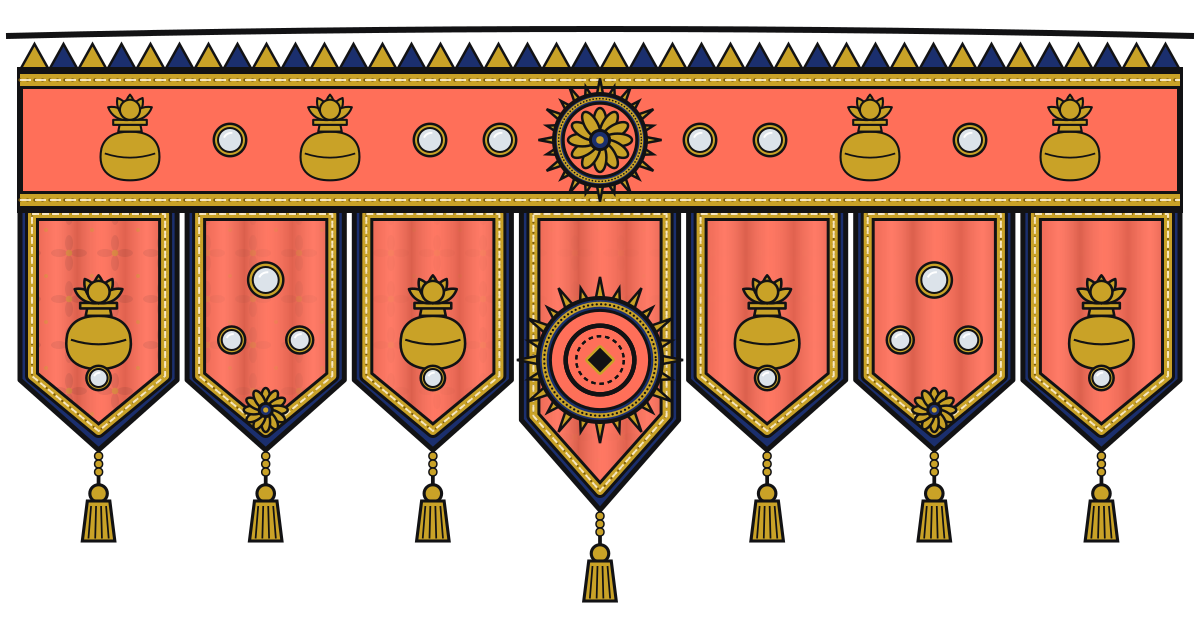
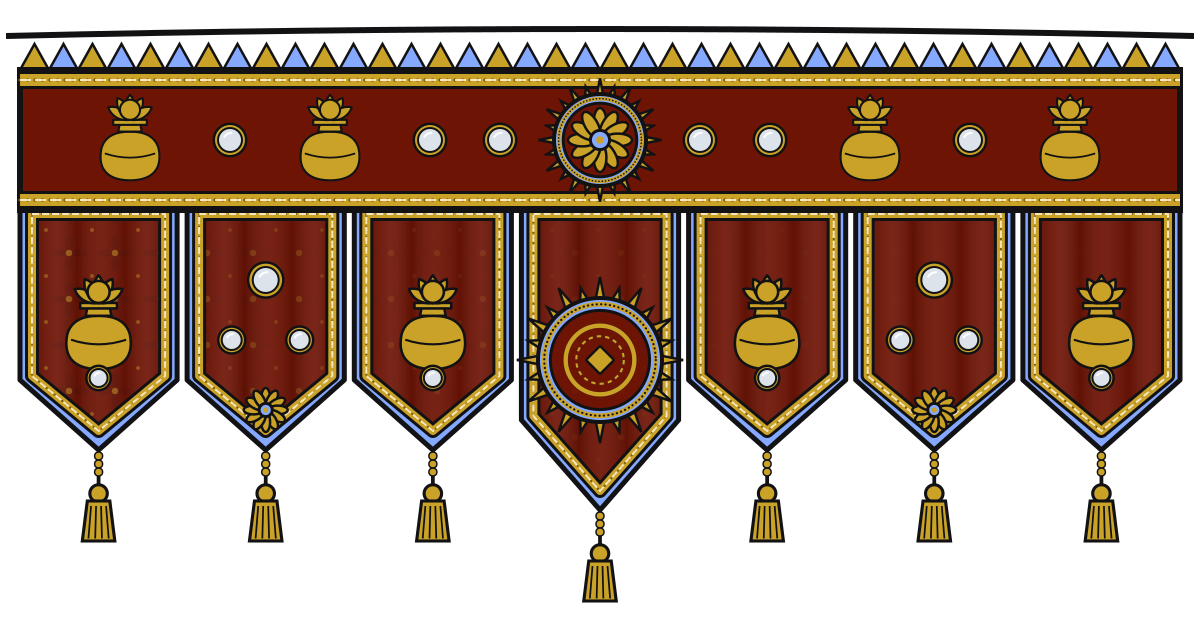
| G1 Torana · gateway The built gate of the seat; the cloth Toran hangs in it | Not yet designed for this clan | Regional tradition |
| G2 Viragallu · hero stone Carved panel stone for a member who died defending the clan | Not yet designed for this clan | Regional tradition |
| G3 Kula-shila · clan stones Standing and table stones that remember the ancestors | Not yet designed for this clan | Design |
| G4 Jayastambha · victory pillar A pillar raised for a victory | Not yet designed for this clan | Design |
| G5 Sima-shila · boundary stone Marks the clan's land, with a line in the native script | Not yet designed for this clan | Design |
4. Sounds
| Accessory | For this clan | Basis |
|---|---|---|
| D1 Pancha-mahashabda · five great sounds The right to five instruments | Not yet designed for this clan | Design |
| D2 Shankha · clan conch The clan's own named war conch | Not yet designed for this clan | Design |
| D3 Murasu · house drums Three drums: war, charity and justice | Madal: the drum for Bhumij dances, with religious and romantic songs | Documented |
5. Kit: colours, metals and emblems
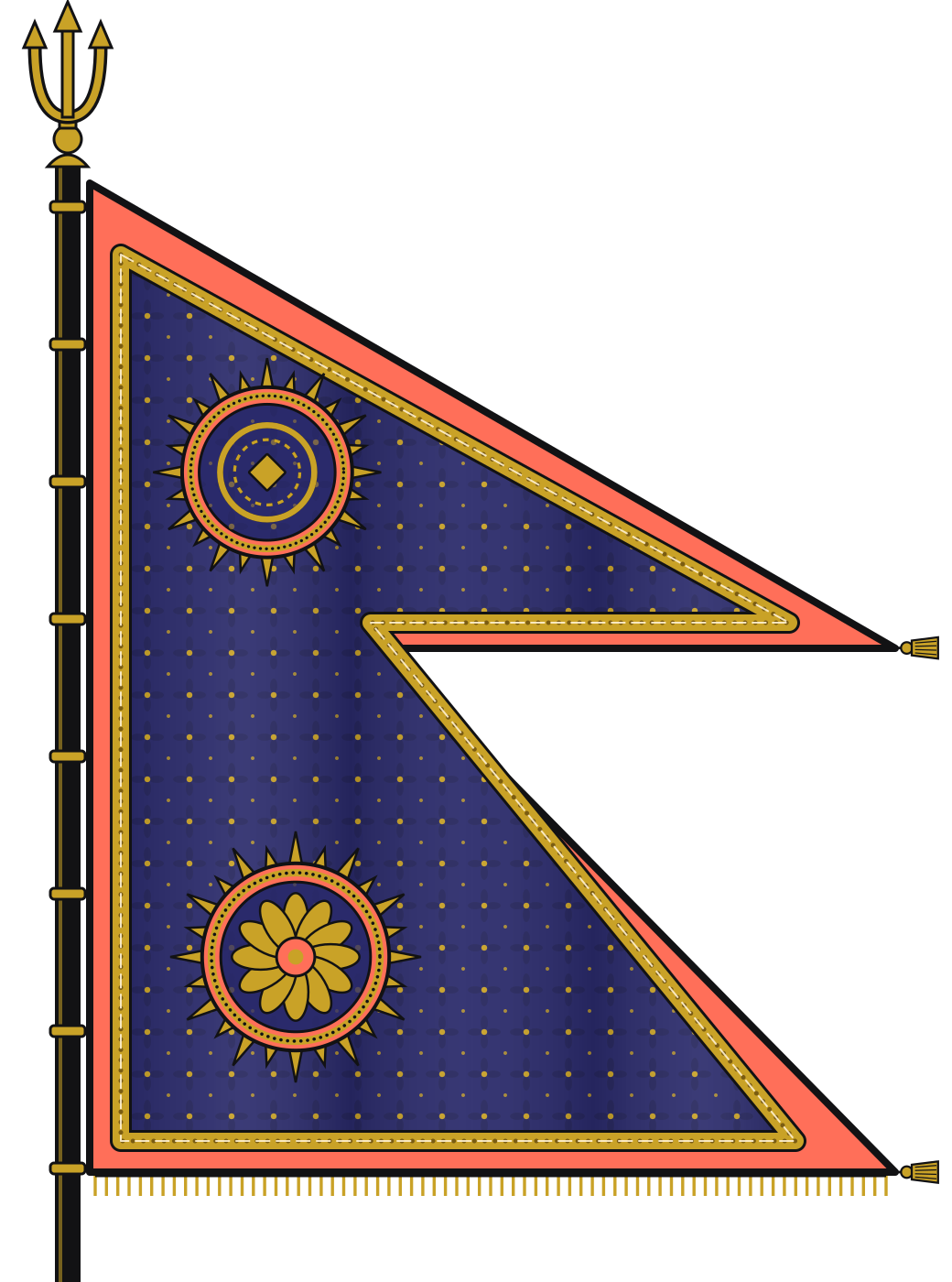
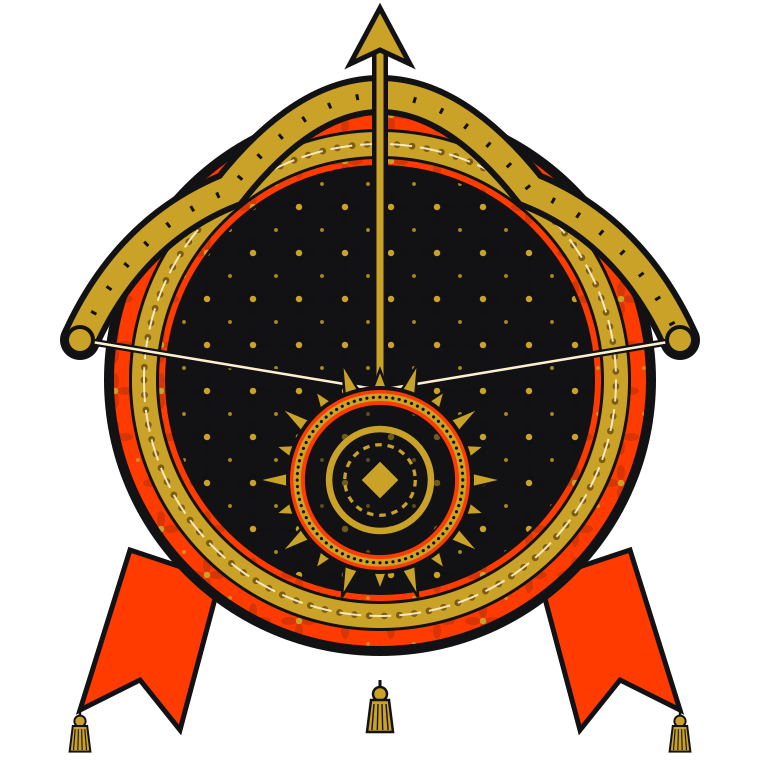
No documented Bhumij seal, coin, banner or emblem is in the extracts. The main emblem is a placeholder until it is drawn. The Atlas's design idea, a raised fist holding a bow, links to the 1832 revolt; it is a design, not a documented symbol.
| Part of the kit | This clan |
|---|---|
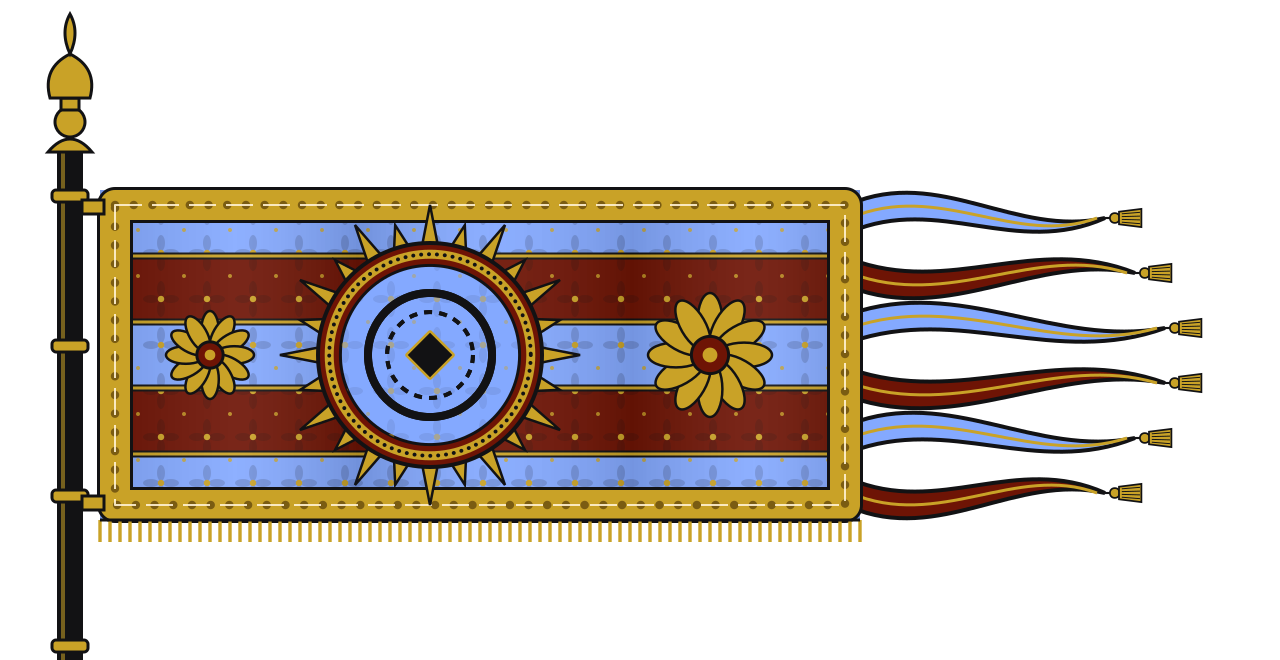
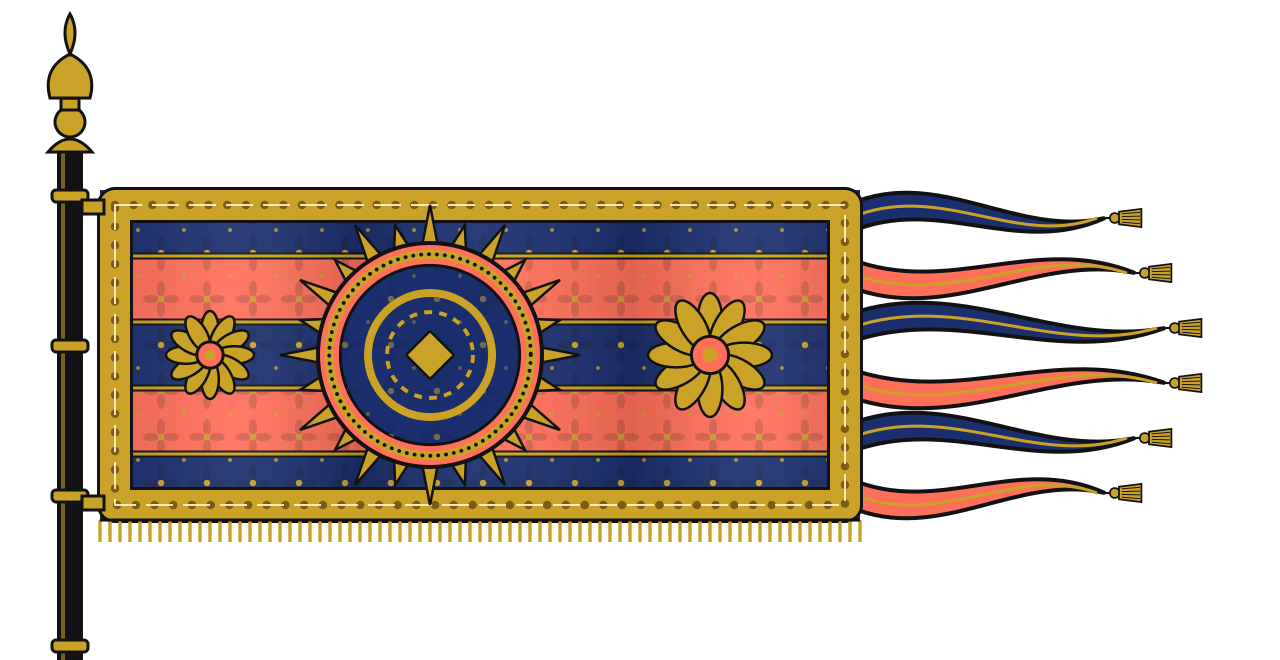
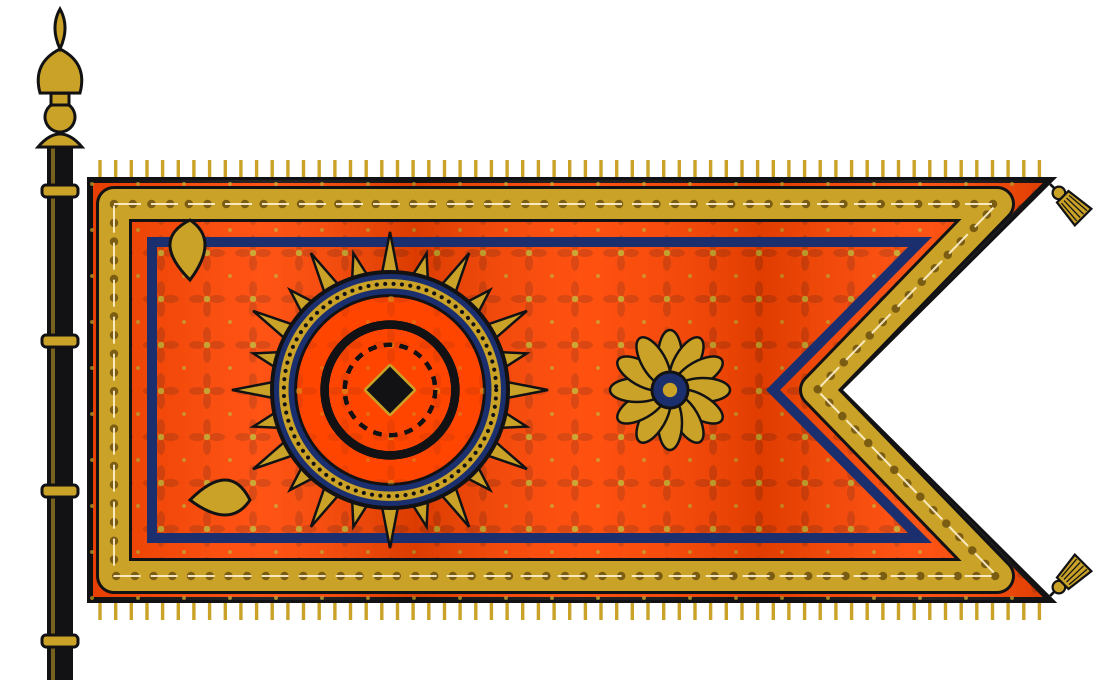
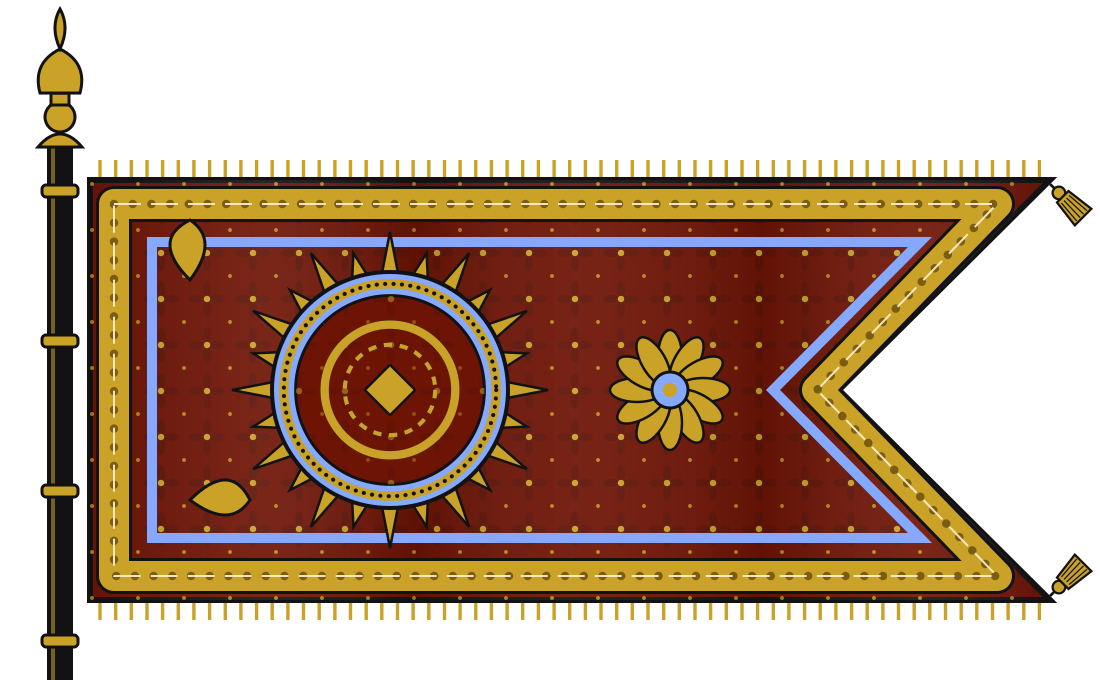
| Field | Deep Crimson Red #FF3B00 |
| Accent | Deep Indigo #2A2A6B |
| Emblem colour | Charcoal Black #121214 |
| Zari metal | Gold |
| Main emblem | A raised fist holding a bow |
| Second image | — |
| Night and day | Every visual accessory has two versions: by night the emblem on the dark field, by day the clan's field colour on cloth woven from its metal. |

6. Flags
Every clan has every flag type; the type says the occasion and the colours say the clan. The outlined card is the flag the Atlas assigns.


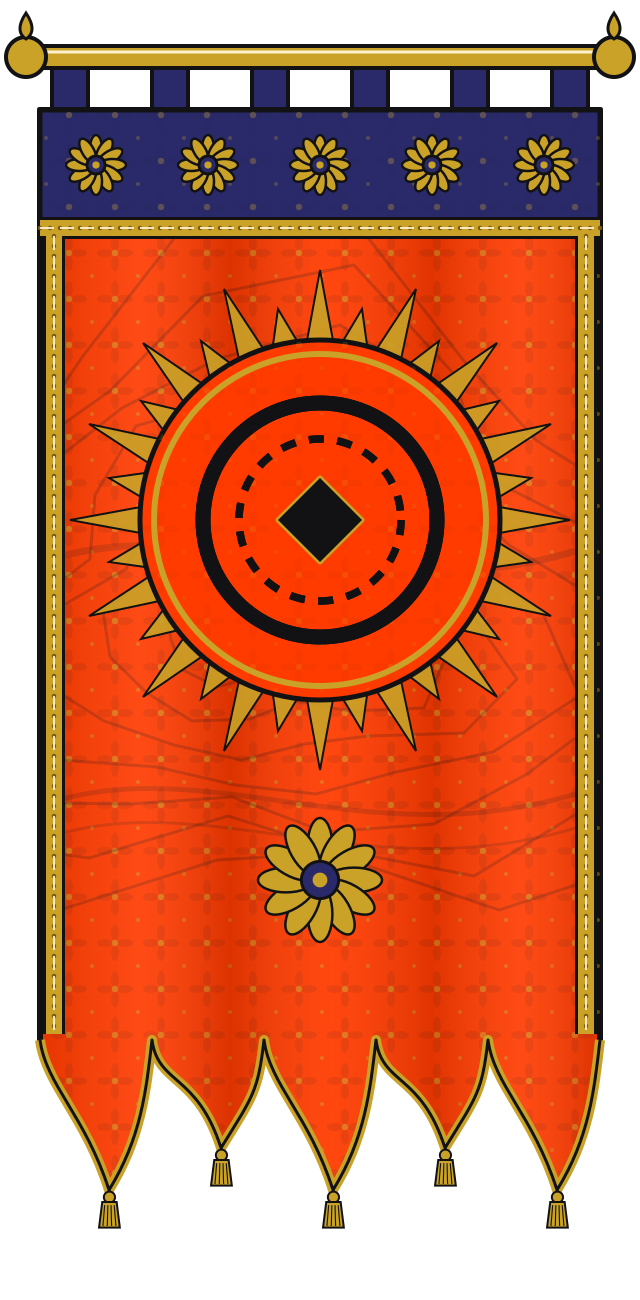
Historic banner
None known
New flag types
| Accessory | For this clan | Basis |
|---|---|---|
| A9 Pota-dhvaja · ship and trade flag For ships, caravans and markets | Not yet designed for this clan | Design |
| A10 Utsava-patāka · festival flag Light, bright flag for fairs and festivals | Not yet designed for this clan | Design |
| A11 Shoka-dhvaja · mourning flag White cloth with the emblem outline in the clan's metal | Not yet designed for this clan | Design |
7. Regalia
| Accessory | For this clan | Basis |
|---|---|---|
| E1 Chhatra · house parasol The ceremonial umbrella | Not yet designed for this clan | Design |
| E2 Chamara · fly-whisks The pair of whisks beside the head of the house | Not yet designed for this clan | Design |
| E3 Danda · staff of office Staff or scepter | Not yet designed for this clan | Design |
| E4 Simhasana · seat The seat of the house, covered in clan cloth | Not yet designed for this clan | Design |
| E5 Khetaka · shield A round shield; the Changi and Dhanush are its flag forms | Not yet designed for this clan | Regional tradition |
| E6 Kula-ayudha · clan weapon The weapon the clan honours | Not yet found for this clan | Under research |
8. Worn
| Accessory | For this clan | Basis |
|---|---|---|
| F1 Kula-vastra · clan cloth The clan's woven pattern in its kit colours | Not yet designed for this clan | Design |
| F2 Kirti-vastra · honour cloth A cloth earned for a deed, not inherited | Not yet designed for this clan | Design |
| F3 Kula-mala · garland flower The flower or leaf the clan wears as a garland | Not yet found for this clan | Under research |
| F4 Chinha · house pin A metal badge with the pin emblem | Not yet designed for this clan | Design |
9. Records
| Accessory | For this clan | Basis |
|---|---|---|
| H1 Clan words A traditional line in the native script | जोतो होड़ोको के मान् आर अधिकार रेया पाईटी रे जन्मजुग आते नवारी ओडोअ् बाराबारी नाम आकाना। · “Omniglot's sample is Article 1 of the Universal Declaration of Human Rights[8]; the extract gives no translation of it.” Omniglot, Bhumij sample (UDHR Article 1 in Devanagari, credited to Biswajit Mandal)[8] | Design |
| H2 Biruda · titles The house's title or titles | Titles: Raja, Sardar, Diwan, Thakur and Patar; Singh in zamindar and rebel names | Documented |
| H3 Prashasti · praise genealogy The lineage as written at the head of a grant | Not yet found for this clan | Under research |
| H4 Vahi · clan register The book of the clan's births, marriages and deaths | Not yet found for this clan | Under research |
| H5 Rana-ghosha · war cry The clan's cry in battle or celebration | Not yet found for this clan | Under research |
10. VishwaVit · knower of the world
Game values are design choices for this project, not historical claims.
References
- Wikipedia, Bhumij people, read 2026-10-21, https://en.wikipedia.org/wiki/Bhumij_people
- Wikipedia, List of Scheduled Tribes in Odisha, read 2026-10-20, https://en.wikipedia.org/wiki/List_of_Scheduled_Tribes_in_Odisha
- Dr. Ramdayal Munda Tribal Welfare Research Institute, Jharkhand, Bhumij, read 2026-10-21, https://trijharkhand.in/en/bhumij
- Subhas Jengcham, Bhumij, Banglapedia (last edited 4 Sept 2021), read 2026-10-21, https://en.banglapedia.org/index.php/Bhumij
- Wikipedia, Bhumij Revolt, read 2026-10-21, https://en.wikipedia.org/wiki/Bhumij_Revolt
- Wikipedia, Ganga Narayan Singh, read 2026-10-21, https://en.wikipedia.org/wiki/Ganga_Narayan_Singh
- Wikipedia, Bhumij language, read 2026-10-21, https://en.wikipedia.org/wiki/Bhumij_language
- Omniglot, Bhumij, read 2026-10-21, https://www.omniglot.com/writing/bhumij.htm
- Vajiram and Ravi, Tribes of West Bengal, read 2026-10-21, https://vajiramandravi.com/current-affairs/tribes-of-west-bengal/
- Wikipedia, Marang Buru, read 2026-10-10, https://en.wikipedia.org/wiki/Marang_Buru
- Wikipedia, Jaherthan, read 2026-10-10, https://en.wikipedia.org/wiki/Jaherthan
- R. V. Russell and Hira Lal, The Tribes and Castes of the Central Provinces of India, vol. 1 (London, 1916), Project Gutenberg eBook #20583, https://www.gutenberg.org/ebooks/20583
- Sushree Mohanty, Indigenous Colours of Odisha: Handbook on 62 Tribes (KISS), read 2026-10-20, link
- R. V. Russell, The Tribes and Castes of the Central Provinces of India, vol. 3 (1916), Project Gutenberg #41424, read 2026-10-10, https://gutenberg.org/cache/epub/41424/pg41424-images.html
- Wikipedia, Munda people, read 2026-10-21, https://en.wikipedia.org/wiki/Munda_people
- Wikipedia, Folk dances of Jharkhand, read 2026-10-10, https://en.wikipedia.org/wiki/Folk_dances_of_Jharkhand
- Pinki Biswas Sanyal, Tusu: A Harvest Festival of Chhota Nagpur, Sahapedia, read 2026-10-21, https://www.sahapedia.org/tusu-harvest-festival-chhota-nagpur
- Wikipedia, List of Scheduled Tribes in West Bengal, read 2026-10-21, https://en.wikipedia.org/wiki/List_of_Scheduled_Tribes_in_West_Bengal
- Wikipedia, Tribes of Jharkhand, read 2026-10-20, https://en.wikipedia.org/wiki/Tribes_of_Jharkhand